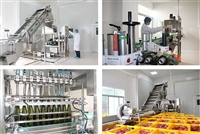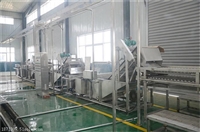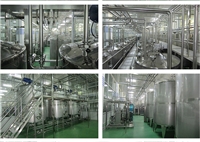
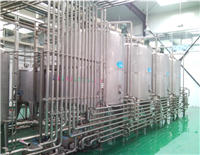


Cherry fruit wine deep processing equipment pilot 50 tons per year pomegranate wine fermentation and filling production line
Category:
Food and Beverage/Food and beverage processing equipment/Beverage production equipment
Model:
kx-2000
Brand:
Wenzhou Kexin
model:
kx-2000
Processing & Customization:
yes
power:
two hundred
power supply voltage:
three hundred and eighty
Applicable bottle height:
five hundred
Applicable bottleneck:
four hundred and fifty
Filling volume:
five hundred
Filling accuracy:
ninety-nine
Overall dimensions:
1700x1300x2100
Place of Origin:
Wenzhou
Retail Price
325,555.00USD
重量
kg
- Product Description
-
model kx-2000
Processing & Customization yes
power two hundred
power supply voltage three hundred and eighty
Applicable bottle height five hundred
Applicable bottleneck four hundred and fifty
Filling volume five hundred
Filling accuracy ninety-nine
Overall dimensions 1700x1300x2100
Place of Origin Wenzhou
Description :
One What are the common fruits suitable for making fruit wine
Kexin can supply a complete set of equipment for the production line of fruit wine with a capacity of 2000 bottles to 9000 bottles per hour and a capacity of 750ml. Common fruit wine ingredients include pomegranate, apple, bayberry, peach, cherry, grape, etc.
II The characteristics of the entire fruit wine production line for making wine:
Firstly, it is rich in nutrients, containing various organic acids, aromatic esters, vitamins, amino acids, minerals, and other nutrients. Regular and moderate consumption can increase human nutrition and benefit overall health;
Secondly, fruit wine has a low alcohol content and minimal irritation, which can refresh and relieve fatigue without harming the body;
Thirdly, fruit wine has a unique charm in color, aroma, and taste. Different fruit wines reflect different styles such as bright color, rich fruit aroma, refreshing taste, mellow and soft taste, and long-lasting aftertaste, which can meet the drinking enjoyment of different consumers;
Fourthly, fruit wine is made from various cultivated or wild fruits, which can save food for brewing.

III Basic process of small-scale fruit wine production line:
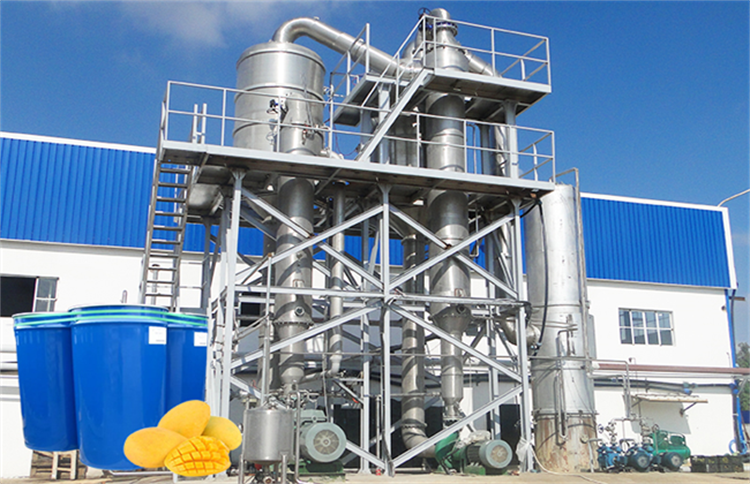
Fresh fruit → Sorting → Crushing and removing stems → Fruit pulp → Separating and extracting juice → Clarifying → Clear juice → Fermentation → Pouring bucket → Storing wine → Filtering → Cold treatment → Mixing → Filtering → Finished product
4 The definition of fermented fruit wine:
Fermented fruit wine refers to fruit that is crushed, pressed, and juiced, and then fermented and aged with alcohol. There are various types of fruit wine, with wine being the most common. According to different brewing methods, it can be divided into several types such as fermented fruit wine, distilled fruit wine, and formulated fruit wine. The fermentation principle of fruit wine is the process in which fruit juice undergoes complex chemical reactions under the action of some enzymes in yeast, producing ethanol and carbon dioxide. Fermented fruit wine does not require distillation or saccharification of the raw materials before fermentation, and its alcohol content is generally between 8-20 degrees.

Five Classification of fully automatic fruit wine production line equipment:
1. According to different brewing methods and product characteristics, it can be divided into several types such as fermented fruit wine, distilled fruit wine, and formulated fruit wine. Fermented fruit wine is made by fermenting and aging fruit juice with alcohol. It does not require distillation or saccharification of the raw materials before fermentation, and its alcohol content is generally between 8-20 degrees. Distilled fruit wine, also known as fruit Baijiu, is the wine obtained by distilling the fruit after alcoholic fermentation, also known as brandy. Distilled fruit wine has a high alcohol content, usually above 40 degrees. Fruit wine, also known as fruit wine, is made by blending fruit juice with alcohol, such as hawthorn wine, osmanthus wine, cherry wine, etc. Cocktails are made by mixing various colored fruit wines in proportion.
2. According to the fruit ingredients, there are grape wine, apple wine, hawthorn wine, and bayberry wine.
3. According to the color of the wine, there are red wine, white wine, ros é wine, etc.
4. Classify dry wine (sugar content 0-4g/L), semi dry wine (sugar content 4-12 g/L), semi sweet wine (sugar content 12-50 g/L), and sweet wine (sugar content greater than 50 g/L) according to their sugar content.
5. Classify calm wine, sparkling wine, and aerated sparkling wine based on their carbon dioxide content.
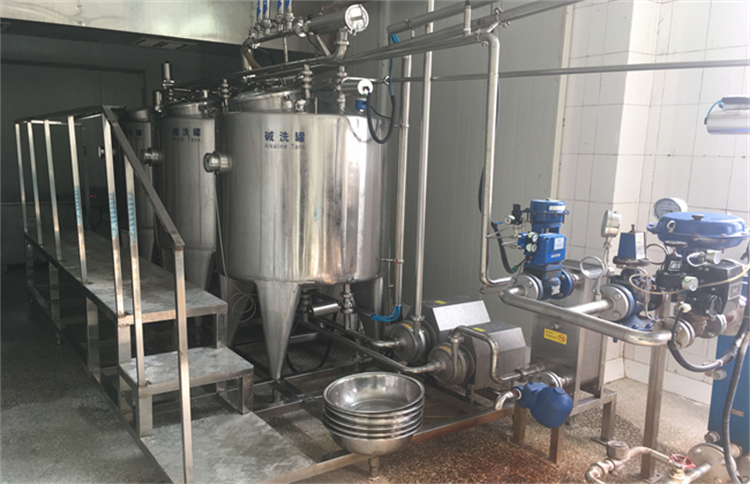
VI Kexin's fully automated 500 ton fruit wine production line process:
1. Choose the fruit. Good wine making ingredients should have a high sugar content, a certain acidity, bright color, and aromatic fruit flavor. Alcohol fermentation can generate alcohol from sugar. The higher the sugar content, the more abundant the alcohol produced, and the better the quality of fruit wine; Acid is beneficial for yeast reproduction during fermentation, as it can dissolve pigments and enhance the color of the wine; The brewed fruit wine is rich in aroma and refreshing due to the ester compounds generated by acid and ethanol. The raw materials should be selected with good maturity and no moldy fruits.
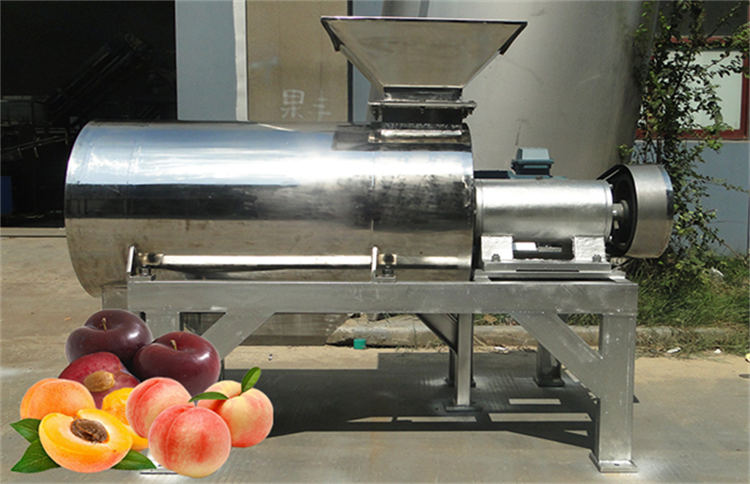
2. Broken. Due to the fact that yeast that can cause fermentation mostly adheres to the outer surface of the fruit, it is necessary to crush the fruit before the yeast can fully mix with the flesh and fruit residue, thereby acting on the sugar in the fruit and producing alcohol. The crushing method often uses a crusher, and the crushed fruit pulp contains juice, pulp, seeds, seed coat, etc. It is generally required to remove the fruit stem.
3. Composition adjustment. First, adjust the sugar. Ordinary fruit wine contains approximately 10-16 degrees of alcohol, and if it is below 10 degrees, it is difficult to store. Therefore, adding sugar can increase the alcohol production to meet the alcohol content requirements of fruit wine. Sugar is usually added using granulated sugar, and it should be done in stages during the fermentation process. After each addition, the total sugar content should be controlled at 14% to 16% to avoid inhibiting yeast activity and affecting the fermentation process. Next is acid adjustment. Due to the impact of acid content on fermentation process and wine preservation, necessary adjustments should be made to the acid content. Generally, each liter of fruit pulp contains 8-12 grams of acid, which is beneficial for yeast reproduction and has a certain inhibitory effect on the growth of harmful microorganisms. If the acidity is too high, sugar can be added to reduce the acidity, or water can be added to dilute the acidity in the fruit pulp. Different acidity fruit pulp can also be mixed with each other to achieve moderate acidity, and then sulfur dioxide can be added. This can kill or inhibit the growth of harmful microorganisms, with a dosage of 40-60mg of sulfur dioxide per liter.
4. Main fermentation (pre fermentation). Place the adjusted fruit pulp into the fermentation tank (or barrel), inoculate 50-100 grams of yeast per liter of raw material, and add yeast nutritional powder at a rate of 0.4% -0.5%. Within 8-12 hours after inoculation, stir thoroughly to ensure even distribution of yeast in the raw material. After inoculation with yeast, gradually raise the temperature to 23 ℃, 27 ℃, and 30 ℃. After the formation of the cap, press the cap down and stir 2-4 times a day for 10-15 minutes each time until fermentation is complete. The alcohol fermentation period is 6-14 days, and the suitable temperature for fermentation is between 23 ℃ and 30 ℃, with a maximum temperature of 36 ℃. During this period, due to the action of yeast, sugar is converted into alcohol and carbon dioxide, while the liquid temperature gradually rises and a boiling sound like water can be heard, forming a "wine cap". When the "wine cap" sinks, most of the sugar is converted into alcohol. Meanwhile, the temperature should be measured three times a day, and if it exceeds 36 ℃, cold air should be introduced to cool it down; When the temperature drops below 18 ℃, hot water or steam should be introduced to raise the temperature. There should be a large amount of air in the middle for yeast reproduction, so when yeast growth is not vigorous, the fruit pulp can be released and then introduced to release carbon dioxide and increase oxygen in the liquid.
5. Squeeze separation. When the residual sugar content in the fruit pulp to be fermented drops to 1%, the fermentation should be immediately ended and the pulp should be removed from the barrel to prevent excessive leakage of harmful substances from the residue, which may affect the quality of the wine. If the floating slag is found to be damaged, moldy, and acidic, it should be removed and thrown away first, and then the liquor should be released. The wine that flows out without applying pressure by removing the floating slag in this way is called self flowing wine, which can be mixed with the original wine; The liquor squeezed out after pressurization is called pressed liquor, and the residue can also be distilled to make liquor.

6. Post fermentation. Put the new wine into a storage bucket and seal it with a wooden lid. Use a rubber stopper in the middle to seal it tightly, and then install a fermentation plug to release the generated carbon dioxide from the fermentation plug. After about 2-3 weeks, the release of carbon dioxide stops. Remove the fermentation plug. When the wine is sour but not sweet, with a slight carbon dioxide and alcohol flavor, and presents the unique color and aroma of the wine, it indicates that the post fermentation has ended. If the alcohol content of the fruit wine does not reach 15 degrees, adjust it to 15 degrees with deodorized wine. Afterwards, fill the wine barrel with the same type of wine, and then tighten and seal the wooden cold alarm gauze.
7. Aging. Newly brewed wine is cloudy, spicy, and not suitable for drinking. It must undergo a period of storage, which is called aging. Generally, it takes 6-18 months for yeast and sediment to gradually settle at the bottom of the tank during storage. These impurities can be removed by changing the tank in a timely manner. Start changing the bucket once a month, after changing it twice, change it every three months, and then change it once every six months or in spring, summer, and autumn.
8. Clarify. Although the aged wine has undergone multiple barrel changes, it is inevitable that there will still be suspended turbidity, so it must be clarified. There are two clarification methods: adding glue and filtering. Adding gel, which utilizes the interaction between proteins and tannins to precipitate. Gelatin, fish gelatin, protein, and some adsorbent substances (such as kaolin) are commonly used for adding glue. Before applying glue, a small test must be conducted to determine the amount of glue to be applied. Generally, 2-3 grams of protein and 4-6 grams of tannins are added to every 100 liters of fruit wine. 10-15 grams of edible gelatin (dissolved in cold water) are added to every 100 liters of fruit wine, and tannins are added in a ratio of gelatin to tannins of 1:0.8. After standing for 2-3 weeks, the mixture is filtered.
9. Cold and hot treatment. To accelerate fruit ripening, cold treatment, heat treatment, or cold hot interaction treatment can be used. Freezing treatment can precipitate tartaric acid salts in wine, improve its stability, and enhance its flavor. The freezing temperature should be controlled for 3-5 days under the condition that the wine does not freeze. Heat treatment can accelerate esterification and oxidation reactions, improve the quality and flavor of wine, with a temperature of 50-60 ℃ and a duration of about 25 days. During the cold hot interaction treatment, the method of first heating and then cooling is generally used. The tartaric acid in the wine is first reacted with ethanol to form an ester, and then frozen to remove precipitation. Therefore, the wine has a good flavor, high clarity, and high stability.
10. Blending, bottling, and sterilization of finished wine. By evaluating the wine and analyzing its chemical composition, determine whether it needs to be blended and formulate a blending plan. The blending content includes alcohol content, acidity, color matching, aroma enhancement, etc. If the alcohol concentration of the original liquor is lower than the target, it can be paired with fruit distilled liquor or edible alcohol.

7 Kexin Company can provide you with after-sales service:
1. Installation and commissioning of equipment: Experienced specialized technicians and engineers are appointed according to different production equipment to be responsible for installation and commissioning, complete their work on schedule according to the contract requirements, and enter normal production after passing the acceptance inspection.
2. After sales service archiving: After the installation and commissioning of the production equipment purchased by customers, all relevant information will enter the special archive service management system, and the use and operation will be timely monitored by our company, with fast and timely service and regular follow-up procedures.
3. Service time commitment: Before the production equipment arrives at the customer's factory, please make an appointment with the after-sales service department for the arrival time of the debugging personnel. According to the requirements, they will arrive at the site on time. If there is an emergency situation that cannot be handled during the operation of the equipment, it will be directly reported to the after-sales service department. After working hours, please contact the contracting parties or marketing personnel, and arrive at the site within 12 hours after receiving the notification.
4. Specialized technical training: In order to ensure that customer technical personnel can proficiently master the performance and operation maintenance procedures of the equipment, in addition to on-site training, we can provide customers with specialized technical training within our company. According to actual needs, we will invite customers to our beverage production factory and sample factory for training.
5. Supply of spare parts: Adequate supply of spare parts throughout the year, quick handling of telephone mail order business at any time, on-site service for major repair parts plan, saving customers time and costs.
6. Regular tour service: Based on customer satisfaction survey results and different customer requirements, visit customers in stages and batches according to the plan, solve customer problems in production at any time, and continuously improve through summarization to achieve customer satisfaction. Customers are requested to fill out the Customer Satisfaction Survey Form and User Service Card carefully at that time.
7. Undertaking major, medium, and minor repairs of equipment: The company undertakes major, medium, and minor repairs, with repair parts supplied at a 10% discount from the factory price. Major repairs take 30 days, medium repairs take 15 days, and minor repairs take 3-7 days to complete.
8. Information Service: In order to facilitate customers to have a better understanding of the development of the beverage market and packaging equipment trends, our company will promptly inform you of the information and regularly mail our consulting magazines to customers.
9. Quality Commitment: Wenzhou Kexin Machinery Manufacturing Co., Ltd. guarantees that the equipment provided is brand new, advanced and reliable, meets the process requirements, and has a one-year warranty from the date of delivery (vulnerable parts are not covered by the warranty).

8 Projects that Wenzhou Kexin Light Industry Machinery Co., Ltd. can undertake:
1. Complete production line for hot filled beverages ranging from 2000 bottles to 36000 bottles per hour
2. Production line for 2000 bottles per hour -36000 bottles of mineral water and purified water
3. 2000 bottles per hour -36000 bottles of carbonated beverage production line
4. Production line for drinking water in 3-gallon and 5-gallon barrels, ranging from 100 to 1500 barrels per hour
5. 2000 cans per hour -36000 cans of canned beverage production line (plant protein beverage, tea beverage, functional health beverage, canned beer production line)
6. Production line for 2000-36000 bottles of dairy beverages per hour (milk production line, yogurt production line, fresh milk production line, pasteurized milk production line)
7. 2000 bottles per hour -36000 bottles carbonated beverage production line (glass bottle carbonated beverage production line, PET carbonated beverage production line, soda can carbonated beverage production line)
8. 2000 bottles per hour -36000 bottles of alcohol production line (beer production line (glass bottles, cans), Baijiu production line, rice wine production line, medicinal wine production line, wine production line, health wine production line, etc.)
9. Various water treatment equipment RO reverse osmosis UF ultrafiltration equipment
10. Various beverage equipment such as mixing tanks, hot and cold tanks, sandwich pots, fermentation tanks, mixing tanks, bottle filling and sealing machines, heat shrink packaging machines, labeling machines, sterilization pots, sterilization machines, etc.
11. Plate and tube UHT devices, CIP systems.
12. Turnkey project for the entire factory.
AfterSalesService :
Key words:- Cherry fruit wine deep processing equipment
More Products