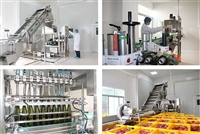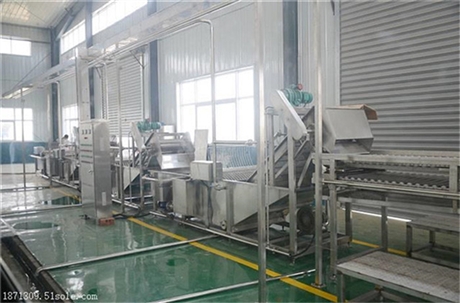

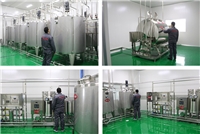


Wenzhou Kexin provides equipment for a fruit deep processing enzyme factory with an annual output of 1000 tons of agricultural and sideline products
Category:
mechanical equipment/Beverage and cold beverage processing machinery/Juice beverage equipment
Model:
kx-2000
Brand:
Wenzhou Kexin
Retail Price
350,000.00USD
重量
kg
- Product Description
-
Description :
Wenzhou Kexin Company is a well-known domestic manufacturer of enzyme beverages, fruit compound beverages, and fruit and vegetable juice beverage production line equipment. Today, we will introduce you to the relevant knowledge of fruit and vegetable juice beverages, enzyme beverages, and fermented fruit beverage production line equipment. The so-called fruit and vegetable juice refers to the fruit and vegetable juice obtained directly from fresh or refrigerated fruits and vegetables (some also use Guangguo) without adding any foreign substances, after cleaning and selection, using physical methods such as pressing, extraction, centrifugation, etc. A juice made by mixing fruit and vegetable juice with water, sugar, acid, or spices is called a fruit and vegetable juice beverage.
One Production process of fruit and vegetable juice beverage technology:
Cloudy fruit and vegetable juice: fruit and vegetable raw materials → cleaning, selection, grading → juice making → separation → sterilization → cooling → blending → homogenization → degassing → sterilization → filling → cloudy fruit and vegetable juice
Clarify fruit and vegetable juice: fruit and vegetable raw materials → cleaning, selection, grading → juice making → separation → sterilization → cooling → centrifugal separation → enzymatic clarification → filtration → blending → degassing → sterilization → filling → clarify fruit and vegetable juice
Concentrated fruit and vegetable juice: fruit and vegetable raw materials → cleaning, selection, grading → juice making → separation → sterilization → cooling → centrifugal separation → concentration → blending → canning → concentrated fruit and vegetable juice


II Detailed process of equipment for fruit and vegetable juice beverage production line:
1. Selection and washing of raw materials: The selection of juice making materials is an important step in the processing of fruit and vegetable juices. The quality requirements for juice making fruits and vegetables are that the raw materials are fresh, free from insect infestation and decay, with good flavor and aroma, stable color, and moderate acidity. Before juicing, in order to prevent pesticide residues and soil dust from being carried into the juice, the fruits and vegetables must be thoroughly washed. For fruits that are pressed with skin, special attention should be paid to the cleaning effect. If necessary, non-toxic surfactants should be used for washing. Some fruits also need to be sterilized with bleach, potassium permanganate, etc. Generally, water spray flushing or running water flushing is used.
2. Color protection: Fruit and vegetable juice beverages undergo various biochemical reactions during their raw material processing, resulting in changes in the color, reduced nutritional value, and decreased or destroyed color, aroma, and taste of the finished product. Therefore, the production of fruit and vegetable juice beverages must be based on theoretical explanations of discoloration mechanisms, and measures must be taken to control or delay discoloration to ensure their commercial value. The discoloration of fruits and vegetables is mainly caused by browning, which can be divided into two categories according to its mechanism: enzymatic browning and non enzymatic browning.
3. Crushing: Different juicing methods require different particle sizes for the pulp, generally between 3-9 mm, with uniform crushing particle size and no particles larger than 10mm. At present, there are mechanical crushing technology, thermal crushing technology (including high-temperature crushing technology and frozen crushing technology), electric material wall separation technology, and ultrasonic crushing technology for crushing technology.
4. Juice extraction: There are usually two methods: cold extraction and hot extraction. The cold pressing method is to extract juice from broken fruit pulp at room temperature, with a simple process and low juice yield. The hot pressing method is to immediately heat treat the crushed raw materials at a temperature of 60-70 ℃, and extract juice under heating conditions to improve the juice yield.
5. Clarification: Refers to the process of precipitating turbid substances or certain components of fruit and vegetable juice that have already been dissolved in the juice through chemical or physicochemical reactions between clarifying agents and certain components of fruit and vegetable juice. After clarification, the fruit and vegetable juice can be easily filtered to achieve satisfactory clarity in the resulting fruit and vegetable juice beverage. The methods of clarification include natural clarification, gelatin tannin method, enzyme clarification, heating coagulation clarification, freezing clarification, etc.
6. Filtration: After clarification, all suspended solids and gelatinous substances in the juice have formed flocculent precipitates, and the upper layer is clear and transparent juice. By filtering, the precipitate and suspended solids can be separated to obtain the desired clarified juice. Filtration is divided into coarse filtration and fine filtration. Coarse filtration, also known as sieve filtration, is carried out after extracting juice, using horizontal screens, rotary screens, cylindrical screens, vibrating screens, and other screens with a diameter of 0.5mm to remove impurities with larger particle sizes. Fine filtration requires the removal of all suspended solids, and the filtration medium should use filter cloth with small and dense pore size, such as canvas, synthetic fiber cloth, stainless steel wire cloth, cotton pulp, diatomaceous earth and other filtration media. Common equipment includes bag filters, fiber filters, plate and frame filter presses, vacuum filters, centrifugal separators, etc.
7. Homogenization: It is a necessary process for producing cloudy fruit and vegetable juice, with the aim of further crushing and dispersing fruit pulp particles of different particle sizes and relative densities in cloudy fruit and vegetable juice, promoting pectin exudation, increasing the affinity between pectin and pectin, preventing pectin stratification and sedimentation, and maintaining the uniformity and stability of fruit and vegetable juice.
8. Degassing: Removing oxygen is the essence of degassing, and commonly used methods include vacuum degassing, nitrogen displacement, enzymatic degassing, and adding antioxidants for degassing.
9. Acid adjustment: In order to achieve the desired flavor and meet the specifications of fruit and vegetable juice, it is necessary to adjust the sugar acid ratio appropriately. The original flavor of fruit and vegetable juice should be maintained, and the adjustment range should not be too large. Generally, a sugar acid ratio of 13:1-15:1 is appropriate. Fruit and vegetable juices can be made separately or mixed with each other. Two or more types of fruit and vegetable juices can be mixed in proportion to complement each other's strengths and weaknesses, resulting in fruit and vegetable juices with different flavors from single fruit and vegetable juices, which have a reinforcing effect. For example, although rose flavored grapes have a good flavor, they are light in color and low in acidity, and can be mixed with dark colored varieties; Wide skinned oranges lack acidity and aroma, and can be added to orange juice.
10. Concentration: The concentration process of fruit and vegetable juice is essentially the process of removing water from it, increasing its soluble content to 65% to 68%, increasing its sugar content and acidity, and extending its storage period. Concentrated fruit and vegetable juice has a small volume, which can save packaging and facilitate transportation. When producing concentrated fruit and vegetable juice, the ideal concentrated fruit and vegetable juice should have recoverability, and the flavor, color, turbidity, and composition of the original fruit and vegetable juice should be maintained during dilution and recovery. The commonly used methods for concentrating fruit and vegetable juice include vacuum concentration, freeze concentration, reverse osmosis and ultrafiltration processes, and drying concentration processes.
11. Sterilization: It is the operation of killing bacteria, fungi, yeast, and inactivating enzyme activity that are contaminated in fruit and vegetable juice. When sterilizing, in order to maintain the flavor of fresh fruit and vegetable juice, the heating time and temperature of the juice should be reduced to a low level to ensure that the loss of effective ingredients in the juice is minimized. Generally, high-temperature short-time sterilization method, also known as instant sterilization method, is used, with the condition of maintaining (93 ± 2) ℃ for 15-30s. In special cases, it can be used for 3-10s above 120 ℃. Fruit and vegetable juice flows through narrow channels between thin plates in a turbulent state, with high heat transfer efficiency and the ability to rise or fall to the specified temperature in a short period of time. By combining thin plates, fruit and vegetable juices can exchange heat with each other, cooling the high-temperature fluid while heating the low-temperature fluid, significantly saving heat and refrigerant.
12. Packaging: The packaging methods for fruit and vegetable juices vary depending on the type of juice and container used, including gravity, vacuum, pressure, and gas information control. The filling of fruit and vegetable juice beverages, except for paper containers, almost all use hot filling. This filling method reduces the volume of vegetable juice due to full filling and cooling, forming a certain degree of vacuum inside the container, which can better maintain the quality of fruit and vegetable juice. Canned fruit and vegetable juice is usually filled using a hot canning machine, and immediately sealed after filling. The center temperature of the can is controlled at 70 ℃. If vacuum sealing is used, the temperature of the fruit and vegetable juice can be slightly lower.
III Glass bottle fermentation production line, fruit enzyme production equipment, wholesale and sales of enzyme processing equipment - Wenzhou Kexin Enzyme Beverage Production Line Process Features:
Wenzhou Kexin Light Industry Machinery Co., Ltd. is one of the earliest manufacturers in China engaged in enzyme production line equipment. It has a market share of over 90% in the enzyme equipment industry and has developed a domestic enzyme fermentation technology patent (MSF composite microbial fermentation technology), which fundamentally solves the problem of ensuring the loss of effective trace elements such as vitamins and amino acids in raw materials such as fruits, vegetables, and plants. During the fermentation process, the pH value changes with stage fermentation, extraction fermentation, deep fermentation, storage period fermentation, and maturation period fermentation. The fermentation effect of bacteria also undergoes a series of changes to complete enzyme decomposition, biochemical synthesis, and immobilization. The active unit of enzymes? Only by effectively utilizing 6 million U can unique small molecule separation technology be adopted! And it is recommended to adopt pharmaceutical grade production technology and quality management system! Strictly control the quality of raw materials, personnel, equipment, production process, packaging and transportation in all aspects! And meet the requirements of hygiene quality standards The core technology of enzymes is the fermentation strain, which is produced on the Japanese enzyme technology platform. It undergoes completely natural fermentation and pure brewing.
Enzymes are carefully selected from over a hundred natural, pollution-free, pesticide free fresh fruits, vegetables, wild vegetables, mushrooms, and other raw materials. After strict selection and washing, advanced high-tech biological extraction technology is used to press them in a scientific ratio. The temperature controlled fermentation process is applied and stored in a specially designed sanitary storage tank, sealed and fermented for more than 180 days. Then, the fermented enzyme solution is extracted and mixed with probiotic groups for secondary fermentation. After two fermentations, it is rich in more nutrients and easier for the human body to absorb. Due to the fact that the temperature throughout the entire production process is controlled below 40 ℃ for natural fermentation and the boiling process is very slow, the enzyme production cycle must exceed one year before it can be filled and packaged.
4quality assurance:
1. Our company guarantees that the goods provided are brand new, unused, manufactured using design and suitable materials, and meet the quality, specifications, and performance requirements specified in the technical contract in all aspects;
2. Our company guarantees that the production line, after being correctly guided, installed, and debugged, will operate within 3 days of feeding the entire system,
Ensure that the equipment meets all technical performance indicators of the product;
3. Our company guarantees that during the quality assurance period specified in the contract, we will provide design, process, manufacturing, and safety services
Responsible for any defects, malfunctions, and damages in the installation, debugging, or materials of the production line caused by the seller's responsibility;
4. The equipment quality assurance period is 24 months after the acceptance of the production line. If during the warranty period, it is found that the quality or specifications of the equipment do not comply with the contract provisions, or if it is proven that the equipment is defective (including potential defects or the use of unqualified materials, etc.), the buyer has the right to claim compensation from the seller during the product warranty period based on the inspection certificate issued by the statutory department;
5. Our company guarantees the mechanical performance of the supplied equipment, the quality of the products, and the consumption indicators of the products.
FiveEquipment Warranty:
1. After equipment acceptance, a 24 month warranty is provided, and the control system provides a 12-month warranty; During the warranty period, our company will provide users with free spare parts and timely and effective services;
2. If the equipment malfunctions, it needs to be repaired on site. Our company guarantees that the repair personnel will arrive at the customer's site within 48 hours to help the customer troubleshoot in a timely manner (except for force majeure);
3. After the warranty period, our company will provide customers with a wide range of discounted technical support, sufficient and adequate spare parts supply, and other after-sales services for life;
4. Our company provides free on-site comprehensive services to users once or twice a year, and the time can be determined according to customer needs.


VIWenzhou Kexin Company can undertake the following project engineering:
1. Bucket water production line (3 gallons+5 gallons)
2. Small bottle water production line (500ml-1500ml)
3. Juice beverage production line (various juices, vegetable juices, bee products, vitamin drinks, functional drinks, etc. 500ml-2000ml)
4. Fruit beverage production line (500ml-2000ml of pellet containing beverages such as freshly squeezed fruit juice and vegetable juice)
5. Carbonated beverage production line (500ml-2000ml carbonated beverages such as soda, Sprite, Coca Cola, fruit flavored soda, etc.)
6. Pop up drink production line (Babao Congee, almond juice, six walnuts and other non aerated pop up drinks+aerated drinks such as soda, Sprite and Coca Cola 210ml-350ml)
7. Red wine production line (750ml-1500ml for wine, champagne, etc.)
8. Baijiu production line (Baijiu, rice wine, rice wine, etc. 100ml-500ml)
At the same time, Kexin Company designs, develops, and modifies various packaging machinery according to user needs. Our service focuses on tracking services to ensure customer interests. Over the years, our products have won the favor of more than 4000 customers worldwide through excellent quality and service, and are exported to various parts of the world.
AfterSalesService :
Key words:- Fermented fruit juice beverage equipment
More Products