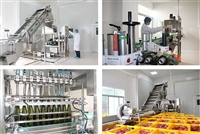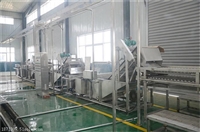
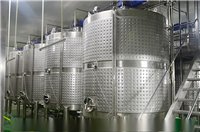


200 tons of complete citrus fruit wine processing equipment, annual Yangmei wine and strawberry wine production line
Category:
Food and Beverage/Food and beverage processing equipment/Beverage production equipment
Model:
kx-2000
Brand:
Wenzhou Kexin
model:
kx-2000
Processing & Customization:
yes
power:
two hundred
power supply voltage:
three hundred and eighty
Applicable bottle height:
five hundred
Applicable bottleneck:
four hundred and fifty
Filling volume:
five hundred
Filling accuracy:
ninety-nine
Overall dimensions:
1700x1300x2100
Place of Origin:
Wenzhou
Retail Price
259,999.00USD
重量
kg
- Product Description
-
model kx-2000
Processing & Customization yes
power two hundred
power supply voltage three hundred and eighty
Applicable bottle height five hundred
Applicable bottleneck four hundred and fifty
Filling volume five hundred
Filling accuracy ninety-nine
Overall dimensions 1700x1300x2100
Place of Origin Wenzhou
Description :
One Definition of fruit deep processed fruit wine:
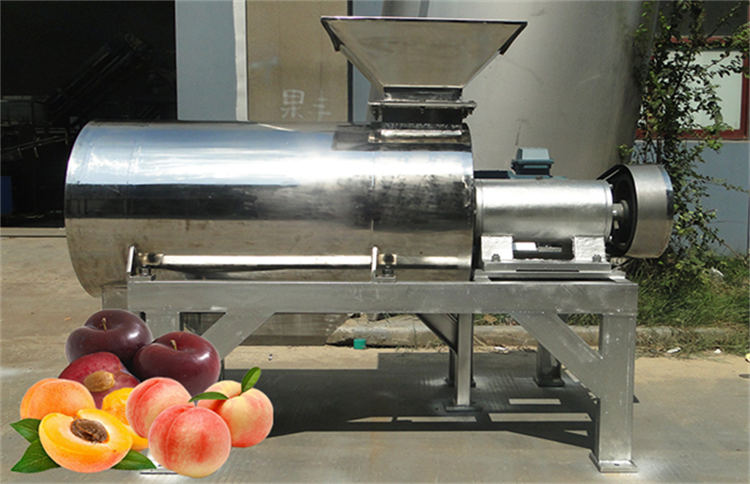
Fruit wine is a type of alcohol made by fermenting the sugar content of fruits themselves with yeast, which contains the flavor of fruits and alcohol. Therefore, folk families often brew some fruit wine to drink. Such as plum wine, grape wine, bayberry wine, peach wine, and so on. Because these fruits have some yeast on their skin and some sucrose added, they can still have some fermentation without the need for additional yeast. However, traditional folk methods of making wine are often time-consuming and prone to contamination. So adding some active yeast is an ideal method for quickly brewing fruit wine.
II Fruits suitable for making fruit wine:
1. Hawthorn wine: Hawthorn, also known as red fruit, has a bright color, refreshing acidity, rich and long-lasting taste, and prominent flavor after brewing.
2. Apple cider: It is a type of liquor made from various varieties of apples such as Guoguang, red banana, yellow banana, and Hongyu. The wine is amber in color and has an apple aroma.
3. Citrus wine: This type of wine is made from citrus fruits and is mainly produced in southern provinces.
4. Berry wine: There are many types of berries in China, including varieties and cultivated varieties, with bright colors and full juice. Therefore, the brewed wine has a bright color and unique rich aroma.
5. Yangmei liquor: Yangmei is a specialty fruit south of the Yangtze River in China, with cultivation and varieties.

III Classification of fermented fruit wine production lines:
1. According to different brewing methods and product characteristics, it can be divided into several types such as fermented fruit wine, distilled fruit wine, and formulated fruit wine. Fermented fruit wine is made by fermenting and aging fruit juice with alcohol. It does not require distillation or saccharification of the raw materials before fermentation, and its alcohol content is generally between 8-20 degrees. Distilled fruit wine, also known as fruit Baijiu, is the wine obtained by distilling the fruit after alcoholic fermentation, also known as brandy. Distilled fruit wine has a high alcohol content, usually above 40 degrees. Fruit wine, also known as fruit wine, is made by blending fruit juice with alcohol, such as hawthorn wine, osmanthus wine, cherry wine, etc. Cocktails are made by mixing various colored fruit wines in proportion.
2. According to the fruit ingredients, there are grape wine, apple wine, hawthorn wine, and bayberry wine.
3. According to the color of the wine, there are red wine, white wine, ros é wine, etc.
4. Classify dry wine (sugar content 0-4g/L), semi dry wine (sugar content 4-12 g/L), semi sweet wine (sugar content 12-50 g/L), and sweet wine (sugar content greater than 50 g/L) according to their sugar content.
5. Classify calm wine, sparkling wine, and aerated sparkling wine based on their carbon dioxide content.

4 The complete automatic production process of 1000 tons of fermented fruit wine:
Fruit selection, crushing, ingredient adjustment, pre fermentation, extrusion separation, post fermentation, barrel replacement, sealing and aging, blending, bottling, sterilization, quality inspection and packaging.
1. Choose the fruit. Good wine making ingredients should have a high sugar content, a certain acidity, bright color, and aromatic fruit flavor. Alcohol fermentation can generate alcohol from sugar. The higher the sugar content, the more abundant the alcohol produced, and the better the quality of fruit wine; Acid is beneficial for yeast reproduction during fermentation, as it can dissolve pigments and enhance the color of the wine; The brewed fruit wine is rich in aroma and refreshing due to the ester compounds generated by acid and ethanol. The raw materials should be selected with good maturity and no moldy fruits.
2. Broken. Due to the fact that yeast that can cause fermentation mostly adheres to the outer surface of the fruit, it is necessary to crush the fruit before the yeast can fully mix with the flesh and fruit residue, thereby acting on the sugar in the fruit and producing alcohol. The crushing method often uses a crusher, and the crushed fruit pulp contains juice, pulp, seeds, seed coat, etc. It is generally required to remove the fruit stem.
3. Composition adjustment. First, adjust the sugar. Ordinary fruit wine contains approximately 10-16 degrees of alcohol, and if it is below 10 degrees, it is difficult to store. Therefore, adding sugar can increase the alcohol production to meet the alcohol content requirements of fruit wine. Sugar is usually added using granulated sugar, and it should be done in stages during the fermentation process. After each addition, the total sugar content should be controlled at 14% to 16% to avoid inhibiting yeast activity and affecting the fermentation process. Next is acid adjustment. Due to the impact of acid content on fermentation process and wine preservation, necessary adjustments should be made to the acid content. Generally, each liter of fruit pulp contains 8-12 grams of acid, which is beneficial for yeast reproduction and has a certain inhibitory effect on the growth of harmful microorganisms. If the acidity is too high, sugar can be added to reduce the acidity, or water can be added to dilute the acidity in the fruit pulp. Different acidity fruit pulp can also be mixed with each other to achieve moderate acidity, and then sulfur dioxide can be added. This can kill or inhibit the growth of harmful microorganisms, with a dosage of 40-60mg of sulfur dioxide per liter.
4. Main fermentation (pre fermentation). Place the adjusted fruit pulp into the fermentation tank (or barrel), inoculate 50-100 grams of yeast per liter of raw material, and add yeast nutritional powder at a rate of 0.4% -0.5%. Within 8-12 hours after inoculation, stir thoroughly to ensure even distribution of yeast in the raw material. After inoculation with yeast, gradually raise the temperature to 23 ℃, 27 ℃, and 30 ℃. After the formation of the cap, press the cap down and stir 2-4 times a day for 10-15 minutes each time until fermentation is complete. The alcohol fermentation period is 6-14 days, and the suitable temperature for fermentation is between 23 ℃ and 30 ℃, with a maximum temperature of 36 ℃. During this period, due to the action of yeast, sugar is converted into alcohol and carbon dioxide, while the liquid temperature gradually rises and a boiling sound like water can be heard, forming a "wine cap". When the "wine cap" sinks, most of the sugar is converted into alcohol. Meanwhile, the temperature should be measured three times a day, and if it exceeds 36 ℃, cold air should be introduced to cool it down; When the temperature drops below 18 ℃, hot water or steam should be introduced to raise the temperature. There should be a large amount of air in the middle for yeast reproduction, so when yeast growth is not vigorous, the fruit pulp can be released and then introduced to release carbon dioxide and increase oxygen in the liquid.
5. Squeeze separation. When the residual sugar content in the fruit pulp to be fermented drops to 1%, the fermentation should be immediately ended and the pulp should be removed from the barrel to prevent excessive leakage of harmful substances from the residue, which may affect the quality of the wine. If the floating slag is found to be damaged, moldy, and acidic, it should be removed and thrown away first, and then the liquor should be released. The wine that flows out without applying pressure by removing the floating slag in this way is called self flowing wine, which can be mixed with the original wine; The liquor squeezed out after pressurization is called pressed liquor, and the residue can also be distilled to make liquor.

6. Post fermentation. Put the new wine into a storage bucket and seal it with a wooden lid. Use a rubber stopper in the middle to seal it tightly, and then install a fermentation plug to release the generated carbon dioxide from the fermentation plug. After about 2-3 weeks, the release of carbon dioxide stops. Remove the fermentation plug. When the wine is sour but not sweet, with a slight carbon dioxide and alcohol flavor, and presents the unique color and aroma of the wine, it indicates that the post fermentation has ended. If the alcohol content of the fruit wine does not reach 15 degrees, adjust it to 15 degrees with deodorized wine. Afterwards, fill the wine barrel with the same type of wine, and then tighten and seal the wooden cold alarm gauze.
7. Aging. Newly brewed wine is cloudy, spicy, and not suitable for drinking. It must undergo a period of storage, which is called aging. Generally, it takes 6-18 months for yeast and sediment to gradually settle at the bottom of the tank during storage. These impurities can be removed by changing the tank in a timely manner. Start changing the bucket once a month, after changing it twice, change it every three months, and then change it once every six months or in spring, summer, and autumn.
8. Clarify. Although the aged wine has undergone multiple barrel changes, it is inevitable that there will still be suspended turbidity, so it must be clarified. There are two clarification methods: adding glue and filtering. Adding gel, which utilizes the interaction between proteins and tannins to precipitate. Gelatin, fish gelatin, protein, and some adsorbent substances (such as kaolin) are commonly used for adding glue. Before applying glue, a small test must be conducted to determine the amount of glue to be applied. Generally, 2-3 grams of protein and 4-6 grams of tannins are added to every 100 liters of fruit wine. 10-15 grams of edible gelatin (dissolved in cold water) are added to every 100 liters of fruit wine, and tannins are added in a ratio of gelatin to tannins of 1:0.8. After standing for 2-3 weeks, the mixture is filtered.
9. Cold and hot treatment. To accelerate fruit ripening, cold treatment, heat treatment, or cold hot interaction treatment can be used. Freezing treatment can precipitate tartaric acid salts in wine, improve its stability, and enhance its flavor. The freezing temperature should be controlled for 3-5 days under the condition that the wine does not freeze. Heat treatment can accelerate esterification and oxidation reactions, improve the quality and flavor of wine, with a temperature of 50-60 ℃ and a duration of about 25 days. During the cold hot interaction treatment, the method of first heating and then cooling is generally used. The tartaric acid in the wine is first reacted with ethanol to form an ester, and then frozen to remove precipitation. Therefore, the wine has a good flavor, high clarity, and high stability.
10. Blending, bottling, and sterilization of finished wine. By evaluating the wine and analyzing its chemical composition, determine whether it needs to be blended and formulate a blending plan. The blending content includes alcohol content, acidity, color matching, aroma enhancement, etc. If the alcohol concentration of the original liquor is lower than the target, it can be paired with fruit distilled liquor or edible alcohol.
11. After blending the new wine, it is bottled. Before bottling, it is filtered again and its bottling maturity is measured. According to experiments, fruit wine can be stored for a long time without spoilage if it has more than 80 preservation units. 1% sugar is one preservation unit, and 1% alcohol is six preservation units. If a certain wine contains 11% alcohol and 20% sugar, it has 86 storage units and can be stored without sterilization. Fruit wine without less than 80 preservation units must be bottled at 60. Sterilize at 70cc temperature for 10-15 minutes.

Five Wenzhou Kexin's cooperation mode and after-sales service with customers:
1. After signing the contract, 30% of the advance payment shall be made as a deposit.
2. Pay 65% of the payment before picking up the goods.
3. After the full line debugging is qualified, the remaining payment for the goods shall be made.
4. Delivery shall be made within 30 working days after the deposit is received upon signing the contract.
5. After the equipment is delivered from the supplier to the purchaser, the purchaser shall organize personnel to move the equipment into place according to the requirements of the supplier's technical personnel, and the connection between equipment shall be the responsibility of the supplier's debugging personnel. The external water, electricity, and gas supply of the equipment shall be the responsibility of the purchaser, with the assistance of the supplier's debugging personnel.
After the installation of all equipment is completed, the supplier's debugging personnel are responsible for the full line debugging and qualification.
7. At the beginning of equipment installation, the supplier shall train one specialized maintenance electrician and one fitter for the purchaser. The training shall end after the equipment is debugged and accepted.
After the equipment debugging is qualified and accepted, the supplier shall provide a one-year warranty for the quality of the equipment. During the warranty period, if the equipment malfunctions due to quality issues, the supplier is responsible for free maintenance. Due to equipment malfunctions caused by the demand side, the supplier can provide maintenance services, and the cost will be borne by the demand side.
During the operation of the equipment, the equipment operator must strictly follow the instructions in the equipment manual for safe operation and maintenance.

VI Wenzhou Kexin Company's Recent Customer Service Engineering Case Exhibition:
Sino Korean joint venture Jiaweiduo Beverage Co., Ltd. provides the overall engineering project for the production line of vitamin functional beverages and corn juice beverages;
Anhui Ningguo Zhanshi Mountain Walnut Dew Beverage Complete Production Equipment;
Hubei Changyang Ge Mei Biotechnology Co., Ltd. has a complete set of production equipment for Ge Gen beverage;
The complete production line for fruit and vegetable juice and the complete set of bottled purified water in the laboratory of Zhengzhou University of Light Industry;
Chongqing Xiucang Ecological Agriculture Development Co., Ltd. has a complete set of production equipment for honeysuckle beverages;
Beijing Delan Hechuang Technology Co., Ltd. provides a complete set of seasoning equipment;
Shandong Weirong Food Co., Ltd. Walnut Milk Beverage Complete Production Equipment;
Jiyuan Jishuiyuan Beverage Co., Ltd. has a complete set of production equipment for large barrel water and bottled water;
Shaanxi Baoerkang Dairy Co., Ltd. daily production of 100T liquid milk turnkey project;
Zhengzhou Natural Food and Dairy Co., Ltd. Fruit Juice Beverage and Vinegar Beverage Complete Equipment;
Xuchang Yanling Shuizhilang Beverage Co., Ltd. has a complete set of production equipment for purified water and soda water;
Cao County Lu Niu Dairy Co., Ltd. provides dairy and beverage equipment;
Henan Kaxiu Food Co., Ltd. Plant Protein Beverage Three Line Integrated Project;
Henan Dingzun Beverage Co., Ltd. has a complete set of production equipment for jujube juice beverages;
Suzhou Nanxi Mountain Beverage Co., Ltd. provides tea beverage and carbonated beverage production lines;

Jinluyuan China Biotechnology Co., Ltd. provides a complete juice production line;
Xiamen Fengtai Trading Co., Ltd. provides juice pretreatment equipment;
Linying Nanjie Village Group Beverage Co., Ltd. provides a complete set of soda water equipment;
Beijing Jiaruixiang Technology Development Co., Ltd. provides juice supporting equipment;
The complete set of equipment for the juice ingredient system of Sanmenxia Hubin Juice Beverage Co., Ltd;
Suiping Tianzhong Baishile Beverage Co., Ltd. has a complete set of production equipment for apple cider vinegar beverages;
Production equipment for peach juice beverage ingredient system of Xixia Rongyuan Food Co., Ltd;
Xinxiang Tianyuan Beverage and Food Factory's complete set of equipment for juice drinks and vinegar drinks;
Henan Tianrun Zhenlu Beverage Co., Ltd. protein beverage overall production equipment;
Zhengzhou Xinlv Food Co., Ltd. provides a complete juice production line;
Luohe Yongli Food Co., Ltd. cold tea beverage production equipment;
Henan Kangran Food Co., Ltd. Fruit Juice Complete Production Equipment;
The complete set of production equipment for the ingredient system of Luohe Huahua Niu Dairy Co., Ltd;
Fujian Ningde Gehongshan Food Co., Ltd. has a complete set of equipment for producing purified water;
Henan Zhongwan Agriculture provides a complete set of fruit enzyme beverage production equipment;

Gongyi Shanshui Agriculture Development Co., Ltd. provides a complete set of wine production line equipment;
Hubei Huasuandou Biotechnology Co., Ltd. provides a complete set of enzyme beverage production line equipment;
Guizhou Gufangtang Biotechnology Co., Ltd. provides a complete set of yellow wine production equipment;
Hebei Xiangyao Dairy Co., Ltd. provides a complete set of milk production line equipment;
Shaanxi Baoerkang Dairy Co., Ltd. daily production of 100T liquid milk turnkey project;
Shanxi Mutong Dairy Co., Ltd. provides a complete set of milk production line equipment;
Zhengzhou Fruit and Vegetable Research Institute provides a complete set of fruit wine production line equipment;
Modern Animal Husbandry (Group) Co., Ltd. provides milk filling and sealing equipment;
Mengniu Dairy (Meishan) Co., Ltd. provides a complete set of milk production line equipment;
Shijiazhuang Junlebao Dairy Co., Ltd. provides a complete set of milk production line equipment;
Henan Baole Dairy Co., Ltd. provides a complete set of milk production line equipment;
Henan Health Palace Liquor Industry provides a complete set of yellow wine production equipment;
Chongqing Wofeng Beer Co., Ltd. provides a complete set of beer production line equipment;
Foshan Morteburg Beer Co., Ltd. provides a complete set of beer production line equipment;
Henan University of Science and Technology provides a complete set of juice and fruit wine beverage production line equipment;
Henan Junlai Mushroom provides a complete set of plastic bottled carbonated beverage production line equipment to Agricultural Technology Development Co., Ltd;
Zhengzhou Qiancheng Pomegranate Industry Co., Ltd. provides a complete set of pomegranate fruit wine production line equipment;

AfterSalesService :
Key words:- Complete set of citrus fruit wine processing equipment
More Products