
Small and medium-sized bottled soy milk production equipment will produce 2000 bottles of soy milk and soy milk beverage processing equipment by 2023
Category:
Food and Beverage/Food and beverage processing equipment/Beverage production equipment
Model:
kx-2000
Brand:
Wenzhou Kexin
Retail Price
390,000.00USD
重量
kg
- Product Description
-
Description :
One Soy milk production line process:
Soybean selection → cleaning → soaking → rinsing → slurry grinding → gel grinding → blending → filtration → homogenization → vacuum degassing → ultra-high temperature instantaneous sterilization → aseptic filling → cooling → packing → refrigeration

II Production process of soybean milk liquid milk:
1. Clean and soak. The surface of soybeans often adheres to dust and microorganisms, and must be cleaned before processing. To soften the cell structure, reduce energy consumption and mechanical wear during grinding, improve pulp yield, reduce bean odor, and shorten soaking time, wet soaking should be used. The soaking solution should use baking soda solution. To inactivate lipoxygenase and trypsin inhibitor, the temperature of the solution should be controlled within a range, and the amount of water should be times the mass of soybeans. To reduce the loss of water-soluble solids, soaking time should not be too long. Fortunately, softened soybeans should be rinsed with clean water to reduce the alkalinity of the solution and remove some soybean skins.
2. Grinding process control. Bean odor is an important factor affecting the flavor of soy milk, and its formation is mainly related to the activity of lipoxygenase. In order to prevent the formation of bean odor during the grinding process and improve the solid recovery rate, in addition to minimizing the grinding time, it is more important to use baking soda solution for grinding, with a solution temperature not lower than, and a dosage of times the mass of soybeans.
3. The texture of soy milk. In order to improve the taste and flavor of the product, in addition to removing particles through filtration, it is also necessary to carry out micronization treatment to decompose as much as possible the viscous substances with poor taste such as fruit acids and carbohydrates in soybeans.
4. Degassing. Due to the high protein content of soy milk, it is inevitable to mix it with air and produce some unpleasant odors during the production process, which also has a certain impact on sterilization. Therefore, soy milk should undergo degassing treatment during the production process.
5. Sterilization. The value of soy milk products is around, and under these conditions, thermophilic Bacillus species such as Clostridium difficile and Clostridium difficile are the main microorganisms causing spoilage. Therefore, the sterilization temperature should be maintained during continuous sterilization.
6. Aseptic packaging. After the soft packaging of soy milk is completed, no further sterilization treatment will be carried out. Therefore, when filling, it is necessary to ensure that the packaging materials, packaging equipment, and packaging process are all in a sterile state to ensure that the sterilized soy milk is not contaminated by microorganisms again.

III Aseptic filling system for soy milk:
1. Aseptic filling system. The entire system consists of sterilization equipment and sterile storage tanks, fully automatic liquid filling equipment, and most of the sterile filling room.
2. Sterilization equipment. Choose an ultra-high temperature instantaneous sterilizer with a sterilization temperature greater than and a material outlet temperature less than.
3. Aseptic storage tank. The main function of this cylinder is to store sterile soy milk to ensure the continuous operation of the filling machine. Due to the sterilization of the sterile system and the post cooling of soy milk being carried out in this cylinder, it is equipped with a steam pipe that runs directly into the cylinder and a jacket that can be cooled by water.
4. Packaging equipment. Choose a liquid packaging machine with a quantitative pump, equipped with multiple sets of high-power ultraviolet lamps to ensure thorough sterilization of packaging materials.
5. Aseptic filling room drainage system.
6. Aseptic filling room. The sterile filling room is designed in a fully enclosed "back" shape, equipped with multiple sets of ultraviolet lamps for indoor air sterilization. The air ultrafiltration device in the filling room is ventilated and maintains positive pressure. The indoor air is discharged from the finished soy milk outlet into the cooling room with ultraviolet lamps. As the outlet is surrounded by a positive pressure atmosphere of sterile air, it can effectively prevent external microorganisms from entering the sterile filling room. In order to maintain the dryness of the sterile filling room and facilitate the discharge of cleaning solution and sterilization steam from the sterile system equipment, a drainage system with disinfectant should be designed in the filling room, which is connected to the discharge port of the filling machine through a flexible joint for the removal of cleaning solution and sterilization steam.
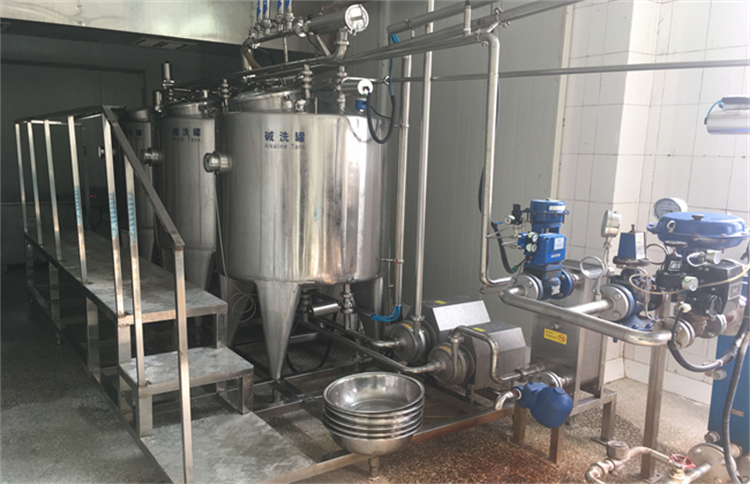
4 Common production processes for milk and yogurt production lines:
1. Pasteurized milk: raw materials (fresh milk) → acceptance → milk purification → storage and refrigeration → homogenization → pasteurization → cooling → filling → inspection → low-temperature storage → delivery
2. Sterilized milk: raw materials (fresh milk) → acceptance → clean milk → refrigerated storage → homogenization → pasteurization (pre sterilization) → cooling → aseptic filling → inspection → low-temperature storage → delivery
3. Yogurt: raw materials (fresh milk) → acceptance (antibiotic testing) → milk purification → storage and refrigeration → homogenization → pasteurization → cooling → inoculation → insulation fermentation → filling → inspection → low-temperature storage → delivery
4. Milk powder: raw materials (fresh milk) → purified milk → warehousing and refrigeration → ingredients mixing → pasteurization → vacuum concentration → spray drying → packaging → inspection → storage → delivery

Five Precautions for the production of soy milk and dairy products:
1. Milk and dairy products are rich in protein, fat, carbohydrates, and various vitamins, making them nutritious foods and excellent bacterial culture media. Therefore, it is necessary to attach great importance to hygiene and prevent microbial contamination during the processing of dairy products.
Generally, sterilization and fermentation processes are defined as critical processes. Among them, some enterprises use it as a special process control, focusing on controlling sterilization (fermentation) temperature and time.
3. Common equipment for liquid dairy products: milk storage tanks, milk purification equipment, refrigeration equipment, homogenization equipment, pasteurization equipment, aseptic filling equipment, cleaning equipment, and insulation transportation vehicles.
After the raw milk is accepted as qualified, pre-treatment processes including milk purification, cooling, and storage should be carried out. After filtration and centrifugal separation, the purified milk should be quickly cooled to 2-3 ℃ and stored for later use.
The purpose of standardization is to ensure that the quality of products meets standard requirements and does not fluctuate with different sources of raw materials.
The main purpose of homogenization of pasteurized milk is to use the powerful mechanical operation of the homogenizer to break down the fat balls in the milk into small particles, prevent fat aggregation and floating, ensure the sensory quality of the product's uniformity, delicacy, and whiteness, and further improve the digestion and absorption of milk.
The purpose of pasteurization is to kill pathogenic bacteria, especially Mycobacterium tuberculosis, while minimizing the number of bacteria as much as possible.
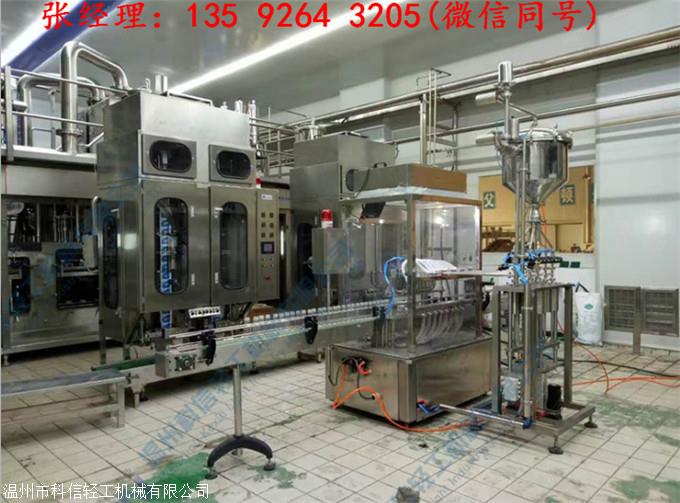
VI Equipment composition of small and medium-sized full-automatic soymilk soybean milk production line:
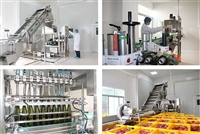
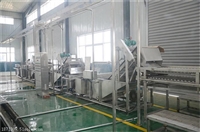
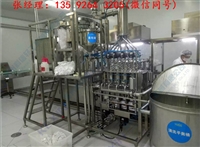
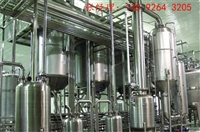
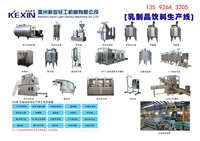
The soy milk pretreatment production line consists of a sandwich pot (for soaking soybeans), grinding wheel mill, colloid mill, sugar pot, mixing tank, separator, dual filtration equipment, beverage pump, temporary storage tank, vacuum deaerator, homogenizer, ultra-high temperature instantaneous sterilizer, cold and hot cylinder and other single machine equipment.
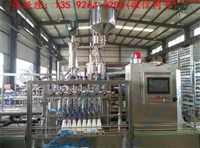
The PET plastic bottle soy milk filling production line consists of automatic bottle blowing machine, automatic bottle sorting machine, empty bottle distribution system, soy milk negative pressure three in one filling machine, automatic capping machine, bottle cap disinfection equipment, finished product conveying system, lamp inspection equipment, sterilization pot, blow dryer, inkjet printer, labeling machine or labeling machine, PE film heat shrink packaging machine or carton packaging machine, robot palletizing machine, winding machine. Our company has formed a complete series of product lines, with a supply capacity ranging from 2000 bottles/hour to 36000 bottles/hour.
The composition of the glass bottle soy milk filling production line includes: glass bottle automatic washing machine, chain plate conveyor system, glass bottle soy milk three in one filling machine, lamp inspection equipment, sterilization pot, blow dryer, inkjet printer, labeling machine, and packaging equipment. Our company has formed a complete series of product lines, with a supply capacity ranging from 2000 bottles/hour to 36000 bottles/hour.
The production line for filling canned soy milk consists of a fully automatic can unloading machine, a can punching machine, a filling and sealing machine, a conveying system, a sterilization pot, a storage tank platform, a drying machine, a liquid level detection machine, a coding machine, a shrink film packaging machine, or a cardboard box packaging machine. Our company has formed a complete series of product lines, with a supply capacity ranging from 1000 cans/hour to 30000 cans/hour.

7 Business process:
1. Preliminary evaluation: Conduct a preliminary evaluation of the project based on your production goals, product characteristics, and marketing plan.
2. Parameter design: Analyze and design the technical parameters of your engineering project, including process, mechanical, and electrical control design.
3. Plan determination: Based on your factory layout, discuss and draw a production line layout plan to establish the final project implementation plan.
4. Manufacturing monitoring: Develop and monitor the manufacturing progress of your project until the overall project passes performance testing and acceptance.
5. Personnel training: Improve the technical level of your production engineering personnel and train them on the operation skills of the entire line and related equipment.
6. After sales service: Kexin adheres to the service concept of putting customer interests at the center, providing you with fast and high-speed engineering and after-sales service.
8 6 reasons to choose Kexin:
1. Kexin Company has sales, engineering, and after-sales departments, all of which are dedicated to serving you;
What we are fighting for is not price, but quality and friendly service;
3. Our salespeople and engineers will patiently listen to your requirements and desired results, and tailor materials for you;
4. Our after-sales colleagues will serve you from your order placement to actual production;
20 years of industry experience,;
6. On site visits to factories and offices.

Nine Projects that Wenzhou Kexin Light Industry Machinery Co., Ltd. can undertake:
1. Complete production line for hot filled beverages ranging from 2000 bottles to 36000 bottles per hour
2. Production line for 2000 bottles per hour -36000 bottles of mineral water and purified water
3. 2000 bottles per hour -36000 bottles of carbonated beverage production line
4. Production line for drinking water in 3-gallon and 5-gallon barrels, ranging from 100 to 1500 barrels per hour
5. 2000 cans per hour -36000 cans of canned beverage production line (plant protein beverage, tea beverage, functional health beverage, canned beer production line)
6. Production line for 2000-36000 bottles of dairy beverages per hour (milk production line, yogurt production line, fresh milk production line, pasteurized milk production line)
7. 2000 bottles per hour -36000 bottles carbonated beverage production line (glass bottle carbonated beverage production line, PET carbonated beverage production line, soda can carbonated beverage production line)
8. 2000 bottles per hour -36000 bottles of alcohol production line (beer production line (glass bottles, cans), Baijiu production line, rice wine production line, medicinal wine production line, wine production line, health wine production line, etc.)
9. Various water treatment equipment RO reverse osmosis UF ultrafiltration equipment
10. Various beverage equipment such as mixing tanks, hot and cold tanks, sandwich pots, fermentation tanks, mixing tanks, bottle filling and sealing machines, heat shrink packaging machines, labeling machines, sterilization pots, sterilization machines, etc.
11. Plate and tube UHT devices, CIP systems.
12. Turnkey project for the entire factory.

AfterSalesService :
Key words:- Small and medium-sized bottled soy milk production equipment
More Products