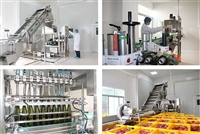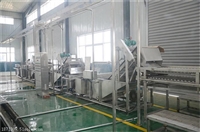
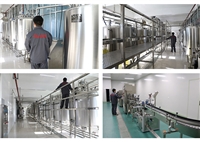
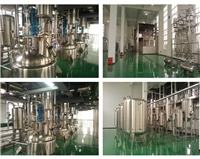
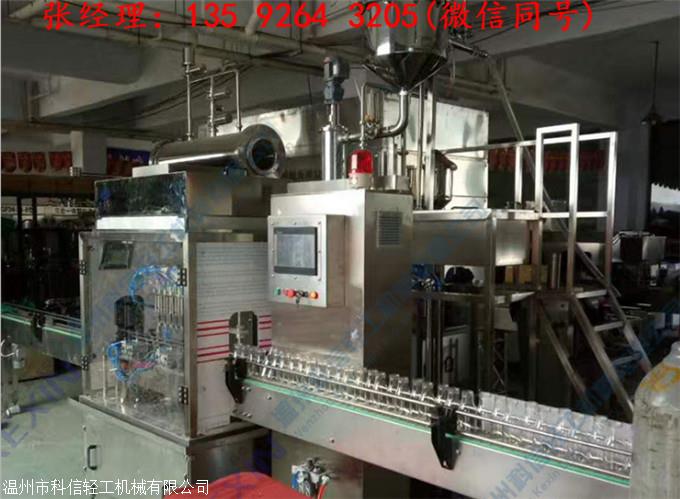
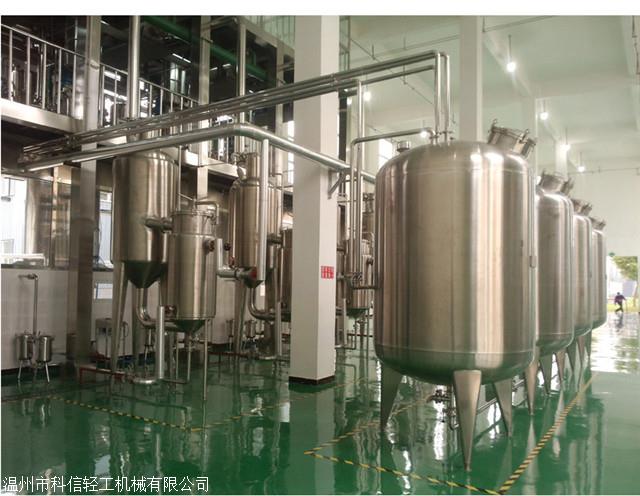
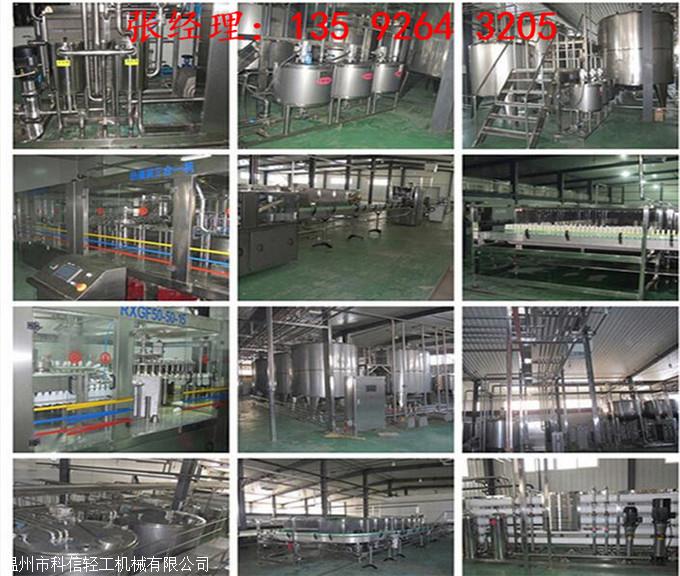
Soy milk beverage filling production line equipment 2023 complete set of soy milk beverage processing equipment
Category:
Food and Beverage/Food and beverage processing equipment/Beverage production equipment
Model:
kx-2000
Brand:
Wenzhou Kexin
Retail Price
420,000.00USD
重量
kg
- Product Description
-
Description :
One The main nutritional components of soy milk are:
1. Plant protein: Soy protein in soy milk is a plant protein that provides 9 amino acids that the human body cannot synthesize on its own and must absorb from the diet. Soy protein can also increase the burning rate of fat, promote the excretion of excess cholesterol, keep cholesterol levels in the blood low, thereby softening blood vessels, stabilizing blood pressure, and preventing obesity.
2. Saponin: It has strong antioxidant properties, can inhibit the formation of pigmentation, promote fat metabolism, and prevent fat accumulation.
3. Linoleic acid and alpha linolenic acid: Linoleic acid in soy milk can reduce cholesterol and neutral fat levels in the blood, while alpha linolenic acid can improve learning ability and make the blood cleaner.
4. Oligosaccharides: They can directly reach the intestine, promote the proliferation of bacteria such as lactic acid bacteria, improve intestinal metabolism, prevent, and also help prevent food poisoning and colorectal cancer.
5. Soy lecithin: Phospholipids are very important for the normal activity of cells. They can promote metabolism, prevent cell aging, keep the body young, and prevent pigmentation and dullness.

II The production process of soy milk:
Soybeans → Removing impurities (peeling) → Soaking → Hot blanching and rinsing → Hot grinding and extraction → Separation → Heat treatment and deodorization → High pressure homogenization → Packaging → Sterilization → Finished product.
III The difference between soybean milk and soymilk:
In terms of production method, soybean milk is raw milk, which can be eaten after being grinded, filtered, boiled and sweetened, such as soybean milk machine at home and family mart's freshly ground soybean milk; After soy milk is ground, it needs to be finely ground (using a colloid mill) and added with various auxiliary materials, additives, vitamins, trace elements, vegetable oil, sugar, milk powder, etc. (saccharin, pigments, preservatives are not allowed);
From the perspective of shelf life, soymilk belongs to beverage series, while soybean milk belongs to food series, which means that from the perspective of shelf life, the former is longer than the latter, and the shelf life of soymilk can reach more than half a year, while the shelf life of soybean milk is generally only about 24 hours under normal temperature conditions; In terms of human absorption, the plant protein and fat globule particles of soybean milk are large, and the human body can only absorb about 40-50%; The production mechanism of soy milk is based on the functional properties of soy protein and the strong emulsifying ability of phospholipids. Therefore, soy milk needs to be homogenized and emulsified (using a high-pressure homogenizer) or treated with ultrasound to form solid and liquid aggregates of proteins, oils, phospholipids, and various excipients, resulting in extremely fine and uniform solid dispersions and liquid emulsions. They form a uniform emulsion dispersion system in water, with a milk like consistency that can be absorbed by the human body by about 95%; From the perspective of production technology, people who often use freshly ground soybean milk as breakfast may find that hot soybean milk is OK, and if soybean milk is cold, it will have a strong beany smell, but not soymilk. This is because during the grinding process of soybeans, the lipoxygenase under the soybean skin reacts with oils and fats in the presence of air and water to produce ketones, aldehydes, alcohols, and other substances, resulting in a soybean odor. Additionally, when soybean phospholipids are oxidized, lactones, furans, alcohols, aldehydes, and other harmful odors are produced; In the production process of soymilk, there are processes such as deodorization and deodorization, but there is no such process in the production of soybean milk, so there will be differences;
In addition, soybeans contain many anti nutritional factors, such as trypsin inhibitor, urease, oligosaccharides, estrogen, cyanide compounds, etc. These anti nutritional factors have toxic side effects, which can cause metabolic disorders and inhibit human production and development after consumption. When producing soy milk, using high-temperature and high-pressure sterilization or instant ultra-high temperature sterilization can eliminate the toxic side effects of anti nutritional factors; There is no such process in the production of soybean milk; In terms of taste, soybean milk has a relatively rough taste due to processing, so many people will have a feeling of sand particles in their throats after drinking soybean milk;

4 The production process of soy milk:
1. Remove impurities from soybeans. The moldy and rotten beans, as well as impurities such as stones, in soybeans must be removed to ensure that the beans put into production are pure, fresh, thin skinned, large and plump, clean and free of impurities. Large scale production should have impurity removal equipment, namely impurity removal machines, which remove impurities from soybeans through mechanical screening, and then use lifting machinery or raw material conveyors to transport soybeans to the next process. Soy milk made from peeled soybeans has better color and flavor than soy milk made without peeling. If using the process of soaking and grinding soybeans after peeling, it is required that the moisture content of soybeans be less than 12% to ensure a peeling rate of over 90%. When the moisture content of soybeans exceeds 12%, they should be placed in a drying machine at 105-110 ℃ for drying treatment, and then peeled after cooling. Soybean dehulling can be achieved by using a gear mill to adjust the spacing so that most soybeans can be divided into two pieces and the soybean cotyledons will be crushed to a degree. After dehulling, the soybean skin will be blown out using a blower device based on the difference in gravity between the bean paste and the soybean skin. The soybean skin accounts for about 13% of the weight of soybeans.
2. Soak. Soaking soybeans can soften cellular tissues, facilitating the extraction of active ingredients. The soaking water should be three times the weight of soybean raw materials. The soaking time depends on the water temperature. When the water temperature is below 10 ℃, the soaking time should be controlled between 10-12 hours; When the water temperature is between 10-25 ℃, the soaking time is generally 6-10 hours; Heating the soaking water can also be used to shorten the soaking time, but the water temperature should not exceed 60 ℃. An appropriate amount of NaHCO3 can be added to the soaking water to shorten the soaking time, effectively remove pigments from soybeans, increase the milk whiteness of soy milk, improve homogenization effect, and help remove oligosaccharides and add trypsin inhibitor to passivate and improve soy milk flavor.
3. Hot blanching and rinsing. Use wastewater or steam for blanching to inactivate lipoxygenase and reduce bean odor. The temperature should be controlled at 95-100 ℃ for about 2-3 minutes to ensure protein invariance and improve extraction efficiency.
4. Hot grinding extraction and separation. Hot water above 80 ℃ is used, in which 0.25% NaHCO3 is added, and the amount of water is 8-10 times of the dry weight of soybean. Use a separating mill to grind the slurry and soybean residue separately.
5. Heat treatment and deodorization. Soybean milk is subject to high-temperature sterilization and deodorization machine, and 100~110 ℃ instantaneous sterilization can kill pathogenic bacteria and bacteria, destroy undesirable factors, inactivate lipoxygenase, urease and other components, so as to achieve the effect of removing the fishy smell of soybean milk.
6. High pressure homogenization. Homogenize the material at 80 ℃ and a pressure of 15-23 MPa to ensure a delicate taste of soy milk and improve product stability.
7. Packaging. Boil soybean milk at 80~100 ℃, bottle and cap it, sterilize it at 121 ℃ for 30 minutes, and then cool it to be finished product.

Five Kexin Service:
If you are exploring a new project, Kexin provides you with a comprehensive solution, including equipment configuration, process flow, product formula, workshop layout, on-site installation, etc.
If your project is in progress and lacks on-site installation and commissioning, Kexin has a construction team to carry out commissioning and sanitary welding between equipment and pipelines for you.
3. If there are quality problems with the products you are producing, Kexin provides quality diagnosis, comprehensive diagnosis of equipment configuration, process flow, etc., and provides effective solutions to improve product quality and reduce production costs for you.
VI Business process:
1. Preliminary: Conduct a preliminary project based on your production goals, product characteristics, and marketing plan.
2. Parameter design: Analyze and design the technical parameters of your engineering project, including process, mechanical, and electrical control design.
3. Plan determination: Based on your factory layout, discuss and draw a production line layout plan to establish the final project implementation plan.
4. Manufacturing monitoring: Develop and monitor the manufacturing progress of your project until the overall project passes performance testing and acceptance.
5. Personnel training: Improve the technical level of your production engineering personnel and train them on the operation skills of the entire line and related equipment.
6. After sales service: Kexin adheres to the service concept of putting customer interests at the center, providing you with fast and high-speed engineering and after-sales service.
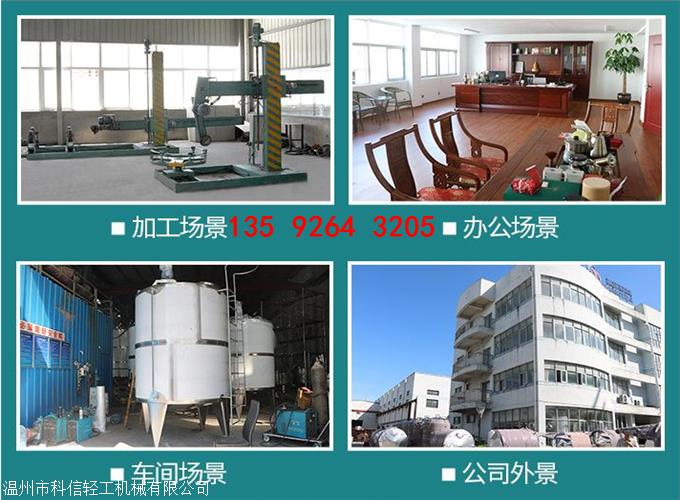
7 6 reasons to choose Kexin:
1. Kexin Company has sales, engineering, and after-sales departments, all of which are dedicated to serving you;
What we are fighting for is not price, but quality and friendly service;
3. Our salespeople and engineers will patiently listen to your requirements and desired results, and tailor materials for you;
4. Our after-sales colleagues will serve you from your order placement to actual production;
20 years of industry experience,;
6. On site visits to factories and offices.
8 Projects that Wenzhou Kexin Light Industry Machinery Co., Ltd. can undertake:
1. Complete production line for hot filled beverages ranging from 2000 bottles to 36000 bottles per hour
2. Production line for 2000 bottles per hour -36000 bottles of mineral water and purified water
3. 2000 bottles per hour -36000 bottles of carbonated beverage production line
4. Production line for drinking water in 3-gallon and 5-gallon barrels, ranging from 100 to 1500 barrels per hour
5. 2000 cans per hour -36000 cans of canned beverage production line (plant protein beverage, tea beverage, functional health beverage, canned beer production line)
6. Production line for 2000-36000 bottles of dairy beverages per hour (milk production line, yogurt production line, fresh milk production line, pasteurized milk production line)
7. 2000 bottles per hour -36000 bottles carbonated beverage production line (glass bottle carbonated beverage production line, PET carbonated beverage production line, soda can carbonated beverage production line)
8. 2000 bottles per hour -36000 bottles of alcohol production line (beer production line (glass bottles, cans), Baijiu production line, rice wine production line, medicinal wine production line, wine production line, health wine production line, etc.)
9. Various water treatment equipment RO reverse osmosis UF ultrafiltration equipment
10. Various beverage equipment such as mixing tanks, hot and cold tanks, sandwich pots, fermentation tanks, mixing tanks, bottle filling and sealing machines, heat shrink packaging machines, labeling machines, sterilization pots, sterilization machines, etc.
11. Plate and tube UHT devices, CIP systems.
12. Turnkey project for the entire factory.
AfterSalesService :
Key words:- Soy milk beverage filling production line equipment
More Products