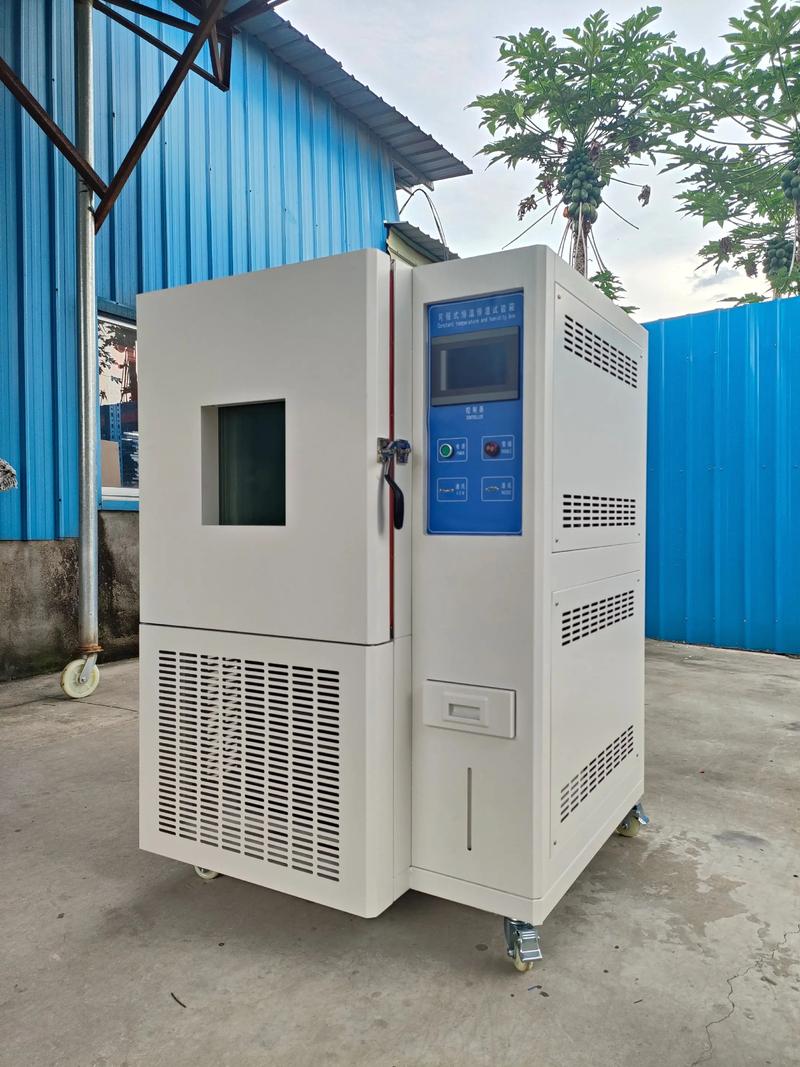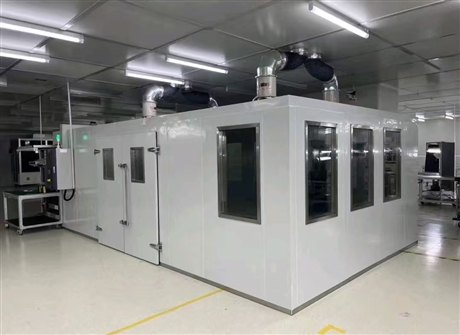

Walk in constant temperature and humidity chamber, large environmental testing chamber that can be operated by people in accordance with GB/T2423 standard
Category:
Instrumentation/Temperature and humidity instruments/Other temperature and humidity instruments
Model:
JX-BRS-4M~36M
Brand:
Juxin Instrument
temperature range:
-70℃~+150℃
humidity range:
20%~98%R.H.
temperature fluctuation:
±0.5℃
Temperature Uniformity:
≤2.0℃
heating rate:
1.0~3.0℃/min
cooling rate:
0.7~1.0℃/min
inner material:
SUS304 stainless steel
Insulation material:
Polyurethane rigid foam+glass fiber
Control method:
Programmable PLC touch screen
execution standard:
GB/T 2423, IEC 60068
Retail Price
10,000,000.00USD
重量
kg
- Product Description
-
temperature range -70℃~+150℃
humidity range 20%~98%R.H.
temperature fluctuation ±0.5℃
Temperature Uniformity ≤2.0℃
heating rate 1.0~3.0℃/min
cooling rate 0.7~1.0℃/min
inner material SUS304 stainless steel
Insulation material Polyurethane rigid foam+glass fiber
Control method Programmable PLC touch screen
execution standard GB/T 2423, IEC 60068
Description :
The walk-in temperature and humidity room is a large volume integrated environmental simulation device designed to meet the long-term environmental reliability testing needs of large products, complete machine components, and batch samples. Unlike traditional small test chambers, the walk-in constant temperature and humidity chamber allows testers to directly enter the cabin for operations, wiring, and status checks, greatly improving testing efficiency and flexibility. This device can accurately simulate various complex temperature and humidity alternating environments, including high temperature, low temperature, constant humidity, and cyclic humidity. It is widely used in quality inspection processes in industries such as electronics, automotive parts, aerospace, and instrumentation, and is a key validation tool to ensure stable operation of products under extreme weather conditions.
In terms of specifications and processes, the walk-in constant temperature and humidity chamber usually adopts modular assembly structure or integral welding structure. The box material is mostly high-quality stainless steel plate or cold-rolled steel plate spray treated. The insulation layer is made of high-density polyurethane foam or rock wool to ensure good insulation performance and sealing. The control system is equipped with a high-precision programmable controller that supports multi-stage program settings. The temperature uniformity and fluctuation are strictly controlled within the industry standard range. The equipment complies with mainstream international and domestic testing standards such as GB/T 2423 and IEC 60068. The sensors use high-precision components such as platinum resistors PT100, and the refrigeration system mostly uses imported compressors to ensure stability and low noise performance under long-term continuous operation, meeting strict laboratory certification requirements.
When selecting a walk-in temperature and humidity room, it is important to consider core indicators such as internal dimensions, temperature range, humidity range, and heating and cooling rate. For large or numerous test samples, a model with sufficient volume and equipped with observation windows, test holes, and internal lighting systems should be selected for real-time monitoring. If the test object generates a large amount of heat, additional heat dissipation devices or increased cooling power are required. Compared with small desktop constant temperature and humidity chambers, the advantage of walk-in constant temperature and humidity chambers is that they can simulate the overall environmental effects in real use scenarios, but they have a large footprint and high energy consumption, making them unsuitable for rapid screening testing in the early stages of small-scale research and development. When purchasing, the cabin size should be reasonably planned based on the maximum external dimensions of the actual sample and future expansion needs, to avoid resource waste or insufficient space.
The installation of a walk-in constant temperature and humidity chamber requires a flat and load-bearing floor, sufficient space for heat dissipation and maintenance around, and a power supply that meets equipment power requirements and is reliably grounded. In daily use, the humidification water circuit should be regularly cleaned to prevent blockage, the sealing of the door seal should be checked to prevent cold leakage, and the temperature and humidity sensors should be calibrated to ensure accurate data. Common faults such as large humidity deviation are often caused by water shortage in the water tank or scaling in the humidifier; Uneven temperature may be related to blocked air ducts or overly dense sample placement. It is recommended to establish regular maintenance records to document the operating status and maintenance content, in order to extend the service life of the equipment. Operators should receive professional training and be familiar with emergency stop and security protection mechanisms to ensure safety and data integrity during long-term unmanned testing.
AfterSalesService :
全程一对一专属对接,实时在线快速响应。故障问题 2 小时提供解决方案,紧急上门需求,省内 24 小时、省外 48 小时安排技术人员上门处理,高效解决设备各类问题,保障生产稳定运行。Key words:
More Products