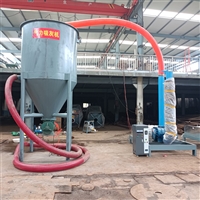

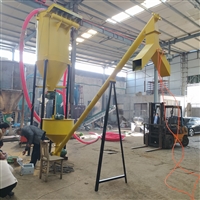
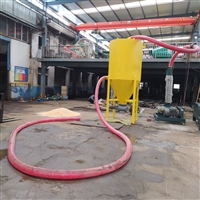

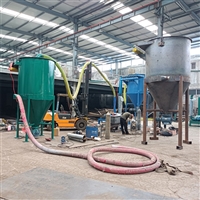

Xinjiang mineral powder pneumatic ash suction machine XWZF railway container cement ash pulse ash suction machine
Category:
mechanical equipment/Conveying equipment/Ash conveyor
Model:
Complete specifications: 125, 150, 175, 200, 250, 300
Brand:
Zhongtian
brand:
Zhongtian
model:
Complete specifications: 125, 150, 175, 200, 250, 300
Item Number:
twenty million two hundred and eleven thousand and two
type:
Pneumatic Conveyor
material:
Carbon steel can be customized
rated power:
11kw
Processing & Customization:
yes
Overall dimensions:
3*1.5*3.7
Product Specifications:
Bag filter
Retail Price
9,800.00USD
重量
kg
- Product Description
-
brand Zhongtian
model Complete specifications: 125, 150, 175, 200, 250, 300
Item Number twenty million two hundred and eleven thousand and two
type Pneumatic Conveyor
material Carbon steel can be customized
rated power 11kw
Processing & Customization yes
Overall dimensions 3*1.5*3.7
Product Specifications Bag filter
Description :
Xinjiang mineral powder pneumatic ash suction machine XWZF railway container cement ash pulse ash suction machine
The main characteristics of pneumatic conveying are:
Pneumatic ash suction machine has a large conveying capacity, long conveying distance, and high conveying speed; It can be loaded in one place and unloaded in multiple places. Pneumatic conveyors can be used for horizontal, inclined, and vertical conveying, and can also form spatial conveying lines, which are generally fixed. Pneumatic conveyors can be used for single conveying, or combined with multiple conveying devices to form a horizontal or inclined conveying system, to meet the needs of different layout forms of work lines. Pneumatic conveyor has good dust prevention effect; Easy to achieve mechanization and automation, can reduce labor intensity, and save manpower; During the transportation process, multiple process operations can be carried out simultaneously, such as mixing, crushing, sorting, drying, and cooling. Pneumatic conveyors have the advantages of preventing materials from getting damp, contaminated, or mixed with debris, and are therefore widely used in industries such as casting, metallurgy, chemical engineering, building materials, and grain processing. The pneumatic conveyor has a movable function, which solves the problem of arbitrary working point and spatial layout that cannot be achieved by traditional material mechanical conveying methods; Especially suitable for long-distance transportation of granular powders. It can be used in various fields such as chemical, power, medicine, building materials, food, etc., and can meet high temperature and special gas requirements.
Pneumatic conveying equipment generally consists of equipment and components such as feeders (such as throat pipes, suction nozzles, transmitters, etc.), conveying pipes, air ducts, separators (commonly used are volumetric and cyclone types), air locks (commonly used are flap type and rotary type, which can be used as both feeders and unloaders), dust collectors, and fans (such as centrifugal fans, Roots blowers, water ring vacuum pumps, air compressors, etc.). The function of the feeder is to feed the material, create a suitable material to gas ratio, and enable the material to start and accelerate. The function of a separator is to separate materials from air and sort them. The function of the air lock is to evenly supply or unload materials while preventing air leakage. The function of a fan is to provide power to the system. High pressure centrifugal fans or water ring vacuum pumps are commonly used in vacuum suction systems; And the compression system requires Roots blower or air compressor.
Instructions for Use
Pneumatic conveying, also known as air flow conveying, is a specific application of fluidization technology that utilizes the energy of air flow to transport granular materials along the direction of air flow in a closed pipeline. The structure of the pneumatic conveying device is simple and easy to operate. It can be used for horizontal, vertical, or inclined conveying. During the conveying process, it can also perform physical operations such as heating, cooling, drying, and air flow classification, as well as certain chemical operations. Materials with high moisture content, adhesive properties, or prone to static electricity during high-speed movement are not suitable for pneumatic conveying.
Purpose/Application Field
Fine chemicals: pigments, dyes, coatings, carbon black, iron oxide, ceramic powder, heavy calcium, light calcium, bentonite, molecular sieves, kaolin, silica gel powder, activated carbon, etc.
Pesticide ores: urea, ammonium chloride, ammonium bicarbonate, baking soda, solid pesticides, tungsten powder, pesticide additives, copper concentrate powder, coal powder, phosphate powder, oxidation, etc.
Building materials: cement, clay, yellow sand, quartz sand, clay powder, silica, limestone powder, dolomite powder, sawdust powder, fiberglass, silica, talc powder, etc.
Food industry: flour, starch, grains, milk powder, food additives, etc.
Uncommon materials can be specially customized, and dust can be separated from particles
The main characteristics of pneumatic conveying are large conveying volume, long conveying distance, and high conveying speed; It can be loaded in one place and unloaded in multiple places.
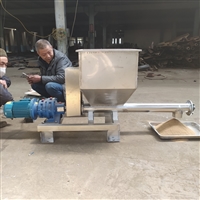
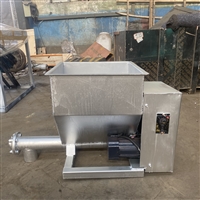
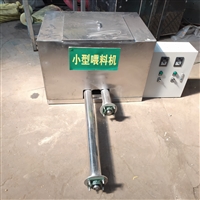
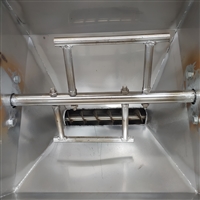
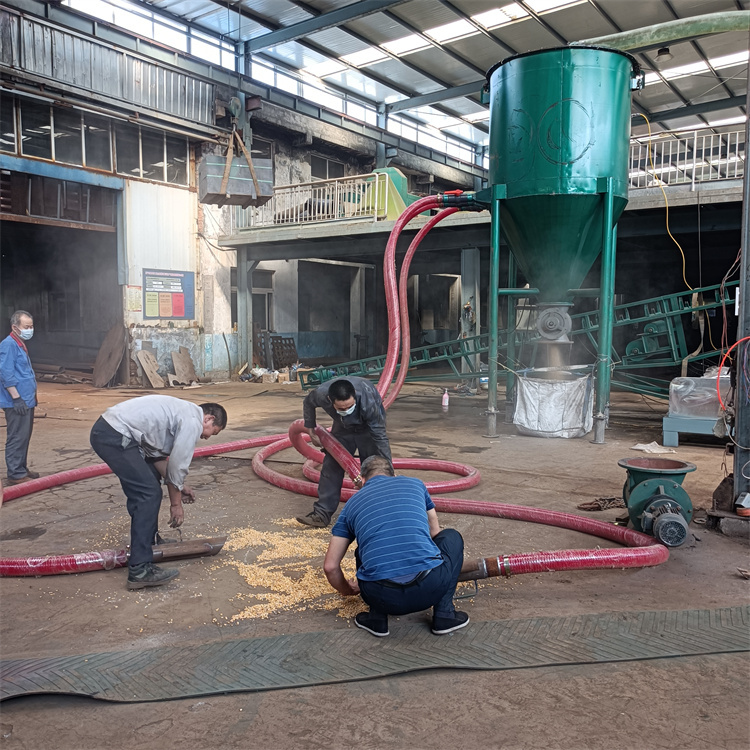
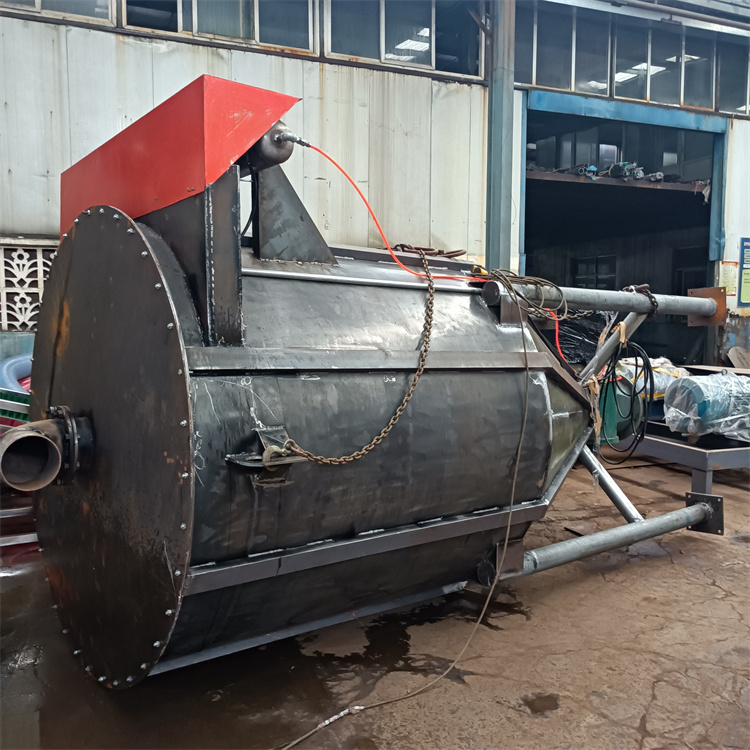
product image
Powdered coal ash is a solid waste discharged after coal combustion, mainly composed of silicon dioxide, aluminum oxide, iron oxide, calcium oxide, magnesium oxide, and some trace elements. Fly ash is both a 'waste' and a 'resource'. If not properly disposed of and discharged into rivers, lakes, and seas, it will cause water pollution; Disorderly stacking can cause pollution to the atmospheric environment. In the environmental governance of coal-fired power plants, the transportation of fly ash cannot be ignored. The pulse dust removal pneumatic conveying equipment produced by Xingtong Machinery uses pressure air as the conveying medium to continuously suck and feed fly ash along a certain route. The entire process is fully enclosed and dust-free, with a high degree of automation. There are two conveying forms: one is single suction, with the feeding port inserted into the fly ash pile and directly pumped out. After pulse dust removal, the gas is separated by a closed air unloader, and the fly ash falls directly into the tank truck or silo; One type is a mixed pneumatic conveyor that integrates suction and blowing, with a suction nozzle inserted into the material pile and a discharge pipe at the other end. One end of the discharge pipe is connected to the air outlet of the fan, so that the coal ash and slag sucked in can be directly blown out. Whether it is a single suction or an integrated suction and delivery system, there are not many restrictions on the terrain of use. It can be loaded and unloaded on dock ships, cleared in cement warehouses, and filled with powder in ton bags. It is suitable for various conveying forms of powder materials, with multiple specifications to choose from, and can be customized according to the conveying requirements of customers.
Pulse dust removal pneumatic conveyor (suitable for powder conveying, fly ash, cement powder loading tank trucks)
Measures to prevent blockages during the operation of pneumatic ash suction machines:
1. In pipeline layout, efforts should be made to reduce the total degree of the pipeline and its angle according to the conveying distance, and to separate small degree bends as much as possible to replace a large degree bend.
2. Equipment or components that generate local resistance, such as reversing devices, bends, etc., should be placed as close as possible to the sending device.
3. Reasonably select and design equipment and components such as sending devices and reversing devices.
4. Equipment or pipeline interfaces should be aligned, tight, with minimal gaps and no misalignment. The centerline of the pipeline should be as straight as possible, reducing twists and turns, ensuring smooth inner walls, and considering easy disassembly and assembly.
5. A dedicated gas storage tank and oil-water separator should be installed before the high-pressure pneumatic ash suction machine to ensure the pressure, flow rate, and quality of the gas source.
6. Ensure that the coal powder does not contain any impurities.
7. Reduce the humidity of coal powder to ensure its ease of transportation.
8. The conveying system should adopt automatic or semi-automatic control to eliminate blockages caused by misoperation.
Understanding and mastering the causes and preventive measures of pipeline blockage during pneumatic conveying can improve the efficiency of pneumatic conveying, reduce the occurrence of faults, and enable better application of fly ash pneumatic ash removal systems in the thermal power industry, bringing more benefits to enterprises.



AfterSalesService :
Key words:- Xinjiang mineral powder pneumatic ash suction machine
More Products