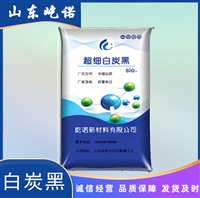
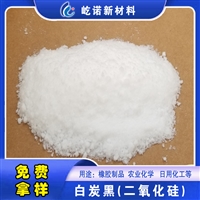
2000 mesh silica sole coating tire rubber coating reinforcement thickening precipitation method white carbon black
Category:
fine chemicals /Inorganic pigments/fillers/White carbon black
Model:
YN-2105
Brand:
white carbon black
brand:
white carbon black
model:
YN-2105
Specification Type:
Gas-phase method
fineness:
2000 mesh
solubility:
insoluble
color:
white
purpose:
Tire manufacturing, silicone rubber industry, coating industry, new energy and other fields
appearance:
White powdery form
main ingredients:
silicon dioxide
chemical formula:
SiO2 nH2O
stability:
superiority
adhesion:
strong
safety:
tall
quality standard:
international
CAS:
14464-46-1
Packing Specification:
10kg
shelf life:
36 months
Storage precautions:
Storage in a dry environment
Place of Origin:
Shandong
manufacturer:
Yinuo New Materials
Retail Price
15.36USD
重量
kg
- Product Description
-
brand white carbon black
model YN-2105
Specification Type Gas-phase method
fineness 2000 mesh
solubility insoluble
color white
purpose Tire manufacturing, silicone rubber industry, coating industry, new energy and other fields
appearance White powdery form
main ingredients silicon dioxide
chemical formula SiO2 nH2O
stability superiority
adhesion strong
safety tall
quality standard international
CAS 14464-46-1
Packing Specification 10kg
shelf life 36 months
Storage precautions Storage in a dry environment
Place of Origin Shandong
manufacturer Yinuo New Materials
Description :


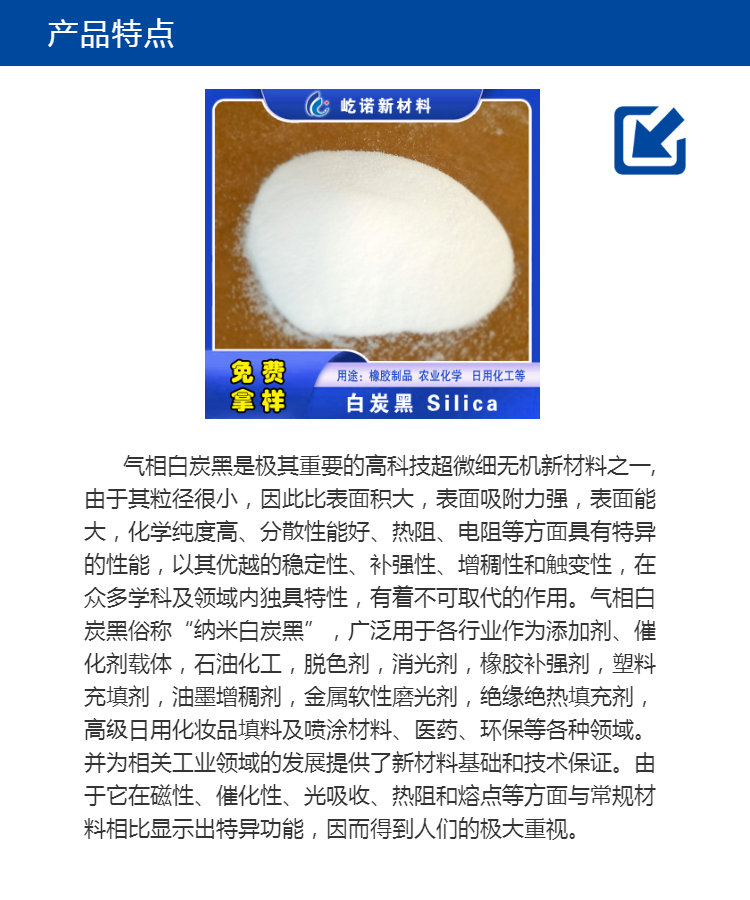
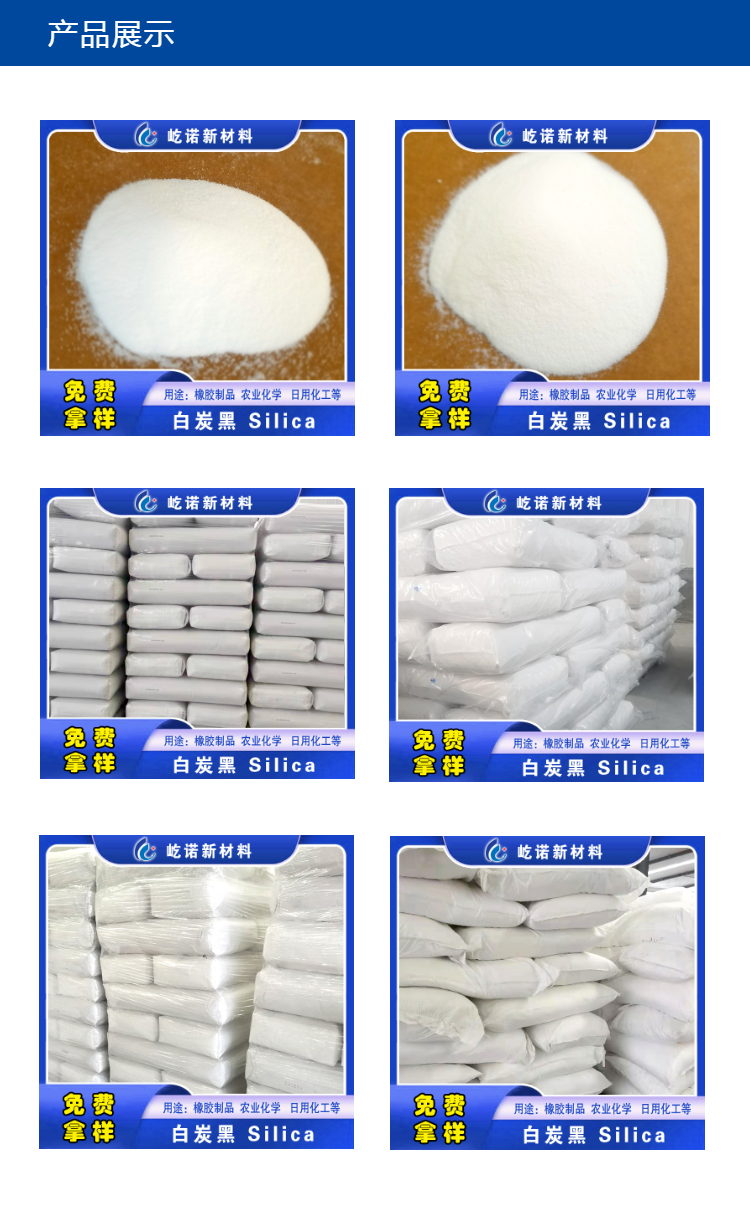


white carbon black
White carbon black is the general term of white powder X-ray amorphous silicic acid and silicate products, mainly referring to precipitated silica, fumed silica and ultra-fine silica gel, as well as powder synthetic aluminum silicate and calcium silicate. White carbon black is a porous substance, and its composition can be represented by SiO2 · nH2O, where nH2O exists in the form of surface hydroxyl groups. Soluble in caustic soda and insoluble in water, solvents, and acids (except). Resistant to high temperatures, non flammable, odorless, tasteless, and has good electrical insulation properties.
Basic Information
Chinese name: White carbon black
Chinese alias: White carbon black (combustion method); Gas-phase white carbon black; Granulated white carbon black; Medicinal grade white carbon black; GH-7 type white carbon black; GH-1A type white carbon black; GH-1B type white carbon black; Hydrated silica; White carbon black; White smoke; Precipitated hydrated silica; Pure latex; Colloidal silica; precipitated silica
English name: Silica
English alias: Combustion method; Pelleted Hydrated Silica; Hydrated Silica; Silicondioxidehydrate; Silica, hydrate; SILICA; Precipitated silica;
CAS number: 10279-57-9
EINECS number: 238-878-4
Molecular formula: SiO2. x (H2O)
Physical and chemical properties
Melting point: 1610 ° C (lit.)
Boiling point:>100 ° C (lit.)
Density: 2.6 g/mL at 25 ° C (lit.)
Refractive index: n20/D 1.544 (lit.)
Storage conditions: 2-8 ° C
form tablets (~0.5 g each)
1. Physical properties
Appearance: White powder or granular or irregularly shaped blocks.
True density: about 2.0g/ml False density: about 0.2g/ml (for regular products).
Resistant to high temperatures and non combustible; Good electrical insulation.
2. Chemical properties:
Can react with caustic soda SiO2nH2O+2NaOH=Na2SiO3+(n+1) H2O
Can react with SiO2nH2O+4HF=SiF4+(n+2) H2O
3. Main chemical indicators
SiO2 content (dry) ≥ 90%
Sieve residue (45 ц m) ≤ 0.5%
Heating reduction: 4.0-8.0%
Burning loss: (dry product) ≤ 7.0%
PH value: 5.0-8.0
Total copper content: ≤ 30mg/kg
Total manganese content: ≤ 50mg/kg
Total iron content: ≤ 1000mg/kg
DBP absorption value: 2.00-3.50cm/g
Specific surface area: Different applications have different ranges, generally 145-165m/g (HT2) 165-185m/g (HT1)
200-300m/g(HT3)
3. Main physical properties (in combination with rubber products))
Tensile strength ≥ 17.0Mpa 500% tensile strength ≥ 6.3Mpa
Tensile length ≥ 675%
ingredient
White carbon black can be roughly divided into precipitation method white carbon black and gas-phase method white carbon black according to production methods. Under normal conditions, gas-phase white carbon black is a white amorphous flocculent semi transparent solid gel like nanoparticle (particle size less than 100nm), non-toxic, and has a huge specific surface area. All the white carbon black produced by gas-phase method is nano silica, with a purity of up to 99% and a particle size of 10~20nm. However, the preparation process is complex and expensive; Precipitation method white carbon black is divided into traditional precipitation method white carbon black and special precipitation method white carbon black. The former refers to white carbon black obtained by precipitation method 、 CO2 and water glass are used as basic raw materials to produce silica. The latter refers to silica produced by special methods such as high gravity technology, sol gel method, chemical crystal method, secondary crystallization method or reverse micelle micro lotion method. Precipitation white carbon black is mainly used as a reinforcing agent for natural rubber and synthetic rubber, as well as a friction agent for toothpaste. Vapor phase silica is mainly used as reinforcing agent, coating and unsaturated resin thickener of silicone rubber, and ultra-fine silica gel and aerogel are mainly used as coating matting agent, thickener, plastic film opening agent, etc.
White carbon black, as an environmentally friendly and high-performance additive, is mainly used in the fields of rubber products (including high-temperature vulcanized silicone rubber), textiles, papermaking, pesticides, and food additives. From the growth rate of white carbon black production from 2004 to 2008, the compound annual growth rate was 13.3%. In 2009, there were over 60 white carbon black production enterprises in China, with a production capacity of about 1 million tons and an output of 750000 tons. China's production and sales volume ranked first in the world.
Thanks to the increasing demand in the tire manufacturing industry, silicone rubber industry, coating industry, new energy and other fields, it is expected that the average annual growth rate of demand for precipitated white carbon black (silica) in China will be about 10% in the future. In 2015, Asia will become a highly dispersed market for white carbon black, with demand growth rates much higher than the global average of 9%, reaching 15% or higher. China accounts for 40% of the Asian market and will become the single market in the world.
preparation
The traditional method for preparing white carbon black is to use sodium silicate, silicon tetrachloride, and ethyl orthosilicate as silicon sources. Except for sodium silicate, other costs are high. The new method uses inexpensive non-metallic minerals as silicon sources, greatly reducing the production cost of white carbon black.
traditional method
(1) Gas-phase method
Mainly chemical vapor deposition (CVD) method, also known as pyrolysis method, dry method or combustion method. Its raw materials are generally silicon tetrachloride, oxygen (or air), and hydrogen, which react at high temperatures. The reaction equation is:
SiCl4+ 2H2+ O2—> SiO2+4HCl
Air and hydrogen are respectively pressurized, separated, cooled and dehydrated, silica gel dried, and dust filtered before being sent to the synthesis hydrolysis furnace. After the silicon tetrachloride raw material is sent to the distillation tower for distillation, it is heated and evaporated in the evaporator, and then transported to the synthesis hydrolysis furnace with dried and filtered air as the carrier. After gasification of silicon tetrachloride at high temperatures (flame temperature 1000-1800 ℃), it undergoes gas-phase hydrolysis with a certain amount of hydrogen and oxygen (or air) at around 1800 ℃; At this time, the generated gas-phase silica particles are extremely fine and form aerosols with the gas, which are not easy to capture. Therefore, they are first aggregated into larger particles in the collector, then collected by the cyclone separator and sent to the deacidification furnace. The gas-phase silica is blown with nitrogen-containing air until the pH value is 4-6, which is the finished product.
Degussa from Germany and Cabot from the United States have global gas-phase production technologies. Their production equipment has a large scale, high degree of automation, low product cost, multiple grades (especially functional specialized product grades applied in special fields), good quality, such as uniform surface area distribution and low moisture content. China's Shenyang Chemical Industry Co., Ltd. and Shanghai Chlor Alkali Chemical Co., Ltd. also use gas-phase production, but their production scale, production technology, automation level, and product grades are far inferior to those of large foreign companies. Guangzhou Jibisheng Technology Industrial Co., Ltd. is a domestic supplier of gas-phase silica with the most complete range of products and technologies. It is the drafting unit responsible for the national standard GB20020-2005 for gas-phase silica.
(2) Precipitation method
The precipitation method, also known as sodium silicate acidification method, uses a water glass solution to react with acid, and obtains white carbon black through precipitation, filtration, washing, drying, and calcination. The reaction equation is:
Na2SiO3 + 2H+—> White carbon black+2Na++H20
Most domestic production enterprises adopt the sedimentation method.
purpose
Due to a series of advantages of white carbon black products, it can be widely used in many fields.
rubber products
White carbon black is used in colored rubber products to replace carbon black for reinforcement, meeting the needs of white or semi transparent products. Silica also has super adhesion, tear resistance, heat resistance and aging resistance, so it can also replace part of carbon black in black rubber products to obtain high-quality rubber products, such as off-road tires, engineering tires, radial tires, etc.
Agricultural chemicals
In agricultural chemical products such as pesticides and high-efficiency spray fertilizers, the use of white carbon black as a carrier or diluent, disintegrant, and disintegrant in water dispersible granule WDG can improve suspension rate. It is recommended to use a content of about 10%. It can maintain long-lasting effectiveness because of its ultra-high surface area, extremely high adsorption capacity, easy suspension, good affinity, and chemical stability. Even under rain, washing, and hot conditions, it can still remain unchanged for a long time.
Daily chemical products
Transparent colored and opaque toothpaste with white carbon black as filler and abrasive, which has good flexibility and dispersibility, smooth and soft paste body, good abrasion resistance, and does not corrode the toothpaste tube body; It can keep the medicinal properties of toothpaste stable. Especially with good compatibility with fluoride, it can avoid the disadvantage of insoluble salts produced by calcium salts as abrasives.
Binder
Used in adhesives made of natural rubber or synthetic rubber, it provides thixotropy and reinforcement, while also improving adhesion due to its stretchability, resulting in high quality and low cost.
Anti caking agent
White carbon black can be used in some products to improve free flowability, such as grassland fertilizers, fungicides, grinding wheel grinders, laundry bleaching agents, phenolic injection molding, plastic products made of phenol and urea, rubber manufacturing, and anti caking mixtures.
Paper making filler
Using white carbon black as paper filler can improve the ink resistance and mechanical strength of paper, increase whiteness, and reduce unit weight. It can effectively achieve lightweight paper, reduce production costs, and improve paper performance.
In addition, it can also be used in many industries such as firefighting agents, feed, cosmetics, matting agents, pigments, paints, etc.
Gas phase application
Gas phase white carbon black is one of the extremely important high-tech ultrafine inorganic new materials. Due to its small particle size, it has a large specific surface area, strong surface adsorption force, high surface energy, high chemical purity, good dispersibility, thermal resistance, electrical resistance and other specific properties. With its superior stability, reinforcement, thickening and thixotropy, it has unique characteristics in many disciplines and fields and plays an irreplaceable role. Gas phase white carbon black, commonly known as "nano white carbon black", is widely used in various industries as an additive, catalyst carrier, petrochemical industry, decolorizer, matting agent, rubber reinforcement agent, plastic filling agent, ink thickener, metal soft polishing agent, insulation and thermal insulation, advanced daily cosmetics filler and spraying material, medicine, environmental protection and other fields. And it provides a new material foundation and technological guarantee for the development of related industrial fields. Due to its unique functions in magnetism, catalysis, light absorption, thermal resistance, and melting point compared to conventional materials, it has received great attention from people. The following are the applications of gas-phase white carbon black in various industries
Electronic packaging materials
Organic light-emitting diode (OLED) is a new type of flat display device that has been newly developed and researched. It has the advantages of low turn-on and driving voltage, direct current voltage driving, compatibility with large-scale integrated circuits, easy full-color conversion, and high luminous brightness (>105cd/m2). However, the service life of OLED devices cannot meet application requirements, and one of the technical difficulties that needs to be solved is the packaging materials and packaging technology of the devices. Currently, organic silicon modified epoxy resin is widely used in foreign countries (such as Japan, the United States, Europe, etc.), which can reduce the internal stress of epoxy resin and form intramolecular toughening through blending, copolymerization, or grafting reactions, improve high temperature resistance, and also enhance the waterproof, oil resistant, and oxygen resistant properties of organic silicon. However, it requires a long curing time (several hours to several days), and to accelerate the curing reaction, it is necessary to use higher temperatures (60 ℃ to 100 ℃ or above) or increase the amount of curing agent. This not only increases costs, but also makes it difficult to meet the requirements of large-scale device production lines for packaging materials (short time, room temperature packaging). Fully dispersing the surface active treated gas-phase white carbon black in the organic silicon modified epoxy resin encapsulation adhesive matrix can significantly shorten the curing time of the encapsulation material (2.0-2.5 hours), and the curing temperature can be lowered to room temperature, significantly improving the sealing performance of OLED devices and increasing their service life.
Resin composite material
Resin based composite materials have the characteristics of lightweight, high strength, and corrosion resistance. However, the requirements for the performance of resin based materials in the materials industry and the pillar industries of the national economy are becoming increasingly high. How to synthesize high-performance resin based composite materials has become an important issue in the materials industry and the business community. The emergence of gas-phase white carbon black provides a new opportunity for the synthesis of resin based composite materials and a new way for the modification of traditional resin based materials. As long as the gas-phase white carbon black particles can be fully and uniformly dispersed into the resin material, the goal of comprehensively improving the performance of resin based materials can be achieved.
1. Improve strength and elongation. Epoxy resin is a basic resin material. Adding gas-phase white carbon black to epoxy resin is completely different in structure from epoxy resin based composite materials added with coarse crystalline silica (such as white carbon black). Coarse crystalline SiO2 is generally added as a reinforcing agent and mainly distributed in the interchain of polymer materials. However, gas-phase white carbon black exhibits extremely strong activity due to its severe coordination deficiency, large specific surface area, and surface oxygen deficiency, making it easy to bond with oxygen in epoxy cyclic molecules, improving the intermolecular bonding force. At the same time, some gas-phase white carbon black particles are still distributed in the gaps of polymer chains. Compared with coarse crystalline SiO2 particles, it shows high flow performance. The addition of gas-phase white carbon black significantly improves the strength, toughness, and ductility of epoxy resin materials.
2. Improve wear resistance and enhance the surface smoothness of materials. Gas phase white carbon black particles are 100-1000 times smaller than SiO2, and adding them to epoxy resin is beneficial for pulling them into fibers. Due to the high fluidity and small size effect of gas-phase white carbon black, the surface of the material becomes denser and cleaner, the friction coefficient decreases, and the high strength of the nanoparticles greatly enhances the wear resistance of the material.
3. Anti aging performance. A fatal weakness of epoxy resin matrix composites in use is poor anti-aging performance, which is mainly due to the ultraviolet medium and long wave effects of 280-400nm solar radiation. Its destructive effect on resin matrix composites is very serious. The degradation of polymer chains causes rapid aging of resin matrix composites. And gas-phase white carbon black can strongly reflect ultraviolet rays. Adding it to epoxy resin can greatly reduce the degradation effect of ultraviolet rays on epoxy resin, thereby achieving the goal of delaying material aging.
plastic
The use of fumed silica can make plastics more compact because of its light transmission and small particle size. After adding fumed silica into polystyrene plastic film, not only its transparency, strength and toughness are improved, but also its waterproof and anti-aging properties are significantly improved. The hardness, smoothness and anti-aging properties of plastic steel doors and windows produced by adding a small amount of fumed silica into ordinary plastic polymers are greatly improved. By using gas-phase white carbon black to modify ordinary plastic polypropylene, the main technical indicators (water absorption, insulation resistance, compression residual deformation, flexural strength, etc.) have reached or exceeded the performance indicators of engineering plastic nylon 6, achieving the replacement of nylon 6 with polypropylene railway accessories. The product cost has been significantly reduced, and its economic and social benefits are very significant.
paint
China is a major producer and consumer of coatings, but currently domestic coatings generally have performance deficiencies, such as poor suspension stability, poor thixotropy, poor weather resistance, poor washability, etc., resulting in the need to import a large amount of high-quality coatings every year. Some coating production enterprises in Shanghai, Beijing, Hangzhou, Ningbo and other places dare to innovate and successfully realize the application of gas-phase white carbon black in coatings. This nano modified coating overcomes the shortcomings of previous products. After testing, its main performance indicators have been greatly improved except for the comparison rate, such as the scrub resistance of exterior wall coatings, which has increased from more than 1000 times to more than 10000 times. The artificial accelerated climate aging and artificial radiation exposure aging time has increased from 250 hours (powdering level 1, discoloration level 2) to 600 hours (no powdering, no discoloration of the paint film, color difference of 4.8). In addition, the bonding strength between the coating and the wall has been greatly improved, the coating hardness has significantly increased, and the surface self-cleaning ability has also been improved.
rubber
Rubber is an elastomer with excellent elasticity, but its comprehensive performance is not satisfactory. In the production of rubber products, carbon black is usually added to the rubber compound to improve strength, wear resistance and aging resistance. However, because of the addition of carbon black, the products are black and of low grade. The emergence of gas-phase white carbon black in China has laid the material foundation for the production of a new generation of rubber products with novel colors and excellent performance. When a small amount of fumed silica is added to ordinary rubber, the strength, abrasion resistance and anti-aging properties of the product reach or exceed those of high-grade rubber products, and the color can be kept unchanged for a long time. The nano modified colored EPDM waterproof coiled material has significantly improved its abrasion resistance, tensile strength, bending resistance and aging resistance, and has bright colors and excellent color retention effect. The development of colored tires has also made certain progress, such as improving the flexural performance of tire side rubber from 100000 cycles to over 500000 cycles. It is expected that in the near future, the coloring of domestic automotive and motorcycle tires will be achieved.
Yan (dyeing) material
Although organic pigments have bright colors and strong coloring power, their resistance to light, heat, solvents, and migration is often inferior to inorganic pigments. The surface modification of organic pigments (dyes) by adding vapor phase white carbon black not only greatly improves the anti-aging performance of pigments (dyes), but also improves the brightness, hue, saturation and other indicators to a certain extent. The performance can be comparable to imported high-end products, greatly expanding the grade and application range of organic pigments (dyes).
ceramics
Adding gas-phase white carbon black instead of nano A1203 to 95 ceramics can not only act as nanoparticles, but also as a second phase particle, which not only improves the strength and toughness of ceramic materials, but also enhances their hardness and elastic modulus. Its effect is more ideal than adding A1203. The use of gas-phase white carbon black to composite ceramic substrates not only improves the density, toughness, and smoothness of the substrates, but also significantly reduces the sintering temperature. In addition, the application effect of gas-phase white carbon black in ceramic products such as ceramic filters and corundum balls is also very significant.
Sealing glue, adhesive
Sealing glue and adhesive are important products with large quantities, wide applications, and a wide range of uses. It requires the product to meet the conditions of viscosity, fluidity, and curing speed. Our country's products in this field are relatively backward, and high-end sealants and adhesives rely on imports. Foreign products in this field have already used nanomaterials as modifiers, and gas-phase white carbon black is the material. It mainly involves coating a layer of organic material on the surface of gas-phase white carbon black to make it hydrophobic. Adding it to the sealant quickly forms a silica structure, that is, a network structure of nano-Si0X small particles to inhibit colloid flow, accelerate curing speed, and improve bonding effect. Due to the small size of gas-phase white carbon black particles, it also increases the sealing and anti-seepage properties of the product.
Fiberglass products
Although fiberglass products have advantages such as lightweight, high strength, and corrosion resistance, they themselves have low hardness and poor wear resistance. Experts added gas-phase white carbon black to the adhesive coating resin through ultrasonic dispersion method, and conducted performance comparison experiments with the adhesive coating without gas-phase white carbon black. It was found that its Mohs hardness increased from the original 2.2 level (equivalent to the hardness of gypsum) to 2.8-2.9 level (3 level is the hardness of natural marble), and its wear resistance increased by 1-2 times. Due to the grafting and bonding effect between nanoparticles and organic polymers, the toughness of the material increased, so the tensile strength and impact strength increased by more than 1 times, and the heat resistance was also greatly improved.
drug carrier
With the significant increase in urban household waste and the increasingly serious environmental pollution, it is urgent to increase efforts to eliminate the "four pests" and prevent the spread of diseases. Brushing lime on tree trunks and spraying pesticides on garbage bins are no longer effective. Currently, major cities have adopted spraying central nervous system insecticides to eliminate insect pests such as mosquitoes, flies, cockroaches, etc. However, these insecticides are mostly imported from abroad, with higher prices and shorter effective periods (only one month) after spraying. The use of gas-phase white carbon black as a carrier to adsorb this type of insecticide has achieved good slow-release effect. According to tests, its effective period after spraying is over one year.
Antibacterial material
By utilizing the large specific surface area, porous structure, strong adsorption capacity, and peculiar physicochemical properties of gas-phase white carbon black, functional ions such as silver ions are uniformly designed into the mesopores on the surface of gas-phase white carbon black and stabilized. A highly efficient, durable, high-temperature resistant, and broad-spectrum antibacterial nano antibacterial powder (with a particle size of only about 70 nanometers) has been successfully developed, and its main technical indicators have reached or exceeded those of similar products in Japan. After testing, it was found that when the concentration of nano antibacterial powder in water is only 0.315%, the antibacterial ability against Gram positive and Gram negative representative strains can be clearly demonstrated, with an inhibition zone of 2-3mm, and the inhibition zone increases significantly with the increase of nano antibacterial powder concentration in water. According to the measurement, when the Ag+content in water is 0.01mg/1, it can completely kill Escherichia coli in water and maintain it for up to 90 days without reproducing new bacterial communities. Applying nano antibacterial powder to enamel glaze to produce a drum washing machine with anti mold and antibacterial functions, with an antibacterial rate of over 99%. It should be pointed out that the use conditions of nano antibacterial powder in enamel glaze are relatively strict, and it must maintain strong antibacterial performance in alkaline liquids and after high-temperature (around 900 ℃) firing, which is beyond the reach of other antibacterial powders. By adding nano antibacterial powder to interior wall coatings, a long-lasting antibacterial and mildew resistant interior wall coating has been produced. The use of nano antibacterial powder in women's underwear detergent, wool and cashmere detergent, dishwashing detergent, and hand sanitizer has been tested by health and epidemic prevention departments, and its antibacterial performance is very significant. It can be foreseen that with the increasing awareness of people's health, nano antibacterial powder will gradually be accepted by the general public of related application enterprises, and will emerge in industries such as bills, medical and health care, chemical building materials, household appliances, functional fibers, plastic products, etc.
AfterSalesService :
Key words:- 2000 mesh silica
More Products