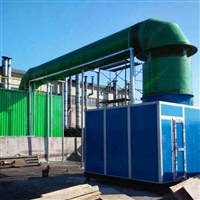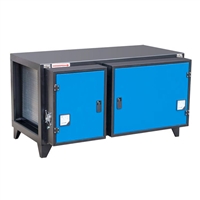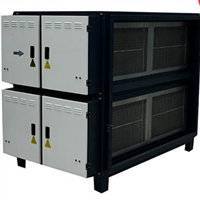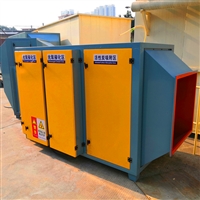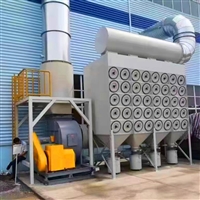
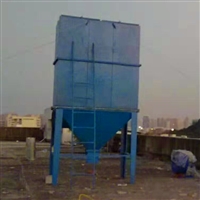
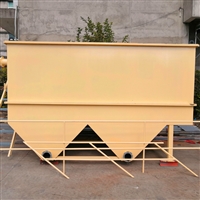
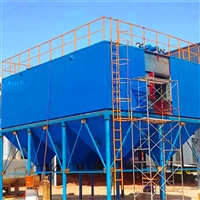
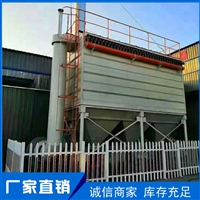
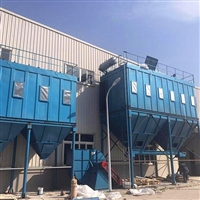
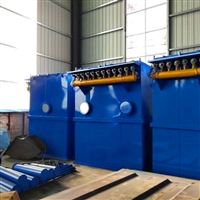
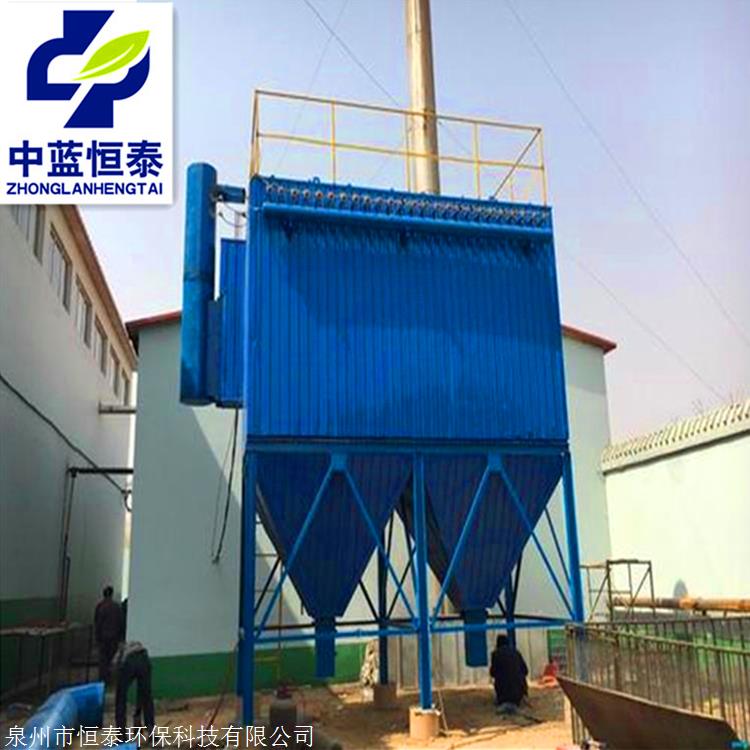
Manufacturer supplies customized Quanzhou bag dust removal equipment for dust bag filters
Category:
Environmental Protection/Air purification equipment/Desulfurization and dust removal equipment
Model:
BDCCQ-615
Brand:
Hengtai Environmental Protection
Retail Price
5,697.00USD
重量
kg
- Product Description
-
Description :
Electric dust removal equipment is an essential supporting equipment for thermal power plants. Its function is to remove particulate smoke and dust from the exhaust gas of stoves or oil fired boilers, thereby significantly reducing the amount of smoke and dust emitted into the atmosphere. This is an important environmental protection equipment for improving environmental pollution and air quality. Its working principle is that when the smoke passes through the flue in front of the main structure of the electrostatic precipitator, the smoke carries a positive charge, and then the smoke enters the channel of the electrostatic precipitator equipped with multiple layers of cathode plates.


According to the method of integrating the axial velocity with the flow area mentioned earlier, calculate the changes in the descending flow rate of a conventional cyclone dust collector after installing different types of drag reducing rods, and plot the percentage of the total processing flow rate of the descending flow dust collector at different cross-sections under various conditions to indicate the average value of the flow rate in the upstream and downstream flow zones, that is, the difference between the descending flow rate and the actual flow rate in the downstream flow zones. It can be seen that the short-circuit flow and descending flow of each model vary along the height of the dust collector. Compared with conventional cyclone dust collectors, installing full-length drag reduction rods 1 # and 4 # increases the short-circuit flow rate, but installing non full-length drag reduction rods H1 and H2 reduces the short-circuit flow rate. The variation law of the flow rate along the process after installing 1 # and 4 # is basically the same as that of a conventional cyclone dust collector, showing a linear distribution, with three parallel decreasing lines. But after installing H1 and H2, the distribution shows a broken line instead of a straight line, and the inflection point is precisely the cross-sectional position where the drag reducing rod is inserted from bottom to top. From this, it can also be seen that the non full length drag reduction rod increases the downward flow rate of each section above the cross-section, which is greater than that of a conventional dust collector. However, after contacting the drag reduction rod, the downward flow rate decreases rapidly, reaching or below the value of a conventional dust collector at the bottom of the cone.
The reduction of short-circuit flow can improve dust removal efficiency, increase the descending flow rate of the cross-section, and also increase the residence time of dusty air in the dust collector, creating more separation opportunities for dust. Therefore, although the drag reduction effect of non full length drag reduction rods is not as good as that of full length drag reduction rods, it is more conducive to improving the dust removal efficiency of cyclone dust collectors. There is a short-circuit flow rate of up to 24% near the inlet section of the exhaust core pipe of a conventional cyclone dust collector, which will seriously affect the overall dust removal effect. How to reduce this short-circuit flow will be a research direction for improving efficiency. Although the drag reduction effect of non full length drag reduction rods is not as good as that of full length drag reduction rods, it will have more practical significance because it reduces the short-circuit flow rate of conventional cyclone dust collectors and increases the flow rate of cross-sectional descent, thereby improving the dust removal efficiency of cyclone dust collectors.
Product Maintenance
Regularly check the operation of control valves, pulse valves, and timers.
The failure of the pulse valve rubber diaphragm is a common fault in bag filters, which directly affects the dust cleaning effect. This device belongs to the external filter type, with a skeleton inside the bag. It is necessary to check whether the parts that fix the filter bag are loose and whether the tension of the filter bag is appropriate. Is the support frame smooth to prevent wear and tear on the filter bag. Compressed air is used for dust removal. Therefore, it is required to remove oil mist and water droplets, and the oil-water separator must be cleaned regularly to prevent malfunction of the moving mechanism and blockage of the filter bag.
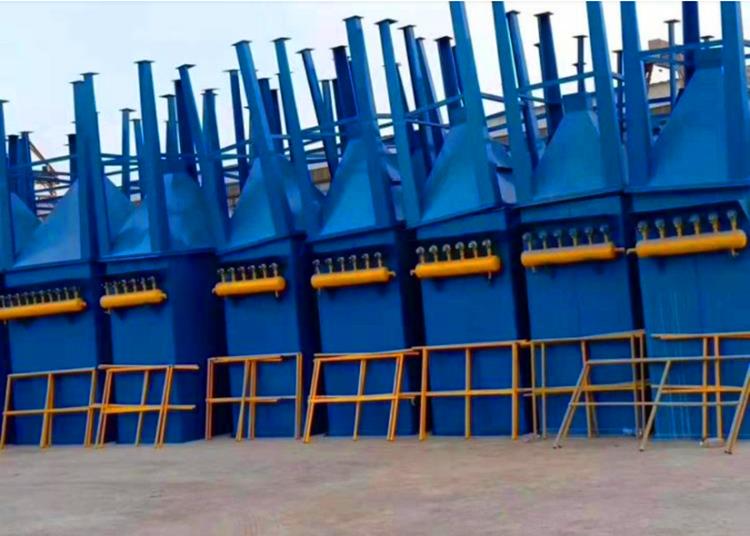
Whether the air volume and pressure and temperature at each testing point are consistent with the design.
The installation status of the 3 filter bags, whether there are any occurrences of bag dropping, loosening, wear, etc. after use, can be judged by visually observing the emissions of the chimney after operation.
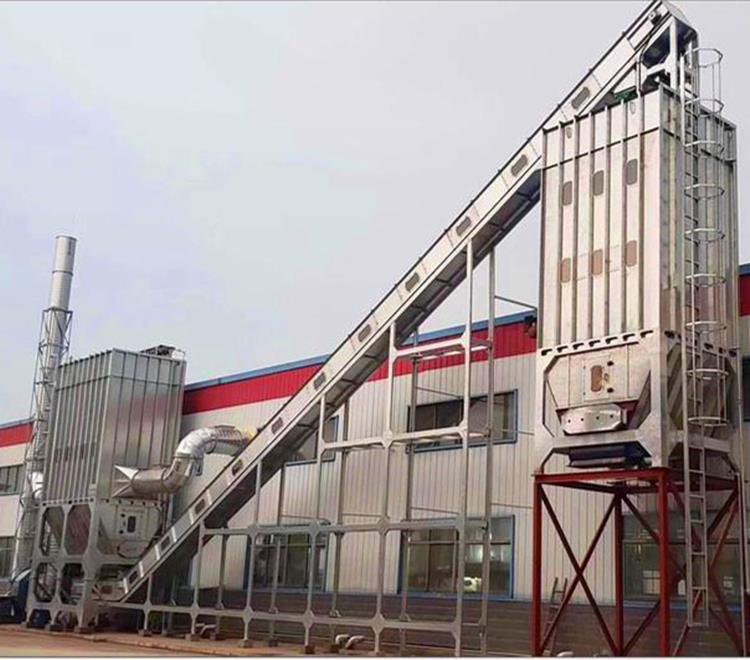
4. Prevent condensation
During use, it is necessary to prevent the gas from cooling below the dew point in the bag chamber, especially when using a bag filter under negative pressure. Due to the frequent leakage of air into the outer shell, the gas temperature in the bag chamber is lower than the dew point, causing the filter bag to become damp. This results in dust not being loose but sticking to the filter bag, blocking the fabric holes and causing dust removal failure. This leads to excessive pressure drop in the dust collector, making it unable to continue operating, and some bags may become stuck and unable to remove dust.
To prevent condensation, it is necessary to maintain the temperature of the gas in the dust collector and its system at 25-35 ℃ above its dew point (such as the dew point temperature of 58 ℃ for kiln mill integrated machines, and the operating temperature should be above 90 ℃), in order to ensure the good use effect of the filter bag.


AfterSalesService :
Key words:- bag filter