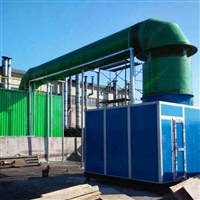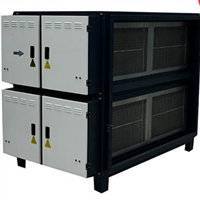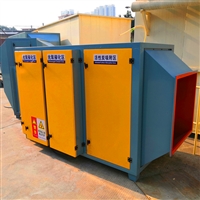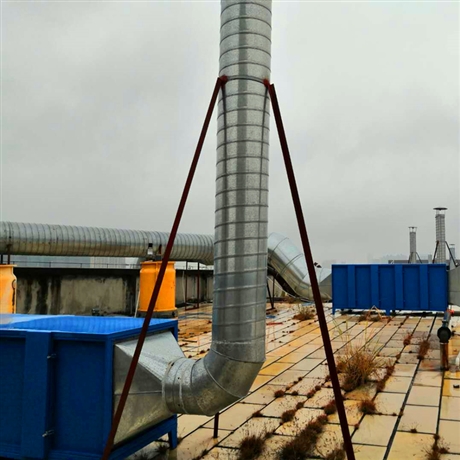


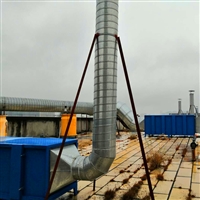
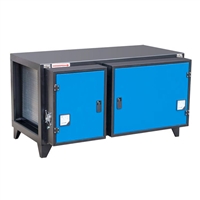
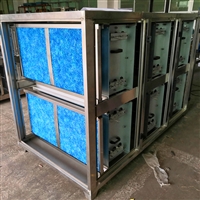
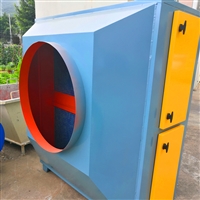
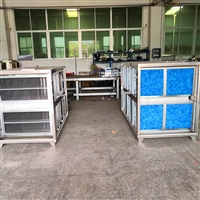
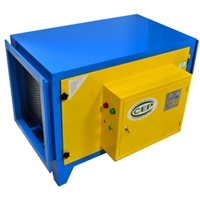
Quanzhou Environmental Protection Photolytic Oil Fume Purifier Nameplate
Category:
Environmental Protection/Air purification equipment/Oil fume purification equipment
Model:
Brand:
Hengtai Environmental Protection
Retail Price
3,000.00USD
重量
kg
- Product Description
-
Description :

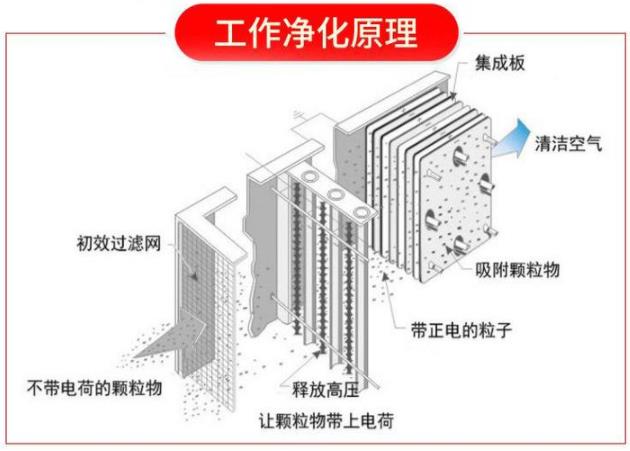
The oil fume is sucked into the electrostatic oil fume purification equipment by the fan, and locally larger oil droplets and oil particles are trapped on the flow plate due to mechanical collision and obstruction. When the airflow enters the high-voltage electrostatic field, under the action of the high-voltage electric field, the oil fume and smoke are ionized, the oil mist is charged, and most of it is degraded and carbonized; Under the electric field force and airflow of the adsorption electric field, a small number of small oil particles move towards the positive and negative plates of the electric field and are collected on the plates. They flow to the oil collection tray under their own gravity and are discharged through the exhaust duct. The remaining micrometer sized oil mist is degraded into carbon dioxide and water by the electric field, and clean air is discharged; At the same time, under the action of the high-voltage generator, ozone is generated in the air inside the electric field, removing most of the odors in the flue gas. Kitchen electrostatic fume purification equipment is a kitchen fume exhaust gas treatment device used for various users' food processing, such as gas stoves, gas stoves, diesel stoves, etc. in restaurants, bars, dining rooms, schools, offices, factories, and other places.
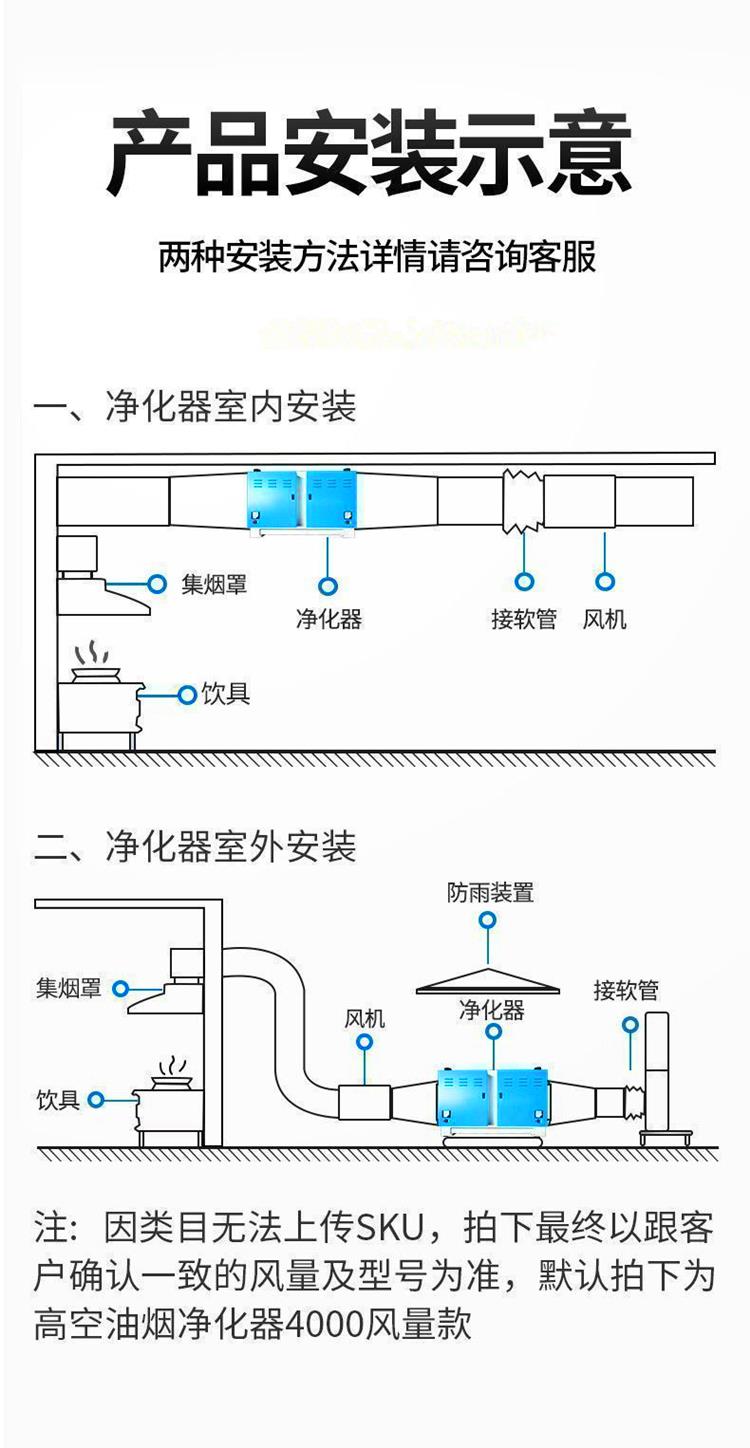 Principle of Cooking Fume Purifier in the Catering Industry:
1、 Product Overview: The fire-resistant oil fume purifier adopts the principle of filtration mechanical separation (filtration, collision, cooling, adsorption) to remove oil substances from oil fume. It has a special filtering and adsorption material, which solves the weaknesses of high oil fume ratio, difficult self flow, and large pressure drop in the application of filtering and adsorption control technology; Solved the problem of low capture efficiency and achieved the effect of ventilation and separation.
2、 The structural characteristics of the product make it occupy very little space and suitable for installation at the position of the smoke hood guide plate, playing a role in oil filtration and fire prevention. Cleaning is simple and convenient, and can become an integral part of a healthy and environmentally friendly smoke exhaust hood. The product can also be paired with other facilities to form a composite.
3、 Technical features:
1. Long lifespan, high temperature resistance, and corrosion resistance;
2. Good cooling performance, strong oil fume capture, and easy separation of oil and gas;
3. Filter elements have high porosity and low resistance
4、 Product advantages:
1. No energy consumption, low operating costs: This product operates without consuming water or electricity, without the need to change the original ventilation power system, without replacing parts, and without additional costs. Significantly extending the cleaning cycle of pipelines and reducing user expenses.
2. Good purification effect: The backend purification wind speed is fast, but the purification efficiency is low; However, the front-end purification wind speed is slower and the purification efficiency is higher.
3. Beneficial for safety and fire prevention: During equipment operation, oil is blocked at the front end, and there is basically no oil in the air duct, which is beneficial for fire protection;
4. Easy installation and maintenance: The equipment is placed in the position of the smoke hood guide plate, and installation and disassembly are very simple. When cleaning this product, soak it in a degreaser or diluted strong alkali and heat it up, then rinse it with running water to restore it to its original state. 5、 Scope of application: restaurants, hotels, hotels, canteens, government canteens, school canteens, etc.
working principle
The plasma fume purifier is designed based on the principle of low-temperature plasma purification combined with mechanical and centrifugal principles. The machine consists of a centrifugal separation section, an efficient filtration section, a low-temperature plasma purification section, a noise reduction section, and other parts.
1. Centrifugal separation section: using mechanical oil removal technology and utilizing fan gas power to purify oil fume. The bidirectional flow theory of fluid mechanics is used to achieve oil fume separation inside the impeller. By changing the angle and form of the blades, oil fume molecules can collide and gather on the blades. Make the oil fume in the form of particulate oil mist, which is thrown into the inner wall of the box by centrifugal force and flows out through the oil leakage pipe.
2. Efficient filtering and noise reduction section: After front-end processing, most of the oil fumes are removed, while the escaping micron level oil fumes are mostly filtered by the subsequent high-efficiency filtering section (coarse filtration and fine filtration). The remaining submicron level oil mist particles, toxic and harmful substances, and odors in the flue gas enter the low-temperature plasma purification section for treatment.
The high-efficiency filtering section not only filters and purifies, but also has sound absorption and noise reduction effects, effectively controlling the overall noise of the equipment.
3. Low temperature plasma purification section: This section mainly uses corona discharge method to generate high concentration ions, and then uses plasma to make particles in the flue gas passing through the electric field carry different (positive and negative) charges, so as to self attract, condense, and increase the volume of individual particles to aggregate into large clusters and sink, thus purifying the flue gas and effectively collecting fine oil fume particles as small as submicron. Different from the electrostatic purification method that directly uses electric field plates to adsorb oil fume particles, this method extends the effective working time of the electric field and achieves low-carbon operation.
Plasma is a type of aggregated substance that undergoes a series of elementary physicochemical reactions when its high-energy electrons collide with molecules in oil fumes, producing various active free radicals and ecological oxygen during the reaction process, namely atomic oxygen produced by the decomposition of ozone. Active free radicals can effectively destroy nucleic acids and proteins in various viruses and bacteria, preventing them from undergoing normal metabolism and biosynthesis, leading to their death; Ecological oxygen can quickly decompose or reduce the odor gases of oil fume molecules into low molecular weight harmless substances.
4. The end of the equipment is equipped with an independent sound-absorbing section, using high-quality glass fiber sound-absorbing materials and utilizing an internal porous grid structure system, allowing sound waves to easily and effectively enter the deep layers of the fiber body, converting sound energy into vibration energy that can be converted and absorbed, ensuring the reduction of equipment noise.


Catalyst combustion method
The principle of combustion purification method is to use the heat generated by high-temperature combustion for oxidation reaction, converting pollutants in oil fume exhaust gas into substances such as CO2 and H2O, thus achieving the purification purpose. During the combustion process, the oil fume exhaust gas is passed through a self purifying catalyst, and the catalytic reaction of the catalyst is beneficial for the conversion of pollutants. Ceramic or metal honeycomb carriers are generally used for oxidation catalysis. This type of oil fume purification equipment is only suitable for situations where the concentration of oil fume is very low, such as raw food or semi-finished products.
Disadvantage: The development of catalytic combustion purification equipment is not yet fully mature.
AfterSalesService :
Key words:- Oil fume purifier