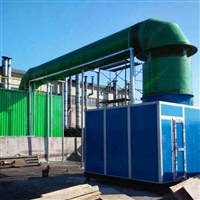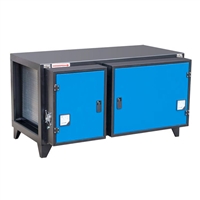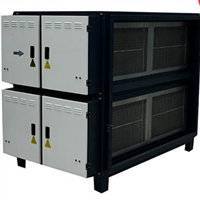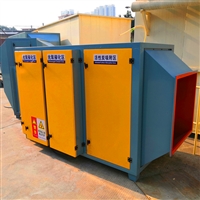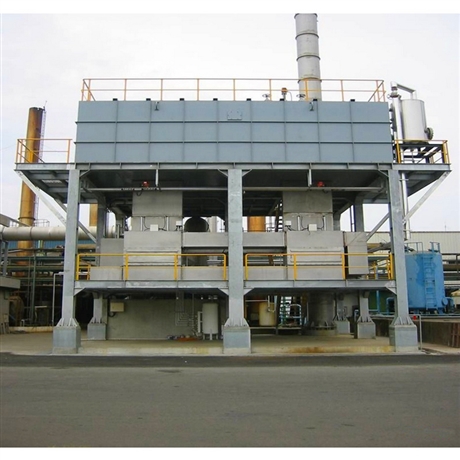



Production standard for bag dust removal equipment
Category:
Environmental Protection/Air purification equipment/Desulfurization and dust removal equipment
Model:
BDCCQ-615
Brand:
Hengtai Environmental Protection
Retail Price
5,697.00USD
重量
kg
- Product Description
-
Description :
Main Features
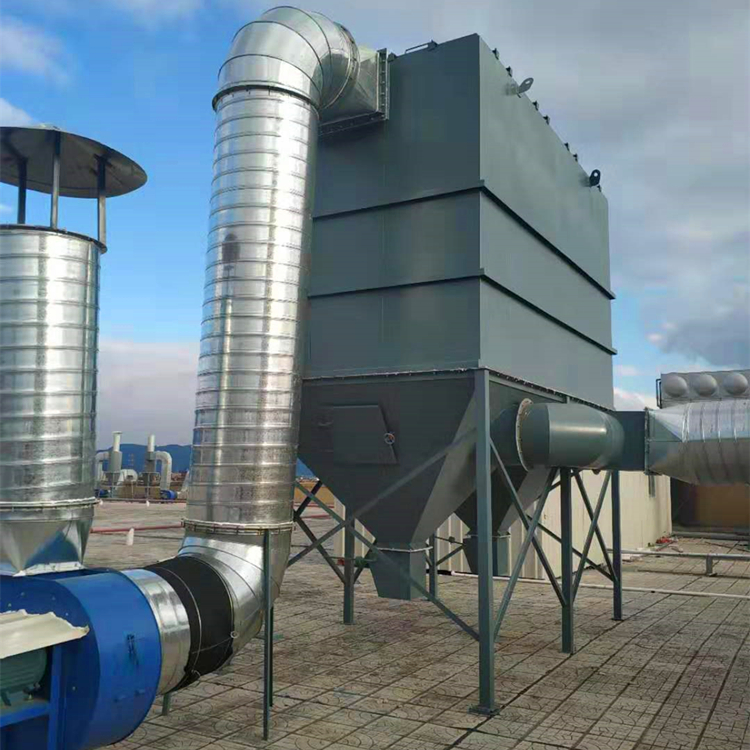
1. High dust removal and desulfurization efficiency;
2. Convenient management and small footprint;
3. Low energy consumption and low operating costs;
4. Long service life: The inner cylinder is made of corrosion-resistant and wear-resistant granite, which has a long service life;
5. The reaction product is a stable sulfur based compound without secondary pollution. The reactants can be used to make bricks or directly sent to cement plants for use as cement raw materials, achieving resource recycling and water recycling.
The condition of dust
The size of dust particles is a key factor affecting the outlet concentration. The dust outside the cyclone dust collector is subjected to two forces in the radial direction simultaneously. One is the centrifugal force generated by the tangential velocity of the rotating airflow, which causes the dust to be pushed outward; The other is the centripetal force generated by the radial velocity of the rotating airflow, which causes the dust to be pushed inward. At the interface between the inner and outer vortices, if the centrifugal force generated by tangential velocity is greater than the centripetal force generated by radial velocity, the dust will move towards the outer wall under the push of inertial centrifugal force and be separated; If the centrifugal force generated by tangential velocity is less than the centripetal force generated by radial velocity, the dust will enter the inner vortex under the push of centripetal force and finally be discharged through the exhaust duct. If the centrifugal force generated by tangential velocity is equal to the centripetal force generated by radial velocity, that is, the external force acting on the dust particles is zero, theoretically, the dust should rotate continuously at the interface. In fact, due to the turbulent airflow and various random factors, dust in this state has a 50% chance of entering the inner vortex and a 50% chance of moving towards the outer wall. The dust removal efficiency should be 50%. The critical dust particles separated at this time are called the segmented particle size. At this point, the interface between the inner and outer vortices is like a sieve with a divided particle size. Dust larger than the divided particle size is intercepted and captured by the sieve, while dust smaller than the divided particle size is discharged from the exhaust pipe through the sieve.
The smaller the particle size of the dust captured by the cyclone dust collector, the higher the dust removal efficiency of the dust collector. The magnitude of centrifugal force is related to dust particles, and the larger the particles, the greater the centrifugal force they are subjected to. When the particle size and tangential velocity of dust are larger, and the radial velocity and exhaust pipe diameter are smaller, the dust removal effect is better. The ash concentration in the gas is also a key factor affecting the outlet concentration. When the dust concentration increases, the dust tends to agglomerate, causing smaller dust particles to agglomerate and be captured. At the same time, larger particles will also be carried to the wall or separated by impact during their movement towards the wall. However, due to the high-speed downward rotation of the airflow inside the dust collector, the pressure at its top decreases. Some of the airflow also carries small dust particles and rotates upward along the outer wall to reach the top, then rotates downward along the outer wall of the exhaust pipe and is discharged through the exhaust pipe, resulting in the dust removal efficiency of the cyclone dust collector being impossible to reach 100%.
According to the formula for calculating dust removal efficiency, η=(1- So/Si) × 100%, where η - dust removal efficiency; So - the flow of dust at the exit, kg/h; Si - the inflow of dust at the inlet, kg/h。
Because the dust removal efficiency of a cyclone dust collector cannot be 100%, when the inflow of dust increases, although the dust removal efficiency improves, the absolute amount of dust discharged from the exhaust pipe will also greatly increase. So, to reduce the dust concentration at the discharge outlet, it is necessary to lower the dust concentration at the inlet. A multi-stage dust removal method using multiple cyclone dust collectors in series can be adopted to achieve the goal of reducing emissions.

Product Maintenance
Regularly check the operation of control valves, pulse valves, and timers.
The failure of the pulse valve rubber diaphragm is a common fault in bag filters, which directly affects the dust cleaning effect. This device belongs to the external filter type, with a skeleton inside the bag. It is necessary to check whether the parts that fix the filter bag are loose and whether the tension of the filter bag is appropriate. Is the support frame smooth to prevent wear and tear on the filter bag. Compressed air is used for dust removal. Therefore, it is required to remove oil mist and water droplets, and the oil-water separator must be cleaned regularly to prevent malfunction of the moving mechanism and blockage of the filter bag.
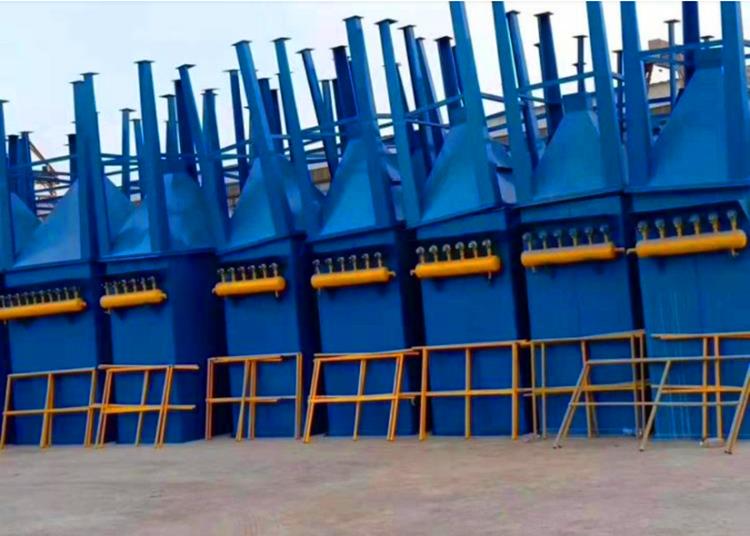
Whether the air volume and pressure and temperature at each testing point are consistent with the design.
The installation status of the 3 filter bags, whether there are any occurrences of bag dropping, loosening, wear, etc. after use, can be judged by visually observing the emissions of the chimney after operation.
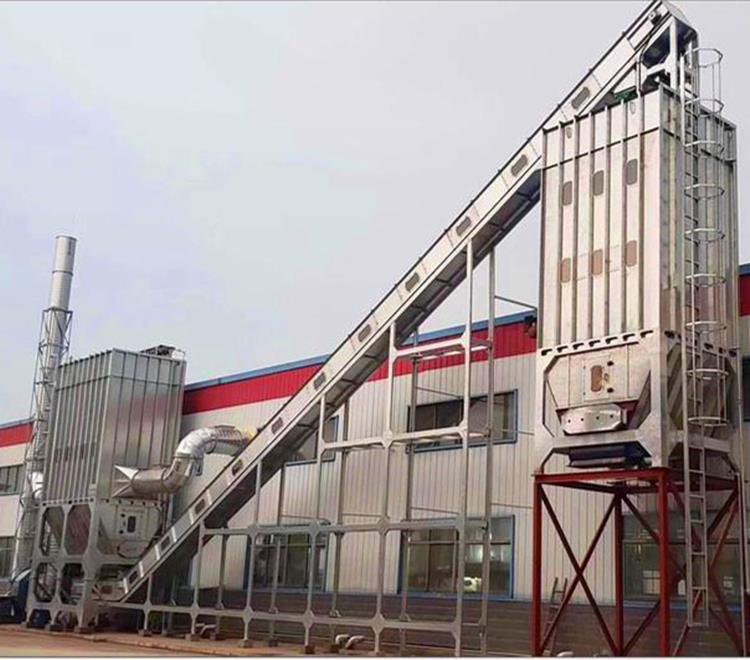
4. Prevent condensation
During use, it is necessary to prevent the gas from cooling below the dew point in the bag chamber, especially when using a bag filter under negative pressure. Due to the frequent leakage of air into the outer shell, the gas temperature in the bag chamber is lower than the dew point, causing the filter bag to become damp. This results in dust not being loose but sticking to the filter bag, blocking the fabric holes and causing dust removal failure. This leads to excessive pressure drop in the dust collector, making it unable to continue operating, and some bags may become stuck and unable to remove dust.
To prevent condensation, it is necessary to maintain the temperature of the gas in the dust collector and its system at 25-35 ℃ above its dew point (such as the dew point temperature of 58 ℃ for kiln mill integrated machines, and the operating temperature should be above 90 ℃), in order to ensure the good use effect of the filter bag.


AfterSalesService :
Key words:- bag filter