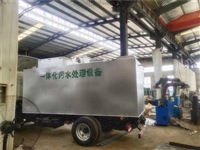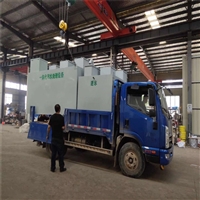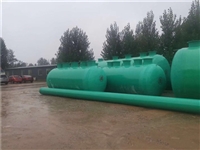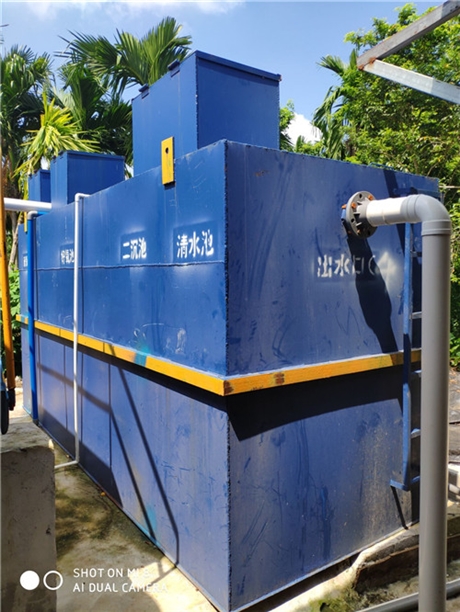

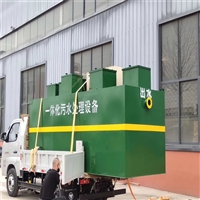
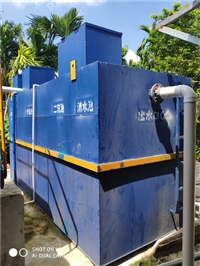


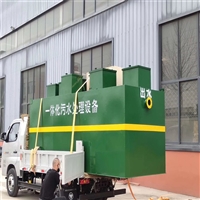
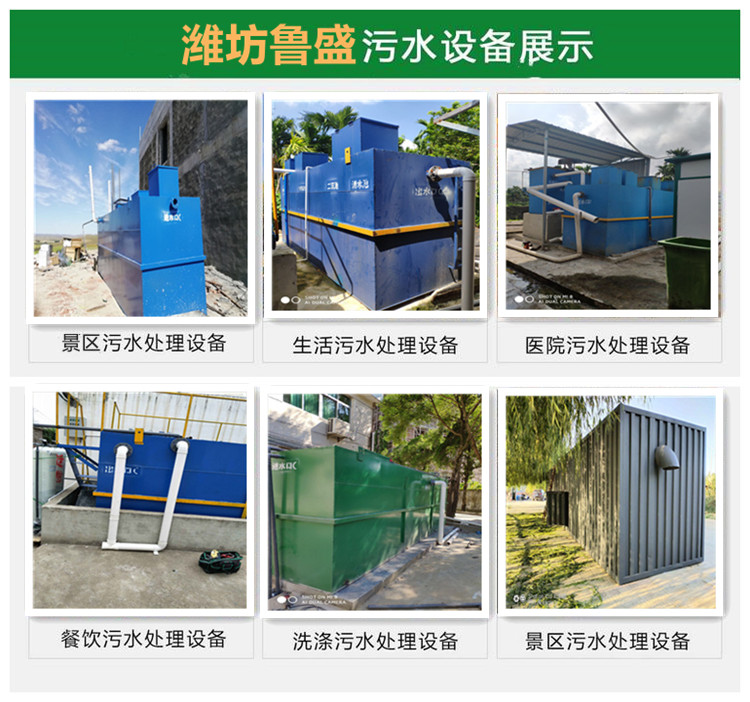
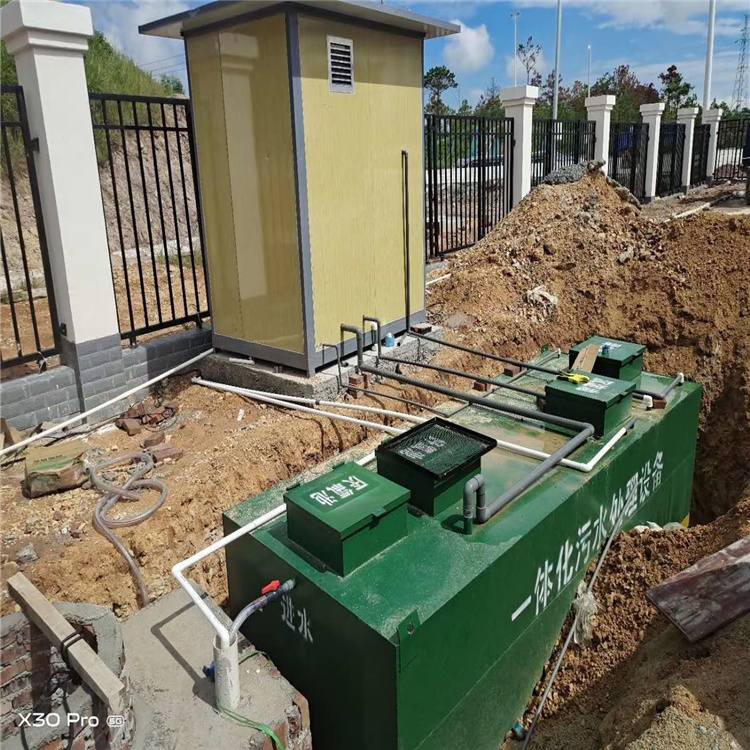
100 person integrated sewage treatment equipment, 10m/d integrated sewage treatment equipment
Category:
Environmental Protection/Sewage treatment equipment/Buried sewage treatment equipment
Model:
wsz
Brand:
Weifang Lusheng Water Treatment
model:
wsz
purpose:
Dealing with domestic sewage, toilet sewage, industrial sewage, medical sewage, etc
Processing & Customization:
No
Wastewater treatment capacity:
Ranging from 0.5m3 to 1000m3
Decontamination rate:
99%
noise:
fifty
pump power:
three hundred and sixty
Overall dimensions:
Determine size based on water volume
Ozone consumption:
not equal
Capacity of gas storage tank:
five
Diameter of water outlet pipe:
zero point five
Inlet pipe diameter:
zero point five
Aeration machine power:
two hundred and twenty
Place of Origin:
Shandong
Is it a cross-border source of goods:
No
manufacturer:
Weifang Lusheng Water Treatment Equipment Co., Ltd
Retail Price
33,400.00USD
重量
kg
- Product Description
-
model wsz
purpose Dealing with domestic sewage, toilet sewage, industrial sewage, medical sewage, etc
Processing & Customization No
Wastewater treatment capacity Ranging from 0.5m3 to 1000m3
Decontamination rate 99%
noise fifty
pump power three hundred and sixty
Overall dimensions Determine size based on water volume
Ozone consumption not equal
Capacity of gas storage tank five
Diameter of water outlet pipe zero point five
Inlet pipe diameter zero point five
Aeration machine power two hundred and twenty
Place of Origin Shandong
Is it a cross-border source of goods No
manufacturer Weifang Lusheng Water Treatment Equipment Co., Ltd
Description :
100 person integrated sewage treatment equipment, 10m/d integrated sewage treatment equipment
With the significant improvement of China's economy and industrial production efficiency, the discharge of domestic and industrial sewage is higher than before, and the concentration of phosphorus compounds in sewage is also higher. This not only causes great harm to the local water microbial environment, but also makes eutrophic water bodies more likely to affect modern urban water safety, making it difficult to effectively implement water resource management quality. Therefore, the application of chemical phosphorus removal agents has greater significance for in-depth research.
Overview of Classification and Characteristics of Wastewater Phosphorus Removal Processes
The sewage phosphorus removal process can be mainly divided into two forms: biological phosphorus removal and chemical phosphorus removal. Although biological phosphorus removal does not require the use of any chemicals, it effectively reduces cost consumption and sludge production, and reduces the probability of chemical pollution. However, excessive dependence on wastewater components limits the effectiveness of biological phosphorus removal processes, resulting in significantly insufficient stability and flexibility of phosphorus removal. This can easily cause secondary pollution of sewage and make it difficult to meet China's sewage discharge standards. The chemical phosphorus removal process has a wide range of practicality and extremely obvious effects, so this type of process is currently the main method used in sewage treatment in China.


Analysis of Reaction Characteristics of Chemical Phosphorus Removal Agents
According to previous data on the use of chemical treatment agents, wastewater treatment is mainly based on the influence of pH and phosphorus containing compounds. Metal salt agents are mostly chosen for reaction, so that phosphorus containing compounds can be effectively replaced and become precipitates to isolate them from water resources. At the same time, it can also adjust the pH value of the water body appropriately, ensuring the quality of water resources. And flocs can separate sediment from water, reducing the probability of phosphorus containing compounds and displaced metals entering the external environment with water flow, thus achieving the basic purpose of chemical phosphorus removal. And in the process of analyzing the reaction characteristics of chemical phosphorus removal agents, it can be divided into the following steps:
Firstly, during the process of introducing chemical agents into wastewater resources, sedimentation and agglomeration reactions occur simultaneously, causing chemical agent particles to react in a short period of time, resulting in the rapid precipitation and agglomeration of phosphorus containing compounds and metal particles into large particles. Secondly, during the flocculation process, it can combine with the water quality environment to form floc structures, which can block large particles and prevent them from being mixed in the sewage and discharged into the external ecological environment. By leveraging the quality characteristics of phosphorus containing compounds and metal elements, the requirement for solid-liquid separation can be achieved, allowing pollutants to accumulate in the pit and tank, so that after sewage discharge, pollutants can be effectively cleaned up separately.
Application of Artificial Wetland Technology in Wastewater Treatment
1. Choose aquatic plants
When building artificial wetlands, there are differences in different locations, and the types of artificial wetlands are also different. Artificial wetlands are composed of two different forms, namely subsurface flow and surface flow. If the temperature is low, surface flow technology should be applied when treating wastewater. However, if the surface temperature decreases, it will lead to a decrease in the basic activity of plants. At the same time, there is not enough oxygen in the ice layer to achieve the desired usage effect. The characteristics of using subsurface flow constructed wetland technology to treat sewage are very significant, with features such as coverage. In addition, if in a low-temperature state, subsurface flow is much better than surface flow, such as better insulation properties. Therefore, when constructing artificial wetlands, the staff should fully consider the temperature changes and actual situations in different regions, choose standardized and reasonable artificial wetland technologies, and make the role of artificial wetland technology play a role. Elements, choose suitable aquatic plants. From a certain perspective, the effectiveness of sewage treatment is influenced by artificial wetland technology and aquatic plants. However, the growth of aquatic plants is greatly limited by seasons, such as lower temperatures in the north, frozen water surfaces, and poor sewage treatment efficiency.
AfterSalesService :
Key words:- Integrated sewage treatment equipment