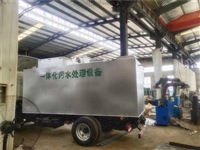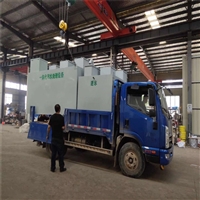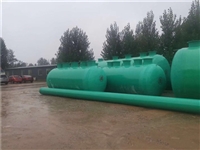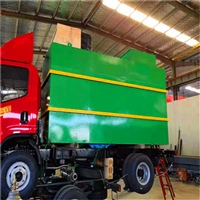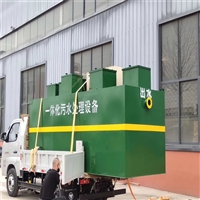
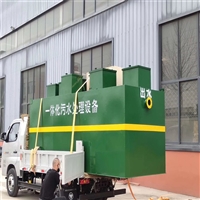
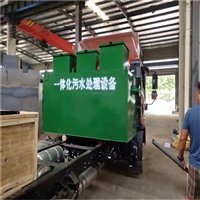


10 ton/day integrated domestic sewage treatment equipment Lusheng Water Treatment
Category:
Environmental Protection/Sewage treatment equipment/Buried sewage treatment equipment
Model:
wsz
Brand:
Weifang Lusheng Water Treatment
Retail Price
25,100.00USD
重量
kg
- Product Description
-
Description :
10 tons/day integrated domestic sewage treatment equipment
Lusheng Environmental Protection mainly treats domestic sewage, medical sewage, and hospital comprehensive sewage, and the treatment results meet the discharge standards,
Underground sewage treatment equipment, integrated sewage treatment equipment, hospital sewage treatment equipment, dosing device, disinfection device, air flotation machine....
Engaged in the research and development, production, sales, and technical services of sewage treatment equipment for daily life, hospitals, and other purposes.


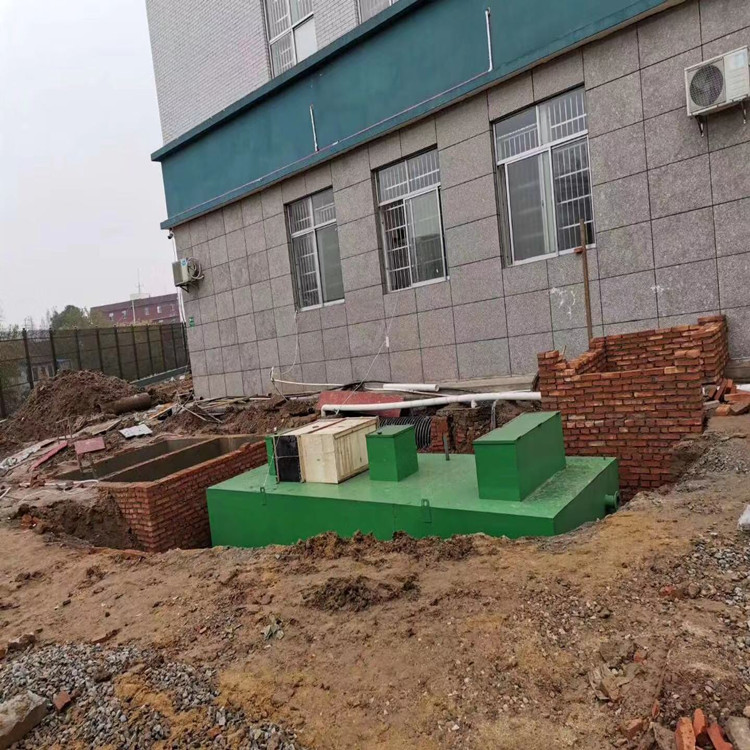
Artificial wetlands are suitable for the treatment of small-scale wastewater with long frost free periods and long plant growth periods. Before entering the wetland, pre-treatment is set according to different water quality. Kitchen wastewater needs to be separated from oil, and those with high suspended solids need to be settled, rather than directly throwing domestic sewage into the artificial wetland. Several types of artificial wetlands can be used in conjunction with biological ponds and other facilities.
The design of artificial wetlands is based on the recently released specification "Technical Specification for Artificial Wetland Wastewater Treatment Engineering" HJ 2005-2010 by the Ministry of Environmental Protection, which includes requirements for inlet water quality and pretreatment. The "Construction Standards for Small Town Sewage Treatment" issued by the Ministry of Construction in 2011 encourage the use of natural treatment processes such as biological ponds and artificial wetlands for domestic sewage with a daily discharge of less than 3000 cubic meters. It also proposes that the effluent discharge standards are the second and third level standards in the "Discharge Standards for Urban Sewage Treatment Plants" GB18918 (third level standards for sewage below 3000 cubic meters), which are suitable for the actual situation of small towns. The advantages of natural treatment methods are low investment, low operating costs, convenient management, and good landscape effects. If mechanical equipment is used as the main treatment process, the operating cost of these small sewage treatment plants is generally above 0.8 yuan/m3, which small towns cannot afford. After completion, their fate is to bask in the sun.
Like other sewage treatment facilities, the management of constructed wetlands after construction is very important, including daily management such as plant replanting, solid waste cleaning, plant harvesting and disposal, water level control, and filling material replacement.
Firstly, the management of a successful artificial wetland should be convenient. Many nitrogen fixing and phosphorus fixing plants are planted in the wetland, and the cleaning of herbaceous plants is the focus of management. Plants absorb eutrophic pollutants as nutrients during their growth process, and are producers of nutrients throughout their entire life cycle. They absorb solar energy and produce nutrients through photosynthesis, such as reeds, which wither in autumn in a poetic and picturesque way... If not cleaned up, the eutrophication of wetland water bodies will be exacerbated, and the previous work of pollutant decomposition and absorption will be in vain; But if it is to be cleaned up, who will organize the corresponding manual organization, post harvest plant processing compost, etc? Who will manage it? Who provides the funding? On the other hand, in areas where artificial wetlands are currently used for sewage treatment in China, the inflow of sewage is mostly untreated raw water (some have undergone a simple primary treatment), but wetlands can generally only be used to treat effluent that has undergone secondary treatment. Therefore, it can be imagined that the treatment effect of sewage in the early stage of wetland construction is quite good. However, when the pollution absorption of artificial wetlands reaches a saturation point a few years later, not only can the newly introduced sewage not be effectively treated and decomposed, but also a large number of withered plants rot and emit odors, becoming new internal pollutants. At this time, the artificial wetland basically becomes a decoration, and the pollutants in the adsorption wetland are likely to become secondary pollution sources, attracting mosquitoes and flies, causing adverse effects on the environment and threatening the safety and hygiene of surrounding residents' lives and work.
AfterSalesService :
Key words:- Domestic sewage treatment equipment