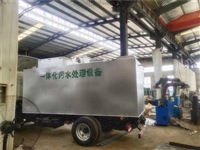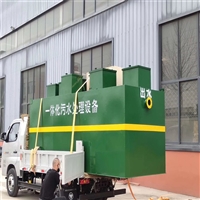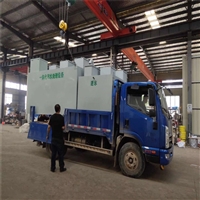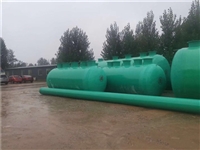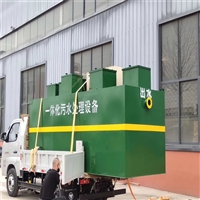
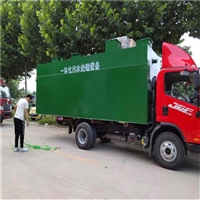
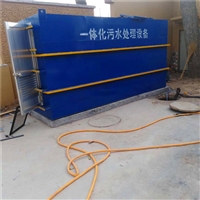

10t/d integrated domestic sewage treatment equipment
Category:
Environmental Protection/Sewage treatment equipment/Buried sewage treatment equipment
Model:
wsz
Brand:
Weifang Lusheng Water Treatment
Retail Price
32,100.00USD
重量
kg
- Product Description
-
Description :
10t/d integrated domestic sewage treatment equipment
We produce sewage equipment and ship it quickly.
The company's flagship products; Underground integrated sewage treatment equipment, chlorine dioxide generator, dosing device, air flotation machine, UASB anaerobic tank, mechanical grid, filter press, etc.

1、 Remove impurities and sand
To reduce the load of complex components in black and odorous water sludge on subsequent processes, it is necessary to first remove impurities and sand from the incoming slurry. Drawing on the experience of sewage treatment, the combination of grille and sedimentation tank is currently the most commonly used impurity and sand removal device for black and odorous water sediment. However, the composition of the sediment in black and odorous water bodies is complex, with large particles such as bricks and stones mixed in the mud, irregular in shape, and relatively heavy in weight, which can cause significant impact on the grid machine. The toothed rake is easily damaged, making the grid machine unable to operate normally. In addition, the spacing between the grid bars is large (if it is too small, it is easy to block), and the composition entering the sedimentation tank is still relatively complex, making it difficult to classify and utilize the sediment in the sedimentation tank.
The mud purifier transformed from shield tunneling mud treatment equipment adopts a combination of vibrating screen and hydraulic cyclone to remove impurities and sand from the sediment, and the engineering implementation effect is significant. After the sediment is transported to the equipment, particles larger than 3mm are first screened out through a pre sieve (made of stainless steel with a sieve hole diameter of 3mm). Particles smaller than 3mm enter the cyclone screening system with the mud, while particles larger than 0.02mm (with a separation particle size D50) are separated from the mud after cyclone and re screening. Fine particulate matter can be separated in multiple stages through a multi-stage cyclone, providing favorable conditions for subsequent resource utilization. The screened slag can be classified according to different particle sizes. Household waste, wooden blocks, shells, etc. can be sent to the nearest landfill for burial; Coarse gravel can be used for filling; Fine sand can be directly used as building materials for secondary utilization.
2、 Sludge concentration
After being treated by the impurity and sand removal equipment, the mud still has a high moisture content and must be concentrated and precipitated first to reduce the volume of sludge entering the drying process. In the sewage treatment industry, gravity concentration, air flotation concentration, and mechanical concentration are currently the mainstream sludge concentration processes. However, in the construction of black and odorous water sediment dredging, due to the large and unstable amount of sludge slurry, achieving continuous production is the primary task. Therefore, the gravity sedimentation process that can operate stably is.
Gravity precipitation is divided into two types: natural precipitation and coagulation precipitation. Natural sedimentation does not add any chemicals and relies solely on gravity to complete the settling of suspended sludge. It has low energy consumption and stable operation, but requires a large footprint to meet continuous production, and the solid content of concentrated sediment is also low. Coagulation sedimentation requires the addition of a certain amount of chemical sludge for sedimentation, which is costly and consumes more energy than natural sedimentation. However, it occupies a small area, has high efficiency, and has a high solid content in concentrated sediment, usually up to 20% -30%. It can greatly reduce the slurry volume of subsequent processes and significantly reduce the amount of slurry. Specific construction can be carried out based on the actual conditions of the project, taking into account factors such as land area, chemical cost, personnel and equipment investment, and selecting a process plan that combines economic benefits and social value.
3、 Sludge drying
The methods for drying sludge in black and odorous water bodies include preloading (vacuum, heap loading), plate and frame pressure filtration, centrifugal dewatering, geotextile bag method, and active ditch drainage drying. The current method for rapid drying of black and odorous water dredging sediment is to first use coagulants and solidifying agents for conditioning, and then perform plate and frame pressure filtration. The higher the pressure on the plate and frame, the lower the moisture content of the filter cake, and the better the sludge dewatering effect. However, when the pressure is too high, it is easy to cause material leakage; The longer the filtration time, the larger the volume of net filtrate obtained, and the better the sludge dewatering effect. However, after reaching a certain length of filtration time, the filtration time is further extended, and the dewatering effect does not change significantly; Within the same filtration pressure and filtration time, as the dosage of flocculant increases, the sludge dewatering speed continuously accelerates and the sludge dewatering effect also improves. So when choosing the mechanical dehydration method, it is necessary to conduct experiments to determine the appropriate pressure and time for pressure filtration, and consider determining the appropriate dosage of flocculant and curing agent from an economic perspective.
4、 Tail water treatment
To ensure that the clear liquid and squeezed water on the concentration tank meet the discharge standards, it is necessary to treat the tail water before discharging it. At present, tailwater treatment mainly focuses on physical, chemical and biological treatment, including coagulation and sedimentation method, membrane bioreactor (MBR) technology, aerated biofilter technology, biological contact oxidation method, ecological wetland, artificial pond and other process technologies.
In the context of tight construction schedules and large processing volumes, the coagulation sedimentation deep treatment method is a more suitable tail water treatment method that meets the requirements. Tailwater coagulation sedimentation reduces the color and turbidity of water by adding coagulants to remove small suspended solids, including organic and inorganic impurities, and lowers the concentration of dissolved impurities in the water to meet discharge requirements.
Under stricter requirements such as large processing capacity and small site, magnetic powder is added to coagulants to form micro floc particles that can act on magnetic fields, such as suspended solids, colloidal substances, algae, phosphorus, etc. Then, they are quickly separated from the water by magnetic force. This ultra magnetic separation purification method has a short residence time, can operate continuously, occupies a small area, and has a large processing capacity, making it an option for the treatment of black and odorous water tail water.
AfterSalesService :
Key words:- Domestic sewage treatment equipment