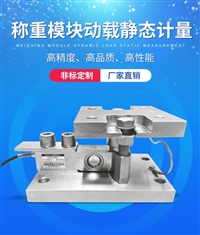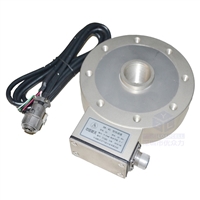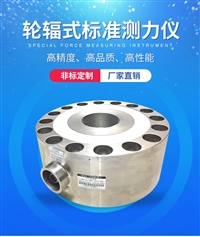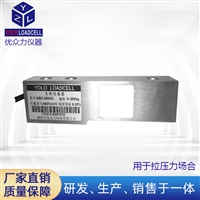

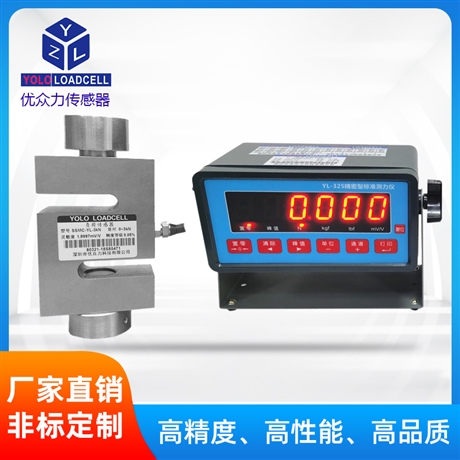

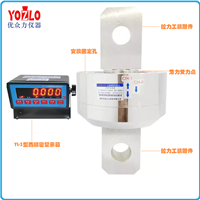
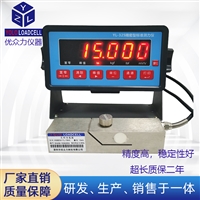
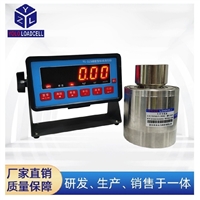
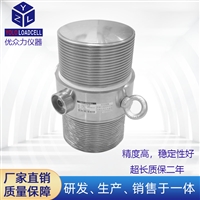
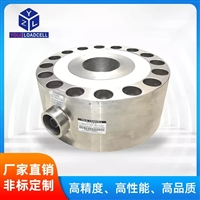
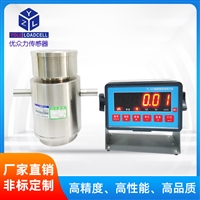
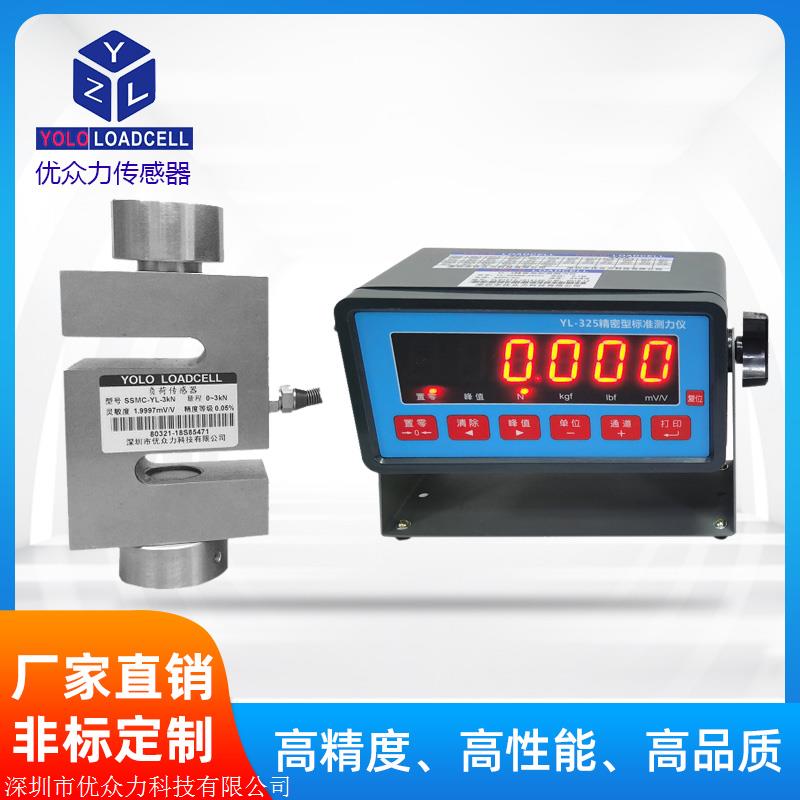
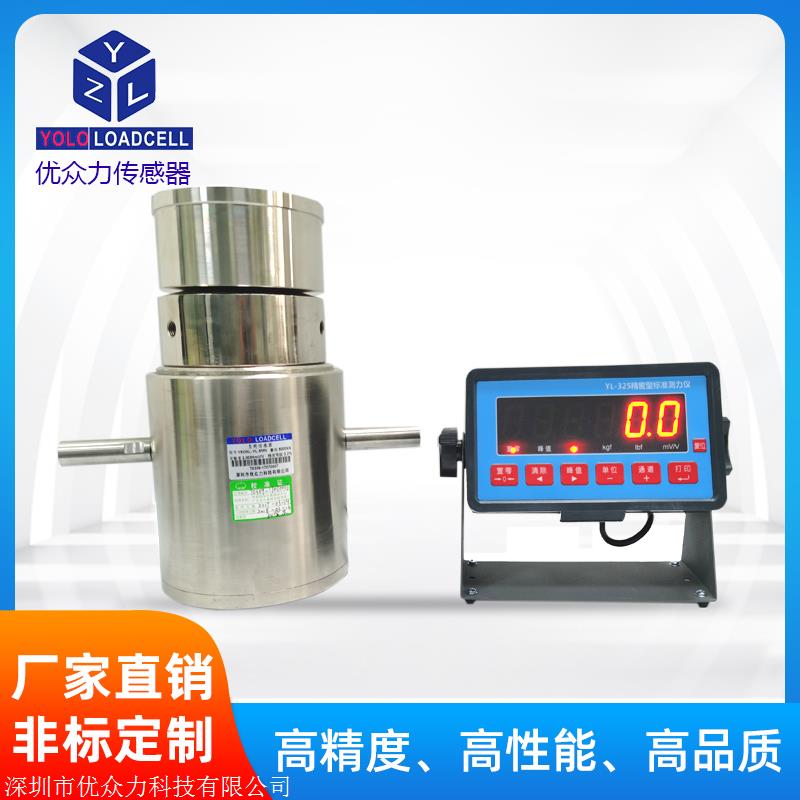
100N laboratory calibration standard force gauge 500N tensile force sensor
Category:
Instrumentation/Mechanical quantity instrument/Force measuring instrument
Model:
100N laboratory calibration standard force gauge 500N tensile force sensor
Brand:
Youzhongli
model:
100N laboratory calibration standard force gauge 500N tensile force sensor
Type of force measurement:
pull
display form:
Digital Display
type:
Digital force measuring instrument
measurement accuracy:
0.1 level 0.3 level
Scope of Application:
electrical
measurement range:
0-300kN
Processing & Customization:
No
weight:
one point four five
Place of Origin:
Shenzhen
manufacturer:
Shenzhen Youzhongli Technology Co., Ltd
Retail Price
180.00USD
重量
kg
- Product Description
-
model 100N laboratory calibration standard force gauge 500N tensile force sensor
Type of force measurement pull
display form Digital Display
type Digital force measuring instrument
measurement accuracy 0.1 level 0.3 level
Scope of Application electrical
measurement range 0-300kN
Processing & Customization No
weight one point four five
Place of Origin Shenzhen
manufacturer Shenzhen Youzhongli Technology Co., Ltd
Description :
Introduction to 100N laboratory calibration standard force gauge and 500N tensile force sensorYouzhongli's various force sensors can be divided into button type, tension pressure type, column type, spoke type, etc. according to their structure, and various structures meet the needs of different installation scenarios. Instruments can be selected according to on-site requirements, including economical instruments, control instruments, handheld instruments, standard instruments, etc.
The usage method of standard force measuring instruments is particularly important. Improper operation may affect the service life of the force measuring instrument and cause damage to the instrument. We hope the following methods can be helpful to you.
1. It is made according to the principle that the greater the tension applied to the spring, the longer the spring will elongate;
2. Observe smaller scale values: What N does each small grid of the spring scale represent;
3. Observation range: Observe the larger scale value on the spring scale panel, and be careful not to apply force beyond its range;
4. Apply tension along the central axis of the spring on the spring scale;
5. Zero point calibration: Check if the pointer is pointing to the zero position. If not, adjust it to the zero mark;
Before use, gently pull the spring a few times to avoid it getting stuck;
7. Observe that the pointer reading line is perpendicular to the scale line;
Before measurement, the spring should naturally sag and check if the pointer is aligned with the zero mark;
9. The measured force cannot exceed its measurement range;
10. The reading must be read in a stationary state.
The placement time of force sensors in standard environments
The force sensor should be placed under standard inspection conditions for a sufficient period of time to ensure that its temperature is the same as and stable under standard inspection conditions. The placement time of the sensor should not be less than 8 hours
Connection and preheating of force sensor
Before inspection, the force sensor should be connected to the excitation and indicator instruments according to the correct wiring method. When using an external excitation power supply, the excitation power supply should be adjusted with a load (i.e. the input terminal of the force sensor is connected to the excitation power supply), and the output voltage of the excitation power supply should be adjusted to the excitation voltage specified by the force sensor, and then powered on for preheating. The preheating time should not be less than 0.5 hours, and testing can only be carried out after all parts have stabilized.
100N laboratory calibration standard force gauge 500N tensile force sensor:


AfterSalesService :
Key words:- 100N laboratory calibration standard force measuring instrument