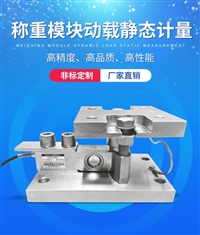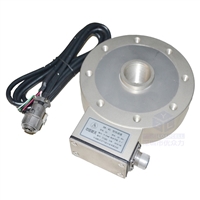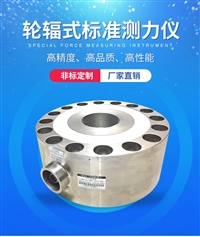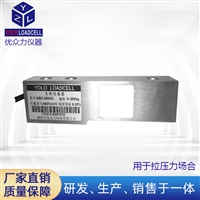

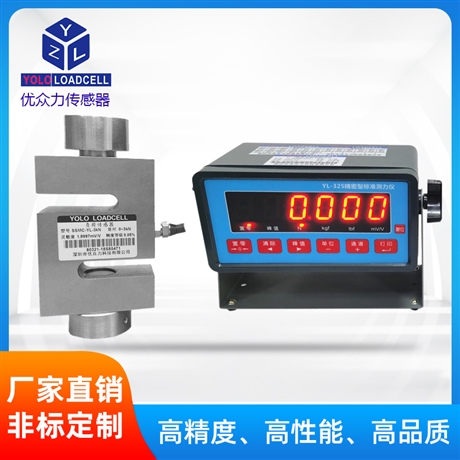

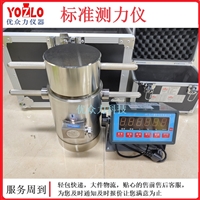
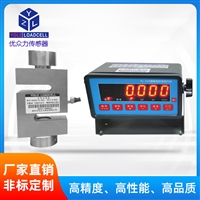
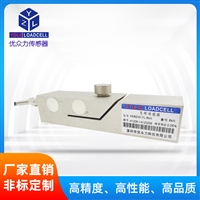
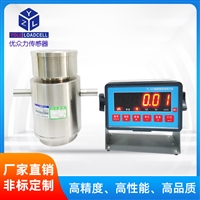
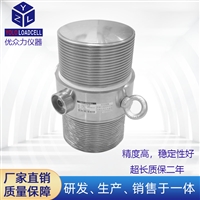
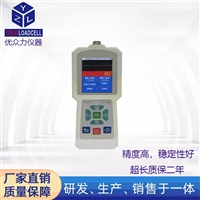
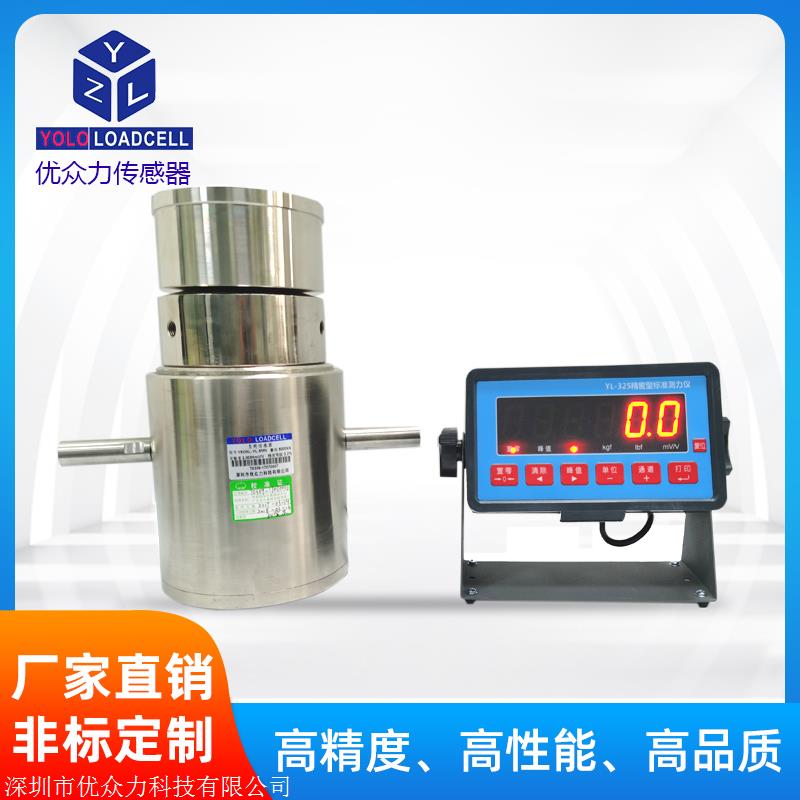
Special standard force measuring instrument for anti bending machine 10kN tensile testing machine standard force measuring instrument 100kN
Category:
Instrumentation/Standard measuring instruments/Mechanical metrological standard instruments
Model:
Special standard force measuring instrument for anti bending machine 10kN tensile testing machine st
Brand:
Youzhongli
model:
Special standard force measuring instrument for anti bending machine 10kN tensile testing machine standard force measuring instrument 100kN
measurement object:
force value
Type of force measurement:
pressure
measurement range:
processing
measurement accuracy:
Level 0.3
Scope of Application:
0-2000kN
Processing & Customization:
No
Overall dimensions:
-
weight:
forty-five
Place of Origin:
Shenzhen
manufacturer:
Youzhongli
Retail Price
280.00USD
重量
kg
- Product Description
-
model Special standard force measuring instrument for anti bending machine 10kN tensile testing machine standard force measuring instrument 100kN
measurement object force value
Type of force measurement pressure
measurement range processing
measurement accuracy Level 0.3
Scope of Application 0-2000kN
Processing & Customization No
Overall dimensions -
weight forty-five
Place of Origin Shenzhen
manufacturer Youzhongli
Description :
Special standard force measuring instrument for anti bending machine 10kN tensile testing machine standard force measuring instrument 100kN Product introduction and description:
The difference between error and uncertainty of standard force measuring instruments
It is important to distinguish between error and uncertainty. Error is defined as the difference between a single measured result and the true value. So, the error is a single numerical value. In principle, the numerical values of known errors can be used to correct the results.
Note: Error is an ideal concept and cannot be precisely known.
2. Uncertainty is expressed in the form of an interval, which can be applied to all the measured values described when evaluating an analytical process and a specified sample type. Generally, uncertainty values cannot be used to correct measurement results.
The difference between error and uncertainty is also reflected in the fact that the corrected analysis results may be very close to the measured values, so the error can be ignored. However, the uncertainty may still be significant as analysts are uncertain about the closeness of the measurement results.
The uncertainty of measurement results cannot be explained as representing the error itself or the residual error after correction.
5. It is generally believed that errors contain two components, namely the random component and the systematic component.
6. Random errors typically arise from unpredictable changes in the influencing variables. These random effects cause changes in the results of repeated observations being measured. The random error in the analysis results cannot be eliminated, but it can usually be reduced by increasing the number of observations. In fact, the experimental standard deviation of the arithmetic mean or the average of a series of observed values is not the random error of the mean. It is a measure of the average uncertainty generated by some random effects. The exact value of the random error of the mean generated by these random effects is unknown.
7. Systematic error is defined as the error component that remains constant or changes in a predictable manner during the analysis of a large number of measurements. It is independent of the number of measurements, so it cannot be reduced by increasing the number of analyses under the same measurement conditions
8. Constant system errors, such as reagent blanks not taken into account in quantitative analysis or inaccuracies in multi-point device calibration, are constant at a given measurement level, but may also vary with different measurement levels
In a series of analyses, the influencing factors undergo systematic changes in quantity, such as those caused by insufficient control of experimental conditions, which can result in unstable system errors
Example 1: During chemical analysis, the temperature of a group of samples gradually increases, which may lead to a gradual change in the results.
Example 2: Throughout the entire experiment, there may be aging effects on the sensors and probes, as well as the introduction of unstable system errors.
Special standard force measuring instrument for anti bending machine 10kN tensile testing machine standard force measuring instrument 100kN:

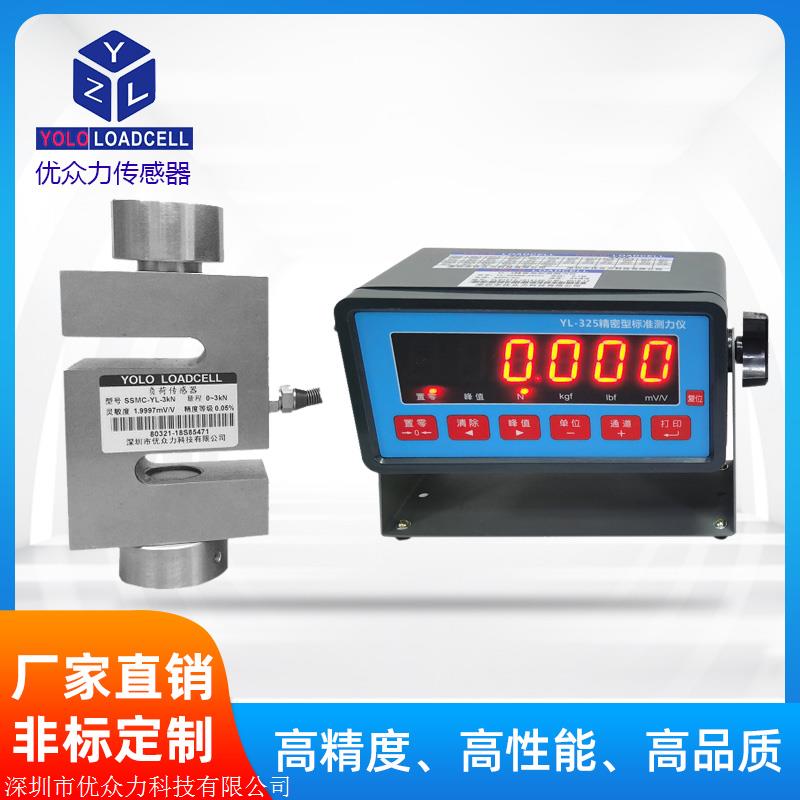
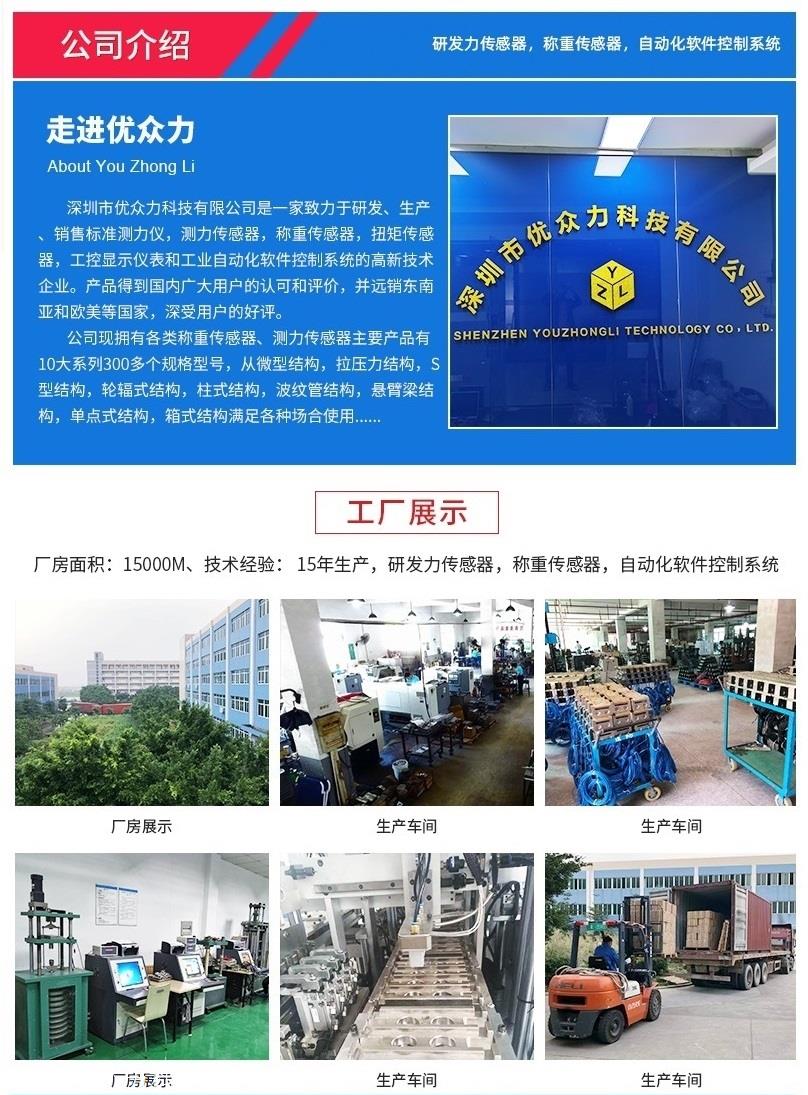

Shenzhen Youzhongli Technology Co., Ltd. adheres to the business philosophy of "specializing in sensors and doing well in sensors", supplying various weighing sensors and ingredient control systems to provide you with cost-effective products;
The company has hundreds of models of various weighing sensors and force sensors, various intelligent application instruments and systems, as well as various overload protection devices for lifting machinery. The product is widely used in fields such as chemical engineering, mining, oil fields, automobiles, lifting machinery, construction, building materials, mechanical processing, thermal power, and transportation.
AfterSalesService :
Key words:- Tensile testing machine standard force measuring instrument