

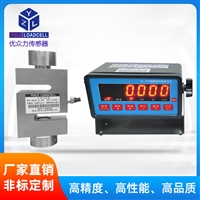

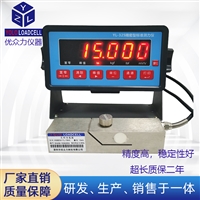
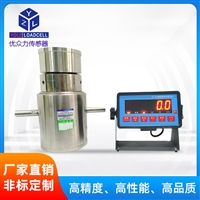
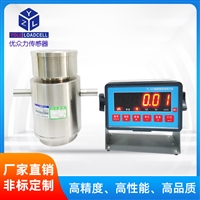
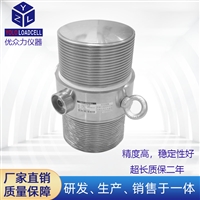
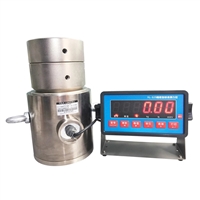
500Nm torque wrench tester coaxiality tester 0.3 level laboratory standard force tester 50kN
Category:
Instrumentation/Standard measuring instruments/Mechanical metrological standard instruments
Model:
500Nm torque wrench tester coaxiality tester 0.3 level laboratory standard force tester 50kN
Brand:
Youzhongli
model:
500Nm torque wrench tester coaxiality tester 0.3 level laboratory standard force tester 50kN
measurement object:
force value
Type of force measurement:
pressure
measurement range:
processing
measurement accuracy:
Level 0.3
Scope of Application:
0-500Nm
Processing & Customization:
No
Overall dimensions:
-
weight:
two
Place of Origin:
Shenzhen
manufacturer:
Youzhongli
Retail Price
280.00USD
重量
kg
- Product Description
-
model 500Nm torque wrench tester coaxiality tester 0.3 level laboratory standard force tester 50kN
measurement object force value
Type of force measurement pressure
measurement range processing
measurement accuracy Level 0.3
Scope of Application 0-500Nm
Processing & Customization No
Overall dimensions -
weight two
Place of Origin Shenzhen
manufacturer Youzhongli
Description :
500Nm torque wrench tester coaxiality tester 0.3 level laboratory standard force tester 50kN product introductionSuitable for force measurement calibration, various measurement and force standard laboratories, automated force measurement, industrial force measurement, university experiments, research institutes, measurement and testing institutions, and other industries' measurement and testing. Discounted price, high-precision force measuring instrument, can come with a calibration certificate from the National Institute of Metrology, and comes with an 18 month warranty.


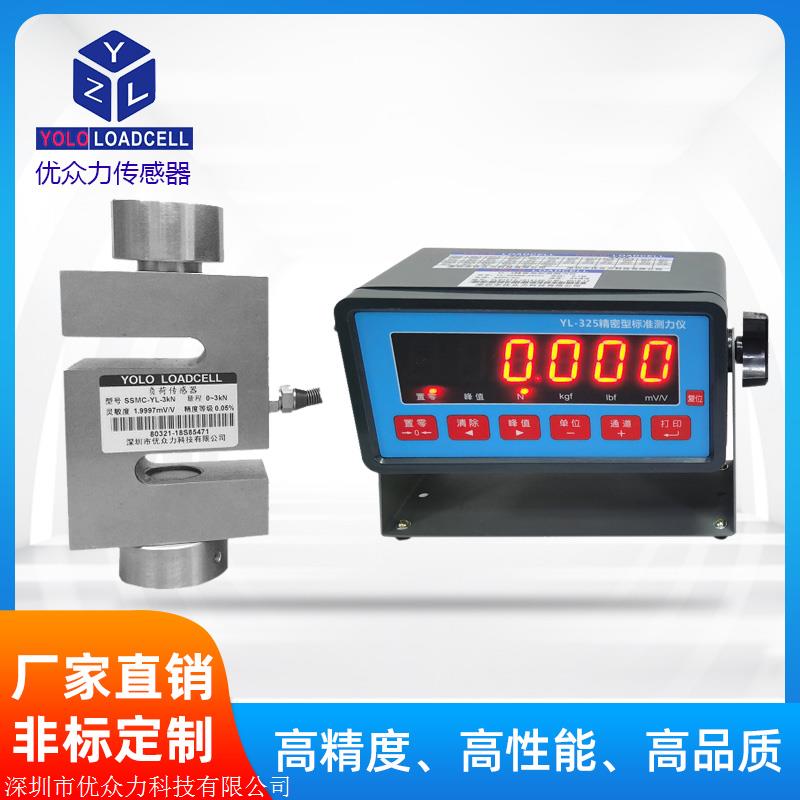
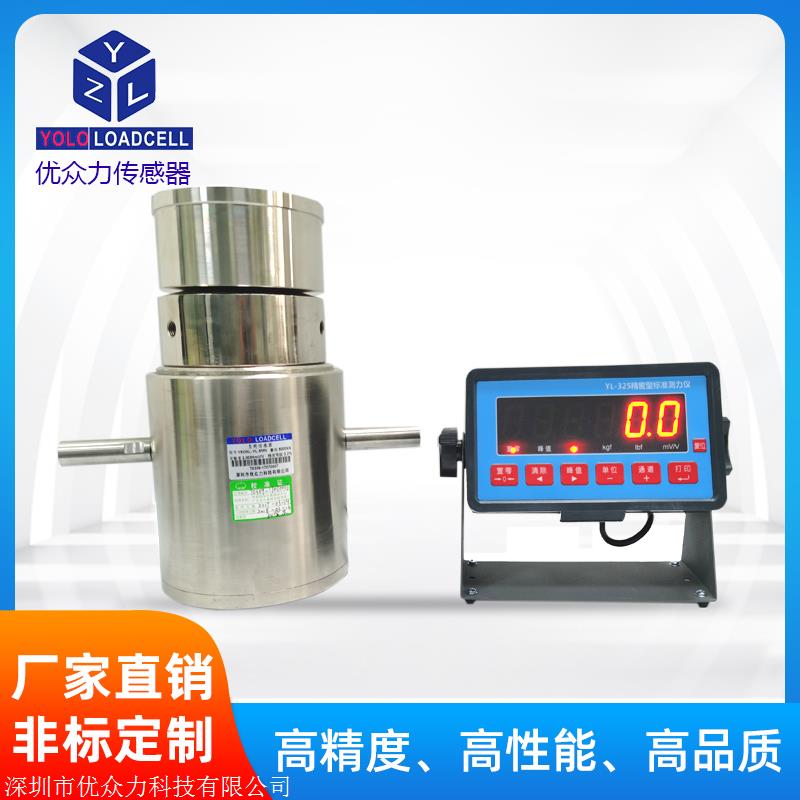
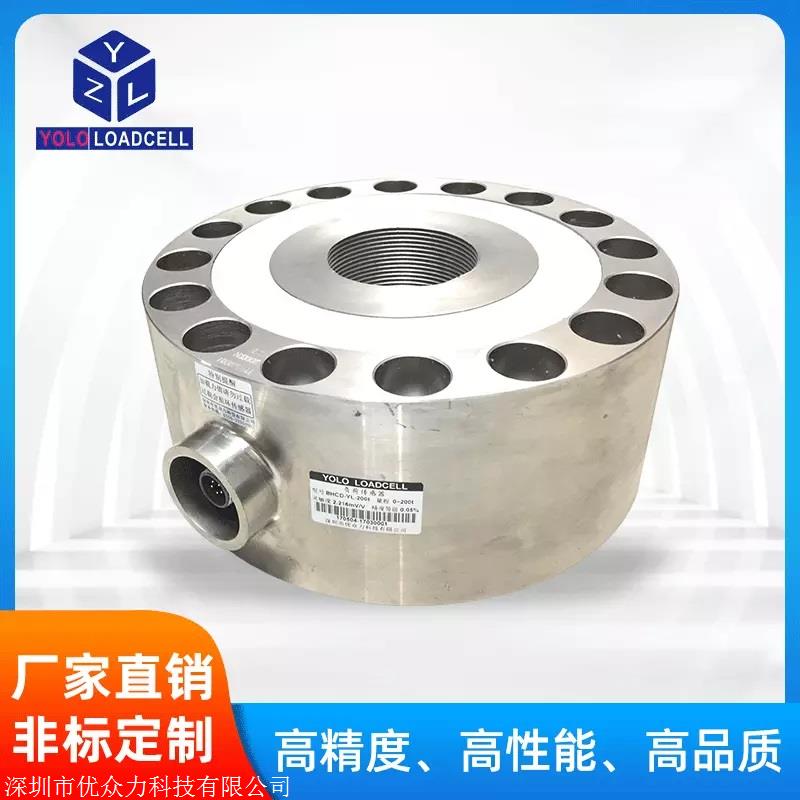
500Nm torque wrench tester coaxiality tester 0.3 level laboratory standard force tester 50kN:
The extensometer calibrator is developed and designed according to the requirements of JJG762-92 extensometer calibration regulations, specifically for calibrating various types of extensometers. It is also widely used for the calibration of displacement sensors and corresponding dial gauges and micrometers.
The extensometer calibrator consists of a rigid bracket, measuring fixture, and micrometer head, and is used to calibrate various extensometers within a gauge length of 100mm. It has the characteristics of high accuracy, light weight, and easy use. The clamping method is reasonable, the use is convenient, and it is suitable for extensometers of different specifications. The extensometer calibrator is an ideal instrument for laboratory testing.
Technical Specifications:
Measurement range: 0-25mm
Measurement error: 0.0002mm
Minimum resolution: 0.5 μ m
Range of gauge length: 0-10mm, 0-25mm, 0-50mm, 0-100mm
The extensometer calibrator is a purely mechanical high-precision displacement micrometer instrument. According to the requirements of JJG762-92 extensometer calibration regulations, it is specifically used for the calibration of various extensometers, and is also widely used for the calibration of displacement sensors and corresponding dial gauges and micrometers.
The selection and testing of the calibration range and detection points for extensometers using an extensometer calibrator:
(1) The calibration range of the extensometer calibrator should be determined based on the technical parameters of the material to be tested by the extensometer. For example, if using a 50mm gauge length extensometer to test the σ P0.2 technical data of a steel sample, please choose a calibration range of 1mm. If measuring the value of n, a calibration range of 25mm is required.
(2) The selection of calibration points for extensometer calibrators is generally not less than 8 points per range. For the above selected example, within the 1mm calibration range, it is best to calibrate 10 points, that is, one point every 0.1mm.
(3) When calibrating an extensometer, it is necessary to use the integer scale multiplication method for measuring the extensometer. Do not use a vernier to estimate the reading or decimal digit reading, as each ten point reading has caused reading fatigue. Estimating the reading or decimal digit reading will exacerbate measurement errors. The integer single line reading method is the most clear, simple, and accurate, with the lowest probability of error occurrence. Even if it occurs, it will be detected in a timely manner. Because the error of integer scale multiples will also increase the error value of the extensometer by multiples, this coarse error will be quickly detected in a timely manner.
(4) The use of an extended column for the extensometer calibrator: When using a basic column to calibrate the extensometer and cannot guarantee the gauge space of the extensometer, remove the protective cap on the basic column, insert the extended column into the main column, align it with the V-shaped groove, and tighten the screw. It must be securely fastened before use.
Maintenance and upkeep of extensometer calibrator:
1. When disassembling and assembling the upper and lower support arms, it is necessary to prevent the positioning nails or steel balls from falling off. If the clamping clip is too tight, it is only allowed to use screws to push it open.
2. The precision of the differential head of the instrument has been calibrated when it leaves the factory, and it cannot be disassembled by oneself during use.
3. It should be used in a clean and dust-free environment, and attention should be paid to keeping the instrument clean and dust-free at all times.
4. Be careful to prevent external damage and rusting.
5. Regularly submit to relevant metrology departments for re inspection.
The extensometer calibrator consists of a precision differential probe and a measuring bracket. The calibrator is designed with a modular structure. By combining precision differential probes and support arms in various ways or positions, and equipped with extended column attachments, as well as various forms of separated samples such as cylinders, plates, and blades, it is easy to calibrate various specifications and models of extensometers. Users can also configure specialized accessories for precise micro deformation measurement according to their specific testing needs.
AfterSalesService :
Key words:- 500Nm torque wrench tester