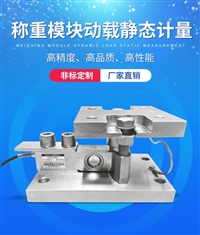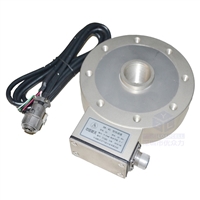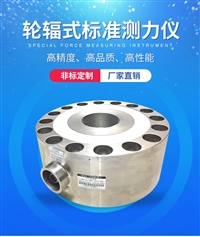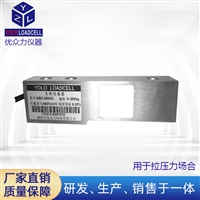

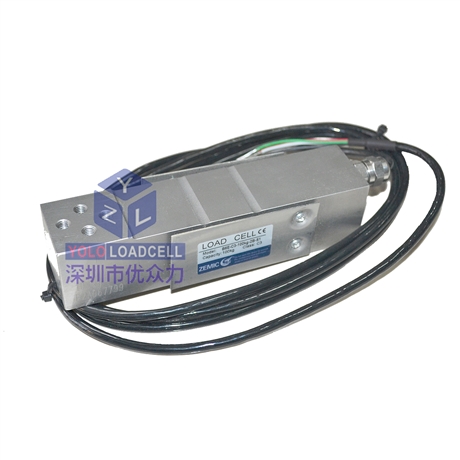



H6E-C3-100KG-3B-S1 Weighing Sensor
Category:
electron/Sensors, sensitive components/force sensor
Model:
H6E-C3-100KG-3B-S1
Brand:
Youzhongli
model:
H6E-C3-100KG-3B-S1
manufacturing process:
integration
output signal:
Simulated type
material:
metal
Physical properties of materials:
conductor
Material crystal structure:
single crystal
Is it imported:
No
Temperature compensation range:
-10-40
sensitivity:
two
Operating Temperature:
-30~70
input impedance:
three hundred and eighty-five
Output impedance:
three hundred and fifty
insulation resistance:
five thousand
insulation resistance:
five thousand
nonlinear:
zero point zero three
repetitiveness:
zero point zero three
hysteresis:
zero point zero two
Working Voltage:
10~12
quantity:
nine hundred and ninety-nine
batch number:
-
Retail Price
180.00USD
重量
kg
- Product Description
-
model H6E-C3-100KG-3B-S1
manufacturing process integration
output signal Simulated type
material metal
Physical properties of materials conductor
Material crystal structure single crystal
Is it imported No
Temperature compensation range -10-40
sensitivity two
Operating Temperature -30~70
input impedance three hundred and eighty-five
Output impedance three hundred and fifty
insulation resistance five thousand
insulation resistance five thousand
nonlinear zero point zero three
repetitiveness zero point zero three
hysteresis zero point zero two
Working Voltage 10~12
quantity nine hundred and ninety-nine
batch number -
Description :
H6E-C3-100KG-3B-S1 Weighing Sensor Product FeaturesYOLO-LOADCELL, the general agent of AVIC weighing sensors in South China, KELI weighing sensors in South China, ZEMIC weighing sensors in South China, KELI brand sensors in South China, AC brand in South China, various micro tension and pressure sensors, handheld digital force measuring instruments, various force sensors, large tonnage force sensors, standard force measuring instruments for measurement, torque sensors. Welcome to inquire by phone;


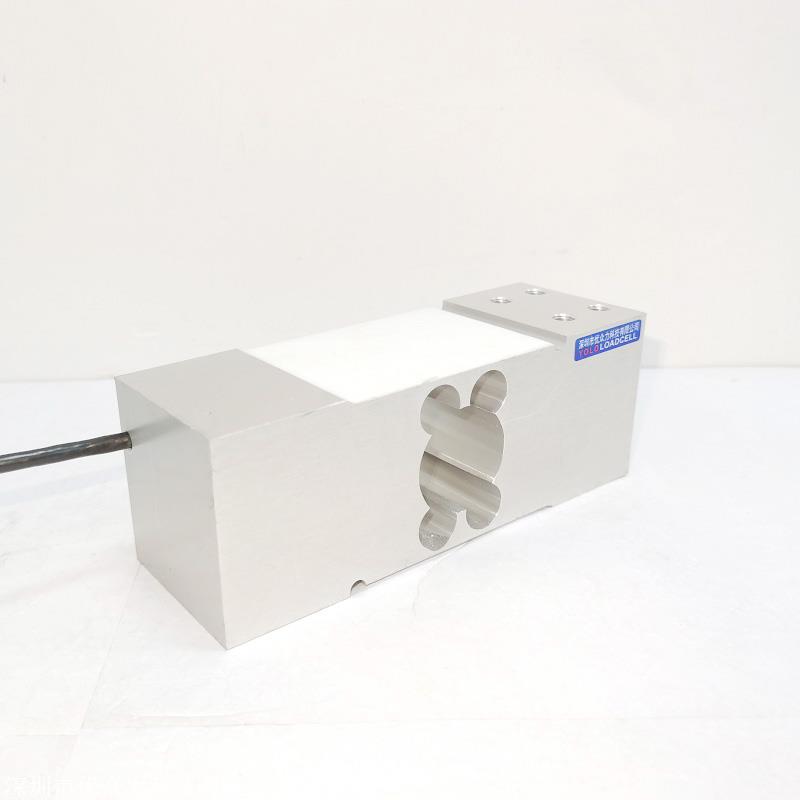

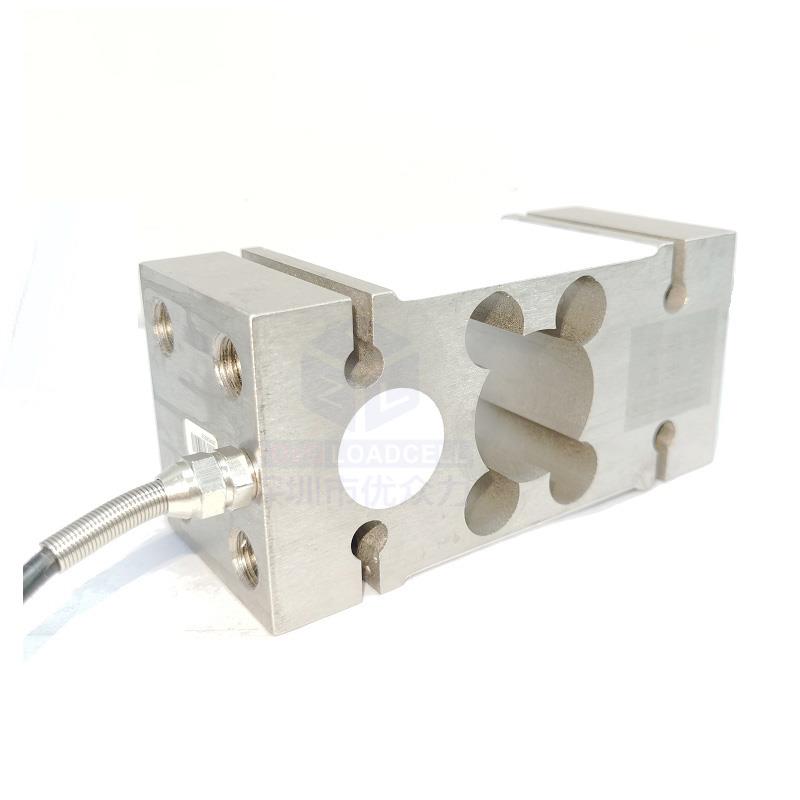
H6E-C3-100KG-3B-S1 Weighing Sensor:
H6E-C3-20KG-2B,H6E-C3-30KG-2B,H6E-C3-50KG-2B,H6E-C3-75KG-2B,H6E-C3-100KG-2B,H6E-C3-150KG-2B,H6E-C3-200KG-2B,H6E-C3-300KG-2B,
H6E-C3-20KG-2B-A,H6E-C3-30KG-2B-C,H6E-C3-50KG-2B-A,H6E-C3-75KG-2B-C,H6E-C3-100KG-2B-A,H6E-C3-150KG-2B-A,H6E-C3-200KG-2B-A,H6E-C3-300KG-2B-A,
H6E-C3-20KG-2B-C,H6E-C3-30KG-2B-A,H6E-C3-50KG-2B-C,H6E-C3-75KG-2B-A,H6E-C3-100KG-2B-C,H6E-C3-150KG-2B-C,H6E-C3-200KG-2B-C,H6E-C3-300KG-2B-C,
A weighing sensor is actually a device that converts a mass signal into a measurable electrical signal output. When using sensors, the actual working environment in which the sensor is located should be considered first, which is crucial for the correct selection of weighing sensors. It is related to whether the sensor can work normally, its safety and service life, and even the reliability and safety of the entire weighing apparatus. There are qualitative differences between the new and old national standards in the basic concepts and evaluation methods of the main technical indicators of weighing sensors. There are several styles available, including S-shaped, cantilever, spoke, plate ring, film box, bridge, and cylindrical.
Weighing sensors can be divided into 8 categories according to conversion methods, including photoelectric, hydraulic, electromagnetic, capacitive, magnetic pole transformation, vibration, gyroscope ritual, and resistance strain, with resistance strain being the most widely used.
Principle of weighing sensor: The elastic body (elastic element, sensitive beam) undergoes elastic deformation under external force, causing the resistance strain gauge (conversion element) attached to its surface to deform simultaneously. After the deformation of the resistance strain gauge, its resistance value will change (increase or decrease), and then the corresponding measurement circuit will convert this resistance change into an electrical signal, thus completing the process of converting external force into an electrical signal. From this, it can be seen that resistance strain gauges, elastomers, and detection circuits are essential components of resistance strain weighing sensors. Below is a brief discussion on these three aspects.
1. Resistance strain gauge: Resistance strain gauge is a mechanical distribution of a resistance wire on a substrate made of organic material. An important parameter of a resistance strain gauge is the sensitivity coefficient k. When it is subjected to a force of f at both ends, it will elongate, that is, deform. When elongated, its cross-sectional area decreases and the radius of the cross-sectional circle decreases. The proportional relationship between the resistance change rate (relative change in resistance) and the elongation rate (relative change in length) of a resistance strain gauge.
It should be noted that the sensitivity coefficient k is a constant determined by the properties of the material used to make the metal resistance wire, and is independent of the shape and size of the strain gauge. The k value of different materials is generally between 1.7-3.6. Secondly, the value of k is an dimensionless quantity without dimensions.
In material mechanics, δ l/l is referred to as strain and denoted as ε. Using it to represent elasticity often appears too large and inconvenient, and its millionth is often used as a unit,
AfterSalesService :
Key words:- H6E-C3-100KG-3B-S1