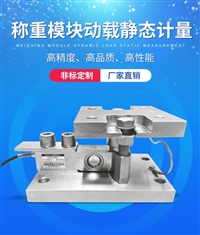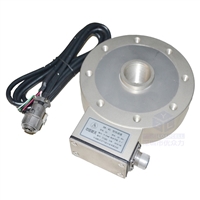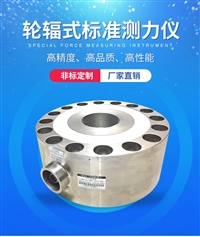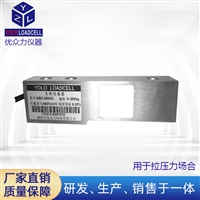

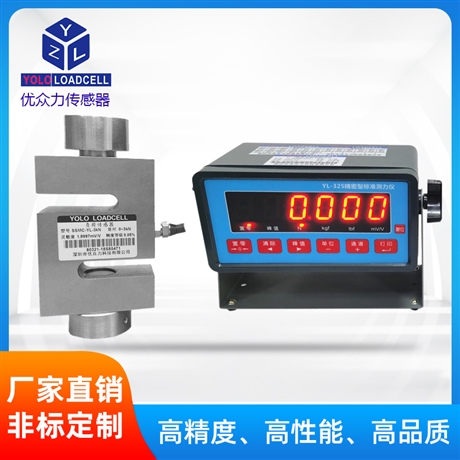


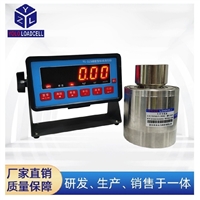
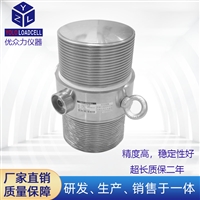
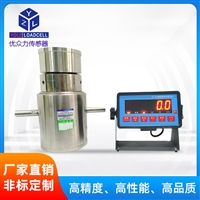
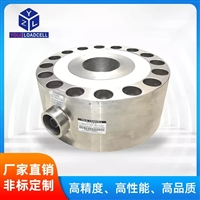
Shenzhen University 0.1 level laboratory standard force measuring instrument 200N S-type force sensor 20kg
Category:
Instrumentation/Mechanical quantity instrument/Force measuring instrument
Model:
Shenzhen University 0.1 level laboratory standard force measuring instrument 200N S-type force senso
Brand:
Youzhongli
Retail Price
180.00USD
重量
kg
- Product Description
-
Description :
Detailed description of the 200N S-type force sensor 20kg standard force measuring instrument in the 0.1 level laboratory of Shenzhen University; The company currently has various types of weighing sensors and force sensors. The main products include 10 series, more than 300 varieties, specifications, ranges, microstructures, tensile and compressive structures, S-shaped structures, spoke structures, column structures, corrugated tube structures, cantilever beam structures, single point structures, box structures, bridge structures, and weighing modules. The weighing range of a single sensor ranges from as small as 50 grams to as large as 3000 tons, and there are analog and digital sensors suitable for various harsh environments such as aluminum alloy, alloy steel, stainless steel, explosion-proof, and high-temperature types. The product is widely used in various fields such as chemical engineering, mining, oil fields, automobiles, lifting machinery, construction, building materials, mechanical processing, thermal power, transportation, etc.


Shenzhen University 0.1 level laboratory standard force measuring instrument 200N S-type force sensor 20kg
Product features: 1. AC excitation core technology for high-precision force measurement, providing extremely stable measurement capability. 2. Ratio voltage provides measurement capability for 2 million display divisions, Zui has a small resolution of 0.001 μ V/V, with a real-time peak measurement capability of up to 10000 times per second, suitable for peak detection in dynamic and impact applications. 4. It has bidirectional calibration, bidirectional measurement, and bidirectional 6-segment linear correction, with 6/24/40 channels available for selection. 5. It has peak measurement and hold functions, and can be reset at the same time when clearing peak values. 6. Both measurement and calibration data can be printed out. 7. Data communication (RS232), three communication output formats. 8. One click conversion of units, with load units of N (kN), kg (t), lb (Klb). 9. Two types of calibration methods: loading calibration and sensitivity data mV/V input calibration. The use of standard force measuring instruments is particularly important due to improper operation. It may affect the lifespan of the force gauge and cause damage to the instrument. We hope the following methods can be helpful to you. 1. It is made according to the principle that the greater the tension applied to the spring, the longer the spring will elongate; 2. Observe the smaller scale values: What N does each small grid on the scale of the spring scale represent? 3. Observe the range: Observe the larger scale values on the panel of the spring scale, and be careful not to apply force beyond its range; 4. Apply tension along the central axis of the spring on the spring scale; 5. Zero point calibration: Check if the pointer is pointing to the zero position. If not, adjust it to the zero mark; Before use, gently pull the spring a few times to avoid it getting stuck; 7. Observe that the pointer reading line is perpendicular to the scale line; Before measurement, the spring should naturally sag and check if the pointer is aligned with the zero mark; 9. The measured force cannot exceed its measurement range; 10. The reading must be read in a stationary state. JJF1469-2014 (Calibration Specification for Strain Gauge Sensor Measuring Instruments), JJG144-2007 (Verification Regulations for Standard Force Measuring Instruments), JJG557-2011 (Verification Regulations for Standard Torque Meters), JJG391-2009 (Verification Regulations for Load Sensors), OIML-R60 (Technical Standard for Weighing Sensors by GUO International Legal Metrology Organization), and NIM-ZY-LS-CL-035 are the testing/calibration rules for standard load measuring instruments, registered with the Chinese Academy of Metrology. They are the early technical standards for the current testing/calibration of load cell indicating instruments, and have been replaced by the JJF1469-2014 standard.
AfterSalesService :
Key words:- S-type force sensor 20kg