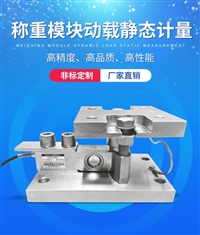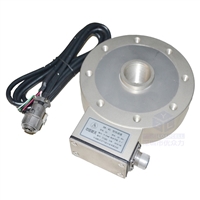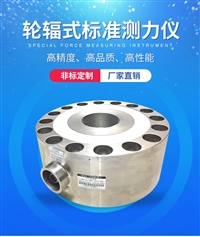

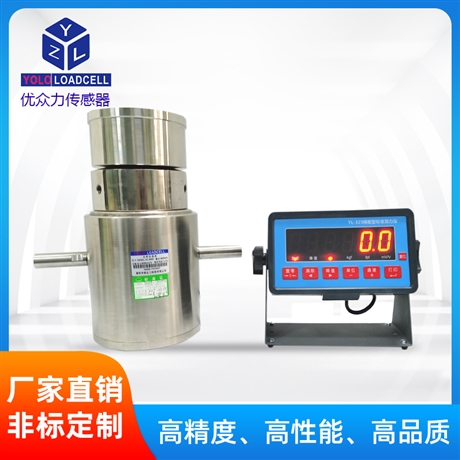

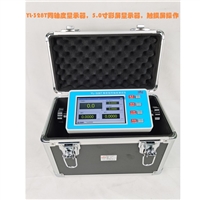
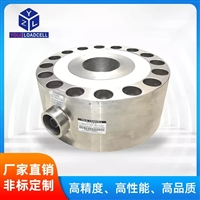


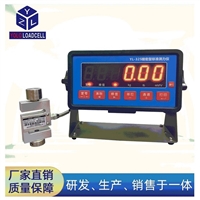

Fujian Institute of Transportation Science and Technology calibration standard force gauge 2000kN Youzhongli standard force gauge 0.1 level 0.3 level
Category:
Instrumentation/Standard measuring instruments/Mechanical metrological standard instruments
Model:
The calibration standard force gauge of the Academy of Transportation Sciences is 2000kN, and the Yo
Brand:
Youzhongli
Retail Price
280.00USD
重量
kg
- Product Description
-
Description :
Fujian Institute of Transportation Science and Technology calibration standard force gauge 2000kN Youzhongli standard force gauge 0.1 level 0.3 level Suitable for force measurement calibration, various metrology and force measurement standard laboratories, automated force measurement, industrial force measurement, university experiments, metrology institutes, research institutes, metrology testing institutions and other industries' metrology and testing. Discounted price, high-precision force measuring instrument, can come with a calibration certificate from the National Institute of Metrology, and comes with an 18 month warranty.
1. Principle of force sensor:
A force sensor is composed of three main components: a bridge circuit (such as a Wheatstone bridge) consisting of one or more elastic bodies that can deform under force, a resistance strain gauge that can sense this deformation, an adhesive that can fix and paste the resistance strain gauge on the elastic body and conduct the strain, and a sealant that protects the electronic circuit.
2. Working process of force sensor:
After being subjected to external force, the strain gauges attached to the elastic body undergo deformation, causing a change in resistance. This change in resistance causes the Wheatstone bridge to lose balance and output an electrical signal that varies linearly proportional to the external force
3. Material of force sensor:
3-1. Materials of elastomers:
The elastic material of the force sensor is generally made of metal, and most of the available materials are aluminum alloy, alloy steel, and stainless steel. Alloy materials have both rigidity to ensure consistent deformation and deformation recovery, as well as good weather resistance and corrosion resistance. The main requirement of an elastomer is to be able to transmit force information and maintain deformation consistency and complete resetting under the same force
3-2. Strain gauges and resistance element materials:
The composition of resistance strain gauges is complex and they are composite manufactured products. The combination of strain gauge substrate and strain copper varies greatly. According to their strain requirements, there are currently nearly a thousand types of products. Generally, the substrate is made of polymer film material, and the strain material is high-purity constantan. The constantan on the substrate is etched with resistance grid wires of different induced deformations after optical treatment. Therefore, the quality of resistance strain gauges is not only related to the substrate material and the purity of the composite metal, but also to factors such as the composite process, etching technology and process, etching chemical materials and post-treatment processes and materials.
The main equipment for determining the mechanical properties of materials is the material testing machine. A testing machine that can perform multiple experiments such as tension, compression, shear, and bending simultaneously is generally referred to as a material testing machine. The material testing machines used for static experiments include hydraulic, mechanical, and electronic mechanical types. The electronic testing machine introduced below is an electronic mechanical testing machine, which is a new type of testing machine that combines electronic technology with mechanical transmission,
Main unit of 500 ton column type force sensor for large-scale pressure testing machine
The main unit of the electronic testing machine consists of four parts: load rack, transmission system, clamping system, and position protection device.
1) Load rack
The load rack consists of four columns supporting the upper crossbeam and worktable, forming a portal frame. Two lead screws pass through both ends of the moving crossbeam and are installed between the upper crossbeam and the worktable. The workbench is supported by two legs on the bottom plate, and the mechanical transmission reducer is also fixed on the workbench. When working, the servo motor drives the mechanical transmission reducer, which in turn drives the screw to rotate and drives the moving crossbeam to move up and down. During the experiment, the force is balanced within the portal load frame.
Fujian Academy of Transportation Sciences Verification Standard Force Gauge 2000kN Youzhongli Standard Force Gauge 0.1 Level 0.3 Level Picture


JJF1469-2014 (Calibration Specification for Strain Gauge Sensor Measuring Instruments), JJG144-2007 (Verification Regulations for Standard Force Measuring Instruments),
JJG557-2011 (Standard Torque Meter Verification Regulations), JJG391-2009 (Load Sensor Verification Regulations),
OIML-R60 (GUO International Legal Metrology Organization Technical Standard for Weighing Sensors)
The NIM-ZY-LS-CL-035 standard load measuring instrument testing/calibration rules, registered with the China Institute of Metrology, are the preliminary technical standards based on which the current dynamometer indicator instrument testing/calibration is carried out. They have been replaced by the JJF1469-2014 standard.
AfterSalesService :
Key words:- Youzhongli standard force measuring instrument 0.1 level