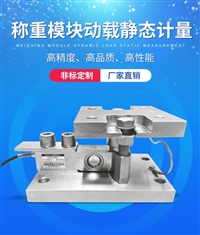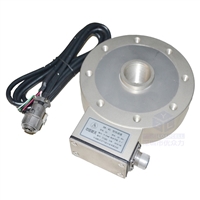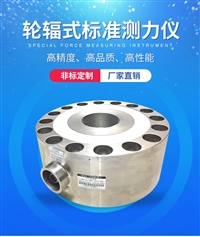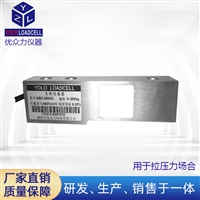

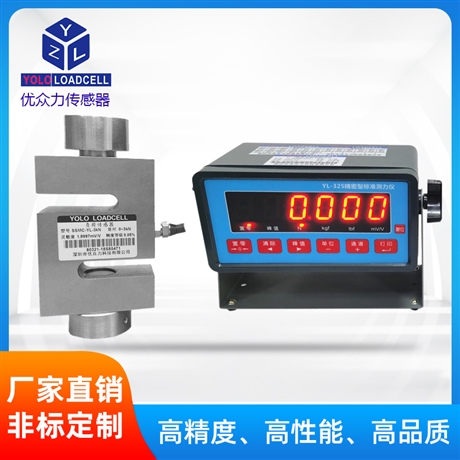

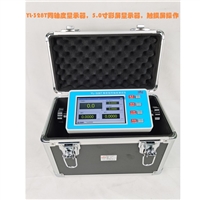
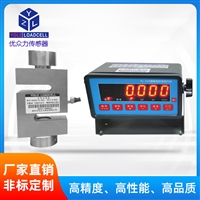

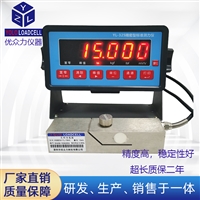
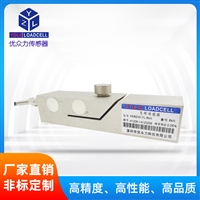

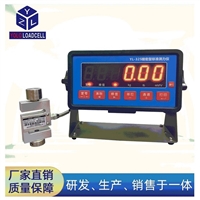
50kN standard dynamometer laboratory calibration standard dynamometer 5kN Youzhongli manufacturer quality assurance
Category:
Instrumentation/Mechanical quantity instrument/Force measuring instrument
Model:
50kN standard dynamometer laboratory calibration standard dynamometer 5kN
Brand:
Youzhongli
Retail Price
180.00USD
重量
kg
- Product Description
-
Description :
50kN standard dynamometer laboratory calibration standard dynamometer 5kN Youzhongli manufacturer quality assurance detailed instructions:

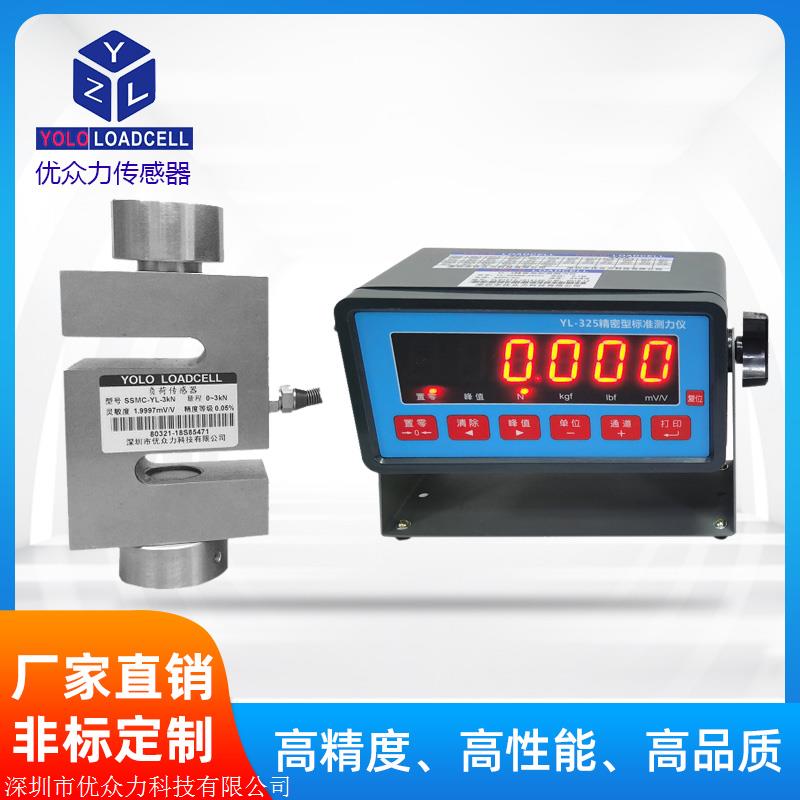


50kN standard dynamometer laboratory calibration standard dynamometer 5kN Youzhongli manufacturer quality assurance:
The standard force gauge manufacturer's standard force gauge is a high-precision small portable tensile and pressure testing instrument. This standard force gauge is widely used in industries and research institutions such as high and low voltage electrical appliances, electronics, hardware locks, automotive parts, ignition machines and devices, pen making, light industry, construction, fishing gear, textiles, chemical industry, machinery, IT, etc. for tensile and compressive load testing, insertion and extraction force testing, destructive testing, etc. It is a digital tensile and compressive testing instrument.
The standard force gauge manufacturer's standard force gauge consists of high-precision force sensors and high-precision digital displays. When the force sensor is subjected to force, the magnitude of the force value is displayed by a high-precision digital display. This instrument is a standard instrument for verifying testing machines, tensile testing machines, and pressure testing machines, and can also be used for force value detection of other equipment. It has the characteristics of simple operation, convenient use, calibration, and strong universality.
Standard force measuring instruments from manufacturers are mainly used for the calibration and verification of force measuring instruments and equipment such as material testing machines and presses. It can also be used for measuring, verifying, and calibrating the "force value" of other related instruments, equipment, components, and parts. Its prominent features are reliable data, stable quality, no aging, and no loss, making it a measuring equipment. It is an economical, easy to operate, convenient to use, accurate and safe measuring device. The standard force gauge is a key selection equipment for various measurement technology supervision, measurement and testing, scientific research institutes, colleges and universities, quality inspection institutions, relevant departments, and enterprises.
1. Used for verifying various testing machines
2. Stable data, reliable quality, non aging, and measuring equipment
3. The force value is amplified by a lever (or directly) and measured with a dial gauge
4. This product is a 0.3 level standard "force value" measuring instrument
5. The structure is made of spring steel and unique te technology
The measurement range of a standard force gauge is from 10% of the maximum test force to the maximum test force.
The standard force measuring instrument manufacturer's standard force measuring instrument is a new generation of digital force measuring instrument that adopts single-chip technology. It has the advantages of complete functions, good reliability, and high measurement accuracy. The instrument can be matched with force sensors of various ranges, and users can flexibly choose according to their needs. The instrument uses a seven digit LED digital tube to display the measured force value (units can be selected from Newton force, kilogram force, or internal code) and sensor sensitivity coefficient, with clear and intuitive display. It is an ideal instrument widely used for force measurement transmission, quality comparison verification, and force sensor performance testing.
Key points for the structure and selection of force sensors
This section provides a brief introduction to the structural styles and characteristics of commonly used force sensors. For more detailed performance and external dimensions, please consult our company. Sensors are described using the accuracy of full-scale error, while standard force gauges are described using the accuracy of equivalent error. Please note the difference between the two. For more detailed information, please refer to JJG391-2009 (Load Sensor Calibration Regulations), JJG144-2007 (Standard Force Gauge Calibration Regulations), and ISO376-2011 (Testing Machine Force Gauge Calibration Specifications);
S-type sensor: It is a commonly used structural form for measuring small and medium force values, and can be used for tension or pressure measurement with corresponding accessories. It has good metrological performance and moderate price. The range of measurement is 100N~200kN, and the optimal measurement range is 200N~50kN.
Single column sensor: It is a commonly used structure for measuring large and medium force values, with good measurement performance and small weight, and is easy to carry for compression applications. The range of measurement is 30kN~5MN, and the optimal range selection is 100kN~5MN.
Torque ring sensor: mainly used for measuring the pressure direction of medium to high force values, with excellent metrological performance, but with a large volume and weight. The range of measurement is 10kN~5MN, and the optimal range selection is 100kN~1MN. This type of sensor is suitable for vertical measurement but not for horizontal measurement due to the lack of fixed screw holes at the bottom.
Wheel spoke sensor: mainly used for measuring mid force values in the direction of tension or compression. For large range applications, the sensor has a large weight and volume. The range of measurement is 10kN~3MN, and the optimal range selection is 10kN~200kN.
AfterSalesService :
Key words:- 50kN standard load cell