
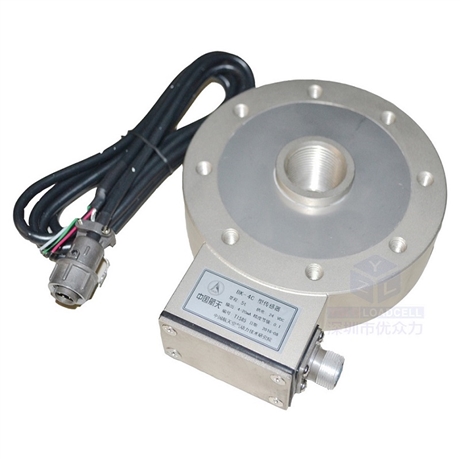

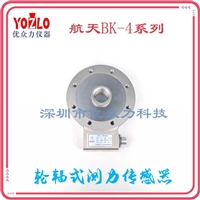
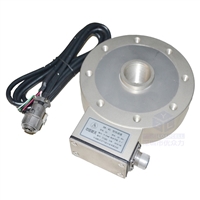
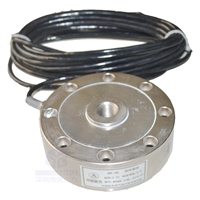
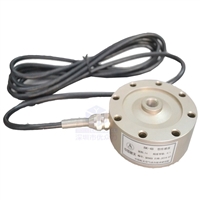
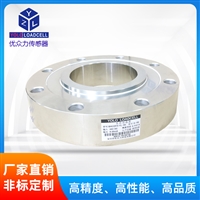
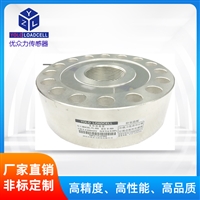
China Aerospace Weighing Sensor BK-4B-10T Hopper Weighing Sensor in Stock
Category:
electron/Sensors, sensitive components/force sensor
Model:
BK-4B-10T
Brand:
Youzhongli
Retail Price
45.00USD
重量
kg
- Product Description
-
Description :
China Aerospace Weighing Sensor BK-4B-10T Hopper Weighing Sensor Inventory:


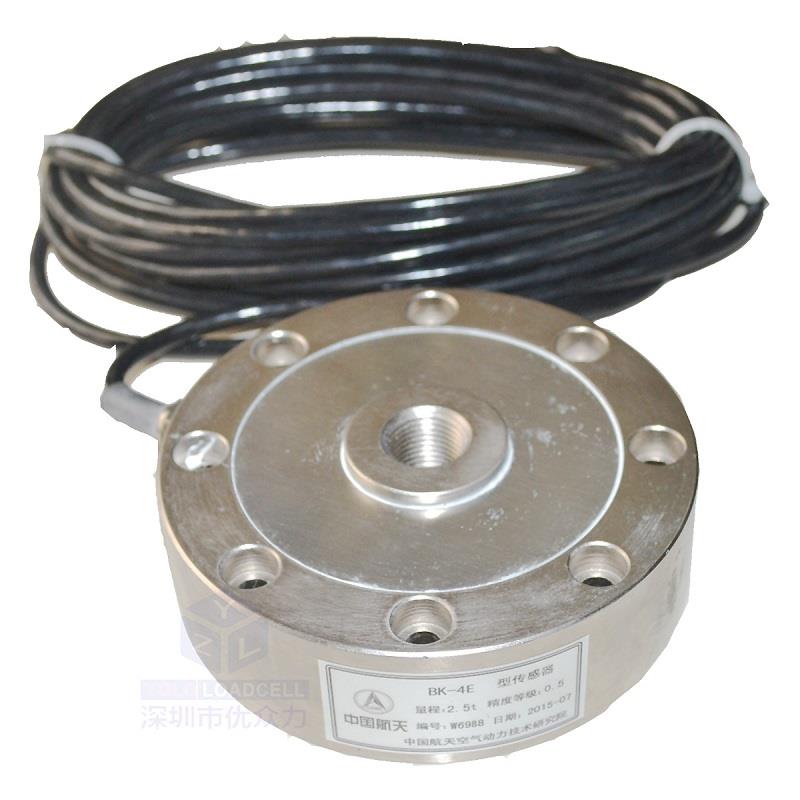


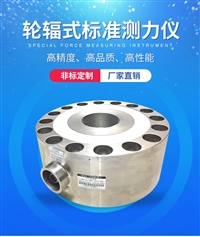
The spoke type sensor consists of a wheel cluster, a wheel hub, wheel spokes, and strain gauges. The spokes are connected in pairs between the wheel hub and the wheel hub (Tian 14-71). There can be four or eight spokes. When external force is applied to the upper end face of the wheel hub and the lower end face of the wheel rim, the rectangular spokes undergo parallelogram deformation (Figure 14-72). At this time, a shear strain proportional to the external force is generated on the spokes. If the strain gauges are attached to the horizontal center axis of the spokes in the direction of t 45 ', eight strain gauges will be attached to the front and back sides of the four spokes respectively, forming a full bridge circuit. When the wheel hub is subjected to external force, the strain gauges attached to the diagonal of the spokes in the shortening direction will be compressed, and their resistance value will decrease. The strain gauges attached to the diagonal in the lengthening direction will be pulled, and their resistance value will increase. As a result, the bridge will lose balance, and the output terminal of the male bridge will produce a voltage signal, which is proportional to the external force acting on the sensor. Wheel spoke sensor; Alloy steel material; high-precision; High stability; Low profile; Easy and fast installation; Surface nickel plating anti-corrosion treatment; Suitable for testing machines, truck scales, and large hopper scales, etc;
Tension sensor is a type of weighing sensor that can convert physical signals into measurable electrical signals as output devices. Tensile sensors have been widely used in many industries, especially in industrial production measurement. So, what are the precautions for installing and using tensile sensors during use?
1. The tension sensor should be handled with care, especially for small capacity sensors that use alloy aluminum materials as elastic bodies. Any impact or drop caused by vibration is likely to cause significant output errors.
2. When designing and installing the loading device, it should be ensured that the line of action of the loading force coincides with the axis of the tension sensor, so as to minimize the influence of tilting load and eccentric load.
3. In terms of horizontal adjustment. If a single tension sensor is used, the installation plane of its base should be adjusted using a spirit level until it is level; If multiple sensors are measuring simultaneously, the mounting surfaces of their bases should be kept as horizontal as possible to ensure that the force borne by each sensor is basically the same.
4. Determine the rated load of the sensor used by selecting the range of the tension sensor according to its instructions.
5. The mounting surface of the sensor base should be as flat and clean as possible, without any oil stains or adhesive film. The installation base itself should have sufficient strength and rigidity, usually requiring higher strength and rigidity than the sensor itself.
6. The sensor housing, protective cover plate, and lead connectors are all sealed and users are not allowed to open them.
7. To prevent chemical corrosion It is advisable to apply Vaseline to the outer surface of the tension sensor during installation. The use of the stage should avoid direct sunlight and sudden changes in environmental temperature
8. Protective or mitigating devices should be installed when unavoidable.
9. To prevent high current from directly passing through the sensor body and damaging the sensor, welding operations are prohibited after the sensor is installed. In case of last resort
10. Add a bypass device made of copper braided wire at both ends of the tension sensor loading device.
11. The cable should not be lengthened by itself. If it is necessary to lengthen, it should be soldered at the joint and sealed with moisture-proof sealant.
12. Cover the tension sensor with some baffles around it. The purpose of doing so is to prevent debris from falling into the moving parts of the sensor, which can affect its measurement accuracy.
13. The cable of the sensor should be kept away from strong power lines or places with pulse waves. If competition cannot be avoided, the cable of the tension sensor should be separately threaded into the iron pipe and the connection distance should be shortened as much as possible.
14. According to the range selection of the tension sensor in its instructions, determine the rated load of the sensor used. Although the tension sensor itself has a certain overload capacity, it should be avoided as much as possible during installation and use. Sometimes short-term overloading can also cause sensor damage.
15. In high-precision applications, the tension sensor and instrument should be preheated for 30 minutes before use.
16. The sensor should be placed indoors in a dry, ventilated, and non corrosive gas environment.
AfterSalesService :
Key words:- China Aerospace Weighing Sensor