

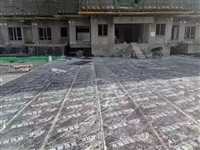
Double rainbow self-adhesive modified asphalt waterproofing membrane wet laying construction is simple and fast
Category:
building materials/Waterproof and fireproof functional materials/Waterproof and moisture-proof materials
Model:
SH-117
Brand:
double rainbow
brand:
double rainbow
model:
SH-117
impermeability:
0.3Mpa 120min
material:
modified asphalt
form:
layered
level:
Level 1
water absorption rate:
one
Elongation at break:
five hundred
tear strength:
ten
compliance:
five hundred
thermal conductivity:
one
Heat resistance:
seventy-five
Applicable Temperature:
five
purpose:
waterproof
Packing Specification:
1.2mm 1.5mm 2.0mm
core material:
polyester fiber
compressive strength:
three
tensile strength:
three
shape:
flaky
Item Number:
SH-117
Is it a cross-border source of goods:
No
manufacturer:
Guangzhou
Retail Price
10.00USD
重量
kg
- Product Description
-
brand double rainbow
model SH-117
impermeability 0.3Mpa 120min
material modified asphalt
form layered
level Level 1
water absorption rate one
Elongation at break five hundred
tear strength ten
compliance five hundred
thermal conductivity one
Heat resistance seventy-five
Applicable Temperature five
purpose waterproof
Packing Specification 1.2mm 1.5mm 2.0mm
core material polyester fiber
compressive strength three
tensile strength three
shape flaky
Item Number SH-117
Is it a cross-border source of goods No
manufacturer Guangzhou
Description :
1、 Product Introduction
Self adhesive modified asphalt waterproofing membrane is a reinforced self-adhesive waterproofing membrane made of SBS, TP, immersion agent, and asphalt as base materials, polyethylene film, PET polyester film, fine sand as surface materials or without film (double-sided self-adhesive), and attached with peelable silicon coated isolation film or isolation paper as anti adhesive isolation material.
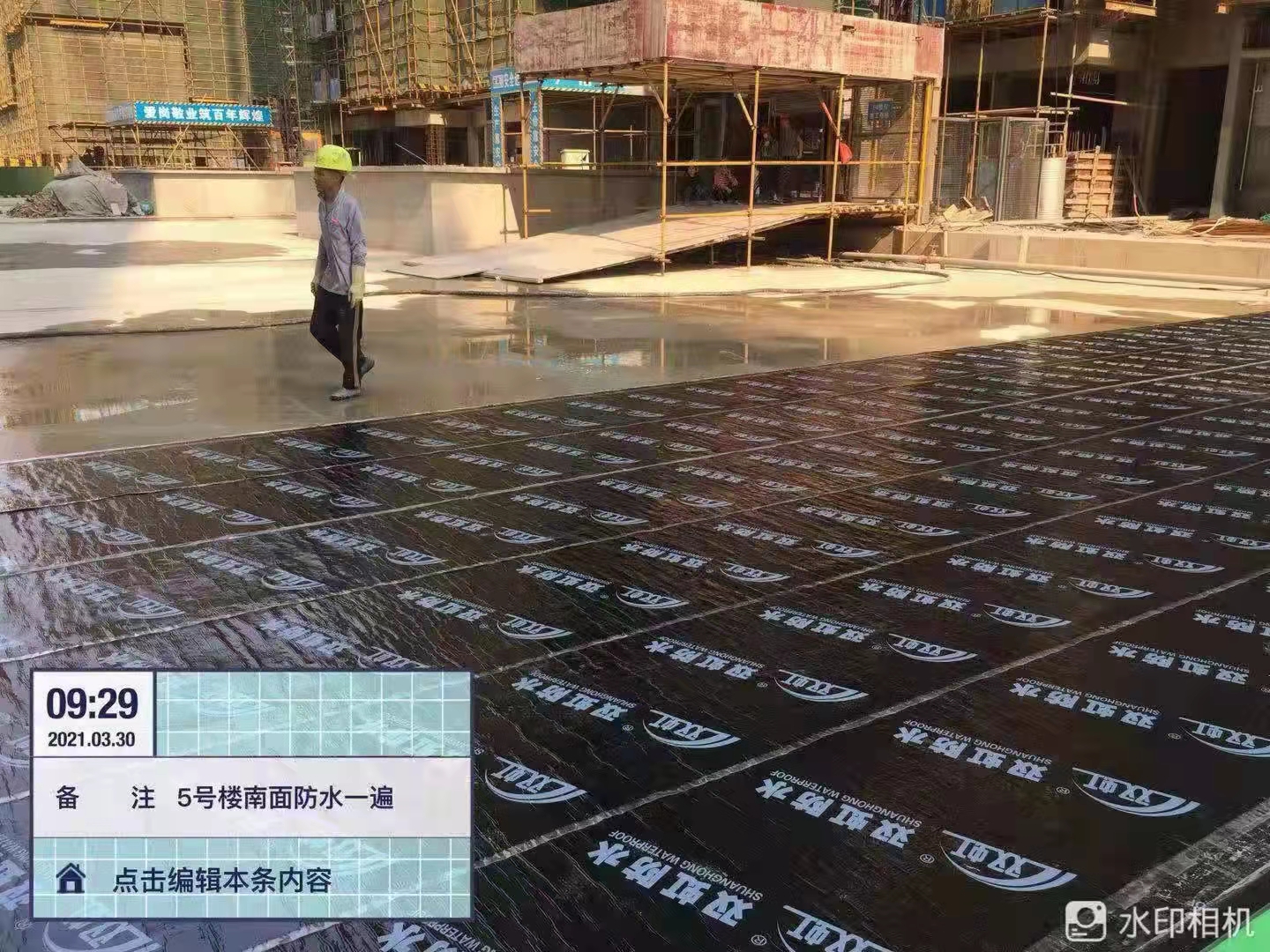
2、 Product Details
Product Name: Double Rainbow Self Adhesive Polymer Modified Asphalt Waterproof Roll
Product Model SH-116
Product form: Black double-sided/single-sided roll material
Implement standard GB23441-2009
3、 Product advantages
1. Good low-temperature flexibility and high elongation;
2. Strong grassroots self isolation and good bonding performance;
3. The construction operation is simple and pollution-free. Customers can produce different materials such as PE film surface, PET film, non film, sand surface, aluminum foil, etc. according to their requirements.
4、 Scope of application
1. The roof engineering of industrial and civil buildings (with exposed and non exposed waterproof layers) is particularly suitable for unstable structures or roof engineering that is prone to shrinkage, cracking, and may produce water vapor.
2. Waterproof, anti-seepage, and moisture-proof measures for underground engineering, as well as open cut subway, tunnel, water tank, canal, garage and other projects.
5、 Construction technology
1. Cleaning the base surface: Waterproof construction requires the base surface leveling layer, cement mortar surface to be flat and firm, and the removal of sludge and debris
And clean it thoroughly, without any unevenness, looseness, sanding, dust or other defects. The internal and external corners should be leveled
Make a small rounded corner with a radius of 50mm to facilitate painting and construction.
2. Brushing the bottom layer: Mix the modified asphalt cold base oil evenly and apply it evenly on the base surface, without penetrating the bottom layer
Accumulation.
3. The sequence of laying rolls is as follows: first high span, then low span, at the same height, from far to near, on the same facade, from high to low
Start laying at this location.
4. Snap line and trial laying: Pop up and paste control lines on the base layer according to the actual overlapping area, and strictly follow the control lines for trial laying
Actual adhesive roll material. Based on the characteristics of the site, determine the density of the elastic line to ensure that the roll material is pasted smoothly and without being affected
The phenomenon of pasting skewness occurs due to accumulated errors. The roll material should be first laid in place and cut correctly according to the required shape,
Only then can we start the actual bonding process.
5. Large area laying of rolls: There are two methods for laying self-adhesive rolls on a large area. In actual construction, construction personnel can
According to the on-site environment, temperature, sunlight and other conditions, determine the pasting method independently, but the basic methods include exhaust, compaction
The anti wrinkle requirements remain the same.
a、 Align the roll with the baseline and spread it out over the entire width. Lift the roll (including the isolation paper) from one end and place it along the long edge of the roll
Fold the line in half, use a paper cutter to gently cut open the edge of the isolation paper, be careful not to scratch the roll, and remove the isolation paper from the roll
Carefully tear open a small section of about 500mm on the back, and then two people work together to remove the insulation paper from this section of the roll
Quasi baseline adhesive laying positioning. Unfold this half length roll back into place and evenly hold the removed isolation paper
Pull back forcefully and slowly pull out the entire half length of the isolation paper. Stick the other half of the fabric using the same method as described above
Roll material. When laying, pay attention to the integrity of the isolation paper pulled out. If tearing or breaking is found, stop laying immediately,
Clean up the torn isolation paper residue before continuing to lay it.
b、 Push laying method: Align the roll with the reference line and lay it for about 5m in length. Use a paper cutter to gently cut open the isolation paper, taking care not to
To scratch the roll, slowly tear off the isolation paper from the back of the roll, while slowly pushing the roll forward along the reference line
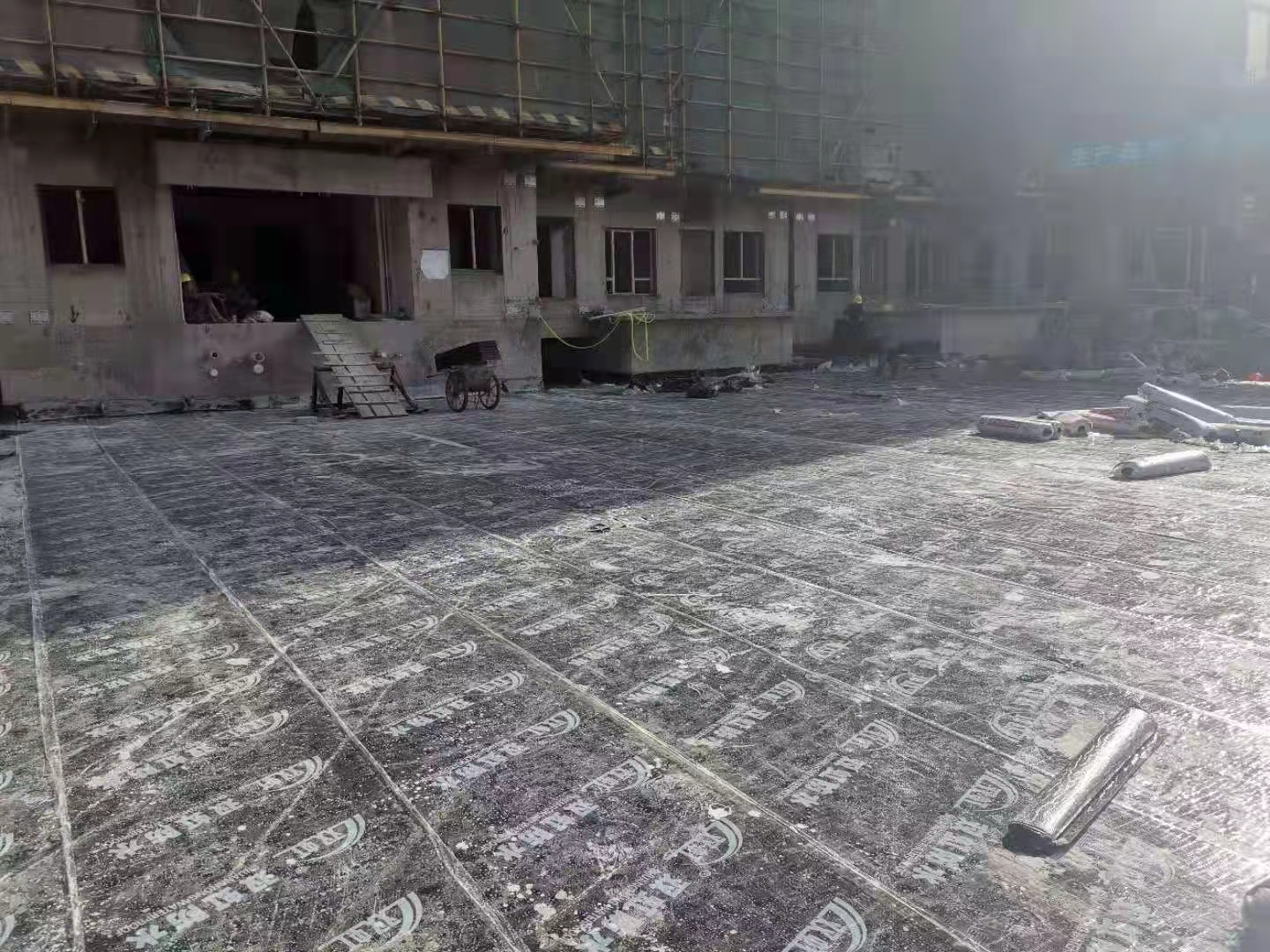
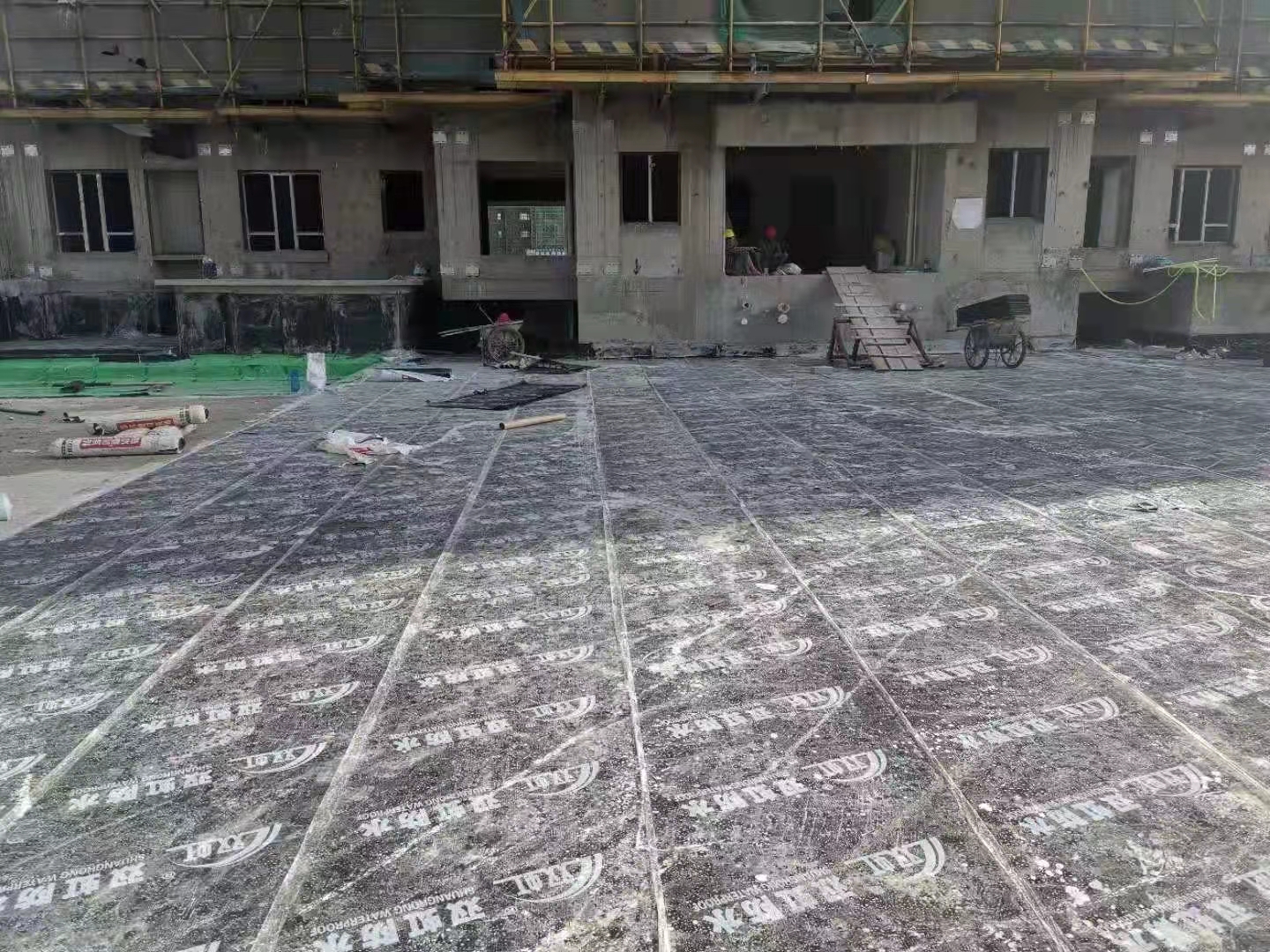
Shop. Roll back the approximately 5-meter-long roll material that was previously tested and stick it onto the base layer using the same method as described above. tiling
At the same time, the waterproof membrane at the end should be aligned with the side edges and seams, leaving at least a 60mm overlap area
Use a roller to press firmly and ensure complete adhesion between the waterproofing membranes.
6. After exhausting and compacting the large-area roll material that has been laid, use a handheld small roller to roll the overlapping parts, rolling outward from the inner edge of the overlap to exhaust air and firmly adhere. When overlapping, it should be aligned with the overlap control line. If there are design requirements for the overlap width, follow the design requirements. If there are no design requirements, follow the long side of 80mm and the short side of 100mm.
7. Roll overlap sealing: Usually, the lap joints of rolls pasted according to the above requirements do not need to be sealed separately, but weak areas such as short edge overlap of rolls, pipe packaging, and cutting of rolls in irregular parts should be sealed with edge sealing paste.
8. If the overlapping parts of the rolls are contaminated during construction, the base treatment agent can be used for cleaning, or a clean damp cloth can be used to clean the rolls. After the construction of the large-area waterproof layer is completed, the second waterproof layer can be directly laid. The construction process is the same as the laying process of the waterproof roll material, but the overlap between the road and the second waterproof layer must be staggered.
9. Fixing and sealing: After cutting the ends of the coil around the edges, press it into the reserved groove (a trapezoidal groove with a depth of 20mm x height of 40mm+60mm), nail it firmly with a metal pressure strip, and seal it with a special adhesive sealant.
10. Key points of construction:
a、 The short edge joints of adjacent rows of rolls should be staggered by more than 300mm to avoid overlapping of multiple layers of joints and uneven adhesion of rolls. The waterproof area is large and must be constructed in stages. During the intermediate process, there are many temporary closures that must be done properly.
b、 After pasting the roll material, measures should be taken to temporarily cover it to reduce the chance of direct exposure and damage to the roll material. One of the methods
Yes, lay the removed silicone isolation paper back on the roll, and this protective paper can also be retained as an isolation layer between the waterproof layer and the protective layer. In addition, it is also possible to consider applying plain cement slurry (with a small amount of polymer for better effect) on the surface of the waterproof layer of the roll material, or taking measures such as watering and water storage.
c、 After pasting, slight surface wrinkles and bubbles may appear when exposed to sunlight, which is a normal phenomenon and will not affect its waterproof performance. Once concealed, they will disappear.
d、 The waterproof layer should be concealed as soon as possible and should not be exposed to sunlight for a long time. Normally, it should be concealed within 24 hours after the completion of the waterproof layer. If there is a closed water test, the concealment time should be calculated from the end of the closed water test.
6、 Precautions
1. Construction cannot be carried out on contaminated grassroots.
2. Roll packaging and isolation film can only be removed before laying and during the next construction process.
3. The materials should be stored in a dry and well ventilated warehouse, and should not be exposed to direct sunlight or rain.
4. The rolls should be laid flat and stacked at a height not exceeding three layers to avoid contact with benzene and substances that affect the chemical properties of asphalt rolls.
7、 Reference dosage
The actual dosage depends on the specific substrate conditions.
8、 Shelf life:
Under normal storage and transportation conditions, the shelf life is one year.
AfterSalesService :
Key words:- Self adhesive modified asphalt waterproofing membrane
More Products