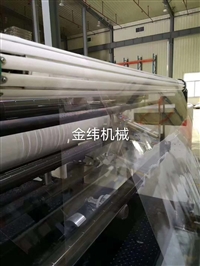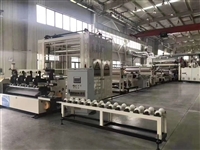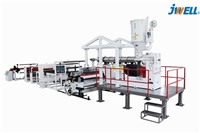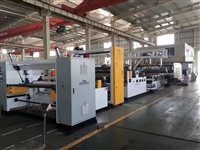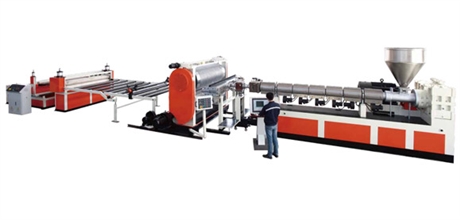

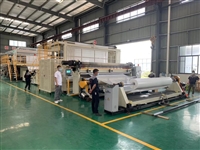


HDPE drainage board production line, gold weft sheet board, HDPE waterproof board production line
Category:
Rubber and plastic/Plastic machinery/Plastic sheet equipment
Model:
JW2000
Brand:
Jinwei Machinery
model:
JW2000
Types of sheets that can be produced:
PE board
Can produce multiple layers of sheet metal:
multilayer board
Board width:
two thousand
plate thickness:
0.5-3
manufacturer:
Jinwei Machinery
Retail Price
1,800,000.00USD
重量
kg
- Product Description
-
model JW2000
Types of sheets that can be produced PE board
Can produce multiple layers of sheet metal multilayer board
Board width two thousand
plate thickness 0.5-3
manufacturer Jinwei Machinery
Description :
The drainage board is made of high-density polyethylene (HDPE), which is a type of anti-seepage material made from polymer materials. It can prevent liquid leakage and gas evaporation. Widely used in construction, transportation, subways, tunnels, and engineering projects. This equipment adopts a dedicated single screw extruder, with a large extrusion volume, stable discharge, and long service life. PID control, temperature control, good energy-saving effect.
Mainly used for underground engineering roof or roof greening. Compared with conventional processes, combining drainage boards with geotextiles integrates multiple functions such as drainage, waterproofing, breathability, moisture retention, and root separation.
The main structure of the drainage board production line:
Feeding system single screw extruder hydraulic screen changer melt metering pump mold two roll forming machine cooling bracket cutting device traction machine cross cutting machine friction winding machine
Two roll forming device:
Can be replaced with different forming rollers
Imported Pai vacuum pump
Strengthening sheet cooling device
Main parameters:
Use 130/33 or 150/33 single screw extruders.
The standard width of the product: 2000mm, 3000mm, 4000mm. Depending on the shrinkage of the raw material, attention should be paid to the selection of mold width.
Thickness of the product: 0.5-3mm
Production range: 400-500kg/h for 130/33 extruder, 500-600kg/h for 150/33 extruder
Molding depth: It can be adjusted according to the depth of the nail, mainly including 8mm, 10mm, 12mm, 16mm, 18mm, 25mm, etc. Generally, a set of forming rollers can replace nails of two different depths, and Z can replace nails of three different depths. When producing multiple specifications of depth, it is necessary to replace the entire set of two roll forming devices.
purpose
The waterproof board has a width of 4-6m and a weight of 200-1500g/square meter. It has high physical and mechanical performance indicators such as tensile strength, tear resistance, and burst resistance. The product has high strength, good elongation, large deformation modulus, acid and alkali resistance, corrosion resistance, aging resistance, and good anti-seepage performance. It can meet the needs of civil engineering such as anti-seepage, isolation, reinforcement, crack prevention and strengthening in water conservancy, municipal engineering, construction, transportation, subway, tunnel, and engineering construction. Due to the use of polymer materials and the addition of anti-aging agents in the production process, this waterproof board can be used in standard temperature environments. It is commonly used for anti-seepage treatment of dams, drainage ditches, and anti fouling treatment of waste sites.
feature
1. Excellent flexibility, impermeability, elongation, and wear resistance;
2. Has good isolation and puncture resistance;
3. No chemical pollution;
4. Resistant to acid, alkali, and various chemical substances, with good dimensional stability, good adhesion, and easy construction.
Construction process of waterproof board
1. Preparation before laying:
1.1 Foundation treatment: It is required that the substrate be flat,
1.2 Contact surface with membrane,
2. Laying method:
2.1 Lay along a certain direction without pulling too tightly, leaving a certain amount of expansion and contraction to adapt to the deformation of the substrate.
When laying waterproof boards, the direction of each unit should be adjusted to facilitate the welding of two units.
After the waterproof board is laid, it should be pressed with a sand bag to prevent wind and sand from affecting the welding of the next edge.
3. Welding of waterproof board
Joint treatment is a key construction procedure, generally using thermal welding method. The surface of the PE film joint is heated to melt it, and then fused into one through pressure.
3.1 For the laid waterproof board, there should be no oil stains, moisture, dust, etc. at the edge joints.
3.2 Before welding, adjust the two edges of the PE film at the joint to overlap a certain width, which is generally 6-8 cm and flat without wrinkles.
3.3 Use a specialized welding machine for welding.
AfterSalesService :
Key words:- Jinwei sheet board HDPE waterproof board production line
More Products