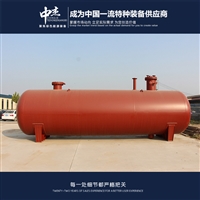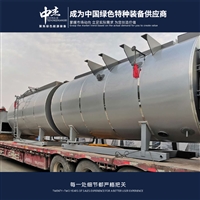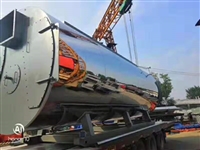
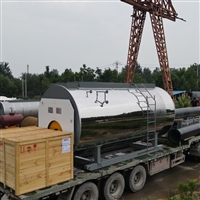
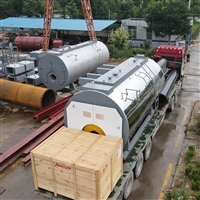
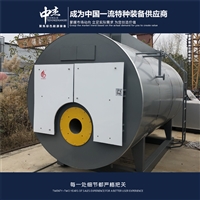
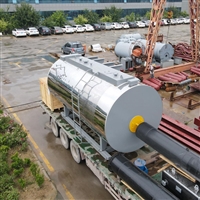
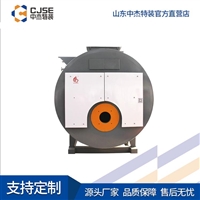
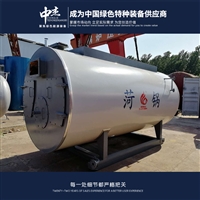
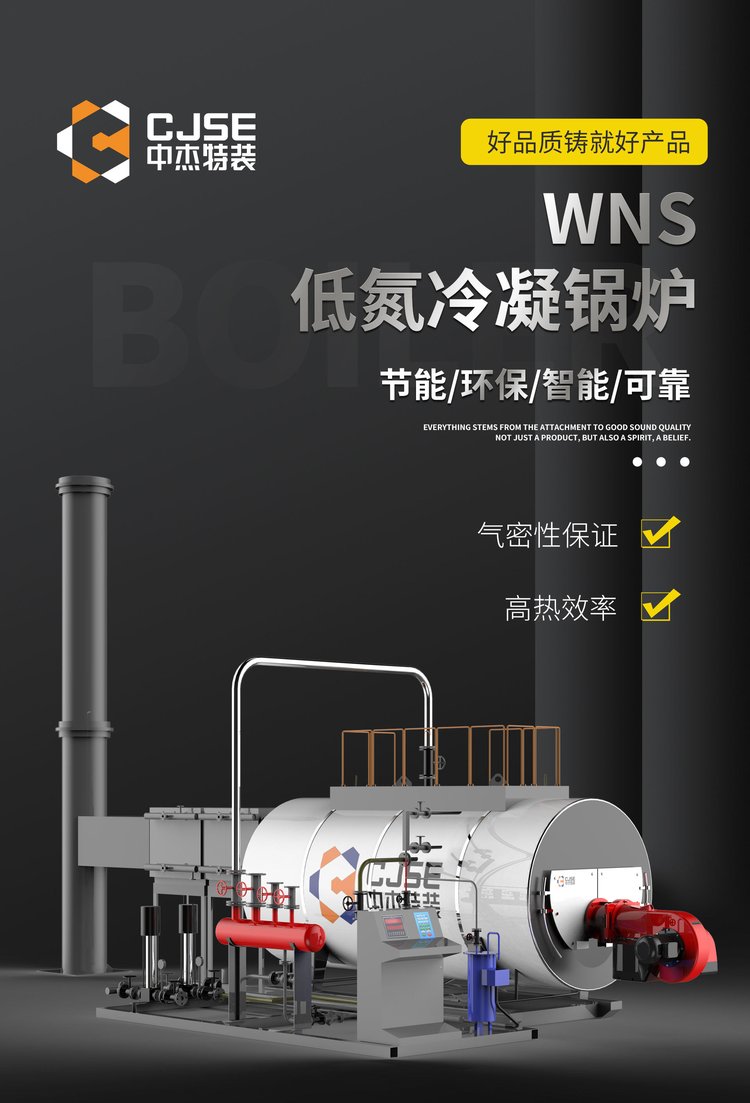
Zhejiang natural gas industry boiler 4-ton condensing integrated boiler manufacturer and manufacturing unit
Category:
mechanical equipment/Industrial boilers and accessories/Gas boiler
Model:
WNS4-1.25-Q
Brand:
Zhongjie Special Equipment
Retail Price
445,000.00USD
重量
kg
- Product Description
-
Description :
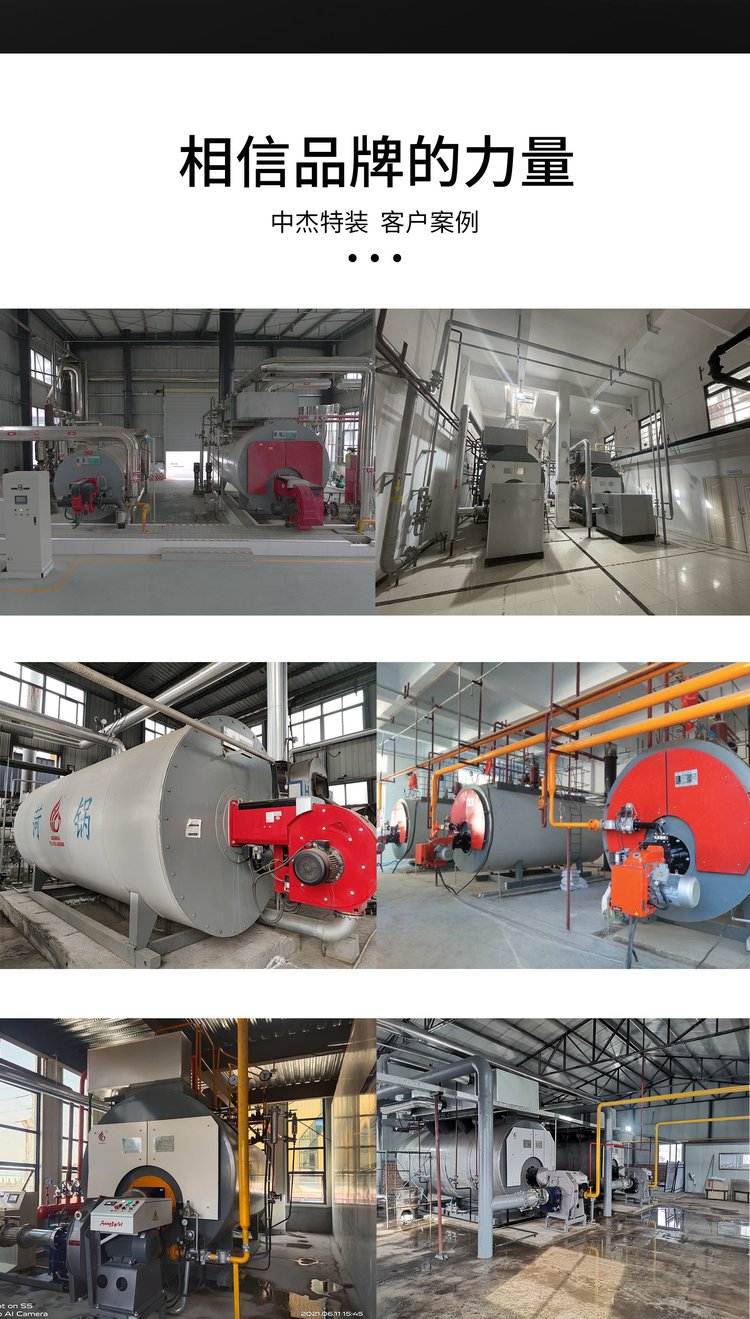
Gas steam boiler is a thermal energy conversion device that uses natural gas, liquefied gas, city gas and other gas fuels as fuel, burns the heat released in the furnace, heats the water in the boiler, and vaporizes it into steam.
Water in a pot (drum) is continuously heated by the energy released from the combustion of gas fuel in the furnace, resulting in an increase in temperature and the production of pressurized steam. As the boiling point of water increases with pressure, the pot is sealed, and the expansion of water vapor inside is limited, generating pressure and forming thermodynamic force (strictly speaking, boiler steam is formed by heating water at constant pressure in the drum to saturation and then vaporizing). It is widely used as an energy source.
A boiler is mainly composed of two main bodies: the shell and the furnace chamber, as well as accessories that ensure its safe, economical, and continuous operation, instrument accessories, automatic control and protection systems, etc. This type of boiler is a drum type boiler with a water-cooled wall. Two return smoke tubes are arranged in the left and right zones inside the drum, and the front smoke box at the front of the drum is folded back. There are downcomers and water-cooled pipes between the drum and the lower connecting box, forming the framework of the combustion chamber. There is a steam water separator on the upper part of the drum to reduce the amount of water carried out by steam. The heating surface of the pot body is the lower part of the pot barrel, including the water-cooled wall tube and the smoke tube.
The basic components and working principle of a steam boiler. A steam boiler is composed of a series of equipment, which can be roughly divided into two aspects: main components and auxiliary equipment.
The main components of a boiler are:
1. Furnace: Ensure that the boiler fuel is burned out and the outlet flue gas temperature is cooled to a value that allows the convective heating surface to operate safely;
2. Economizer: uses the heat from the exhaust gas at the tail of the boiler to heat the feedwater, reduce the exhaust gas temperature, and save fuel.
3. Boiler drum: Connect the heating surfaces of the boiler together and form a water circulation loop with water-cooled walls, downcomers, etc. The drum stores soda water and can adapt to load changes. It is equipped with a soda water separation device inside to ensure the quality of soda water. The once through boiler has no drum.
4. Water cooled wall: the main radiation heating surface of the boiler, absorbing furnace radiation heat, heating working fluid, protecting the furnace wall, etc.
5. Combustion equipment: Inject fuel and air required for combustion into the furnace and ensure stable ignition and good combustion of the fuel;
6. Air preheater: Heating the air used for fuel to enhance ignition and combustion; Absorb waste heat from flue gas, reduce exhaust gas temperature, and improve boiler efficiency.
7. Furnace wall: It is the protective shell of the boiler, which plays a role in sealing and insulation. The heavy furnace wall of a small boiler can also serve as a support for boiler components.
8. Structure: Support and fix boiler components.
The auxiliary equipment of the boiler mainly includes:
1. Induced draft equipment: The flue gas generated during boiler operation is sent to the atmosphere through induced draft fans and chimneys.
2. Dust removal equipment: removes fly ash from boiler flue gas.
3. Fuel supply equipment: capable of storing and transporting fuel.
4. Water supply equipment: The water treated by the water treatment equipment is sent to the boiler by the water supply pump.
5. Dust and slag removal equipment: Remove ash and slag from the boiler and transport it away.
6. Air supply equipment: The air heated by the air preheater is transported to the furnace and coal grinding device through an air supply fan.
7. Automatic control equipment: automatic detection, program control, automatic protection, and automatic adjustment.
Maintenance and upkeep of gas steam boilers
1、 Maintenance methods
1. The feedwater of the boiler must undergo qualified treatment, which is an important matter for extending the service life of the boiler and ensuring safe operation.
2. The temperature of the feedwater should be as close as possible to the temperature of the furnace body, above 20 ℃.
3. It is necessary to regularly inspect, maintain, and clean the low water level cut-off device. The water level controller should be cleaned at least once a month, and the water level gauge should be rinsed at least once a day. The flushing of the water level gauge should be at a high water level; After flushing, the water level should not be lower than the low safety water level. If the flushing is not clean at once, it can be flushed multiple times, but it must be flushed at a high water level.
4. Regular sewage discharge operations are required, at least once a day (per shift), and after discharge, the sewage valve should be checked for any leakage caused by the influence of pollutants; If there is, it must be excluded.
When the boiler is shut down without maintaining steam pressure, negative pressure will be generated in the steam space of the boiler and air will be trapped. Therefore, when reigniting for combustion, the main steam valve should be opened first.
6. After the accumulation of ash in the smoke pipe, it will cause the exhaust temperature to rise, thereby reducing the efficiency of the boiler and increasing fuel consumption. Therefore, the front and rear door covers should be opened regularly to brush or blow off the accumulated ash in the smoke pipe.
7. The boiler safety valve will not open during normal automatic operation of the boiler, but it is a necessary accessory to ensure safety and should be checked every time.
2、 Shutdown maintenance and anti-corrosion measures
After the boiler is shut down, maintenance must be carried out to prevent corrosion inside the boiler.
2. Short term maintenance. Wet maintenance method can be used; After shutting down the boiler, fill the boiler with water and exhaust all the air.
3. Long term maintenance. Dry maintenance method can be used, which means draining the boiler water after shutdown, opening the lower hand hole, blowing dry the accumulated water in the pot, and adding desiccant through the lower hand hole. It should be replaced regularly, starting with monthly inspection and replacement, and then every three months thereafter. However, it should be noted that all desiccants must be removed before the boiler is put into operation.
3、 Monitoring and maintenance
During boiler operation, the equipment should be inspected every hour, with a focus on checking the operation of boiler safety components and rotating equipment.
2. Specific regulations shall be made for the inspection, testing, and regular operation of boiler equipment, and shall be displayed on site in the form of icons.
3. Operators shall promptly fill in records based on the inspection results.
4. The site must be kept clean regularly, with no debris, dust, accumulated water, or oil stains.
AfterSalesService :
Key words:- Natural gas industrial boiler
More Products