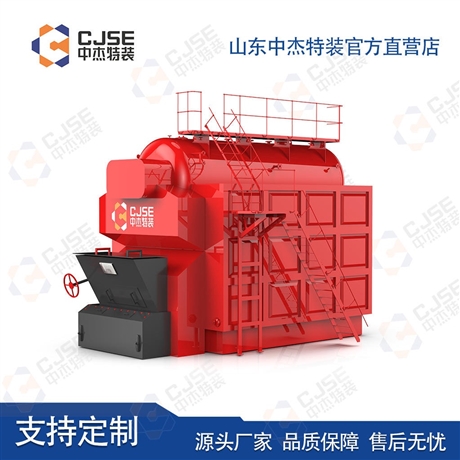



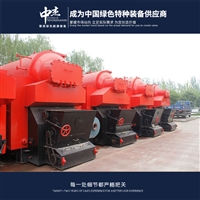

Selection of Biomass Boiler Supply for Enterprises Using 4-ton Biomass Boilers in Liaocheng
Category:
mechanical equipment/Industrial boilers and accessories/biomass boiler
Model:
DZL4-1.25
Brand:
Zhongjie Special Equipment
Retail Price
245,000.00USD
重量
kg
- Product Description
-
Description :
In recent years, due to the increasing pressure on environmental protection and the worsening energy crisis, a series of laws and regulations have been continuously introduced to promote emission reduction and energy conservation, encourage the promotion of new energy, etc. As a major energy consumer and emitter, boilers have also undergone or are currently undergoing large-scale updates or renovations under the joint promotion of various levels, boiler production and use units, energy supply enterprises, etc. However, due to differences in policies in various regions, varying interests of market entities, and insufficient technology and understanding, some boiler users have insufficient understanding of the advantages and disadvantages of various renovation plans. The actual operating effect after renovation is significantly different from the planned effect or seriously unsuitable. Therefore, we are responsible to our customers and based on a large amount of detailed and scientific data, we comprehensively compare the differences in several main energy (coal, natural gas, biomass) boiler plans from an objective and fair perspective for customers to identify and choose from.
1、 Theoretical differences in boiler usage costs among three types of energy sources
Note:
1. The national standard range for low calorific value of Class II bituminous coal is 4200-5000 Kcal/Kg, with a median of 4600 Kcal/Kg; Due to differences in composition and processing, biomass fuels have a calorific value range of 3300-5000 Kcal/Kg, typically 3800-4200 Kcal/Kg, with a median of 4000 Kcal/Kg.
2. The theoretical efficiency of the boiler is taken from the limit value in the national standard "Boiler Energy saving Technical Supervision and Management Regulations", which is the low design requirement value.
3. The fuel price is temporarily calculated based on the current market price in Changsha, and can be adjusted by each region according to actual conditions.
2、 The differences in boiler usage costs among three types of energy sources in actual operation
(Taking the enthalpy of 600000 kcal per ton of steam as an example).
because:
(1) Coal fired boiler
1. Coal quality of coal-fired boilers is prone to fluctuations, and there are generally certain issues with coal quantity measurement;
2. Reasons for boiler body design, operator proficiency, unstable coal quality, ash accumulation, etc
The average operating efficiency of actual layer fired boilers (chain boilers below 20T) is below 70%, and some boilers are even below 60% (from a report by Professor Zhao Qinxin of Harbin Institute of Technology at the Industrial Boiler Industry Association);
3. According to calculations, the converted cost of electricity consumption, slag and dust removal water consumption, labor, maintenance accessories, and other expenses for coal-fired boilers is about 20 yuan/ton of steam.
(2) Biomass boiler
1. Due to the lack of national standards and regulatory oversight for biomass pellet fuels. In addition, due to the complex composition of its raw materials and different processing methods, its calorific value fluctuates greatly, and there is a common phenomenon of calorific value not meeting the contractually agreed standards.
2. Due to the immaturity of domestic biomass boiler technology, small and medium-sized industrial boilers, whether using layer combustion or suspension combustion, are simply modified based on original coal-fired or gas-fired boilers. Therefore, their combustion is not entirely targeted at the characteristics of biomass fuel, resulting in lower thermal efficiency.
3. There is no good solution to the inherent problem of slagging and ash accumulation in biomass boilers, which mainly relies on manual regular ash cleaning, resulting in a significant decrease in their actual thermal efficiency, especially when coal-fired boilers are converted to biomass boilers. According to a large amount of calculated data, their average efficiency is less than 70%.
4. Biomass boilers consume slightly more water, electricity, labor, and maintenance costs than coal-fired boilers.
(3) Natural gas boiler
1. Natural gas boilers have lower labor and water consumption costs.
2. The promotion of energy-saving or condensation technology for the tail flue gas of natural gas boilers has significantly improved their thermal efficiency. When the exhaust temperature of natural gas boilers drops below 80 degrees, their efficiency can reach over 95%.
Based on the above reasons, after comparing the actual operating data of a large number of customers, the actual operating costs of the three types of fuel boilers mentioned above should be revised to (the fluctuation factor of fuel calorific value is temporarily not considered).
3、 Comparison of advantages and disadvantages of three fuels in boiler use
(1) Advantages
Coal:The fuel supply is guaranteed, the technology is mature, the stoker personnel are familiar with it, and the usage cost is low.
Biomass:Compliant with national renewable energy policies and emission reduction policies, it has broad promotion prospects and significant social significance.
natural gas:Clean and environmentally friendly, the boiler occupies a small area, has a low failure rate, and can significantly improve the on-site environment of the user unit. It has obvious relative advantages in areas with sufficient supply and low prices, high environmental requirements, and high costs.
(2) Disadvantage
Coal:The pressure of environmental protection and emission reduction, including the testing of PM2.5, will force small and medium-sized industrial boilers to quickly withdraw from the situation dominated by fossil fuels such as coal and coal based (including coal slurry); Urban areas and ecological protection zones will gradually prohibit the transportation, discharge, or significant increase in the cost of processing coal and "three wastes"; The boiler room and its ancillary facilities, energy storage, etc. occupy a large amount of space.
Biomass:
1. Due to factors such as supply radius (the collection and transportation cost of biomass raw materials exceeding 50Km radius will increase significantly), season, and household production, fuel supply is limited, and the possibility of price fluctuations also increases. Currently, the scale of most biomass fuel plants in China is limited, with an annual output of around 10000 to 20000 tons, which cannot meet the demand for boiler usage on a large scale. Therefore, in recent years, projects such as biomass power generation have been hindered, and scholars generally believe that biomass fuels are suitable for rural local gasification or as fuel for small urban coal-fired boilers or stoves.
2. Biomass fuels require large storage sites and high fire protection levels. Due to the fact that the density of granular biomass fuel is generally between 0.7-1.2, based on a storage capacity of 7-10 days of normal use, the storage site and fire prevention requirements required for larger tonnage boilers are unacceptable to many units.
3. The sources of biomass fuel are complex, with not only large fluctuations in calorific value, but also rich in Cl, K ions or SiO2. The corrosion and SiO2 wear problems of these ions on boilers will gradually be exposed and have serious consequences.
4. There is currently no good solution to the problem of low operating efficiency caused by low-temperature slagging and ash accumulation in biomass boilers worldwide, and small and medium-sized industrial boilers can only rely on regular manual cleaning.
5. The problem of biomass fuel self burning due to low ignition point and lack of oxygen after shutdown, resulting in the accumulation of combustible gas volume and causing furnace explosion, should be highly valued.
6. Due to its low ash content and high volatile matter, biomass fuel is prone to anaerobic or peroxide combustion, which is also one of the important factors affecting its thermal efficiency.
7. The technology in boiler body structure, boiler operation, and flue gas treatment is still immature. The treatment of flue gas requires a large amount of water and electricity resources, and improper treatment can greatly affect the PM2.5 emissions in the air environment. This is also one of the reasons why the Pearl River Delta region, after promoting biomass fuel on a large scale for several years, now requires all boilers to be converted to natural gas
The anaerobic pyrolysis and gasification technology of biomass cannot meet the application of large and medium-sized boilers due to the huge equipment investment and production limitations, and currently cannot be widely promoted.
natural gas:Due to the advantages of natural gas in environmental protection and its increasing proportion in primary energy, the contradiction between supply and demand and the law of value will inevitably lead the country to gradually link and fluctuate its prices with other primary energy sources in the future, and its long-term price trend will gradually be relaxed. In addition, insufficient natural gas or seasonality in certain areas are also reasons that affect its further promotion.
4、 Comparison of initial investment analysis
In summary, after comparing the actual operating costs, advantages and disadvantages of various energy boiler schemes, initial investment and other factors, combined with the characteristics of energy storage and distribution in China, it is not difficult to see that in the short term,It is difficult for China to change the current situation where coal is the main fuel (accounting for about 70%),Coal fired boilers will mainly develop towards large-scale, energy-saving, high-efficiency, efficient desulfurization and dust removal, as well as overall coal gasification; And natural gas (including rock gas) will rapidly expand its proportion due to its abundant reserves, environmental protection, and economic characteristics; As a renewable energy source and zero carbon emission new energy such as biomass, it will gradually become an important supplement to existing energy with the promotion and application of its core technology, and will be increasingly popular in daily life and small industrial boiler applications.

AfterSalesService :
Key words:- biomass boiler
More Products