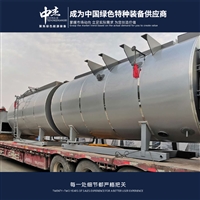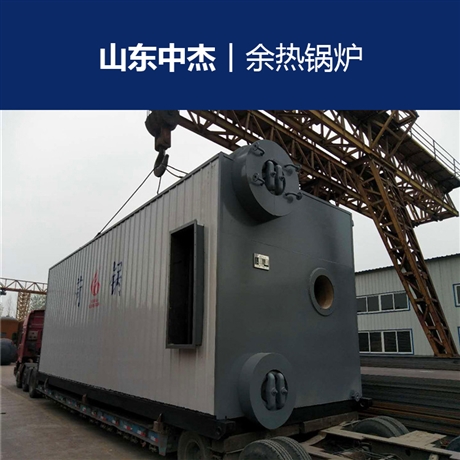



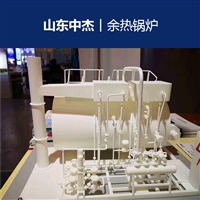

Shandong customized flue gas waste heat boiler waste heat flue gas utilization manufacturer
Category:
mechanical equipment/Industrial boilers and accessories/Waste heat boiler
Model:
YYQ1400
Brand:
Zhongjie Special Equipment
Retail Price
243,000.00USD
重量
kg
- Product Description
-
Description :
1、 Working principle of waste heat boiler
The design of energy-saving waste heat boilers is a complex and complex large-scale project with high requirements for reliability and economy. Currently, there are common problems such as a high dependence on experienced designers, long design cycles, and poor knowledge reuse. The ability to quickly develop new products that customers need is related to the survival and development of enterprises.
Waste heat boilers are divided into two types: fire tube and water tube. Its structure is similar to that of an industrial boiler. The fire tube waste heat boiler has a large water storage capacity and small steam pressure fluctuations under the conditions of fluctuating flue gas and steam consumption. However, its evaporation capacity and steam pressure are limited by the diameter of the boiler drum and operating conditions.
Due to poor cooling and high temperature stress, this type of boiler is not suitable for high smoke temperatures (above 600 ℃) and thick tube plates. Instead, a water tube waste heat boiler is recommended. Water tube waste heat boilers have two circulation modes: auxiliary circulation and natural circulation.
A waste heat boiler is a boiler that generates steam or hot water by utilizing gases, exhaust gases, and waste liquids from industrial production processes, as well as the heat from exhaust gases of certain power machinery. The waste heat boiler is an important energy-saving equipment. The exhaust temperature of various smelting furnaces and roasting kilns is 650-1250 ℃; The exhaust temperature of power machinery such as gas turbines and diesel engines is 370-540 ℃.
Installing a waste heat boiler to absorb some of the heat from these exhaust gases can significantly improve the overall thermal energy utilization efficiency of the system. For example, after installing a waste heat boiler in a steel rolling heating furnace, the overall thermal energy utilization rate of the system can even be increased by about twice.
The temperature of the flue gas entering the waste heat boiler is an important factor determining the layout of the heating surface of the waste heat boiler. When the temperature of the imported flue gas is between 400 and 900 ℃, convection tube bundles are mainly installed inside the boiler, and no furnace chamber is provided; However, there are exceptions when the melting point of smoke and dust is low. A cooling furnace chamber should be set up to control the temperature of the inlet smoke entering the convection flue and avoid bridging the ash between the convection pipes.
In the cracking process of chemical production, in order to avoid the re aggregation of high-temperature cracking gas, it is necessary to rapidly cool the high-temperature cracking gas to the temperature at which the cracking reaction stops. At this time, the waste heat boiler becomes an indispensable rapid cooling process equipment.
After passing through the waste heat boiler, high-temperature dusty exhaust gas can not only lower the temperature, but also settle some dust particles, which is beneficial for reducing environmental pollution and selecting dust collectors. In the chemical production process, the exhaust temperature of the waste heat boiler depends on the requirements of the next process.
Waste heat boilers used in industrial furnaces generally use induced draft fans to exhaust the gas to the atmosphere; The waste heat boiler used in power machinery and chemical production processes relies on the pressure of the intake air itself to pass through the waste heat boiler and be discharged into the atmosphere or enter the next process unit.
When the imported flue gas temperature or exhaust gas combustion temperature is above 1100 ℃, its layout is not much different from that of general industrial boilers. When there is a large amount of accumulated fine ash in the high-temperature exhaust gas, the tube bank of the boiler should be arranged vertically, and the flue gas should wash the tube bank longitudinally at a high smoke velocity (about 20 meters/second).
For high-temperature exhaust gas containing corrosive smoke and dust, the flow rate should be low (about 8 meters/second) and uniform, and other anti-wear measures should be taken. For corrosive high-temperature exhaust gas containing sulfur dioxide (SO2), the exhaust temperature should usually be higher, without using an economizer for heating water, in order to increase the metal wall temperature and prevent metal corrosion.
2、 Classification of waste heat boilers
The main types of waste heat boilers include: sintering machine waste heat boiler, three waste mixed combustion furnace and blowing gas waste heat boiler, cement kiln waste heat boiler, steel waste heat boiler, hazardous waste waste waste heat boiler, garbage incineration waste heat boiler, coking waste heat boiler, non-ferrous metal smelting waste heat boiler, waste heat boiler, ore blast furnace industry waste heat boiler, glass kiln waste heat boiler, dry quenching waste heat boiler, carbon kiln waste heat boiler, gas steam turbine waste heat boiler, steelmaking waste heat boiler, etc.
(1) According to the properties of waste heat, it can be divided into the following categories:
1. High temperature flue gas waste heat: It is a common form characterized by large output, concentrated production points, strong continuity, easy recovery and utilization. It takes away 40-50% of the total heat, and the waste heat boiler recovers heat, which can be used for production or domestic heat and power generation.
2. High temperature slag waste heat: such as blast furnace slag, converter slag, electric furnace slag, etc., the temperature of the slag is above 1000 ℃, and the heat it carries away accounts for 20% of the total heat.
3. High temperature product waste heat: such as coke oven coke, steel ingots and billets, high-temperature forgings, etc., it generally has a certain temperature Very high, containing a large amount of waste heat.
4. Waste heat from combustible waste gases and liquids, such as blast furnace gas, catalytic cracking regeneration waste gas from refineries, and black liquor from paper mills, can all be utilized.
5. Chemical reaction waste heat: Industrial sectors such as metallurgy, phosphoric acid, fertilizers, chemical fibers, and paint all generate a large amount of chemical reaction waste heat.
6. Waste heat of cooling medium: A large amount of cooling water discharged from cooling devices such as water jackets in industrial furnaces, and steam produced by various vaporization cooling devices all contain a large amount of waste heat, which can be reasonably utilized.
7. Waste heat from condensate water: The physical sensible heat generated by the condensation of steam used in the production process of various industrial sectors after the industrial process.
(2) Due to the close relationship between waste heat and other production equipment and processes, the utilization of waste heat has the following characteristics:
1. The unstable heat load is mainly determined by the production process.
The composition, concentration, and particle size of smoke and dust vary greatly. As a result, the arrangement of the heating surface of the boiler is affected, and it is necessary to consider anti-wear, dust blocking, and dust removal.
The diversity of smoke components makes some smoke corrosive. SO2 in flue gas, smoke and dust, or various metal and non-metal elements in slag may cause low-temperature or high-temperature corrosion and ash accumulation in waste heat equipment.
4. Restricted by the inherent conditions of the installation object. If there are any restrictions on the elevation of the boiler inlet and outlet smoke ports; Some restrictions on the exhaust temperature of boilers make it meet the requirements of production processes.
(3) Due to the different properties of waste heat flue gas, the types and structural forms of waste heat boilers vary. According to structural characteristics, it can be divided into two categories: shell and tube waste heat boilers and flue type waste heat boilers. According to the dust content and characteristics of the flue gas at the inlet of the waste heat boiler, it can be divided into the following five categories:
1. Waste heat boilers with a dust content not exceeding 20g/Nm3 in flue gas are classified as waste heat boilers;
2. Waste heat boilers with dust content greater than 20g/Nm3 and not greater than 70g/Nm3 in flue gas are classified as Class II waste heat boilers;
3. Waste heat boilers with a dust content greater than 70g/Nm3 in the flue gas are classified as Class III waste heat boilers;
4. Waste heat boilers with adhesive smoke and dust in the flue gas are classified as Class IV waste heat boilers;
5. Waste heat boilers with strong corrosive components or toxic flue gas in the flue gas are classified as Class V waste heat boilers.
Classification based on the pressure level of steam generated by waste heat boilers
At present, waste heat boilers adopt five categories of steam water systems, including single pressure, double pressure, double pressure reheating, triple pressure, and triple pressure reheating.
1. Single pressure stage waste heat boiler: The waste heat boiler only produces steam of one pressure to supply to the steam turbine.
2. Dual pressure or multi pressure stage waste heat boiler: The waste heat boiler can produce steam of two different pressures or multiple different pressures to supply to the steam turbine.
Classified by the arrangement of heating surfaces
1. Horizontal arrangement of waste heat boiler
2. Vertical arrangement of waste heat boiler
Classification based on the flow characteristics (working principle) of the working fluid in the evaporative heating surface
1. Natural circulation waste heat boiler: The flue gas flows horizontally through vertically installed pipe clusters. The density difference between the water vapor mixture in the pipe cluster and the cold water in the downcomer is the driving force for maintaining the natural circulation of the water vapor mixture in the evaporator.
2. Forced circulation waste heat boiler: The flue gas usually flows vertically through horizontally arranged pipe clusters. Ensure a constant circulating flow rate in the evaporator through a circulating pump.
3. DC waste heat boiler: The DC waste heat boiler relies on the pressure head of the feed water pump to convert the feed water into superheated steam through each heating surface. In the evaporative heating surface, the flow of the working fluid is achieved by the pressure head of the feedwater pump.

3、 Characteristics of waste heat boiler
Waste heat boilers usually do not have burners. If high-pressure and high-temperature steam is needed, an additional burner can be installed inside the waste heat boiler. By burning fuel, the entire flue gas temperature is raised, which can generate high parameter steam.
For example, when a certain waste heat boiler is not equipped with a burner, the inlet flue gas temperature is 500 ℃. After installing an additional burner, the inlet flue gas temperature can reach 756 ℃. The pressure of steam can be increased from 4MPa to 10MPa, and the temperature of steam can be increased from 450 ℃ to 510 ℃. Steam can be used for high-temperature and high-pressure steam turbines, thereby increasing electrical power output.
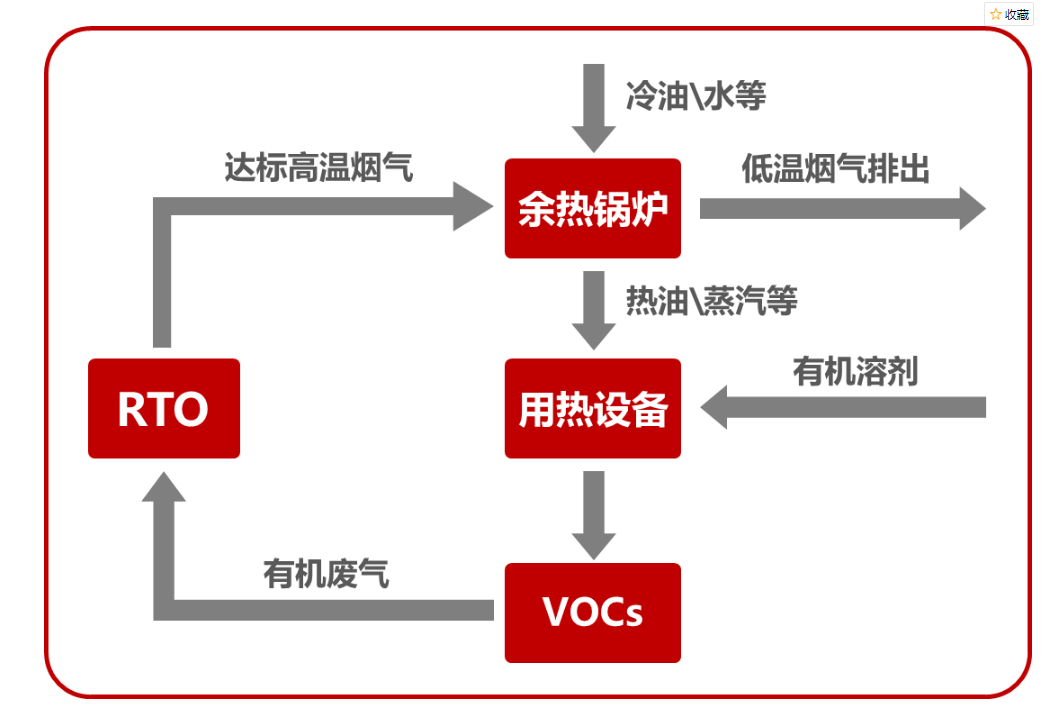
The waste heat boiler mainly uses exhaust gas as a heat source, so there is no need for a combustion system (unless there is a requirement for supplementary combustion).
The difference between waste heat boiler and conventional boiler:
Waste heat boilers utilize existing waste gas waste heat or solid sensible heat.
The waste heat boiler can generate steam under multiple pressures, which improves the heat recovery efficiency.
The waste heat boiler does not have a fuel combustion device.
As a waste heat utilization system, the waste heat boiler should adapt to the needs of the main process and not affect the operation of the main process.
The layout of the heating surface of the waste heat boiler is diverse.
Usually, a waste heat boiler consists of an economizer, evaporator, superheater, heat exchange tube group and container such as a header and a steam drum. In steam cycles with a reheater, a reheater can be added. In the economizer, the boiler's feedwater completes the preheating task, raising the feedwater temperature to a level close to saturation temperature; In the evaporator, the water phase changes into saturated steam; Saturated steam is heated and heated in the superheater to become superheated steam; The reheated steam is heated to the set reheating temperature in the reheater.
4、 Selection of waste heat boiler
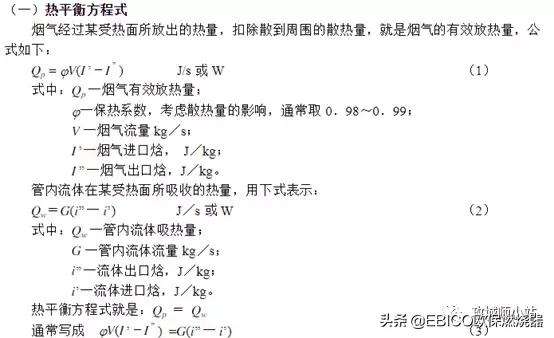
The conditions that should be met when designing a waste heat boiler
1. Smoke side parameters:
Smoke volume (standard or operating conditions), smoke inlet temperature, smoke composition, smoke dust content, smoke side pressure (positive or negative), boiler smoke side system resistance
2. Boiler parameters:
Boiler rated evaporation capacity, boiler rated steam pressure, boiler rated steam temperature, boiler exhaust gas temperature
3. Other parameters:
The industry to which the main flue gas system belongs, system process description, boiler installation form, boiler structural form, meteorological parameters of the boiler installation site, or other special requirements.
AfterSalesService :
Key words:- waste heat boiler
More Products