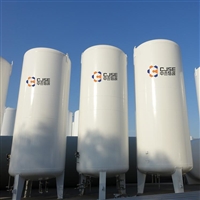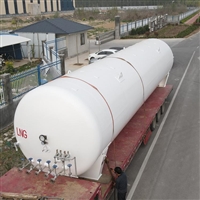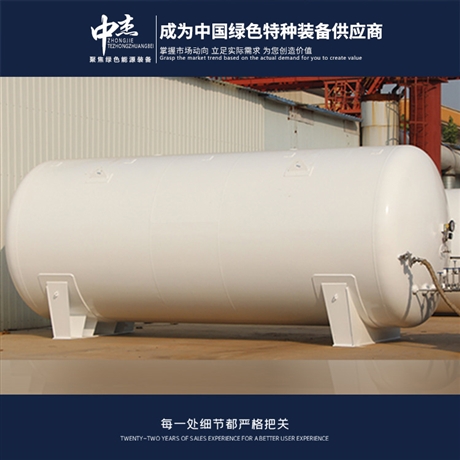

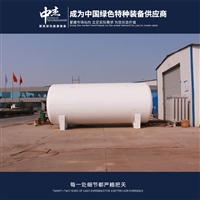
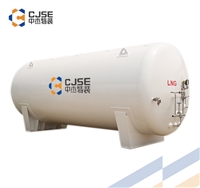
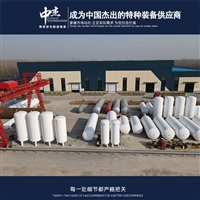
Shandong natural gas storage tank manufacturer horizontal CFW60-0.8 tank model
Category:
mechanical equipment/Storage and transportation equipment/storage tank
Model:
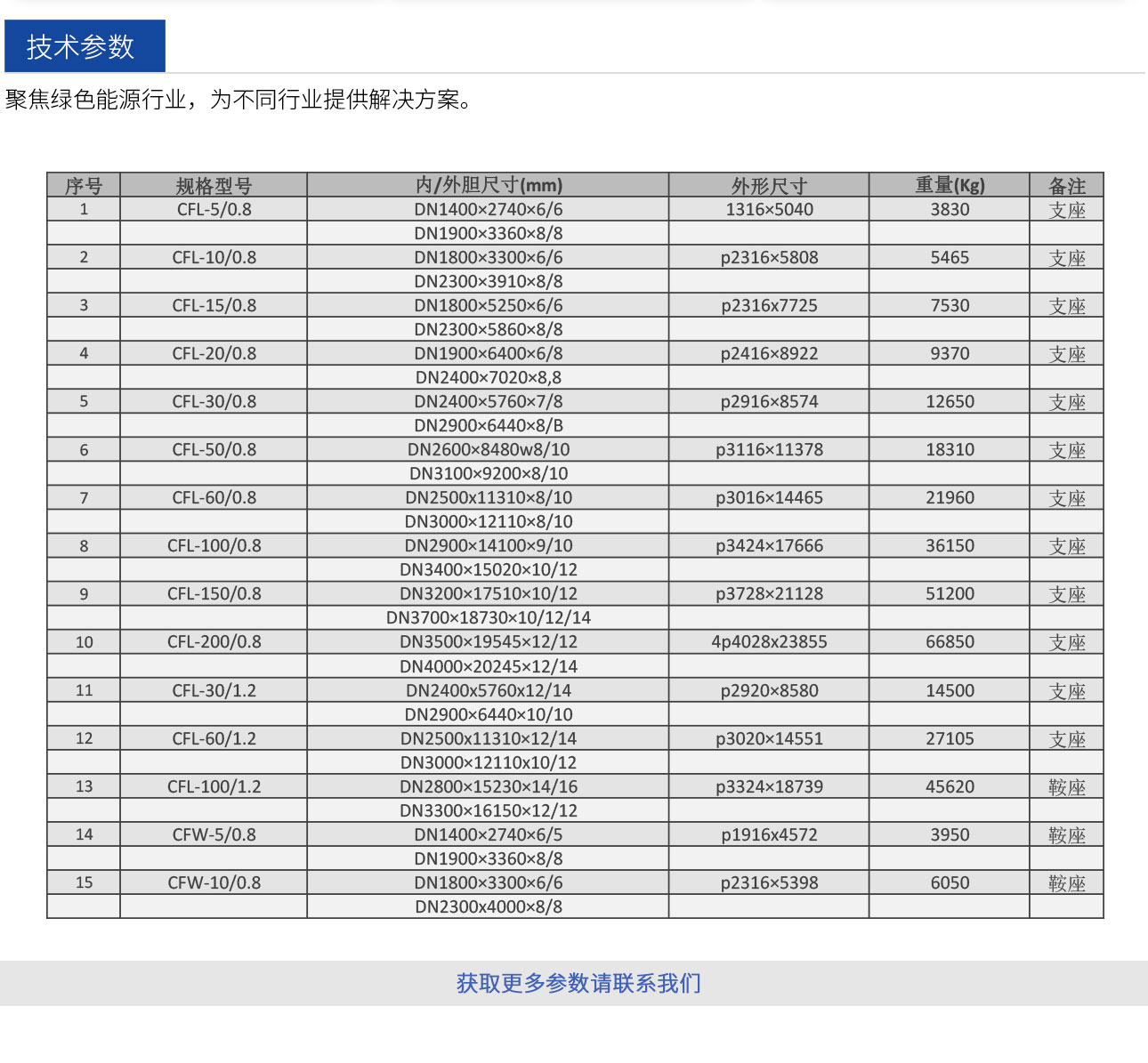
CFW60-0.8
Brand:
Zhongjie Special Equipment
model:
CFW60-0.8
material:
stainless steel
capacity:
fifty-four
storage location:
Ground storage tank
Product Usage:
Storage tank
Placement method:
horizontal storage tank
structural form:
horizontal
Processing & Customization:
yes
Applicable materials:
LNG Tank
volume:
fifty-four
Overall dimensions:
DN2400-12400-8
self-weight:
two hundred and nineteen thousand and six hundred
Place of Origin:
Heze, Shandong
container type:
The first type of pressure vessel
Special Equipment Manufacturing License Number:
A2
weight:
two hundred and nineteen thousand and six hundred
Operating Temperature:
one hundred and ninety-three
work pressure:
zero point eight
diameter:
DN2400
height:
one hundred and twenty-four thousand
type:
Anti corrosion storage tank
Retail Price
316,000.00USD
重量
kg
- Product Description
-
model CFW60-0.8
material stainless steel
capacity fifty-four
storage location Ground storage tank
Product Usage Storage tank
Placement method horizontal storage tank
structural form horizontal
Processing & Customization yes
Applicable materials LNG Tank
volume fifty-four
Overall dimensions DN2400-12400-8
self-weight two hundred and nineteen thousand and six hundred
Place of Origin Heze, Shandong
container type The first type of pressure vessel
Special Equipment Manufacturing License Number A2
weight two hundred and nineteen thousand and six hundred
Operating Temperature one hundred and ninety-three
work pressure zero point eight
diameter DN2400
height one hundred and twenty-four thousand
type Anti corrosion storage tank
Description :
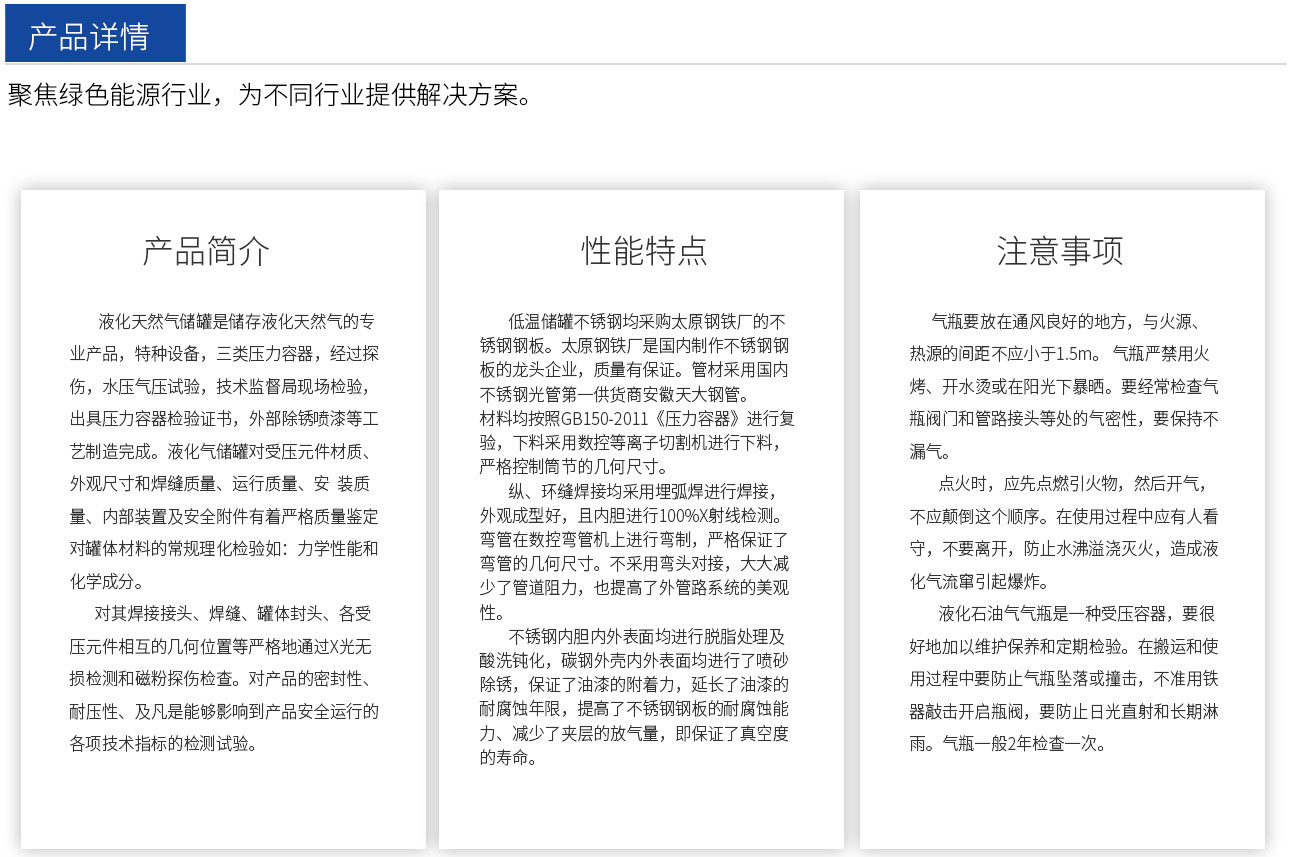
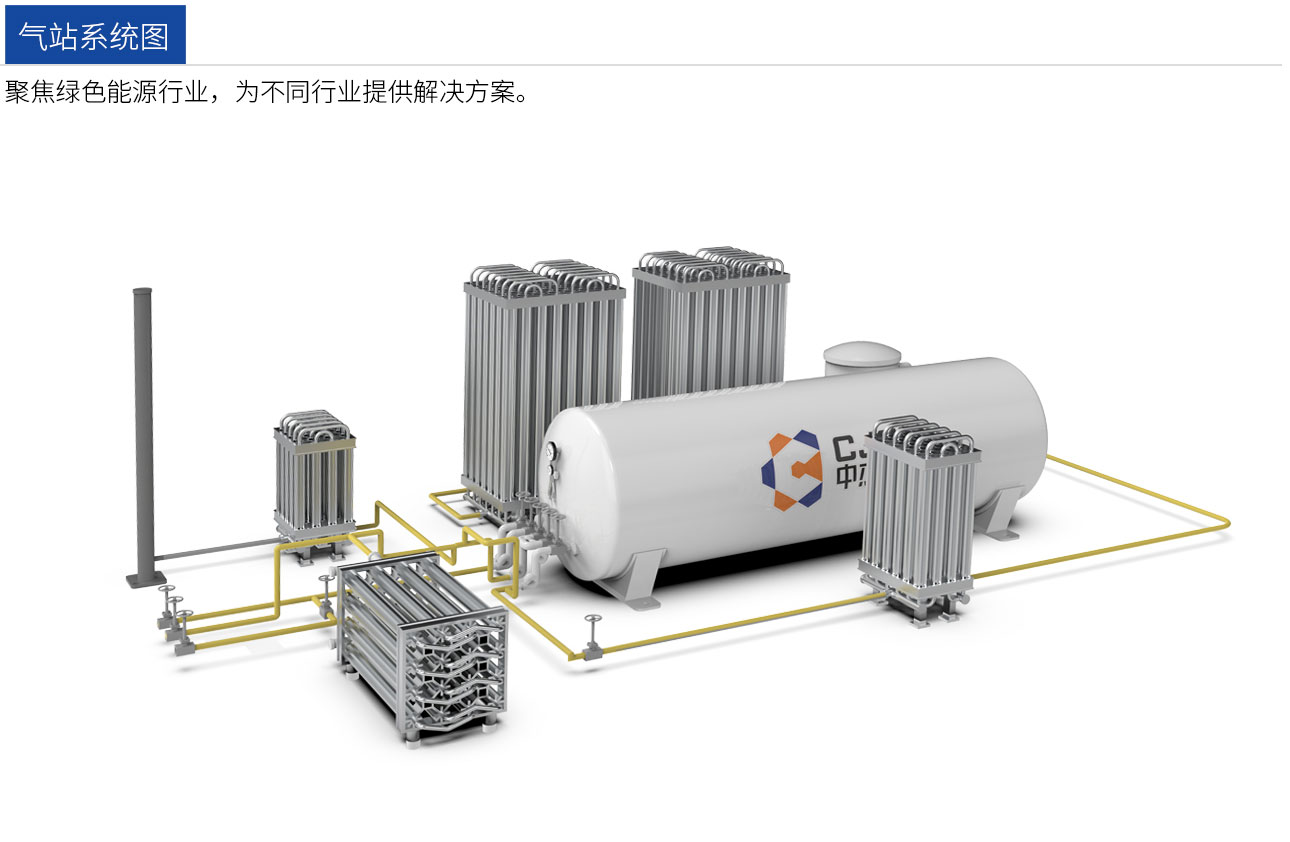
Natural gas is widely recognized as a clean, environmentally friendly, and safe energy source. After liquefaction, the volume of natural gas is reduced by about 600 times, which brings great benefits to storage. Liquefied natural gas (LNG) is stored in atmospheric and low-temperature storage tanks.
1. Low temperature resistance
The boiling point of liquefied natural gas under normal pressure is -160 ℃. LNG adopts a low-temperature and atmospheric storage method, which lowers the temperature of natural gas below its boiling point, resulting in a slightly higher operating pressure of the storage tank than atmospheric pressure. Compared with high-pressure and ambient temperature storage methods, this can greatly reduce the thickness of the tank wall and improve safety performance.
Therefore, LNG requires storage tanks to have good low-temperature resistance and excellent cold insulation performance.
2. High safety requirements
Due to the low-temperature liquid stored in the tank, in the event of an accident, the refrigerated liquid will evaporate in large quantities, with a gasification amount approximately 300 times that of the original refrigerated state, forming an automatically detonating gas mass in the atmosphere.
Therefore, API, BS and other specifications require storage tanks to adopt a double-layer wall structure and use the sealing concept. In the event of a leakage in the layered tank, the second layer of the tank can completely seal off the leaked liquid and evaporated gas, ensuring storage safety.
3. Special material
The inner tank wall requires low temperature resistance and is generally made of materials such as 9Ni steel or aluminum alloy, while the outer tank wall is made of prestressed reinforced concrete.
4. Strict insulation measures
Due to the temperature difference between the inside and outside of the tank reaching up to 200 ℃, in order to maintain the temperature inside the tank at -160 ℃, the tank body must have good cold insulation performance, and high-performance cold insulation materials should be filled between the inner and outer tanks. The cold insulation material at the bottom of the tank also needs to have sufficient pressure bearing performance.
5. Good seismic performance
The seismic requirements for general buildings are to withstand seismic loads without collapsing. To ensure the safety of storage tanks under unexpected loads, they must have good seismic performance. LNG storage tanks are required to not collapse or crack under specified seismic loads.
Therefore, the selected construction site should generally avoid earthquake fault zones. Before construction, seismic tests should be conducted on the storage tanks to analyze their structural performance under dynamic conditions and ensure that the tanks are not damaged under the given seismic intensity.
4、 When there is a large amount of long-term sweating or frosting in the LNG storage tank, and the pressure keeps rising rapidly, the vacuum failure should be considered, and emergency treatment should be carried out by manually draining the pressure and transferring the LNG liquid in the tank.
6、 It is recommended to conduct a vacuum test on LNG storage tanks every year. When the tank is a hot tank, the vacuum degree should be less than 1Pa, and when the tank is a cold tank, the vacuum degree should be less than 0.5Pa (0.00375TOF) to be qualified.
7、 The storage tank cannot be transported with liquid, and the LNG liquid inside the tank should be discharged when it is not in use for a long time.
8、 LNG storage tanks are pressure vessel equipment. According to the requirements of the "Safety Technical Supervision Regulations for Pressure Vessels" issued and implemented, the installation, maintenance, and renovation of pressure vessels require qualified units to inform the local quality inspection department and obtain permission before installation, maintenance, and renovation can be carried out.
AfterSalesService :
Key words:- Natural gas storage tank manufacturer
More Products