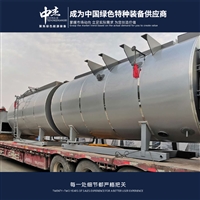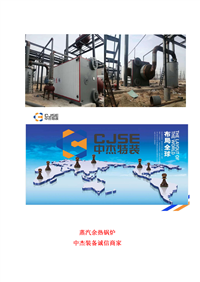
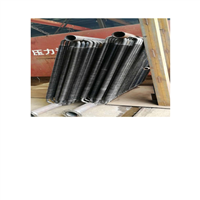


Waste heat flue gas utilization boiler Waste heat boiler manufacturer ordering hotline
Category:
mechanical equipment/Industrial boilers and accessories/Waste heat boiler
Model:
q2-1.25
Brand:
Zhongjie Special Equipment
Retail Price
225,000.00USD
重量
kg
- Product Description
-
Description :
1、 The concept of waste heat boiler
With the continuous advancement of science and technology and the deepening of industrialization, more and more industrialized enterprises are committed to using emerging energy sources to replace old energy sources or improving the reuse rate of limited resources. The investment in industrial production is much stronger than in other fields. In order to reduce costs and obtain higher profits, enterprises must continuously improve their technological level and reduce energy consumption. As is widely known, energy can be converted and utilized, and similarly, the heat energy emitted daily from industrial equipment can also be converted into power for use in factories. The application of waste heat boilers is a progress in industrial production. Factories produce a lot of heat energy every day, which, if well converted, can become new productivity. However, if ignored, not only does it cause waste, but it also brings great harm to the environment.
A boiler that uses the sensible heat of various exhaust gases and the waste heat from incineration as a heat source is called a waste heat boiler, also known as a waste heat boiler. A waste heat boiler operates based on the absorbed heat energy, as illustrated by specific examples. The catalytic hydrogen production unit of a certain industrial chemical plant generates a lot of heat energy every day, so the factory installed a waste heat boiler for it. The waste heat boiler utilizes the high temperature generated by the catalytic hydrogen production device to heat the water in the boiler to a certain extent, and then generates new energy through waste heat recovery or steam to replace other devices.
2、 The operating principle and problems of waste heat boiler
1. Operating principle of waste heat boiler
The operating principle of a waste heat boiler: Fuel, gas, and coal are burned to produce high-temperature flue gas that releases heat. The high-temperature flue gas first enters the furnace, then enters the waste heat recovery device in the front smoke box, then enters the smoke tube, and finally enters the waste heat recovery device in the rear smoke box flue. The high-temperature flue gas becomes low-temperature flue gas and is discharged into the atmosphere through the chimney.
2. Problems encountered during the operation of waste heat boilers
Waste heat boilers can greatly improve the utilization efficiency of the heat released from fuel combustion, so they are widely used in industrial plants. However, as the boiler is used for a long time, many problems arise one after another, and these shortcomings and hidden dangers to a certain extent affect the working efficiency of the boiler and the normal use of other equipment. There are several specific issues:
2.1 The exhaust temperature of the boiler cannot be controlled
When the waste heat boiler runs for a period of time, its exhaust efficiency gradually decreases, and the temperature of the smoke produced cannot meet the required requirements. In general, as time goes by, the exhaust temperature will continue to increase. Its height increase will not only damage the boiler itself, but also cause explosions due to the accumulation of impurities on the heating surface of the boiler, posing a significant safety hazard. The exhaust temperature of the boiler cannot be well controlled, which greatly reduces the utilization rate of the boiler.


2.2 Decrease in Overheating Capacity of Superheater
If the overheating area of the waste heat boiler is designed to be very small, the problem of insufficient overheating will occur. Normally, the temperature at the outlet of a boiler for overheating should be around 430 ℃. However, due to the small overheating area, the actual heat generated by the boiler cannot reach 430 ℃. As a result, the boiler cannot provide heating, which greatly affects the normal operation of the equipment.
2.3 High degree of damage to the economizer
The main function of the coal saving port of the boiler is to supply water to the boiler, and the water is transmitted through this path. However, in actual operation, we cannot guarantee that the temperature of the water is consistent with that of the boiler, as there is always a significant deviation between them. It is precisely this temperature deviation that can damage the economizer and even corrode it. And the soot blowing system will also leave a lot of impurities, which will solidify for a long time and are difficult to eliminate, greatly affecting the operating speed of the boiler, thereby affecting the efficiency and effectiveness of the boiler.
3、 Energy saving retrofit technology for waste heat boilers
There are many problems with waste heat boilers that cannot be solved. As long as relevant technologies are improved and enhanced, the good performance of waste heat boilers can still be utilized to serve other equipment, thereby improving the efficiency and effectiveness of the entire factory. According to the specific problems that arise with the boiler, adjustments should be made from the following aspects.
1. Innovative measures for superheaters
The main problem with the superheater is that the area of the superheater is too small to provide sufficient heat, which not only affects the normal operation of the equipment, but also poses a safety hazard. To solve this problem and increase the temperature at the outlet of the superheater, we adopted the following method: due to the presence of a space between the inlet of the economizer and the outlet of the convective evaporation section, we installed a saturated steam low-temperature superheater between them. This low-temperature filter uses finned tubes as the heat transfer medium and adopts a modular box structure. In addition, we also need to install a fixed and rotatable soot blowing device in this space. The purpose of these additional configurations is to cooperate with existing devices to improve the ability and effectiveness of heat energy conversion, and avoid the occurrence of low efficiency situations.
Specific operating process: The added saturated steam low-temperature superheater can convert the temperature of the received saturated steam to around 310 ℃, and then combine the saturated steam with the saturated steam of the waste heat boiler itself to reach the required temperature based on this temperature. After this process, the enthalpy value of the steam flowing into the superheater has significantly increased. As a result, the superheating capacity of the waste heat boiler has been greatly improved, and the problems that occurred before the renovation will not occur, thus ensuring that the waste heat boiler can operate stably for a long period of time. It is worth mentioning that in the middle and later stages of waste heat filtration operation, the new type of superheater that has been adjusted and modified can balance the ability of overheating, and there will be no situation where the temperature is too low or too high. In addition, during the later operation process, as time passes, a lot of dust and impurities will accumulate on the convective heating surface of the boiler. These dust and impurities will change the position of the flue gas heat, causing the heat to move backward. The adjusted superheater solves this problem well and can effectively increase the temperature of the superheated steam. The dew point problem of pipelines can be solved by dismantling the steam drum and evaporation heating surface, which not only provides convenience for daily equipment operation and maintenance work, but also simplifies the waste heat boiler system. In this process, we must ensure the working condition of the newly added low-temperature superheater, because only the working condition can guarantee that the temperature of the superheated steam outlet can meet the requirements.
2. Innovative adjustment measures for economizer
Once the exhaust temperature is too high, it will seriously affect the efficiency of the waste heat boiler. Improving the operation level of the waste heat boiler can be achieved by dismantling the high and low temperature furnace walls of the previous economizer, and configuring a modular structure of building blocks made of spiral finned tubes. Generally, the heating surface of these economizers can increase the heat exchange area over a large range, thereby greatly improving the thermal conductivity level of the economizer and fully reducing the exhaust temperature, which can ensure a temperature of 180 ℃. At the same time, during the renovation, a special modular construction with building blocks was used. On the one hand, it can greatly improve the quality and related performance of the equipment, and on the other hand, it can facilitate construction, which is conducive to shortening the construction time and effectively reducing the time cost. Due to the large temperature difference in boiler feedwater, it is easy to cause corrosion and perforation of the economizer. As for the water supply system of the economizer, based on the heat exchange requirements, the high-temperature reactor can heat the boiler water from the outlet of the economizer, achieving the goal of greatly increasing the actual temperature of the water flowing into the economizer, while reducing the temperature difference with the boiler and avoiding dew point corrosion problems as much as possible, ensuring the efficient and safe operation of the economizer.
3. Innovative adjustment measures for soot blowers
During the operation of the waste heat boiler, we found that the working effect of the soot blower has a significant impact on the working status and efficiency of the boiler. When the working effect of the soot blower is poor, it will increase the deposition of dust and impurities on the heating surface of the waste heat boiler. At the same time, in addition to the heating surface of the waste heat boiler, there is also an economizer device, which will also have a lot of dust and impurities. The accumulation of these dust and impurities will greatly affect the stable performance of boiler operation. Our solution to this problem is to modify the soot blower. Specifically, the original sonic soot blower is replaced with a PLC controlled shock wave soot blower. This new blower can greatly improve the soot blowing ability, reduce the accumulation of dust and impurities in related configurations, and provide guarantees for the normal operation of the waste heat boiler.
4. Improve the self-control system of the waste heat boiler
In addition to corresponding modifications to the superheater, economizer, and soot blower, it is also necessary to adjust and improve the control system of the waste heat boiler. The improvement of the control system of the waste heat boiler is aimed at adapting to the convenience and timeliness of boiler control. Specific measures: Replace the electrical self-control control system adapted to the newly added shock wave soot blowing system with an advanced PLC control system; Upgrade the original DCS control system and add matching display parameters to the system. This measure to improve the control system of the waste heat boiler can effectively supervise and control the waste heat boiler, thereby maximizing the efficiency of the boiler's operation.
4、 The effectiveness test of energy-saving technology innovation
After the renovation of the waste heat boiler system was completed, in order to verify the effectiveness of the renovation, we conducted a specific experimental test on an industrial chemical plant. Before inspection, we estimated that the exhaust temperature of the new boiler could change from 220 ℃ to around 180 ℃. We have created an energy-saving estimation table (Table 1) for the inspection structure. According to the data shown in Table 1, we can see that the working efficiency of the waste heat boiler has increased from 72.63% to 81.87%, an increase of nine percentage points. This result is estimated to increase the recovery and utilization rate of flue gas heat by nearly 10 percentage points. By settling in this way, 3051.43t of standard coal can be saved, and the saved energy can be provided to the heat exchanger, oil slurry evaporator steam drum, and medium pressure saturated steam overheating. If calculated at 1200 yuan per ton, a total of 3661716 yuan can be saved. In short, the reformed waste heat boiler can not only save a lot of expenses for industry, but also reduce the degree of environmental pollution.
AfterSalesService :
Key words:- Waste heat flue gas
More Products