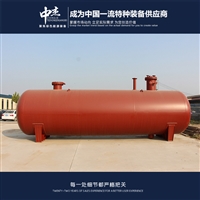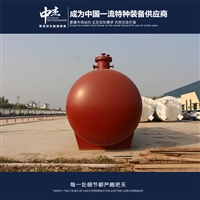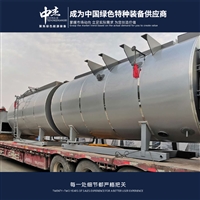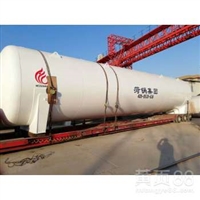


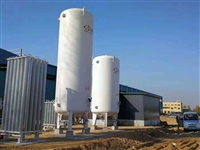

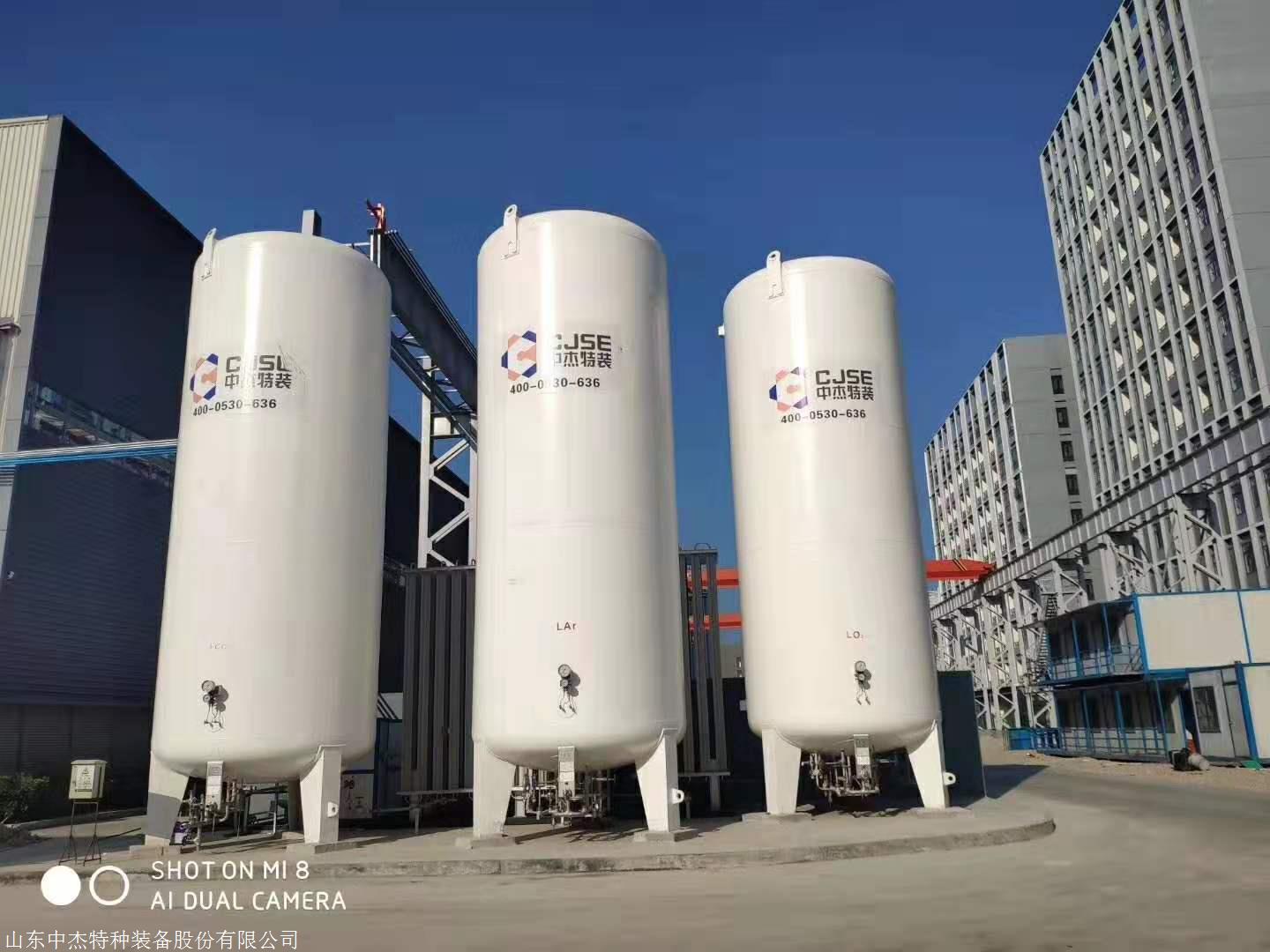
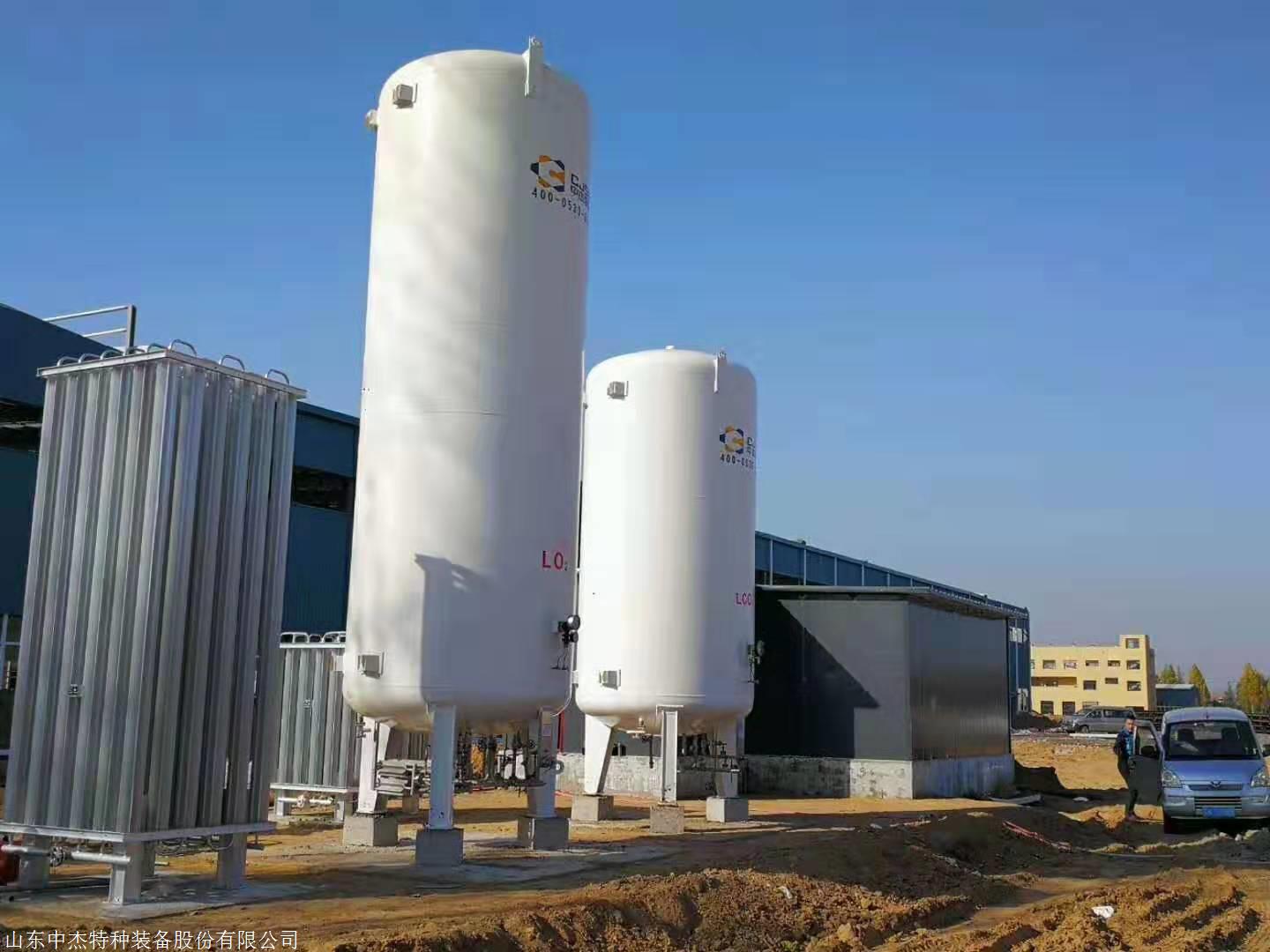
Pharmaceutical and chemical industries, air separation use low-temperature storage tanks, 30 cubic low-temperature liquid oxygen storage tanks, price standardization design
Category:
mechanical equipment/Storage and transportation equipment/storage tank
Model:
CFW30-0.8
Brand:
Zhongjie Special Equipment
Retail Price
215,000.00USD
重量
kg
- Product Description
-
Description :
Pipeline system design
(1) Pipeline material
The material selection of oxygen pipelines shall refer to the table in Article 11.0.9 of the "Design Code for Oxygen Stations" (GB50030-2013). The material of liquid oxygen pipeline is usually stainless steel seamless steel pipe (GB/T14976-2012); The material of oxygen pipelines, except for copper and copper alloy drawn pipes (GB/T1527-2006) used at the oxygen filling station, manifold, and 5 times the nominal diameter behind the valve, stainless steel seamless steel pipes can be used for all other positions of the pipeline.
(2) Pipeline calculation
Pipeline calculation is mainly based on pipeline material, working pressure and other conditions, and calculates the pipe diameter according to the high allowable flow rate. Taking the oxygen delivery pressure of the oxygen pipeline in a certain oxygen filling system as 14.7MPa, the working capacity of the gasifier as 300Nm3/h, and the working temperature as room temperature as an example, according to Table 9 in Article 8.2 of GB16912-2008, the high allowable flow velocity in seamless stainless steel pipes is 4.5m/s. The calculated inner diameter and wall thickness of the pipeline are:
d===12.67mm
Choose seamless stainless steel pipe with an inner diameter of 25.
In the formula: d is the inner diameter of the pipeline, mm; Q is the capacity of the gasifier, Nm3/h; U is the flow velocity inside the tube, m/s; P is the pressure inside the tube, MPa。
δ===1.67mm
Choose a diameter of 32 × 2.5.
In the formula: δ is the wall thickness of the pipeline, mm; P is the pressure inside the pipeline, MPa; D is the outer diameter of the pipeline, mm; [σ] is the allowable stress of the pipe material at the design temperature, MPa; φ is the welding joint coefficient, and seamless steel pipes are taken as 1; Y is the coefficient, taken as 0.4 for austenitic steel; C is the additional thickness of the pipe wall (0 for stainless steel), mm。
(3) Valve selection
The selection of valves for oxygen pipelines can be based on the working pressure conditions of the pipeline, using oxygen specific valves. It is strictly prohibited to use gate valves when the working pressure of oxygen pipelines is greater than or equal to 0.1MPa; Valves with a nominal pressure of ≥ 1.0MPa and a nominal diameter of ≥ 150mm should use manual oxygen valves with bypass, but valves that require frequent operation should use pneumatic remote control valves.
Oxygen pressure gauge can be selected as an oxygen specific pressure gauge. A fully open safety valve should be installed in the pipeline between two cut-off valves to prevent the accumulation of low-temperature liquid from generating excessive pressure due to gasification.
(4) Selection of pipe fittings
The elbows of oxygen pipelines can be made of cold-formed or hot bent carbon steel elbows with a bending radius not less than 5 times the nominal diameter, or long radius pressure welded elbows, but corrugated elbows cannot be used. Variable diameter pipes and tees for oxygen pipelines usually use pressure welded fittings. Except for flange or threaded connections with equipment and valves, all oxygen pipeline connections are welded. When using threaded connections for oxygen pipelines, polytetrafluoroethylene film should also be used as a filler at the threaded connection. The flanges and fasteners on the oxygen pipeline shall be selected according to the current national and industry standards.
The valve outlet on the oxygen pipeline should not be directly connected to elbows or tees. The regulating valve group, branch valve, main valve, and workshop inlet valve on the oxygen pipeline should have a straight pipe section on the outlet side with a length not less than 5 times the outer diameter of the pipeline and not less than 1.5m.
When discharging residual oxygen gas, the diameter of the exhaust pipe can be expanded or a muffler can be installed to reduce the noise generated by severe vibration in the oxygen pipeline.
 Pipeline installation and inspection
(1) Pipeline welding requirements
Stainless steel oxygen pipelines below DN100 can be welded using argon arc welding for full welding, while the rest can be welded with argon arc welding as the base and then covered with electric welding. Copper pipes are generally welded using tungsten inert gas arc welding.
(2) Pipeline weld inspection
The inspection of pipeline welds adopts radiographic testing, and the quantity and quality standards of the testing are classified and tested in accordance with Article 8.6.2 of the Safety Technical Regulations for the Production of Oxygen and Related Gases by Deep Freezing Method (GB16912-2008).
(3) Pipeline strength test and air tightness test
The pressure test medium for oxygen pipelines is generally selected as oil-free dry air, nitrogen, and oil-free clean water. During the hydrostatic test of austenitic stainless steel pipelines, the chloride ion content in the water does not exceed 25g/m3. When the design pressure of the pipeline is greater than 4.0MPa, a hydrostatic test is used, and the hydrostatic test pressure is selected at 1.5 times the design pressure; When the design pressure of the pipeline is less than 4.0MPa, gas pressure testing is used, and the pressure for gas pressure testing is selected at 1.15 times the design pressure, and not less than 0.1MPa.
After the oxygen pipeline pressure test is qualified, an air tightness test is also required. The experiment uses oil-free, dry, and clean air or nitrogen as the test medium, and the test pressure is the design pressure.
Before putting the oxygen pipeline into use, use oil-free dry air or nitrogen to blow at a speed of not less than 20m/s and not lower than the design flow rate of the oxygen pipeline, to remove any residual moisture, iron filings, debris, etc. inside the pipeline.

AfterSalesService :
Key words:- low-temperature storage tank
More Products