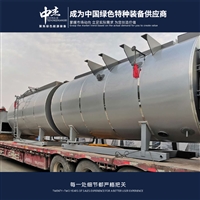


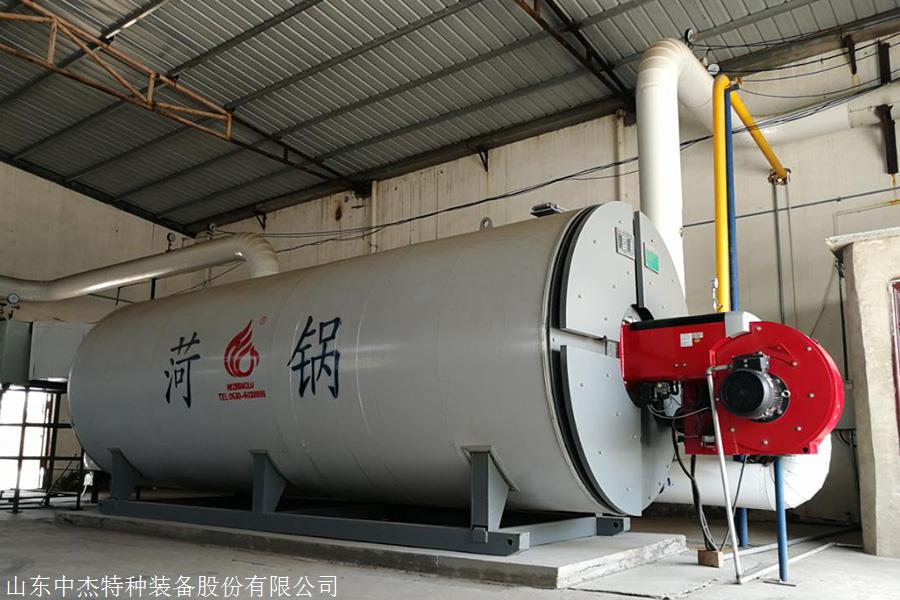
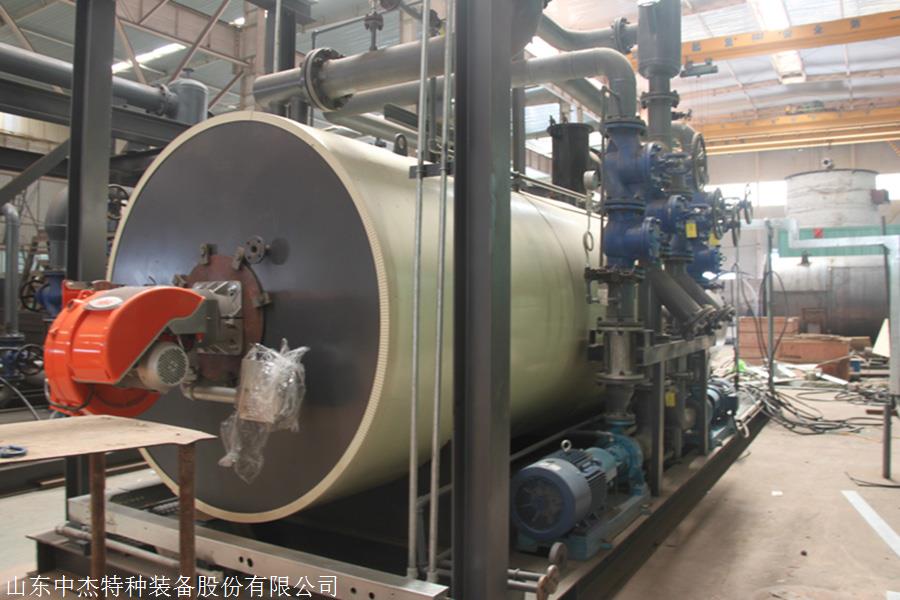
Customized Thermal Oil Boiler Manufacturer Selection of Thermal Oil Boiler Products
Category:
mechanical equipment/Industrial boilers and accessories/Heat transfer oil boiler
Model:
Brand:
Zhongjie Special Equipment
Retail Price
124,000.00USD
重量
kg
- Product Description
-
Description :
The design, manufacturing, installation, use, inspection, repair, and modification of the thermal oil furnace shall comply with the provisions of the Interim Regulations on Safety Supervision of Boiler and Pressure Vessels and this regulation. In addition, gas-phase boilers should also comply with the relevant requirements of the "Safety Technical Supervision Regulations for Steam Boilers"; Liquid phase furnaces should also comply with the relevant requirements of the "Safety Technical Supervision Regulations for Hot Water Boilers".
1. The organic heat carrier storage tank should be placed as low as possible in the heating system to allow for the removal of the organic heat carrier from the boiler. The storage tank and the thermal oil furnace should be separated by a partition wall. Storage tanks should meet the following requirements:
1) The volume of the storage tank should not be less than 1% of the total amount of organic heat carriers in the thermal oil furnace Twice.
2) The storage tank should be equipped with a liquid level gauge, and the upper part of the storage tank should be equipped with an exhaust pipe. The exhaust pipe should be connected to a safe location, and its diameter should be one grade larger than the expansion pipe (according to the series specified in Article 21 of this regulation).
2. Stop valves should be installed on the inlet and outlet pipelines of the heat transfer oil furnace. When the distance between the pump and the boiler does not exceed 5m, a stop valve may not be installed at the inlet of the boiler. Valve connections should use non leakage sealing materials and asbestos products are not allowed.
3. There should be a necessary number of exhaust valves at high places in the heat transfer oil furnace and pipeline network to facilitate the regular discharge of gas products formed during the operation of the heat transfer oil furnace. The exhaust valve should meet the following requirements:
1) The shape and position of the exhaust valve should be easy to operate.
2) The exhaust pipe of the exhaust valve should be connected to a fixed container, and the exhaust pipe of the liquid-phase furnace can be directly connected to the atmosphere. The distance between fixed containers, exhaust pipes, and open flame heat sources should not be less than 5m.
4. For gas-phase furnaces that operate independently, each furnace should generally be equipped with two supply pumps, one as the working pump and one as the backup pump. For gas-phase furnaces with automatic reflux of condensate, a supply pump is not required. At least two electric circulation pumps should be installed in the circulation system of the liquid-phase furnace, one as the working pump and one as the backup pump. The selection of flow rate and head for the circulating pump should ensure the necessary flow rate of the organic heat carrier in the heat transfer oil furnace.
5. Insulation measures should be taken for pipelines within the scope of the thermal oil furnace, but covering measures should not be used for flange connections.
During the ignition and pressure boosting process of the thermal oil furnace, the exhaust valve on the boiler should be opened multiple times to exhaust the mixed steam of air, water, and organic heat carriers. For gas-phase furnaces, when the temperature and pressure of the organic heat carrier match the corresponding relationship, the exhaust should be stopped and normal operation should be resumed.
7. Organic heat carriers must be dehydrated before use. Different organic heat carriers should not be mixed for use. When mixed use is required, the organic heat carrier production unit should provide the mixing conditions and requirements before mixing.
8. The residual carbon, acid value, viscosity, and flash point of the organic heat carrier in use should be analyzed annually. When two analyses fail or the content of decomposed components in the heat carrier exceeds 10%, the heat carrier should be replaced or regenerated.
9. The heating surface of the thermal oil furnace should be inspected and cleaned regularly, and the inspection and cleaning results should be recorded in the boiler technical file.
10. After the installation or major repair of the thermal oil furnace, it should be carried out by the user unit and the installation or repair unit before being put into operation Only after passing the hydraulic test at 5 times the working pressure can it be put into operation. During hydraulic and air tightness tests, the local boiler safety supervision agency should send personnel to participate.

AfterSalesService :
Key words:- Thermal oil boiler manufacturer
More Products