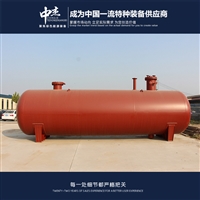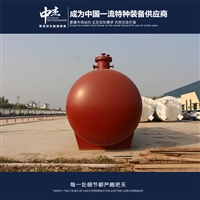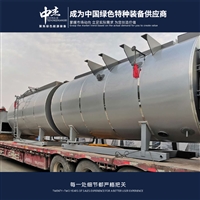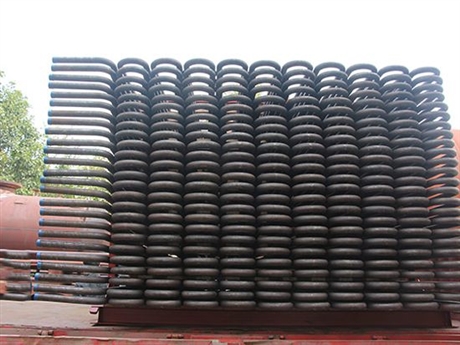



Customers choose manufacturers for glass kiln flue gas waste heat boilers
Category:
mechanical equipment/Industrial boilers and accessories/Waste heat boiler
Model:
Brand:
Zhongjie Special Equipment
Retail Price
220,000.00USD
重量
kg
- Product Description
-
Description :
Ways to reduce consumption and save energy in glass kilns
The energy consumption of glass kilns accounts for more than 75% of the total energy consumption of glass factories. In recent years, many enterprises have been focusing on the glass material supply, feeding system, combustion system, kiln structure, kiln insulationwaste heat utilizationMany energy-saving measures have been taken in terms of homework control, and great achievements have been made. The fuel consumption index of many factories has significantly decreased. Some factories have reached the level of first-class or special class furnaces. But compared to foreign countries, there is still a considerable gap. Regarding how to reduce energy consumption, the following 8 energy-saving approaches are proposed:
Raise the temperature of the glass liquid without increasing the flame temperature
After the temperature of the glass liquid is increased, the melting speed can be accelerated and the melting time can be shortened, which increases the output and reduces the unit consumption. The specific method is:
(1) Improve the radiation heat of the flame space on the glass liquid.
Glass liquid selectively absorbs radiation energy. Wavelength less than 3 microns can be transmitted downwards through the liquid surface. The carbon particles in the flame and the inner wall surface of the kiln space are capable of emitting radiation energy with wavelengths less than 3 microns. Therefore, increasing the blackness of the flame (through oxygen deficient heat medium or carbon enhancement measures) and maintaining a high blackness value of the kiln masonry (related to the roughness and temperature of the masonry surface. The blackness values of clay bricks and silica bricks at high temperatures are 0.61-0.62 at 1000 ℃, 0.52-0.53 at 1200 ℃, and 0.47-0.49 at 1400 ℃. The blackness value of electric melting refractory bricks at high temperatures is 0.4-0.5) can increase the radiation heat of the flame space on the glass liquid.
2. Eliminate the "cold air" film near the liquid surface. Pay attention to the height of the bottom plate of the small furnace from the liquid level and the angle of flame spraying. Oxygen blowing can also be considered as a melting aid measure (in foreign countries, blowing oxygen at a speed of 195-500 meters per second accelerates the heat transfer rate and increases the flame temperature near the liquid surface by about 100 ℃).
(2) Improve the temperature or temperature uniformity of the glass liquid in the kiln pit.
The viewpoint is to increase the heat transfer of the flame to the glass liquid by lowering the liquid surface temperature. At the same time as the liquid surface temperature decreases, the uniformity of the glass liquid temperature in the depth direction of the pool is also improved. The measures taken to achieve the above viewpoint are:
1. Bubbling at the bottom of the pool (pay attention to the purification of the bubbling medium and the erosion of the bubbling bricks)
2. Deepen the pool. It can intensify vertical convection and improve the temperature uniformity of the glass liquid at the depth of the pool. At the same time, it also adapts to the increase in melting rate.
3. Kiln body insulation.
4. Electric assisted melting.
Secondly, strengthen homogenization
Most factories report that homogenization is a key process that affects product quality. At present, the homogenization process is basically in a state of "innate deficiency and acquired imbalance". It is difficult to maintain the uniformity of the mixed materials after entering the kiln, resulting in uneven composition. The thermal permeability of the glass liquid and the heat dissipation from the kiln to the surroundings result in uneven temperature. Relying solely on natural diffusion for homogenization is clearly not sufficient. Therefore, mandatory homogenization measures must be taken. The current effective measures include: low foaming in the pool (obvious for dark materials), mixing in the material channel, material leakage at the bottom of the working material or material channel (with leakage holes), and electric heating in the material channel When using mixing measures, attention should be paid to the position of the mixing point, the depth of insertion of the mixer, and the mixing process, otherwise the desired effect cannot be obtained The material of domestic mixers is an urgent problem that needs to be solved Surface liquid flow can not only enhance lateral flow and improve temperature uniformity, but also remove dirt and crust from the liquid surface The size of the ear canal should be appropriate and not cause too much heat loss. The discharge can be continuous or intermittent. Electric heating can significantly improve the temperature uniformity in the depth direction of the material channel pool, but the temperature distribution in the horizontal plane may not necessarily improve. The determination of electrode shape, glass liquid resistance between electrodes, and the methods of electrode adjustment, installation, and maintenance are important considerations when using heating. While implementing mandatory homogenization measures, the role of natural diffusion should still be fully utilized. So, in design, careful consideration should be given to the size of the workspace and the length of the feeding channel.
Thirdly, reduce useless heat
(1) Reduce the heat that cannot be utilized, such as the surface heat dissipation of the kiln body, the radiation heat from the holes, and the heat carried away by the gas escaping from the holes and brick joints. The measures taken include: 1. Thermal insulation of the kiln body. China has achieved significant results in using kiln insulation for several years. But it is only in the initial stage, and the insulation effect can be further improved. The direction is to develop multi-layer composite insulation layers, using composite (such as sandwich type, filling type) insulation materials, developing dispersed concrete insulation materials, and developing sealing materials that are compatible with various refractory materials. 2. Sealing of holes and brick joints. Attention should be paid to the feeding port, temperature measuring hole, and fire viewing hole. If conditions permit, a fully enclosed feeding machine (such as spiral or wrapped) should be selected, and corundum embedded tubes should be used for temperature measurement. Industrial television should be used to observe the flame and chemical conditions. 3. The scaling up of kilns. The larger the kiln scale, the lower the heat dissipation per unit output.
(2) Reduce the heat generated by repeated heating. The main purpose is to reduce the heat consumption of repeated heating of the reflux glass liquid (usually, this heat accounts for about one tenth of the heat consumption of glass melting). The measures taken include setting up kiln walls, sinking the liquid flow tunnel, appropriately reducing the height of the liquid flow tunnel, and appropriately lowering the temperature of the glass liquid entering the liquid flow tunnel.
Fourth, shallow clarification, deep material extraction, control the flow of liquid in a single channel direct current direction
This is from the perspective of increasing the temperature of the glass liquid in the clarification zone, reducing reflux, and selecting the glass liquid to flow into the liquid hole. This can improve the production and quality of glass liquid and reduce the loss of reflux glass liquid. The measures taken to achieve the above viewpoint are: setting up a low and wide kiln sill to reduce the depth of the settling liquid hole below the clarification tank (which may not sink when melting dark materials).
Fifth, a stable feeding system
The stability of droplet shape, size, and temperature is a prerequisite for ensuring molding quality and yield. The degree of separation between the feeding channel and the working area, as well as the cross-section, size, insulation condition, heating system, and cooling system of the feeding channel, are the main factors affecting stable feeding. The full separation between the feeding channel and the working components can maintain an independent operating system for the feeding channel without interference. The practice of using the heat from the melting section to heat the material channel in some factories that do not require full separation is debatable. The saddle shaped cross-section at the bottom of the material channel can reduce the lateral temperature difference. Appropriately deepening the hopper can increase the static pressure head, making the droplet temperature more stable. The length and width of the material channel should be determined based on the flow rate and output size. A longer material channel is beneficial for temperature regulation and can adapt to changes in flow rate over a large range. The heat dissipation of the material channel is large, especially at the material basin. So we need to strengthen insulation. The heating and cooling system should be able to flexibly and reliably adjust the temperature of the glass liquid and maintain temperature uniformity. The cooling system has a coarse adjustment function, while the heating system has a fine adjustment function. Most people believe that a system combining multi nozzle gas heating and electric heating is ideal.
Sixth, change the material formula and mix material spheroidization
(1) Adding a small amount of melting aid components such as lithium mica to the material can lower the melting temperature of the glass and accelerate its melting process. The discharge volume has significantly increased.
(2) Coordinating material spheroidization. The shaping treatment of mixed materials is a topic of concern for everyone. We advocate using dry spheroidization treatment. The mixed material is pressed into small balls without adding a binder. It can eliminate dust inside and outside the kiln, accelerate solid-phase reactions, and increase the contact area between the mixture and the glass liquid. This can shorten the melting time and extend the furnace life, and the unit heat consumption will also be reduced accordingly.
Seventh, utilize available heat
(1) The fuel should be fully burned to release all the heat. When burning gas, it is necessary to determine the appropriate air to gas momentum ratio and surround the gas with air.
(2) To improve heat transfer efficiency and maximize air preheating temperature, it is necessary to increase the heating surface area of lattice bricks, use higher lattice bodies, and adopt novel lattice bricks and their arrangements (such as cross shaped and cylindrical bricks, arranged in basket or chimney style). It is also necessary to study the material of the grid brick and the uniformity of the airflow distribution inside the grid brick (the uniformity of airflow distribution is directly related to the utilization rate of the grid brick. Factors that affect the uniformity of distribution include the construction coefficient of the grid brick, the ratio of the volume of the upper and lower channels of the grid brick to the volume of the grid brick, etc.).
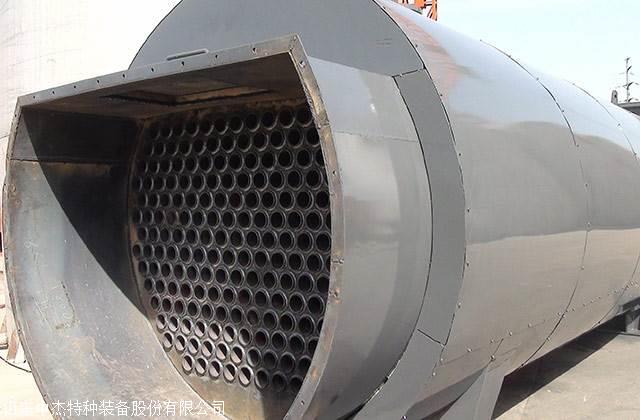
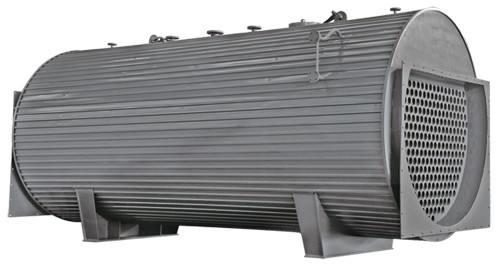
(3) Utilization of waste heat from flue gas.The heat carried by the flue gas discharged from the heat storage chamber should be recovered as much as possible under allowable conditions. Many factories have installed waste heat boilers in their flue systems. Some factories have also installed heat pipes to recover heat. In addition, research should be conducted on how to utilize the waste heat from flue gas to heat and even sinter the materials.
For glass kilns using heat pipe technology for flue gas waste heat recovery, the following two forms can generally be applied:
① Install a waste heat recovery device at the bottom of the glass furnace heat storage chamber below 500 ℃, utilizing the principle of radiation heat exchange to fully recover the heat of the flue gas and produce saturated steam.
② A bypass is installed next to the flue of the glass kiln, and a heat pipe type waste heat recovery device is installed to recover the waste heat from the low-temperature exhaust gas at 250-300 ℃ in the flue, producing saturated steam.
The generated steam can generally be used in the following ways:
① The saturated steam produced in two places is superheated by a steam superheater in the top wall of the heat storage chamber, which can reach over 400 ℃. It is used to atomize heavy oil, remove compressed air, and achieve the purpose of energy saving.
② Used as a heating agent for heavy oil or natural gas vaporization, removing external steam to achieve energy-saving effects.
③ The saturated steam produced by the waste heat boiler can be used to blow the flue, seal the gas lead seal, and remove the external steam supply.
④ In addition to fully meeting production needs, there is also some excess steam that can be used for daily life (heating, bathing, etc.).
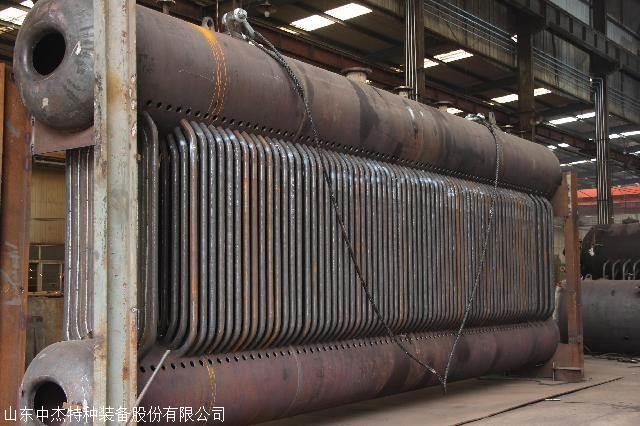

AfterSalesService :
Key words:- waste heat boiler
More Products