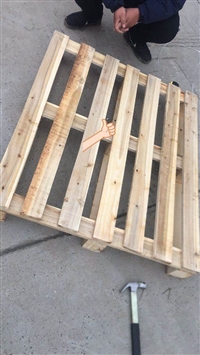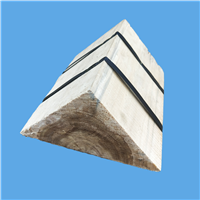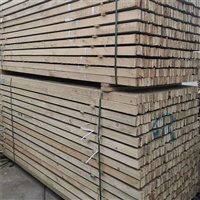


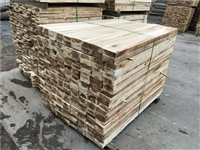
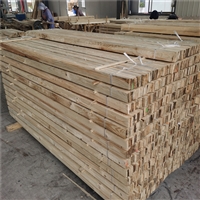


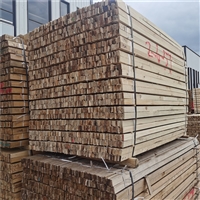
Xuzhou Iron Cedar Square Construction Site Using White Pine Iron Cedar Square Engineering Wooden Square Construction Wooden Square
Category:
building materials/Wooden materials/Solid wood board
Model:
Brand:
Zhantu Wood Processing Factory
Retail Price
1,050.00USD
重量
kg
- Product Description
-
Description :


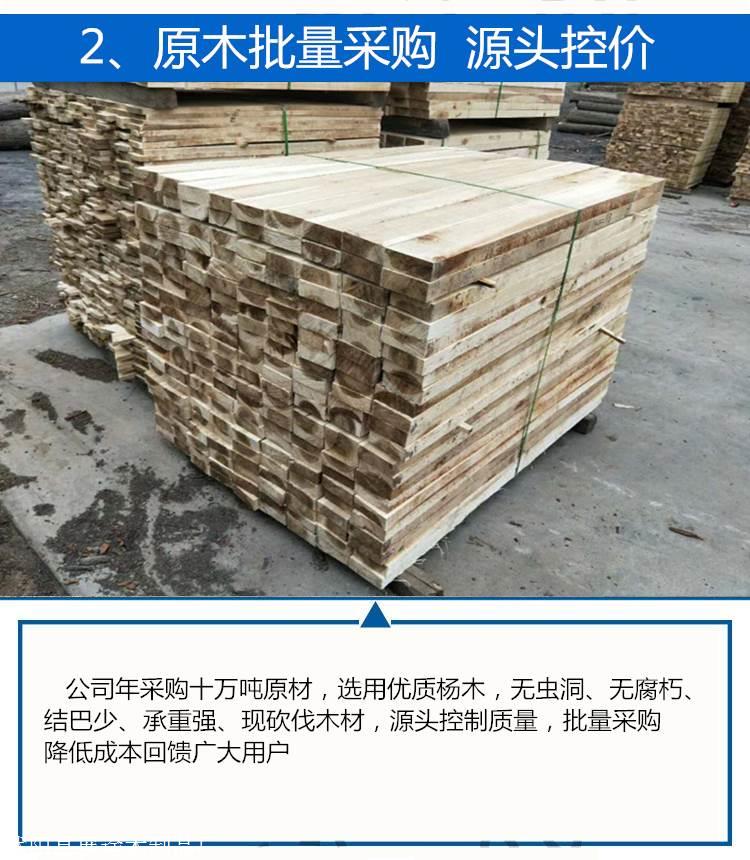
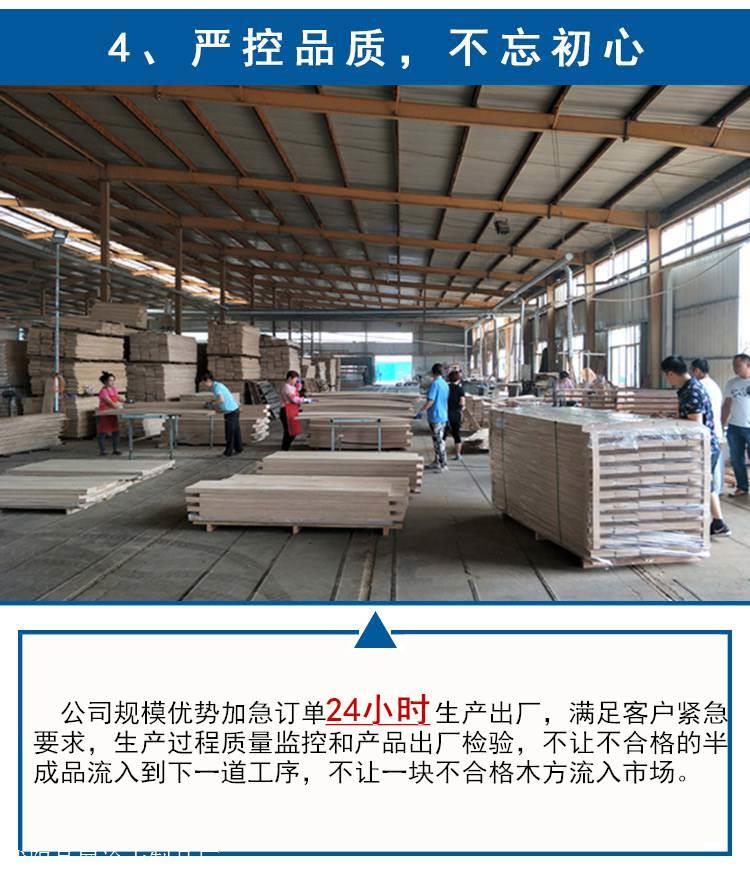
Junsheng Wood Industry's construction wood square, commonly known as square wood, also known as wooden square, construction wood square, construction wood square, mouth material, formwork support, square wood support, etc., the names of each place are not very consistent. It refers to cutting wood logs into square strips of a certain size and shape according to the actual needs of the construction site, which are used for formwork support in civil engineering and structural construction, serving as a fixed template and wood for roof trusses.
Today, we will explain the common specifications of formwork timber and the factors that affect the quality of building timber. We will also discuss which materials are suitable for making building timber and the usage of building timber from all over the country!
1、 Common specifications for building timber
The building timber used in China now also has inconsistent sizes for engineering materials. From the wooden frame under the house structure template in 1996, which used building timber x 100 and x 40 (unit: MM), to today's building timber sizes of 32 x 82, 35 x 85, 40 x 60, 40 x 70, 40 x 80, and 44 x 64 (unit: MM), it can be seen that due to the shortage of materials and the rise in prices, the size of materials has shrunk, leading to inconsistent specifications and models.
Nowadays, the origin of imported materials is different, and the materials are also similar. Some materials from different origins are fragile, easy to break, have insufficient grip force, insufficient sinking force, and the resulting size inconsistency is also obvious. However, generally speaking, the conventional building timber dimensions on the market include: 35 × 85, 37 × 87, 40 × 90, 45 × 60, 60 × 60, 40 × 70, 40 × 60, 38 × 88, 50 × 70, etc., and lengths include: 2 meters, 3 meters, 4 meters, 2.5 meters, etc.
It is not a commercial building or a residential building. Generally, flat buildings do not use wooden formwork, but instead use beam base plates with sizes including 20 × 250, 20 × 300, 25 × 200, 25 × 250, 23 × 250, 23 × 300, 30 × 250, 30 × 300, etc., with lengths of 3 meters and 4 meters.
The general dimensions of building timber used for engineering sleepers include: 100 × 100, 200 × 200, 300 × 300, 400 × 400, etc., with lengths of 2.5 meters, 3 meters, and 4 meters.
The general dimensions of building timber used for engineering springboards include: 40 × 250, 40 × 300, 50 × 250, 50 × 300, etc.
2、 Quality factors affecting building timber
pest
Wooden blocks are often affected by pests during storage, transportation, and use. The natural enemies of wood are termites, longhorn beetles, and elephantiasis. If the wooden blocks are not properly protected, they will be damaged by these pests, thereby affecting the quality of the engineering wooden blocks.
Suggestion: If it is an outdoor wooden block, it should be soaked in preservatives to allow the preservatives to penetrate into the fibers of the wooden block, making the wood green from inside out, preventing corrosion, and resisting insect attacks.
crack
Cracks in wood are commonly referred to as cracking, as cracks appear between the fibers of the wood, which can lower the evaluation grade of the wood.
If the wooden block cracks when purchased, you can mix some sawdust with 520 glue and apply it to the cracked area.
decay
Under certain conditions, wood can be invaded by wood rot fungi and bacteria, which can cause changes in the color and structure of the wood, resulting in it becoming soft and fragile, appearing as pores, powders, or sponges. This is the manifestation of wood decay.
change color
The discoloration of wooden blocks is mainly caused by two reasons: chemical discoloration and fungal discoloration. Chemical discoloration is caused by the interaction between wood and chemical products, while fungal discoloration is caused by the invasion of fungal organisms into wood.
transform
The deformation of wooden blocks is mainly caused by warping and twisting deformation during processing, drying, and storage, and the deformed wooden blocks have a certain impact on quality.
AfterSalesService :
Key words:- Hemlock wood square
More Products