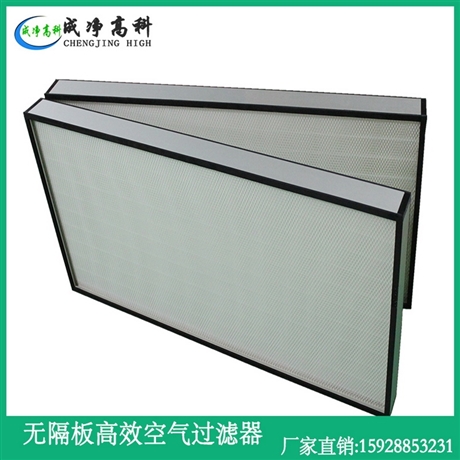

Yunnan Kunming High Efficiency Filter, Yunnan Kunming Ultra fine Fiberglass High Efficiency Filter, Yunnan Kunming H13H14 Hundred level High Efficiency Filter
Category:
Environmental Protection/Filter material/Filter screen
Model:
H13/H14
Brand:
Chengjing High Tech
filtration efficiency:
H13: ≥99.95% @0.3μm / H14: ≥99.995% @0.3μm
filter material :
Ultra fine glass fiber filter paper
Outer frame material:
Aluminum alloy profiles/galvanized steel sheets
field delimiter :
Hot melt adhesive separation
heat resistance:
≤80℃
Humidity resistance:
≤80% RH
Testing Standard:
EN 1822 / GB/T 13554
Applicable cleanliness:
ISO Class 5 or above
Retail Price
10,000,000.00USD
重量
kg
- Product Description
-
filtration efficiency H13: ≥99.95% @0.3μm / H14: ≥99.995% @0.3μm
filter material Ultra fine glass fiber filter paper
Outer frame material Aluminum alloy profiles/galvanized steel sheets
field delimiter Hot melt adhesive separation
heat resistance ≤80℃
Humidity resistance ≤80% RH
Testing Standard EN 1822 / GB/T 13554
Applicable cleanliness ISO Class 5 or above
Description :
The high-efficiency filter is the core end filtration component in air purification systems, mainly used to intercept tiny particles of 0.3 microns or more in the air, such as dust, bacteria, virus aerosols, etc. This category of products is usually used in clean environments with extremely high cleanliness requirements of Class 100 (ISO 5) and above, to solve the problem of excessive indoor air particles and ensure the sterile and dust-free state of production or experimental environments. As the last line of defense for HVAC systems, its performance directly determines the overall compliance of cleanrooms and is widely applicable in key operating conditions such as electronic semiconductors, biomedicine, and precision instrument manufacturing.
This high-efficiency filter is manufactured according to EN 1822 or GB/T 13554 standards, with filtration efficiency levels ranging from H13 (99.95% @ 0.3 μ m) to H14 (99.995% @ 0.3 μ m). The filter material is usually made of ultra-fine glass fiber paper or PTFE membrane, which is separated and folded by hot melt adhesive or sealant to increase the filtration area and reduce initial resistance. Common outer frame materials include aluminum alloy, galvanized steel plate, or stainless steel, which need to be scanned and tested one by one (DOP/PAO leak detection) to ensure no leakage. Typical specifications and dimensions can be customized according to the on-site air outlet, with common thicknesses of 69mm, 90mm, or 150mm. The initial resistance under rated air volume is generally controlled between 200-250Pa to ensure efficient interception while maintaining system energy balance.
When selecting, it is necessary to clarify the specific level requirements of the cleanroom: Class 100 cleanrooms usually require the use of H14 high-efficiency filters; Yunnan Kunming ultrafine fiberglass high-efficiency filter; The H13H14 hundred level high-efficiency filter in Kunming, Yunnan can be used for thousand or ten thousand level environments to reduce costs. Attention should be paid to distinguishing between "high efficiency" and "sub high efficiency", with the latter having lower efficiency and not suitable for level 100 environments. If the environmental humidity is high or there is a risk of chemical corrosion, stainless steel frame and moisture-proof filter material version should be selected. In addition, it is necessary to confirm the installation method, whether it is used in conjunction with the static pressure box or directly installed inside the diffuser plate. Different installation structures have different requirements for the frame strength and sealing surface flatness of the filter screen. When selecting, the interface size tolerance should be checked.
Before installing the high-efficiency filter, it is necessary to thoroughly clean the inside of the air duct and static pressure box to prevent secondary pollution. During installation, clean gloves should be worn and handled gently. It is strictly prohibited to touch the surface of the filter paper with hands to avoid damage and leakage. The sealing gasket needs to be compressed evenly to ensure that there are no gaps between the frame and the frame. In daily maintenance, pressure difference changes should be monitored regularly. When the final resistance reaches twice the initial resistance or the specified value (such as 400-450Pa), it should be replaced in a timely manner. The replacement cycle is usually 1-2 years, depending on the effectiveness of the front-end pre filter and the dust concentration in the usage environment. Common faults include rapid increase in pressure difference, often caused by failure of pre filtration or sudden increase in environmental dust, requiring investigation of upstream systems.
AfterSalesService :
Key words:
More Products