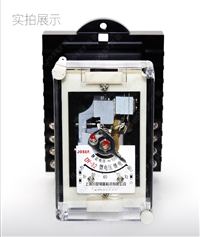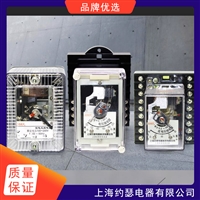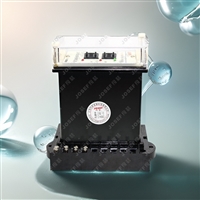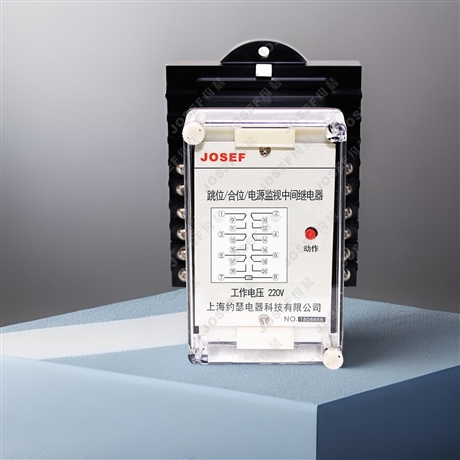

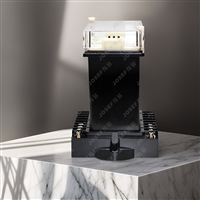
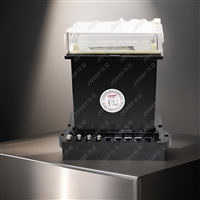
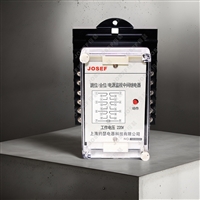
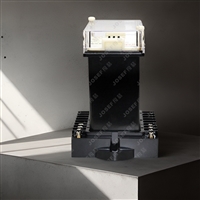
JOSEF static intermediate relay XJZJ-208 voltage 380V board front wiring with base
Category:
electron/electrical/Liquid level controller
Model:
XJZJ-208
Brand:
Shanghai Joseph
model:
XJZJ-208
rated voltage:
three hundred and eighty
Place of Origin:
Shanghai
Retail Price
160.00USD
重量
kg
- Product Description
-
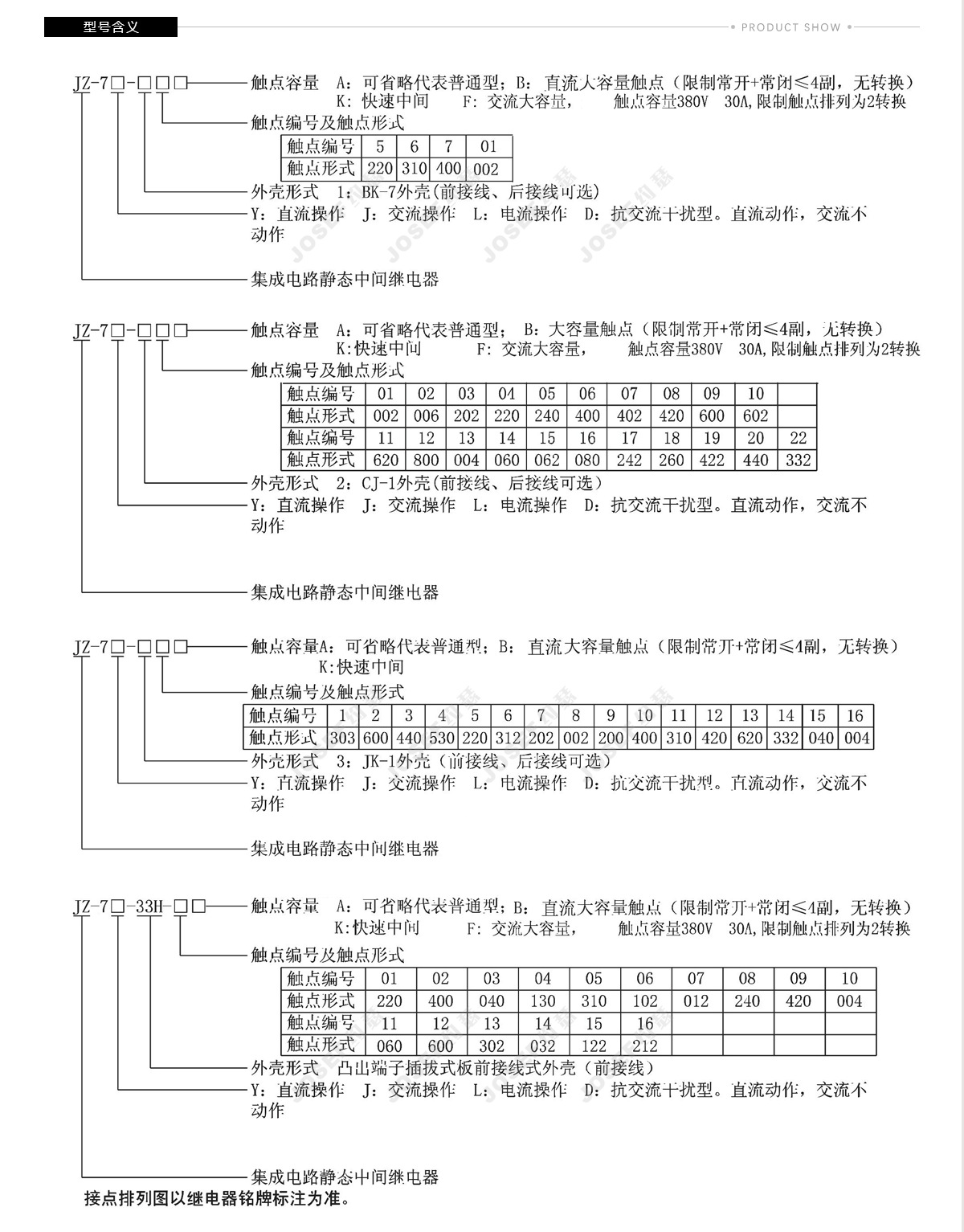
model XJZJ-208
rated voltage three hundred and eighty
Place of Origin Shanghai
Description :
Intermediate relay XJZY-220 DC220V cabinet bottom plate fixed installation
Static intermediate relay XJZY-31 DC220V board front wiring
Intermediate relay XJZY-39C 110VDC board rear wiring
Intermediate relay XJZY-204 DC220V
Static intermediate relay XJZY-317C DC220V
Intermediate relay XJZY-33A
The starting voltage of intermediate relay XJZY-204XMT shall not be less than 70% of the rated voltage
Static intermediate relay XJZJ-31 AC220V
Intermediate relay XJZJ-15 AC220V
Intermediate relay XJZJ-220 AC220V board rear wiring
Jump in position power monitoring relay XJZJ-201XMT AC220V
Static intermediate relay XJZJ-208 voltage 380V board front wiring with base
Intermediate relay XJZJ-204 AC220V
Static adjustable delay intermediate relay XJZS-244
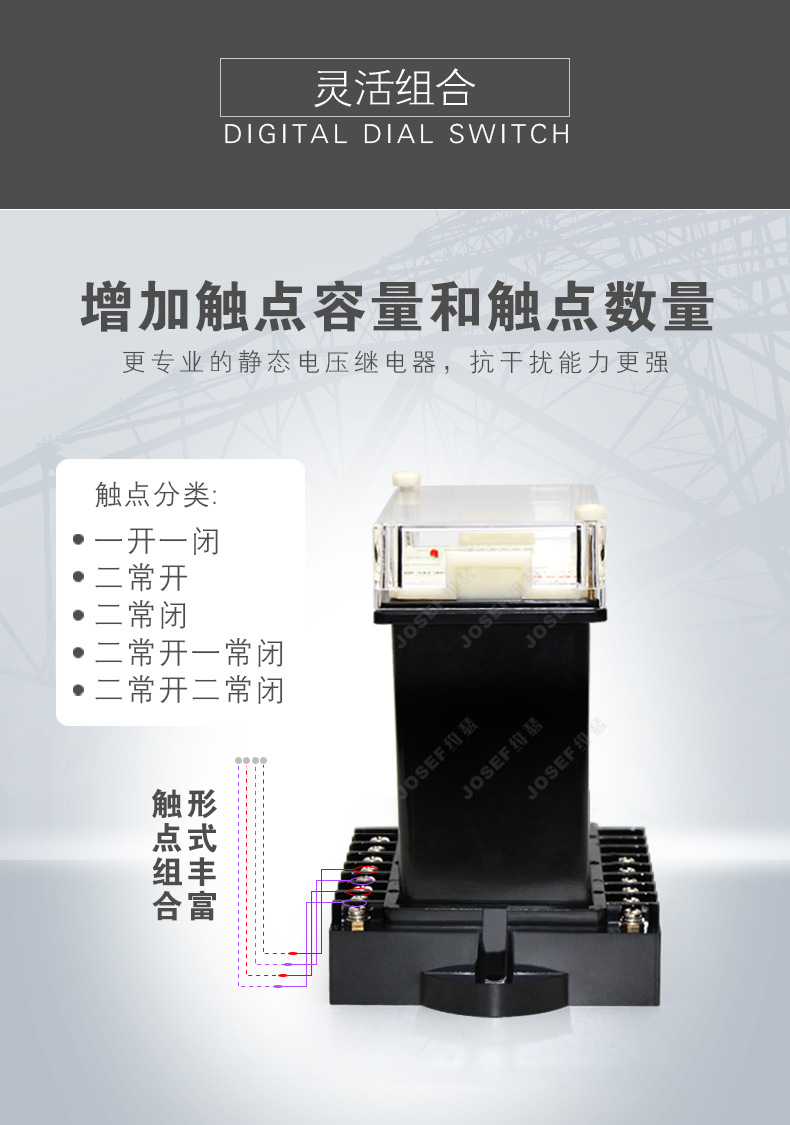



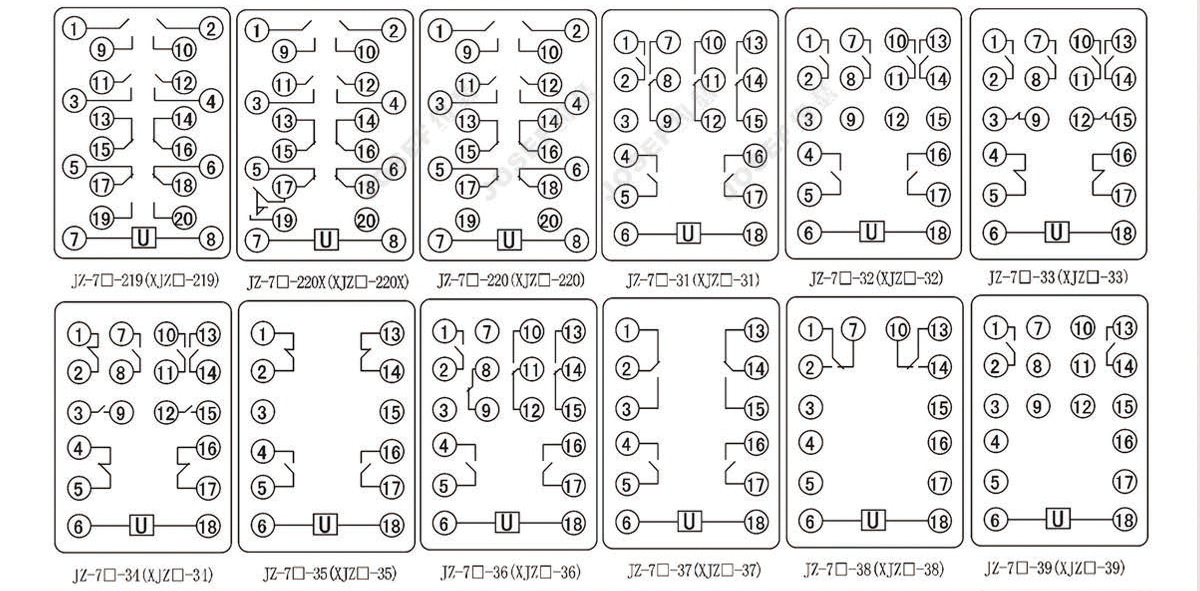
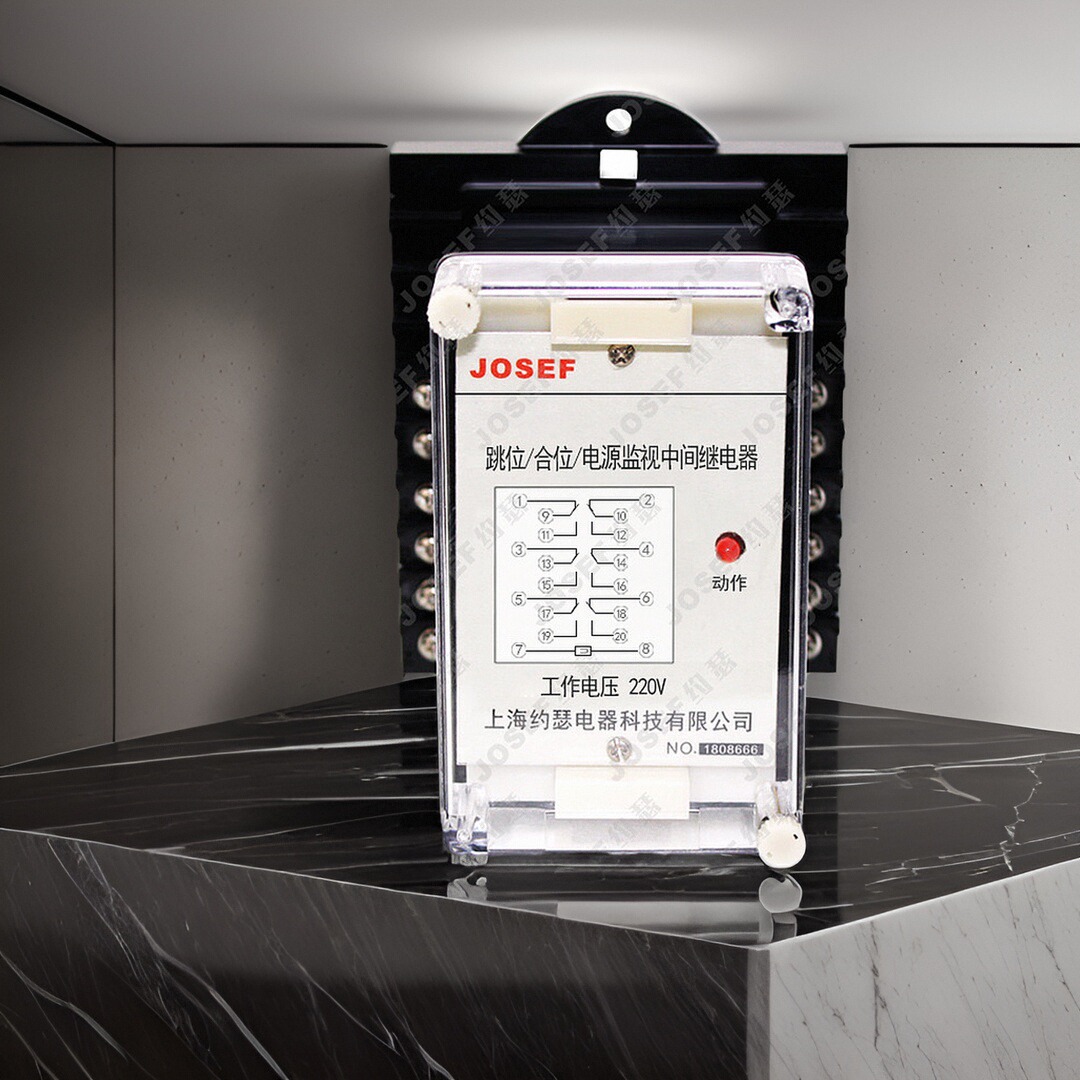

Intermediate relay is a special electrical control component mainly used to transmit signals in control circuits and simultaneously control multiple circuits. It plays a role in increasing the number and capacity of contacts in relay protection and automatic control systems. The structure and working principle of intermediate relays are basically the same as AC contactors, but the main difference from contactors is that they have more contacts and smaller contact capacities.
Intermediate relay is essentially a type of voltage relay, which differs from ordinary voltage relays in that it has a larger number of contacts and allows a larger current to flow through the contacts, which can disconnect and connect circuits with higher currents. Therefore, intermediate relays are mainly used in control circuits to increase the number and capacity of contacts and transmit signals when needed.
Intermediate relays usually do not have main contacts because their overload capacity is relatively small, so all auxiliary contacts are used, with a large number. These auxiliary contacts can meet the needs of different contacts in the control circuit and achieve simultaneous control of multiple circuits.
Intermediate relays are divided into various types, including electromagnetic intermediate relays, delay intermediate relays, and static intermediate relays. Among them, electromagnetic intermediate relays are the most common type, and their operating principle is that when the excitation amount applied to the relay coil is equal to or greater than its operating value, the armature is attracted to the guide magnet, and at the same time, the armature presses the contact spring, causing the contact to connect, disconnect, or switch the controlled circuit. Delay intermediate relays have a delay function, which can be divided into two types: power on delay and power-off delay. Static intermediate relays are integrated circuit type, with advantages such as high stability and fast action, suitable for the construction and renovation projects of large cabinets.
In short, intermediate relays are one of the indispensable and important components in electrical control systems. They can increase the number and capacity of contacts, achieve simultaneous control of multiple circuits, and transmit signals when needed, thereby ensuring the stable and reliable operation of the electrical control system.
AfterSalesService :
Key words:- intermediate relay