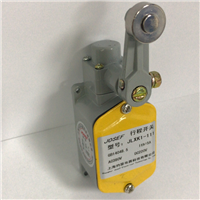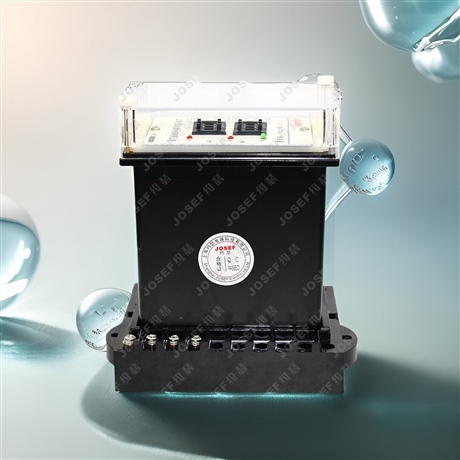

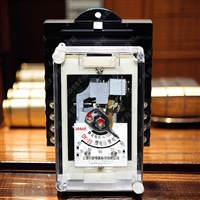

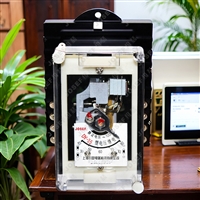
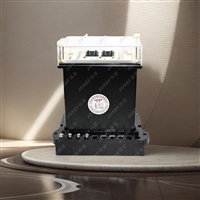
JOSEF Low Voltage Relay DY-110/DP 25-124V Embedded Installation
Category:
electron/electrical/Liquid level controller
Model:
DY-110/DP
Brand:
Shanghai Joseph
model:
DY-110/DP
Processing & Customization:
yes
rated voltage:
two hundred and twenty
Place of Origin:
Shanghai
manufacturer:
Shanghai Joseph
Retail Price
155.00USD
重量
kg
- Product Description
-
model DY-110/DP
Processing & Customization yes
rated voltage two hundred and twenty
Place of Origin Shanghai
manufacturer Shanghai Joseph
Description :
One purpose
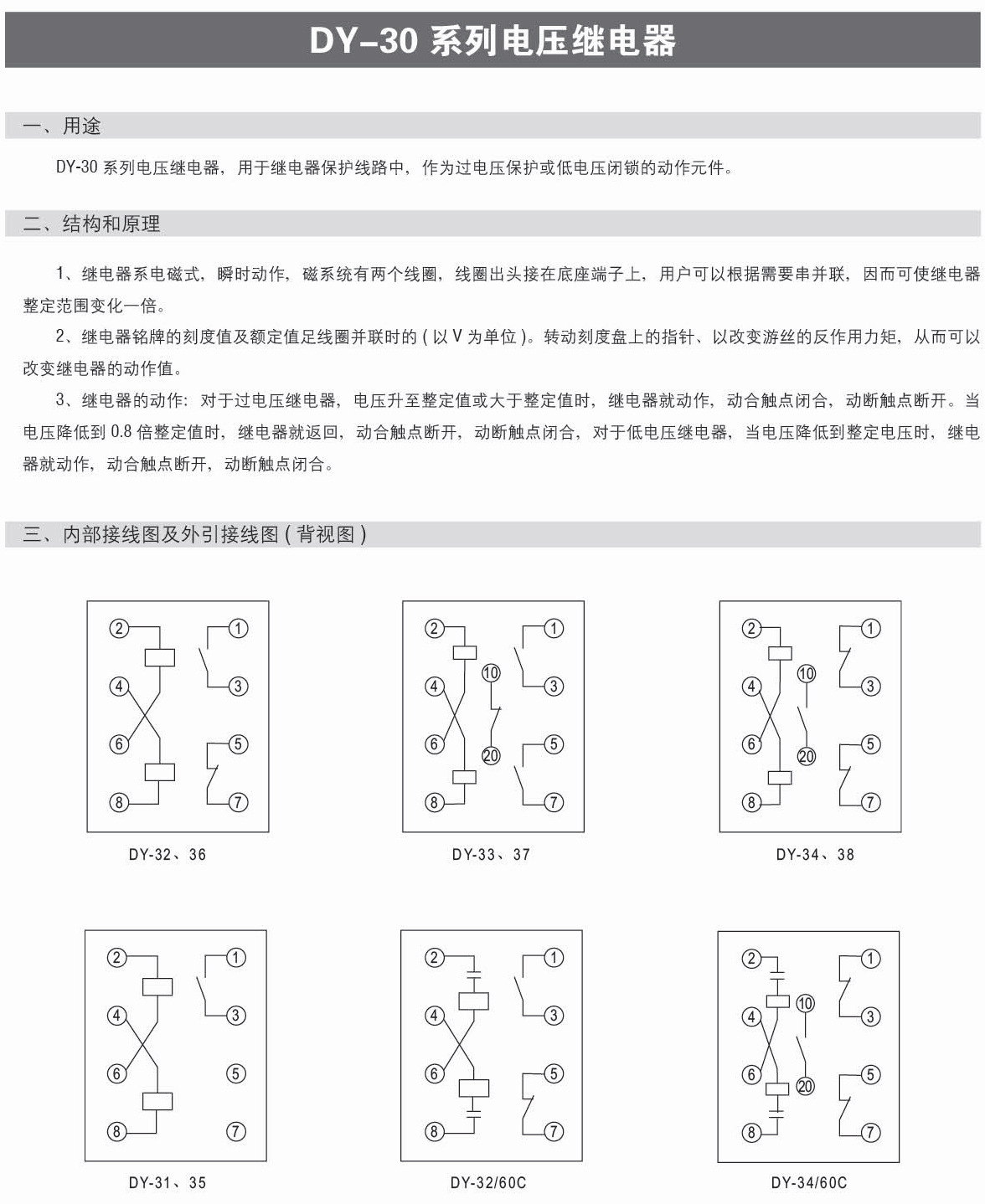
DY series voltage relays are used in relay protection circuits as action components for overvoltage protection or low-voltage lockout.
working principle
The relay is electromagnetic and operates instantaneously. The magnetic system has two coils, with the coil heads connected to the base terminals. Users can connect the coils in series or parallel as needed, thus doubling the setting range of the relay.
The scale value and rated value of the relay are sufficient when the coils are connected in parallel (in V units). Rotate the pointer on the dial to change the reaction torque of the balance spring, thereby changing the action value of the relay.
Relay action: For overvoltage relays, when the voltage rises to or exceeds the set value, the relay will act, closing the dynamic contact and disconnecting the dynamic contact. When the voltage drops to 0.8 times the set value, the relay returns, the dynamic contact opens, and the dynamic contact closes. For low-voltage relays, when the voltage drops to the set voltage, the relay acts, the dynamic contact opens, and the dynamic contact closes
II Technical Specifications
DY-32/60C and DY-34/60C specifications are long-term thermal stable (with built-in series capacitors) voltage relays.
● Relay scale limit error: not greater than 6%.
● Variation of action value: not greater than 6%.
The return coefficient of voltage relays DY-31, 32, 33, and 34 shall not be less than 0.8; DY-35、 The return coefficient of low voltage relays 36, 37, and 38 shall not exceed 1.25.
Action Time
For overvoltage relays
At 1.1 times the action value, the action time should not exceed 0.12s; at 2 times the action value, the action time should not exceed 0.04s.
For low-voltage relays
When the working voltage of the relay is 0.5 times the set voltage, the action time shall not exceed 0.15 seconds.
● Overvoltage capability: When the coils are connected in parallel, the voltage should be uniformly raised from zero to 1.05-2.2 times the set voltage at the minimum setting value. Within this range, the relay should not have any vibration that would cause the dynamic contact to not work. After this test, the relay should still meet the technical requirements.
● Overvoltage: When the setting value is increased by 1.75 times or higher, the dynamic contact of the relay should close without shaking.
When there are no external collisions or vibrations. When the working voltage at each setting position (excluding point *) of the overvoltage relay is 0.6 times the setting value, its dynamic breaking contact should reliably close the circuit.
When the working voltage of a low-voltage relay is 0.6 times the set voltage or lower, its dynamic breaking contact should close without shaking.
When there is no external collision or vibration, the working voltage at each setting position of the low-voltage relay should not be less than 1.5 times the setting voltage, and its dynamic contact should reliably close the circuit.
Under the action voltage and return voltage; The movable system of the relay should not be stuck in the middle position.
The air gap between the rotor and the magnetic pole should ensure that the rotor and the magnetic plate do not collide under any specified working conditions of the relay.
Relays with dynamic contact points and dynamic contact points must not have bridge shaped contacts simultaneously make contact with dynamic contact points and dynamic contact points during operation.
When the pointer rotates from the * scale value to the * final scale value, the coils of the balance spring must not touch each other.
When the relay is activated, the bridge shaped contact should slide on the centerline of the static contact (tolerance ± 1mm), and the total air gap between the dynamic and static contacts should not be less than 2mm.
The distance between the static contact point and the limiting plate should not exceed 0.3mm.
Rear wiring of voltage relay DY-32/60C board
Voltage relay DY-36/160V board front with seat
Voltage relay DY-23C/60C with board front base
Voltage relay DY-29C setting value: 40-160V. Wiring in front of the fixed installation board inside the cabinet
Fixed installation of voltage relay DY-36 220VDC cabinet bottom plate
Fixed bottom plate of voltage relay DY-36/60C 220VDC cabinet
Voltage relay DY-29C/160 40~160V board front wiring
Voltage relay DY-48 set voltage AC160V, protruding board front wiring, 2 closed points and 1 open point
Front wiring socket of voltage relay DY-34/60C board
Voltage relay DY-28C set voltage AC160V, protruding board front wiring
Static passive undervoltage relay DY-38G (X) setting range 19-180V contact form: one normally open and two normally closed rail installation
Voltage relay DY-32 board with front seat
Voltage relay DY-33/60C 15-60V board rear wiring
Voltage relay DY-32/62C 60V fixed value 15V board front wiring
Voltage relay DY-37 voltage setting range 40-160V, pre board wiring
Voltage relay DY-54/32-132V
Voltage relay DY-38 setting voltage range: 12~48V Contact form: one normally open and two normally closed
Low voltage relay DY-28C/160
Voltage relay DY-34 100VAC 15~30V board rear wiring
Installation of voltage relay DY-54G 33~132V rail
Voltage relay DY-24C/60C
Voltage relay DY-36 80~320V with base
Installation method of low voltage relay DY-110: pre board wiring, working voltage: AC220V,
Voltage relay DY-34/60CG undervoltage type 15-100V with two normally closed contacts
Voltage relay DY-23C, D type, rated voltage 200V, 50~200V




AfterSalesService :
Key words:- voltage relay