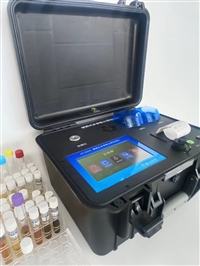
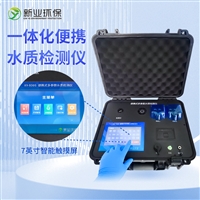
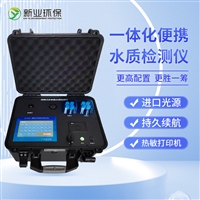
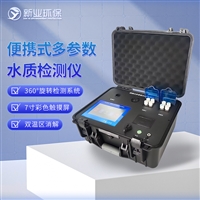

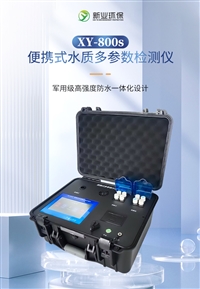

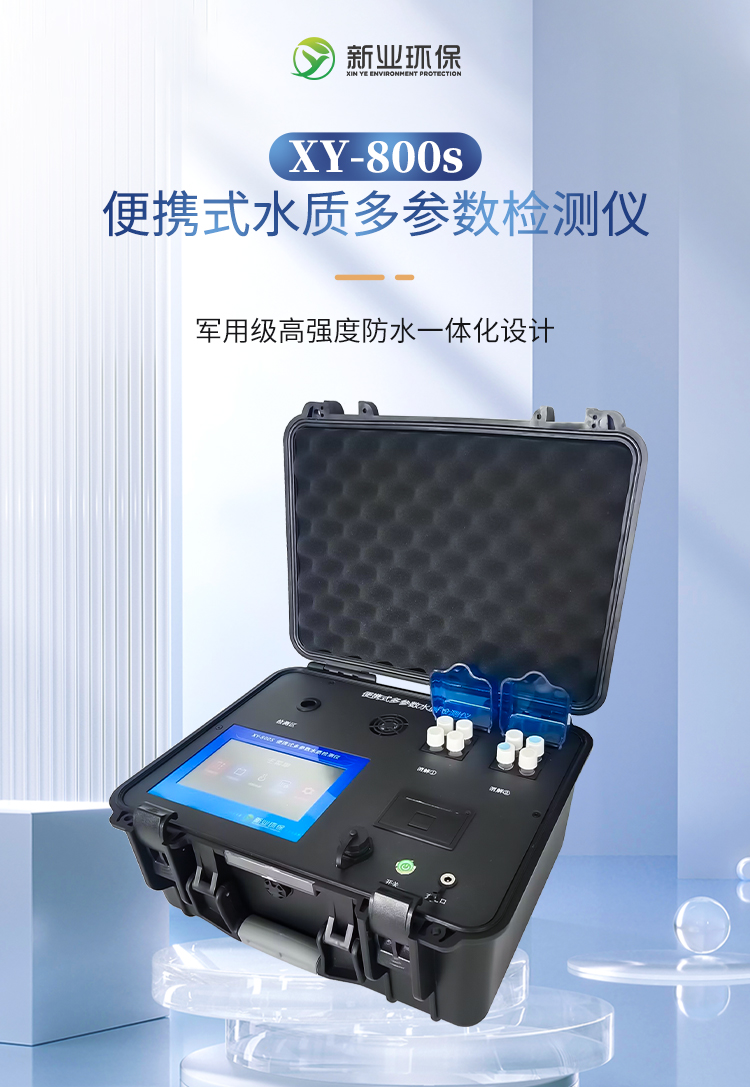
Basic operating steps of portable water quality multi parameter detector COD, ammonia nitrogen, total phosphorus, and total nitrogen
Category:
Instrumentation/Analytical instruments/Water quality analyzer
Model:
XY-800S
Brand:
Qingdao Xinye Environmental Protection
model:
XY-800S
type:
Portable water quality analyzer
Installation method:
portable
Processing & Customization:
yes
measurement range:
COD(5-10000mg/L)、 Ammonia nitrogen (0.01-150mg/L) (segmented), total phosphorus (0.01-100mg/L) (segmented), total nitrogen (0.01-100mg/L)
measurement accuracy:
6. <1.5%
power supply voltage:
8.4V4200mAh
power supply voltage:
Rechargeable
resolution:
0.02m/s
weight:
06
Place of Origin:
Qingdao
manufacturer:
Qingdao Xinye
Retail Price
26,800.00USD
重量
kg
- Product Description
-
model XY-800S
type Portable water quality analyzer
Installation method portable
Processing & Customization yes
measurement range COD(5-10000mg/L)、 Ammonia nitrogen (0.01-150mg/L) (segmented), total phosphorus (0.01-100mg/L) (segmented), total nitrogen (0.01-100mg/L)
measurement accuracy 6. <1.5%
power supply voltage 8.4V4200mAh
power supply voltage Rechargeable
resolution 0.02m/s
weight 06
Place of Origin Qingdao
manufacturer Qingdao Xinye
Description :
Basic operating steps of portable water quality multi parameter detector COD, ammonia nitrogen, total phosphorus, and total nitrogen
How to do water quality testing? Generally speaking, water quality testing has the following basic steps:
1. Collect water samples
The collection of water samples is a step in water quality testing. When collecting water samples, it is necessary to choose suitable sampling points to avoid interference from the surrounding environment. Use clean containers, collect water samples according to prescribed methods, and be careful to avoid human contamination.
2. Processing water samples
The collected water samples need to be processed to remove possible suspended solids, particulate matter, and organic matter. Common processing methods include filtration, precipitation, and extraction.
3. Measurement parameters
Select appropriate parameters for measurement based on actual needs. Common water quality indicators include pH value, dissolved oxygen, ammonia nitrogen, total phosphorus, total hardness, etc. Use water quality testing instruments for measurement and operate according to standard methods.
4. Analysis results
Based on the measurement results, conduct data analysis and evaluation. Compare the measured results with relevant water quality standards to determine whether the water quality meets the requirements. Meanwhile, it is also necessary to consider the water quality requirements for different purposes, such as drinking water, agricultural water, or industrial water.
Precautions for water quality testing
1. Collection and preservation of samples
The collection of water samples should ensure the representativeness of the sampling points and avoid external pollution. The sampling container must be clean and free of impurities, and avoid contact with other substances during the sampling process. After sampling, seal and refrigerate the water sample in a timely manner to avoid any changes.
2. Using standard methods
When conducting water quality testing, standard methods and equipment should be used, and relevant specifications and requirements should be followed. Only in this way can the accuracy and comparability of the measurement results be guaranteed.
3. Quality control measures
In water quality testing, quality control is the key to ensuring the reliability of results. A reasonable quality control system should be established, including the establishment of blank samples, parallel samples, and spiked recovery, to verify the accuracy of experimental processes and instruments.
4. Regular monitoring
Water quality testing should not be a one-time process, but should be regularly monitored. Regular monitoring can timely detect the changing trends of water quality problems and take corresponding measures for prevention and treatment.
Water quality testing is an important means to ensure water source safety and guarantee healthy living. By following the correct steps and precautions for water quality testing, we can detect water quality problems early and take corresponding measures for treatment.


AfterSalesService :
Key words:- Multi parameter water quality detector
More Products