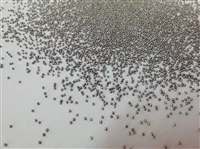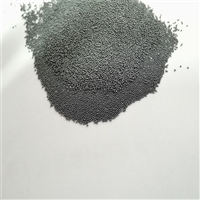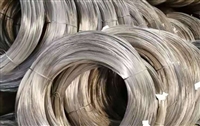


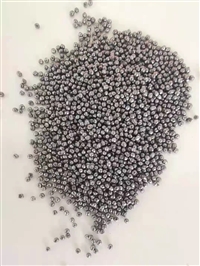
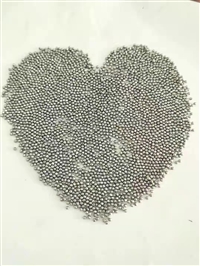

Reinforced steel shot material, high carbon steel particle size 0.6-1.2mm, high hardness, more than twice the service life of ordinary steel shot
Category:
hardware/abrasive/Polishing paste
Model:
Reinforced steel shot 0.6-1.2
Brand:
Anlan Di
model:
Reinforced steel shot 0.6-1.2
main ingredients:
High carbon steel wire
Specification and weight:
one
granularity:
About 0.6-1.2mm
manufacturer:
Shandong Blue Earth Metal Technology Co., Ltd
Retail Price
8,600.00USD
重量
kg
- Product Description
-
model Reinforced steel shot 0.6-1.2
main ingredients High carbon steel wire
Specification and weight one
granularity About 0.6-1.2mm
manufacturer Shandong Blue Earth Metal Technology Co., Ltd
Description :
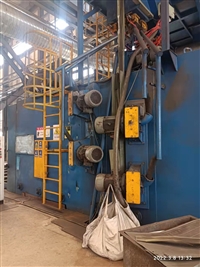
Not all steel shot can be called strengthened steel shot. Below are a few pictures to illustrate the process of shot peening strengthening. Shot blasting operation is a cold treatment process, in which countless abrasives are driven by a power source to continuously strike the surface of the parts, removing rust, oil stains, welding scars and other debris from the surface. It can also cause the crystals on the surface of the parts to stretch and displace, forming a uniform residual compressive stress layer.
The following figure shows the deformation of the part surface after the shot blasting operation is completed: (insert two figures)
Reasons for factors affecting shot blasting: (insert a picture)
01. Surface roughness
The roughness of the workpiece surface is determined by the depth and size of the craters formed by abrasive impact on the workpiece surface. A single abrasive has high kinetic energy, resulting in deep impact craters, high roughness values, good paint adhesion, and a large amount of paint usage; A single abrasive has low kinetic energy, resulting in shallow impact craters, low roughness values, poor paint adhesion, and low paint usage.
When the kinetic energy of the abrasive is the same, the surface treatment efficiency of abrasive with sharp edges is high, but the roughness of the workpiece surface will be too large, wasting paint; Half circle and spherical abrasives can repair the craters caused by sharp edged abrasives, reduce the roughness value to the range required by PSPC, and meet the adhesion requirements of coatings. So when used on site, sharp abrasives and spherical abrasives are often mixed together. (Insert two images)
02. Surface coverage rate
The surface coverage of the workpiece is a reflection of shot peening efficiency. During the shot blasting process, the faster the coverage rate required for the workpiece surface is achieved while meeting other quality requirements, the higher the work efficiency.
There are many factors that affect the surface coverage of workpieces, mainly including:
1. Proportion of abrasives
2. Quantity of abrasives
3. The shape of abrasive
4. Nozzle shape, spray angle, and distance
5. Shot peening work pressure and time (insert a picture)
When the working pressure, blasting time, spraying angle, distance, and nozzle shape of shot blasting are the same, the appropriate amount, ratio, and consistent shape of abrasive will greatly reduce the blasting time.
When the outlet pressure is the same, the nozzle shape is the same, the nozzle size is the same, and the abrasive size is the same, the efficiency of segmented and angular media is higher than that of circular media. But if there are more sharp shaped abrasives or irregular abrasive shapes, the frictional resistance between abrasives will increase, which will instead reduce the ejection speed of abrasives and the kinetic energy of a single abrasive, leading to a decrease in sandblasting efficiency. So when used on site, sharp abrasives and spherical abrasives are often mixed together. Spherical abrasives act as lubricants, ensuring the kinetic energy of individual abrasives. (Insert a picture)
03. Consumption of abrasives and dust
The consumption of abrasives and the amount of dust generated directly affect the frequency of consumables replacement in dust removal equipment, the cleanliness of the workpiece surface, and the working environment of workers. (Insert two images)
Characteristics that qualified abrasives should possess (insert a picture)
Advantages of New Reinforced Steel Balls
The new reinforced steel shot adopts international advanced technology, and is produced in strict accordance with German VDFI8001/2009 and American SAE J441 and AMS2431 standards by using the company's unique heat treatment process on special wire rods, repeatedly drawing to achieve the required particle size diameter, corresponding hardness and tensile strength, and then refining through CNC cutting, rounding and other processes.
Main chemical components:
Carbon C: 0.60-0.65%; Silicon Si: 0.10-0.30%; Manganese Mn: 0.40-1.20%; Sulfur S ≤ 0.03%; Phosphorus P ≤ 0.03%. (Insert a picture)
The basic requirement for using any abrasive is to meet the surface treatment requirements of the target material.
In the shipbuilding industry, surface cleaning of steel plates must meet the requirements of the new PSPC coating standards for salt content, cleanliness, and roughness.
1) Salt content, target standard within 50mg/㎡, measured result 25.6-26.8, lower limit 24, upper limit 30
2) Cleanliness, target level 1, measured result level 1.
3) Roughness, target value 30-75um, measured result 50-70.


AfterSalesService :
Key words:- Reinforced steel shot material high carbon steel
More Products