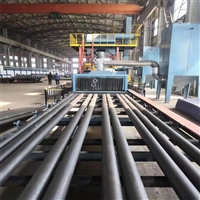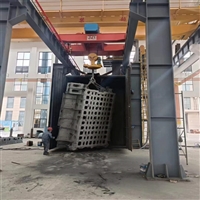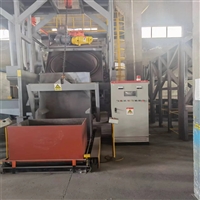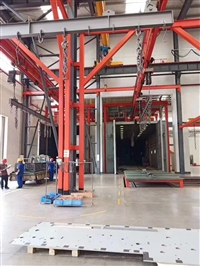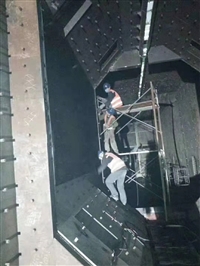
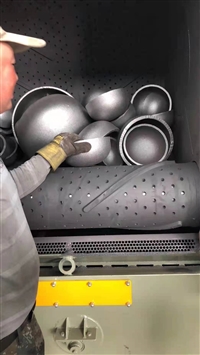


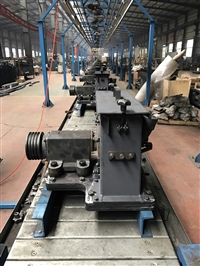
Shot blasting machine Wear resistant protective plate Shot blasting machine Track polishing head Shot blasting machine Impeller
Category:
mechanical equipment/Foundry equipment/Sanding machine
Model:
Shield track electric hoist impeller
Brand:
Anlan Di
model:
Shield track electric hoist impeller
voltage:
three hundred and eighty
Motor power:
0-45
weight:
one
Place of Origin:
Qingdao, Shandong
Is it imported:
No
Processing & Customization:
No
Shot blasting volume:
220kg
dust removal efficiency:
99.9%
power:
one
Is it a cross-border source of goods:
No
manufacturer:
Shandong Blue Earth Metal Technology Co., Ltd
Retail Price
200.00USD
重量
kg
- Product Description
-
model Shield track electric hoist impeller
voltage three hundred and eighty
Motor power 0-45
weight one
Place of Origin Qingdao, Shandong
Is it imported No
Processing & Customization No
Shot blasting volume 220kg
dust removal efficiency 99.9%
power one
Is it a cross-border source of goods No
manufacturer Shandong Blue Earth Metal Technology Co., Ltd
Description :
1、 The wear-resistant plate material of shot blasting machine is a commonly used accessory of shot blasting machine, so the material of shot blasting machine wear-resistant plate is also of great concern to everyone. There are several types of shot blasting machine wear-resistant plate materials that are widely used at present.
(1) Cast Steel Manganese 13 (ZGMn13) - Austenitic Wear resistant Manganese Steel Austenitic manganese steel is known for its high toughness and easy work hardening. Recently, the austenitic manganese steel produced and applied domestically and internationally is still mainly Mn13 series, with a chemical composition of 1.0% to 1.4% and 11% to 14%. After 1000-1050% water toughening treatment, a single austenitic structure can be obtained. So far, austenitic manganese steel has been mainly used as the protective plate for the chamber of abrasive wear shot blasting machines under high impact loads. Some countries, such as Japan, highly recommend Mn13Cr2 wear-resistant steel with high yield strength and wear resistance. In the 1950s and 1960s, high manganese steel was almost used as a popular wear-resistant material in China. However, in production practice, it was found that high manganese steel is only wear-resistant under conditions of high impact, high stress, and hard abrasive, and its yield strength is low, making it easy to deform.
In recent years, the technological progress of austenitic manganese steel has mainly been reflected in the strict control of Si and P content that affects performance during the production process, especially the limitation of P content; In addition, trace elements such as V, Ni, and RE are often added to cast high manganese steel to reduce slag inclusion, columnar crystals, and coarse grains. Mnl7 (Mnl8) and Mn25, also known as ultra-high manganese steel, are beneficial in solving the problem of reduced toughness caused by the occurrence of carbides inside thick and large section manganese steel after liquid toughening treatment. They are also conducive to solving the problem of brittle fracture of manganese steel parts under low-temperature working conditions. However, the wear resistance and cost-effectiveness of ultra-high manganese steel under high impact abrasive wear conditions, as well as key issues such as the selection of Mn, C, and Mn/C, especially the low lifespan under low stress wear, still require further research and practical verification through widespread application under different working conditions.
(2) Medium and high chromium cast iron - chromium based white cast iron. The development of wear-resistant white cast iron abroad can be divided into three stages: ordinary white cast iron, nickel hard cast iron, and high chromium white cast iron. Chromium based white cast iron is still the mainstream of wear-resistant cast iron at home and abroad. The Cr15, Cr20, and Cr26 series high chromium wear-resistant cast iron have been mass-produced and applied in the United States, Japan, and China. On the basis of high chromium cast iron, China has also studied medium chromium silicon wear-resistant cast iron and low chromium wear-resistant cast iron suitable for as cast applications, which have been mass-produced and mainly used in shot blasting blade, shot blasting end guard plate, shot blasting top guard plate, side guard plate, shot separation wheel, directional sleeve, etc.
The microstructure of high chromium cast iron after solidification is (Fe, Cr) C-type carbides and phases. When the matrix is entirely martensitic, this alloy has good wear resistance. If there is residual austenite in the matrix, heat treatment is usually required; Compared with ordinary white cast iron, low chromium alloy white cast iron has better stability of carbides. In the study of chromium based white cast iron, it is often believed that the harder it is, the more wear-resistant it is. In fact, blindly pursuing hardness may not necessarily achieve ideal results, but rather significantly increase costs and cause waste. Experiments have shown that high chromium cast iron is close to 90%. When subjected to angular erosion wear, its wear resistance is not as good as that of 20 steel.
In the hot spot area of the projectile belt, due to the concentrated impact of the pellets, an extremely wear-resistant protective plate is required, which is usually made of cast steel and heat-treated material: ZGMn13
The rest of the non projectile hot spot areas are covered with ordinary protective plates, usually made of high manganese steel: 65Mn
2、 High, medium, and low chromium cast iron, mainly used in wear-resistant plates of shot blasting machines (end guard plates, top guard plates, side guard plates, shot separation wheels, directional sleeves/blades, etc.)
3、 Because shot blasting machine tracks are very special special adhesive tapes with various technical indicators different from ordinary rubber tapes, they are not controlled by ordinary rubber tape factories in society, so the quality varies greatly. Ordinary consumers need to learn to distinguish: look at the glue. Shot blasting machine rubber tracks are composed of three layers, with the outermost layer being the top cover glue, which directly contacts the workpiece being cleaned and is hit by the steel shot. Therefore, the wear is severe and it bears a lot of destructive force. The service life of the top cover glue is almost the service life of the track, and the top glue is also the rubber exposed to the outermost layer. The quality can be seen and felt. Good rubber has elasticity, and rubber is made by molds. In order to exhaust the gas in the mold cavity, molds have small holes for exhaust, which will... Leave the exhaust line on the rubber and pull it by hand. If the elasticity is sufficient, then the rubber is good. As for the spots on the surface of the track, it is rubber dirt that has been adhered to the mold for a long time, which does not affect the quality.



AfterSalesService :
Key words:- Wear resistant protective plate for shot blasting machine
More Products