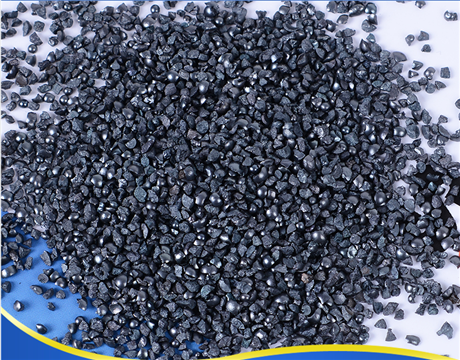



Secondary quenching of steel sand with high cycle times and high cleaning efficiency
Category:
hardware/abrasive/Polishing paste
Model:
0.3-1.4
Brand:
Anlan Di
model:
0.3-1.4
main ingredients:
Carbon, manganese, silicon, sulfur, phosphorus
Specification and weight:
one
granularity:
0.3-1.4
manufacturer:
Shandong Blue Earth Metal Products Co., Ltd
Retail Price
5.20USD
重量
kg
- Product Description
-
model 0.3-1.4
main ingredients Carbon, manganese, silicon, sulfur, phosphorus
Specification and weight one
granularity 0.3-1.4
manufacturer Shandong Blue Earth Metal Products Co., Ltd
Description :
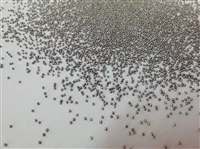
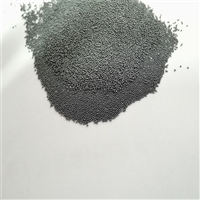
Characteristics of Anlandi secondary quenching steel sand: selected raw materials, strict testing in each process, moderate hardness of steel sand (can be customized according to customer requirements), strong toughness, impact resistance, can be used repeatedly for several times, long service life, good rebound elasticity, strong adhesion, fast cleaning speed, low sand consumption, no breakage, high brightness of cleaned workpieces, and good technical effect. Compared to ordinary steel grit, the service life is increased by 30%, and the metallographic structure changes from ordinary martensite to bainite.
The alloy cast steel shot, low shell steel shot, and steel sand produced by Shandong Blue Earth Metal Technology Co., Ltd. can be applied to:
Casting cleaning
Clean the oxide on the surface of the casting; To achieve good cleanliness and required roughness on the surface of castings for subsequent machining and painting.
Steel plate pretreatment
Use shot blasting to remove oxide scale, rust, and impurities, and form appropriate roughness for subsequent painting and coating. Then use a vacuum cleaner or purified compressed air to clean the steel surface.
construction machinery
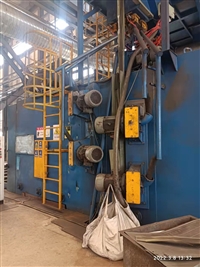
Mechanical cleaning can remove rust, welding slag, and oxide scale on the workpiece, remove stress, increase the adhesion between the anti rust coating and the metal substrate, and greatly improve the anti rust quality of engineering machinery components.
Stainless steel plate cleaning
The surface treatment of stainless steel plates should achieve cleanliness, brightness, and delicate luster. Suitable abrasives should be selected to remove P from the surface of cold-rolled stainless steel plates. According to the surface of different grades of stainless steel plates, different particle sizes and ratios of abrasives should be selected. Compared with traditional chemical treatment methods, it can reduce cleaning costs and achieve green and environmentally friendly production.
steel structure
Steel structural components, H-beams, C-shaped steels, angle steels, etc. are widely used in the modern construction industry. Rust removal or oxide scale removal treatment is required for use to achieve good anti-corrosion performance and aesthetics.
pipeline anti-corrosion
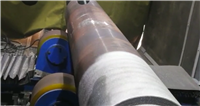
In order to enhance the corrosion resistance of steel pipes, the surface of the pipes needs to be treated by shot blasting to remove oxides and attachments on the surface, achieving the required rust removal level and anchor depth. While obtaining a clean surface, it also meets the adhesion between the steel pipe and the coating, achieving a good anti-corrosion effect.
Provide technical support and after-sales service to users
(1) The company has a technical service team consisting of application technology engineers who are familiar with the operation and performance of various shot blasting or sandblasting equipment,
(2) With years of valuable experience serving customers in various fields, we provide answers to their questions regarding product usage. Specifically, it includes:
(3) Provide customers with abrasive usage solutions through pre-sales consultation and research;
(4) Propose feasible solutions to improve homework efficiency and reduce costs for users;
(5) Provide on-site guidance for the operation and maintenance of user devices;
(6) Provide abrasive ratio according to user quality requirements;
(7) It can detect indicators such as roughness, cleanliness, and salt content, and provide suggestions for improvement.


AfterSalesService :
Key words:- Secondary quenched steel grit
More Products