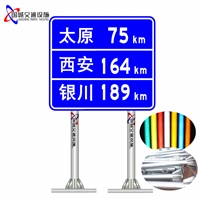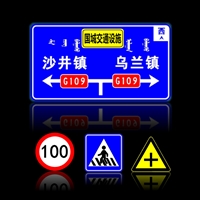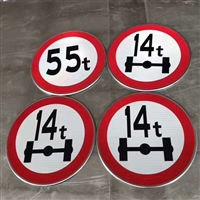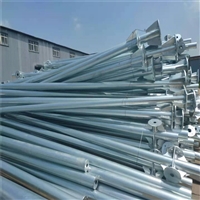


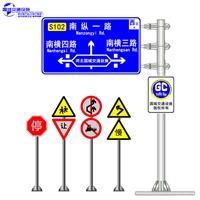
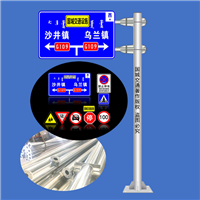

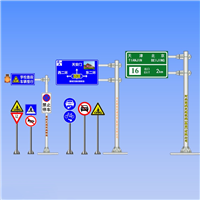
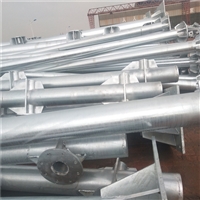

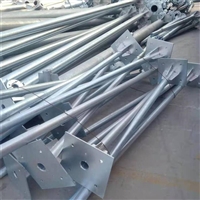
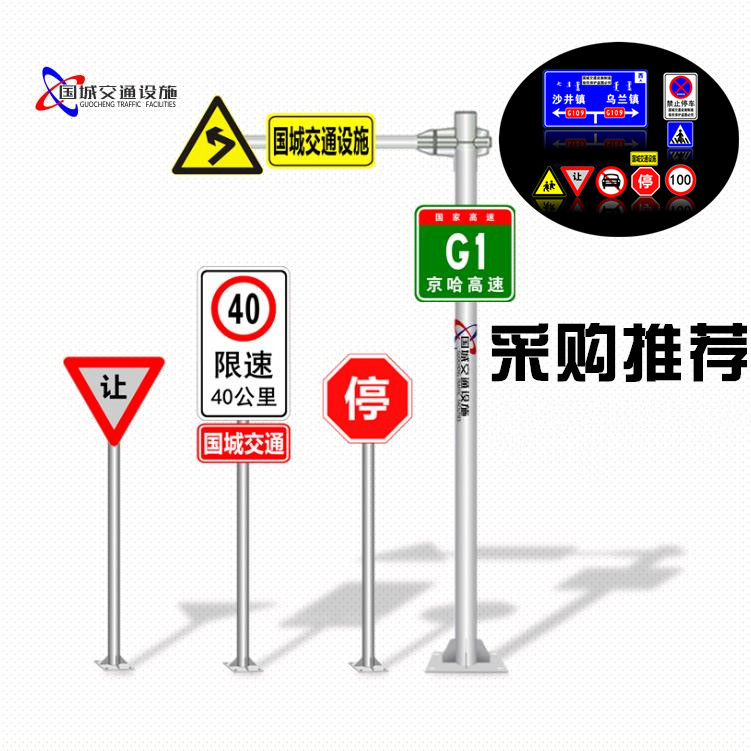
Scenic Area Construction Traffic Sign Pole Cantilever Traffic Sign Pole Column Sign Pole National Urban Traffic
Category:
Security/Traffic safety equipment/Other traffic safety equipment
Model:
According to customer requirements
Brand:
Guocheng Transportation
model:
According to customer requirements
material:
Q235B
manufacturer:
Hebei Guocheng Transportation Facilities Co., Ltd
Retail Price
425.00USD
重量
kg
- Product Description
-
model According to customer requirements
material Q235B
manufacturer Hebei Guocheng Transportation Facilities Co., Ltd
Description :
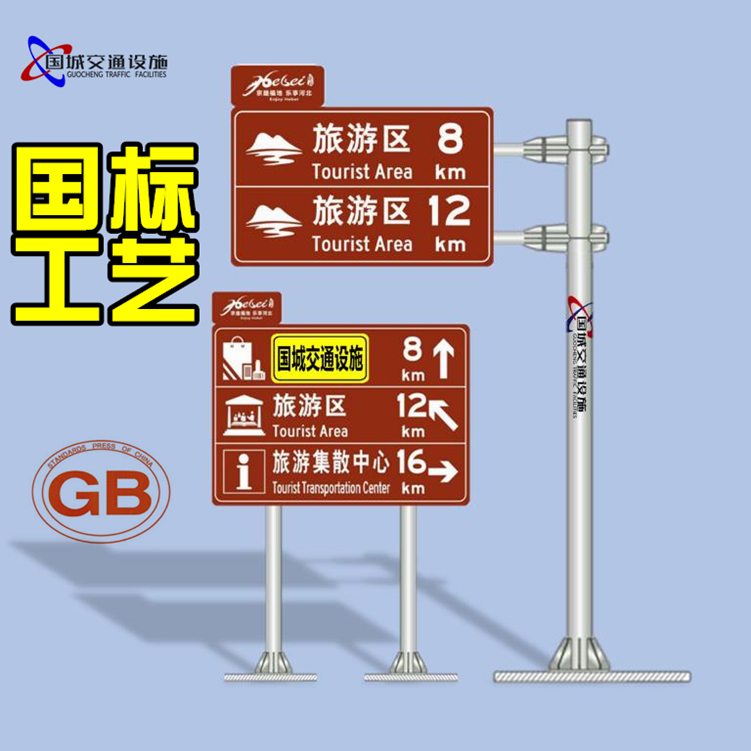
The function of traffic sign poles is to warn vehicles and pedestrians to pay attention to the danger ahead; Prohibition signs are signs that restrict the traffic behavior of vehicles and pedestrians; Indication signs are signs that indicate the direction of vehicles and pedestrians to move forward; A directional sign is a sign that conveys information about the direction, location, and distance of a road.
Highway traffic sign pole manufacturers use graphic signs instead of text to convey specific information that is difficult to describe in words, mainly for traffic management purposes such as prompting, guiding, and indicating. It mainly includes main signs such as warning signs, prohibition signs, directional signs, guide signs, tourist area signs, road construction signs, and auxiliary signs attached to the main signs.
The supporting structures of the logo mainly include column type (single column, double column), cantilever type (single cantilever, double cantilever), gantry type, and suspension type. The setting of traffic sign posts should consider the comprehensive situation of the road surface, plan reasonably, and important information can be repeated.
Function of Traffic Sign Pole:
1. Made of aluminum plate, beautiful, durable, not easily deformed, corrosion-resistant and rust resistant, with a service life of over 10 years; 2. Aluminum plates are coated with 3M grade reflective film, which has stable reflective performance. Guangzhou road traffic signs have uniform brightness and superior front and angle reflective performance. The reflective effect is excellent and can serve as a good reminder; 3. The back of the signboard is equipped with an aluminum groove, which is simple, convenient, and fast to install. After installation, it is stable and reliable, with strong wind resistance; Classification of road traffic signs: 1. Horizontal: The entire proportion is relatively long horizontally. Generally, the entire surface is used as a sign. You can usually see it on the walls of small shops and large buildings. 2. Vertical: The entire proportion is relatively long vertically. Generally, the entire surface is used as a sign. 3. Protruding: A sign that protrudes from the walls of a building, except for the back, and is used as an advertising medium on both sides of the entire surface or with two side walls. For example, a three sided flip sign. 4. Pillar shaped: Horizontal, vertical, and three-dimensional identification signs marked on certain fixed structures on the ground. 5. Roof type: Refers to the installation of fixed structures on the roof of a building, and the hanging or pasting of board shaped, living cubic, or illusionary identification signs on them. 1. Road traffic sign posts are generally located on the right side of the road, in a position that is easy for drivers to see. When setting up road traffic signs on lanes such as overtaking lanes, lanes, and emergency parking belts, it is difficult to do so on the roadside. It is usually set up above the road through a gantry to facilitate driver observation and solve the problem of cantilevered traffic sign poles obstructing each other. Near the end of the highway, some prohibition or warning signs will also be placed within the median strip.
2. When setting the position of traffic sign posts, it is important to consider that the signs do not obstruct or affect each other, and that they are not obstructed by other buildings that obstruct the view of drivers and passengers.
3. The setting of road traffic signs such as interchanges and service areas should be based on the principle that vehicles approaching intersections or diverging or merging points will not affect the driver's line of sight.
4. The installation of road traffic sign posts requires drivers to have sufficient reaction time to make necessary judgments for operation. Therefore, in order for the content of the logo to play such a role, there should be a certain amount of advance in the setting of the logo. In general, the larger the board size and simpler the content of road traffic signs, the smaller the advance distance of the sign can be.
5. The roadside traffic sign post must have a clear distance of 25cm from the outer edge of the shoulder, and there should be a clearance of 2m between the lower edge of the sign board and the outside road surface of the emergency stop zone. When setting up signs above highways, the clear distance between the lower edge of the sign board and the road surface should be greater than 5m.
6. The road traffic sign board is arranged at a right angle to the highway and can be slightly tilted inward. The front of the board faces the direction of traffic, making it easy for drivers to observe. There is no unified opinion on the issue of leaning roadside signs in road traffic signs. Some places believe that the signboard should only tilt inward when it is more than 9m away from the edge of the shoulder. When the signboard is less than 9m away from the edge of the shoulder, to prevent glare caused by reflection, it is tilted outward by about 30 degrees.

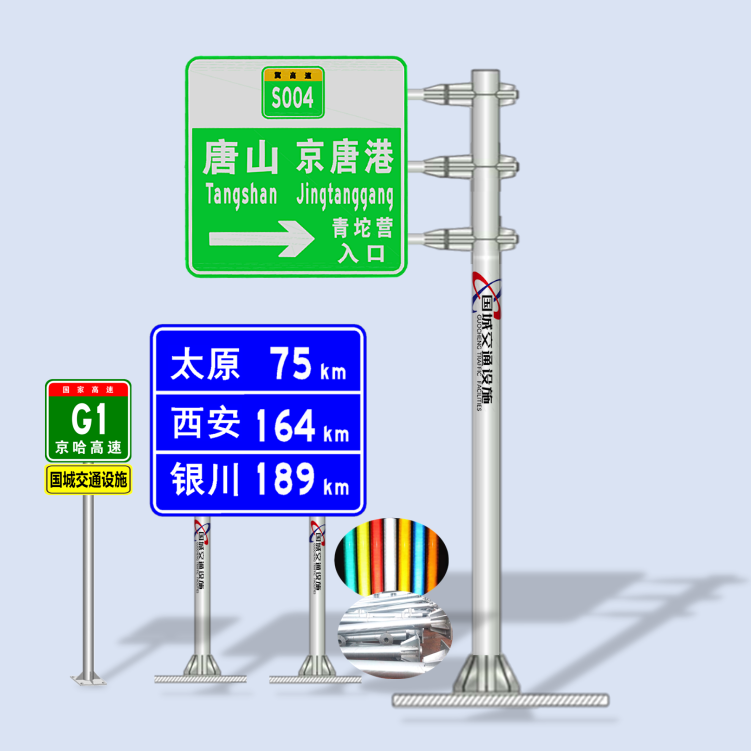

All traffic signs should be positioned and installed according to requirements, ensuring good visibility. When the signboard installation point is obstructed by trees, structures, etc., the position should be adjusted appropriately. The installed signs should be almost perpendicular to the direction of traffic flow. In curved road sections, the angle of sign placement should be determined by the direction of traffic flow. In order to eliminate glare on the surface of roadside signs, the signs should be rotated backwards by about 5 ° to avoid direct sunlight from the headlights. For general road sections, for roadside column signs, the distance between the inner edge of the sign board and the edge of the earth shoulder shall not be less than 250mm, the height of the lower edge of the sign board from the ground shall be 2m~2.5m, and the net height of the cantilever sign from the road surface shall not be less than 5m. 5.2.3 Sign support structure a. Steel support structure should be made and installed in accordance with the provisions of "Road Traffic Sign Board and Support Components" (GB/T 23827). b. Supporting structures with tubular or hollow sections should be equipped with rain caps. c. Drilling, punching, and workshop welding should be completed before steel electroplating. The provided connectors and accessories should be suitable for the sign installation system and comply with the requirements of "Road Traffic Sign Boards and Supporting Components" (GB/T 23827). d. During installation, the signboard should be appropriately supported and reinforced, and its surface should be protected against damage. e. The installation of the sign support structure should be carried out after the strength of the foundation concrete meets the requirements and is approved by the supervising engineer. f. All steel in contact with aluminum alloy or other metals in the logo should be protected to prevent corrosion of the steel or aluminum alloy, and the protective measures should be approved by the supervising engineer. g. Steel parts should undergo pre-treatment such as degreasing and rust removal before painting treatment. After processing, hot-dip galvanizing should be carried out, and the surface of the coating should be practical and smooth, without sagging, dripping or excess agglomeration. The surface of the plated part should be free of defects such as plating leakage. The thickness of the coating should meet the requirements of relevant regulations. Fasteners such as bolts, nuts, and connecting accessories should also be galvanized.
The gantry traffic sign pole is installed on the gantry, and the height of the lower edge of the sign above the ground should be greater than the clearance height specified for the road. 6. Attached traffic sign post: The sign is attached and installed on the overpass and nearby structures, and is divided into two types: attached on the roadway and attached on the road according to the position of the attached layout. 3、 Maintenance of road traffic sign posts. 1. The setting (adjustment) of road traffic signs should be completed before the completion and opening of new (renovated, expanded) roads, and the signs related to these new (renovated, expanded) roads in the road network should also be adjusted synchronously to improve their settings. When road traffic conditions change, the setting of relevant signs should be adjusted in a timely manner. Highway number and city road name signs should be used as much as possible to enable road users to understand their route and location. 3. The logo should be regularly cleaned and maintained to maintain sufficient reflectivity and ensure visual recognition. During the use of the logo, it should also be avoided from being obscured by numbers or being affected by street lighting that affects visual recognition. The shape and color of the logo should comply with the provisions of this section during its service life.

AfterSalesService :
Key words:- Construction of traffic sign posts in scenic areas
More Products