

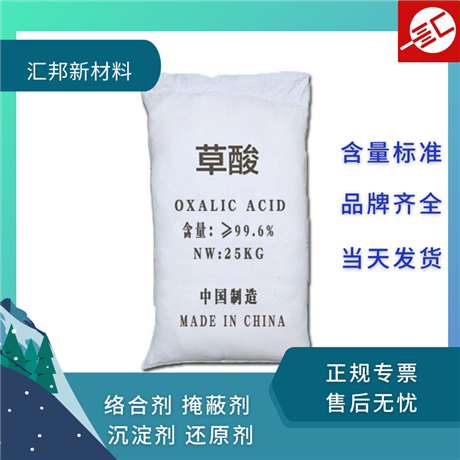



Huibang Oxalic Acid, Ethylene Glycolic Acid, Anhydrous Oxalic Acid, High Strength and High Content Manufacturer, Wholesale Quantity, Large Discounts
Category:
chemical industry/carboxylic acid/Oxalic acid and salts
Model:
industrial-grade
Brand:
Huibang New Materials
model:
industrial-grade
chemical name:
H2C2O4
product grade:
qualified product
alias:
oxalic acid
molecular formula:
H2C2O4
Implement quality standards:
National standard GB/T 1626-2008
purpose:
Chelating agent, masking agent, precipitant, reducing agent
trait:
Colorless monoclinic sheet
safety:
low toxicity
Packing Specification:
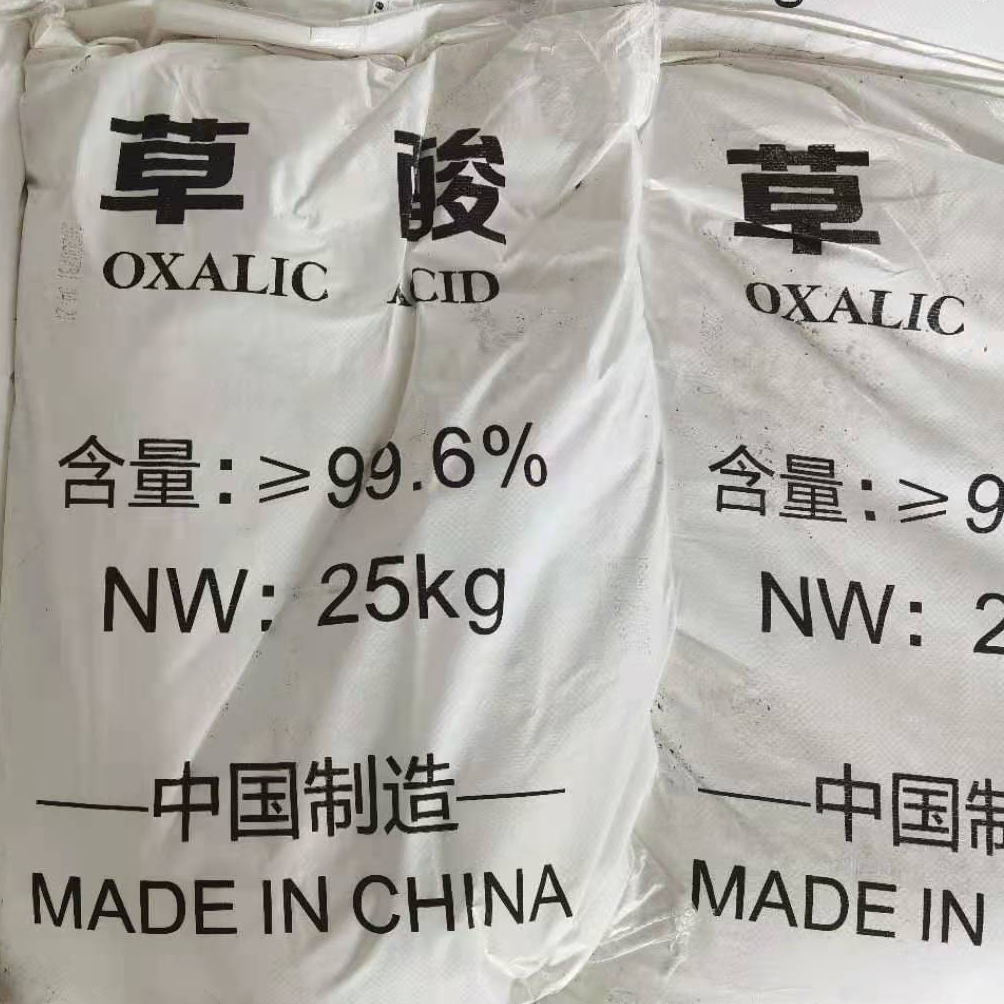
25kg/bag
Precautions:
Oxalic acid is not easily oxidized and decomposed in the human body. It is a product formed through metabolic processes and belongs to acidic substances. It can cause an imbalance in the acidity and alkalinity of the human body, and excessive consumption can lead to poisoning; Moreover, if oxalic acid encounters calcium and zinc in the human body, it forms calcium oxalate and zinc oxalate, which are not easily absorbed and excreted from the body, affecting the absorption of calcium and zinc. Children's growth and development require a large amount of calcium and zinc. If the body lacks calcium and zinc, it can not only lead to poor bone and tooth development, but also affect intellectual development. Excessive intake of oxalic acid can also cause stones.
Retail Price
3.50USD
重量
kg
- Product Description
-
model industrial-grade
chemical name H2C2O4
product grade qualified product
alias oxalic acid
molecular formula H2C2O4
Implement quality standards National standard GB/T 1626-2008
purpose Chelating agent, masking agent, precipitant, reducing agent
trait Colorless monoclinic sheet
safety low toxicity
Packing Specification 25kg/bag
Precautions Oxalic acid is not easily oxidized and decomposed in the human body. It is a product formed through metabolic processes and belongs to acidic substances. It can cause an imbalance in the acidity and alkalinity of the human body, and excessive consumption can lead to poisoning; Moreover, if oxalic acid encounters calcium and zinc in the human body, it forms calcium oxalate and zinc oxalate, which are not easily absorbed and excreted from the body, affecting the absorption of calcium and zinc. Children's growth and development require a large amount of calcium and zinc. If the body lacks calcium and zinc, it can not only lead to poor bone and tooth development, but also affect intellectual development. Excessive intake of oxalic acid can also cause stones.
Description :


introduction
Oxalic acid is a metabolic product of living organisms, widely distributed in plants, animals, and fungi, and plays different functions in different living organisms. Research has found that over a hundred plant species are rich in oxalic acid, especially in plants such as spinach, amaranth, sugar beet, purslane, taro, sweet potato, and rhubarb. Oxalic acid can reduce the bioavailability of mineral elements and easily form calcium oxalate with calcium ions in the human body, leading to kidney stones. Therefore, oxalic acid is often considered an antagonist of mineral element absorption and utilization.
trait
Colorless monoclinic or prismatic crystals or white powder, odorless oxalic acid produced by oxidation, and odorless oxalic acid produced by synthesis. Sublimation at 150-160 ℃. It can weather in high heat and dry air. 1g is soluble in 7ml of water, 2ml of boiling water, 2.5ml of ethanol, 1.8ml of boiling ethanol, 100ml of glycerol, and 5.5ml of glycerol. It is insoluble in benzene, chloroform, and petroleum ether. The pH value of a 0.1mol/L solution is 1.3. Relative density (d18.54) 1.653. Melting point 101~102 ℃ (187 ℃, anhydrous). Low toxicity, median lethal dose (rabbit, transdermal) 2000mg/kg.
chemical properties
Oxalic acid, also known as oxalic acid, is widely present in plant-based foods. Oxalic acid is a colorless columnar crystal that is soluble in water but insoluble in organic solvents,
Oxalate has a strong coordinating effect and is another type of metal chelating agent in plant-based foods. When oxalic acid combines with some alkaline earth metal elements, its solubility is greatly reduced, such as calcium oxalate, which is almost insoluble in water. Therefore, the presence of oxalic acid has a significant impact on the bioavailability of essential minerals; When oxalic acid combines with some transitional metal elements, a soluble complex is formed due to the coordination effect of oxalic acid, greatly increasing its solubility.
Oxalic acid begins to sublime at 100 ℃, rapidly sublimates at 125 ℃, and undergoes significant sublimation and decomposition at 157 ℃.
Can react with alkali and undergo esterification, acylation, and amidation reactions. Reduction reactions can also occur, and decarboxylation reactions can occur when heated. Anhydrous oxalic acid has hygroscopicity. Oxalic acid can form water-soluble complexes with many metals.
exist
Oxalic acid is found throughout nature and often exists in the form of oxalate in plants such as clover, fescue, sorrel, and acid mold. Almost all plants contain calcium oxalate. Oxalic acid is a common component in plants, especially herbaceous plants, and is often present in the form of potassium or calcium salts. Autumn crabapple and banana exist in the form of free acids.




AfterSalesService :
Key words:- oxalic acid
More Products


