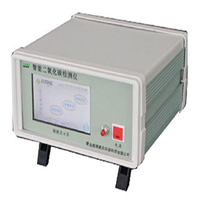


Formaldehyde detector for rapid detection of formaldehyde concentration PPM400ST
Category:
Instrumentation/Analytical instruments/Gas analyzer
Model:
PPM-htv
Brand:
UK PPM
brand:
UK PPM
model:
PPM-htv
Item Number:
See details
material:
See details
Installation method:
Portable handheld device
display mode:
See details
Coverage frequency:
See details
level accuracy:
See details
distortion:
See details
sensitivity:
See details
weight:
See details
Specifications:
See details
Processing & Customization:
yes
Is it imported:
yes
Place of Origin:
Shandong
Retail Price
9,900.00USD
重量
kg
- Product Description
-
brand UK PPM
model PPM-htv
Item Number See details
material See details
Installation method Portable handheld device
display mode See details
Coverage frequency See details
level accuracy See details
distortion See details
sensitivity See details
weight See details
Specifications See details
Processing & Customization yes
Is it imported yes
Place of Origin Shandong
Description :
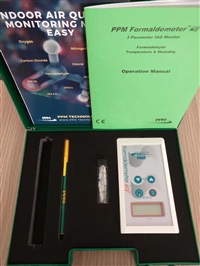
PPM htv formaldehyde detector

Unlike other formaldehyde measurement devices such as colorimetric tubes, HTV can measure many samples without any inconvenient auxiliary equipment. Due to its compact structure and battery power supply, this instrument is a truly portable detector that is easy to use and can quickly and semi quantitatively measure formaldehyde content in the air. It can be displayed in both ppm and mg/cm3 units. HTV uses discontinuous sampling to measure formaldehyde concentration in the air, mainly used as a detection device for occupational health.
Key points: It is very important to understand the following points when using the instrument
HTV can perform temperature compensation, with a maximum measurement range of 10-30 ℃.
The results measured by HTV are instantaneous readings on site, and a single value does not represent the level of formaldehyde exposed to the air for a long time. A series of measurement data with short intervals is superior to the results of irregular detections.
Avoid smoking in the testing environment as cigarettes contain aldehydes during combustion.
Make sure that droplets or dust are not sucked into the instrument, as this can cause long-term damage to the sensor.
The HTV design is reasonable, the structure is sturdy, and it can ensure daily testing and use. However, if the instrument is subjected to strong oscillations, the randomly provided formaldehyde calibration standard tube should be used to check the operation and calibration of the instrument.
1.1 Instrument Features
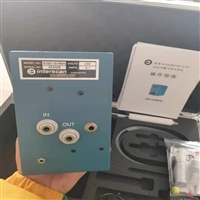
Inlet: The gas to be measured enters the sensor through a copper inlet.
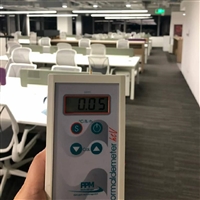
Display screen: The LCD displays the formaldehyde concentration in the sample with a resolution of 0.01ppm, as well as text information about an ongoing operation.
Operation building: There are four operation keys in total, some of which have multiple functions. The operation key switch is placed under the membrane, and the corresponding key position can be pressed to operate.
Display: Sensor is recovering
The sensor is in standby mode, ready to measure
Sampling in progress
Extract calibration gas
Set verification level
Need to replace battery
The instrument needs to be calibrated
Battery Room: There is a battery room with a lid behind the instrument. Loosen the two screws to open the lid and you will see it. When the screen appears, it indicates the need to replace the battery, refer to section 5.1 Battery Replacement.
Serial interface: This port can be used to connect HTV with external devices PPM AMS-2 or SP-1 for automatic continuous detection. Please refer to Section 8 for details.
1. Technical information
2.1 Operating principle: Electrochemical formaldehyde sensor
HTV uses efficient electrochemical sensor technology to measure formaldehyde concentration in the air. The formaldehyde sensor consists of two inert metal electrodes and an appropriate electrolyte. When air is drawn into the sensor through the internal sampling system, a voltage value proportional to the concentration of formaldehyde in the sample gas is generated. Formaldehyde catalyzes and activates an electro oxidation reaction on one of the electrodes, generating a voltage. This signal is amplified by a precision amplifier and displayed on the screen. After calibration, the formaldehyde concentration is displayed in ppm.
All electronic systems use modern advanced integrated circuits and surface mount technology for assembly to ensure the reliability and durability of the HTV.
2.2 Interference factors
Phenolic aldehydes and resorcinol
The presence of phenolic compounds in the air can interfere with the reading of HTV. When it is necessary to detect the concentration of formaldehyde in an environment that has previously had phenolic resin, the equipped phenolic filter tube must be installed at the sampling port of the instrument. The filter tube can remove phenolic gases from the sample, even if the phenolic concentration exceeds 1000ppm, it will not affect the formaldehyde reading.
Lifespan of phenolic filter tube
Each filter tube can be used up to five times, and used filter tubes cannot be stored together with new ones. The new filter can be purchased from PPM company through distributors.
Alcohols and aldehydes
Like other portable formaldehyde detectors, this instrument not only responds to formaldehyde, but also produces cross interference from other gaseous substances such as methanol, ethanol, acetaldehyde, etc.
Users can request a list of common interferences.
Sensor background reading
Due to the high sensitivity of the sensor, even in an air that is recognized to be free of formaldehyde or other interferences, a background reading may still be generated.
Measurement of extreme high and low humidity areas
Due to the high sensitivity of sensors, background readings are likely to occur when measuring in the humidity pole region (usually within the range of 40-60% RH). The current design of HTV, with humidity readings and built-in data analysis functions, can compensate for humidity measurements in pole regions to some extent.

2. The use of HTV
3.1 Sampling
Power on: Press the button to turn on the power, and the instrument will display the following message, indicating that the instrument is ready to start measuring.
Sampling: Place the instrument in the air environment to be tested, press the key once, and the light screen will display as
At this point, you will hear the sound of the built-in pump briefly collecting sample gas.
Display reading: The display screen will flash for 10 seconds between the following two screens:. During measurement, the display screen will show flashing and increasing values, which will be fixed at a non flashing value after 60 seconds and will remain at this value until the device is turned off. It indicates the value of formaldehyde expressed in ppm. If a high concentration of interfering gas appears (see section 2.2), the instrument will provide a reading after approximately 10 seconds to avoid the influence of interfering gas.
Replacement settings: The two time periods mentioned above (10 seconds and 60 seconds) can be changed according to the needs of the supplier or customer, otherwise the manufacturer will make the default settings. For more information, please contact the local business.
Other readings:
Press and hold the ▼ key, and the instrument will display the time it takes to reach the displayed concentration.
Press and hold the ▲ key, the instrument will display a reading in mg/m3, and the screen will show "Alt"
Shutdown: Press the key once to shut down. If the device is forgotten to shut down after testing, it will automatically shut down after 5 minutes.
3.2 Sensor Recovery Phase
Sensor cleaning: Before the next test, turn off the instrument for a few minutes to allow the sensor to automatically remove residual formaldehyde. Normally, the higher the reading, the longer it takes to clear residual gas. If the sensor is turned on before cleaning, the screen will flash and the sampling pump will not work. Only when the sensor is cleaned and the power on display continues uninterrupted for 3 seconds, does it indicate that the instrument is ready to start extracting the next sample gas.
AfterSalesService :
Key words:- Formaldehyde detector
More Products