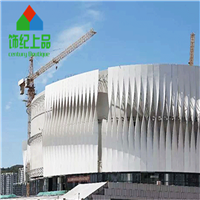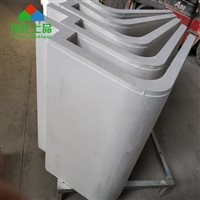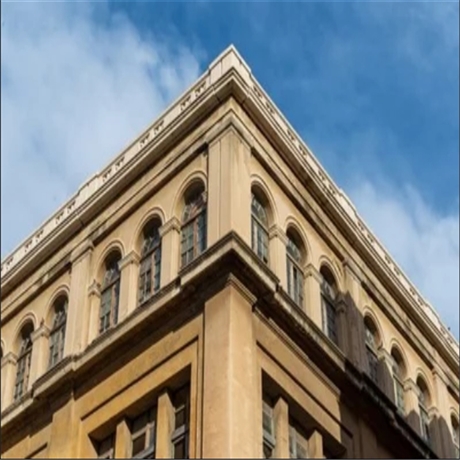

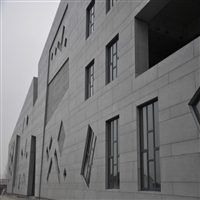
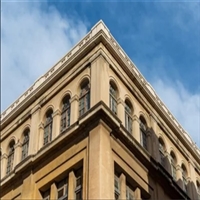


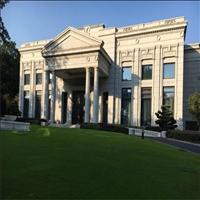

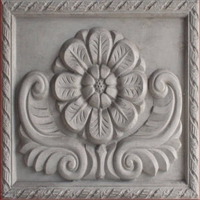
The facade requirements that need to be met when using GRC exterior wall decorative panels are from Guangdong GRC manufacturer, Shangpin Decoration
Category:
building materials/Masonry materials/Concrete products
Model:
sjsp2021
Brand:
Top grade decoration
model:
sjsp2021
density:
one thousand and eight hundred
Sound absorption coefficient:
≥45Db
Usage location:
Main bricklaying
special function:
corrosion-resistant
Place of Origin:
Guangdong
Specifications:
According to the drawings, any specifications can be customized
weight:
twenty-nine
shape:
plate-like
compressive strength:
≥45Db
level:
premium
Specifications:
According to the drawings, any specifications can be customized
Is it a cross-border source of goods:
No
appearance:
Smooth and flat surface can be sprayed with any color of paint
Item Number:
sjsp2021
manufacturer:
Guangdong GRC component manufacturer decoration grade
Retail Price
300.00USD
重量
kg
- Product Description
-
model sjsp2021
density one thousand and eight hundred
Sound absorption coefficient ≥45Db
Usage location Main bricklaying
special function corrosion-resistant
Place of Origin Guangdong
Specifications According to the drawings, any specifications can be customized
weight twenty-nine
shape plate-like
compressive strength ≥45Db
level premium
Specifications According to the drawings, any specifications can be customized
Is it a cross-border source of goods No
appearance Smooth and flat surface can be sprayed with any color of paint
Item Number sjsp2021
manufacturer Guangdong GRC component manufacturer decoration grade
Description :
What facade requirements do GRC exterior wall decorations need to meet? The facade design using GRC exterior wall decoration must meet the following requirements:
1. Meet the requirements of building functionality.
2. Harmonious architectural environment.
3. Beautiful, harmonious, and unified in style.
4. Correct proportion, appropriate proportion.
5. Technically feasible and easy to install.
6. Economically reasonable.
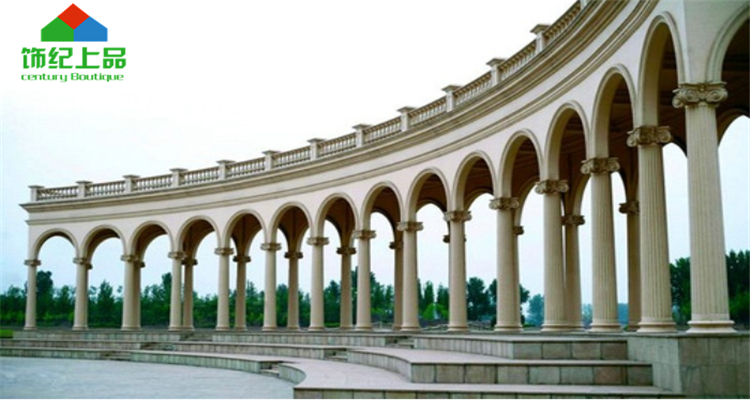
The architectural facade design (i.e. component application design) must provide detailed construction drawings and node diagrams. And confirm:
1. Component type, variety, size, texture, color.
2. The components used and the quantity of components.
3. The combination of components and stitching.
4. Component shutdown processing.
Horizontal continuous members (such as eaves and waistlines) determine the length of a single piece, including:
1. Determine the gap between connected components. Considering the factors of moisture, dry deformation, and temperature deformation, the level of continuous components must be left between the expansion joints. Expansion joints with a single length not exceeding 2m shall have a width of not less than 5mm. For components with a single length of 2m or more, the width of the expansion joint shall be 5-10m meters
2. There are three methods for handling component gaps:
(1) Mingzhen. Similar to real stone components, maintaining a natural stitching effect.
(2) Half open seam. Fill the gaps with adhesive strips (or plastic strips) and apply sealant to fill the gaps.
(3) The dark coal seam. Fill the joints with rubber strips (or plastic strips), apply sealant and putty, and paint to make the joints flush with the components.
Attention: Do not use cement mortar to fill the gaps when dealing with semi open needle marks and hidden needles.
3. The length of each component must be determined based on the dimensions of the building axis, the position of door and window openings, changes in wall corners, and the position of wall expansion joints (drain holes) to ensure that the connection joints of the components are consistent and symmetrical with the elevation of the building. And the dimensions of the components used for production and installation. The length of the horizontal component can be between 1.2-2.4 meters.
4. The horizontal corners of buildings must be designed as internal and external corner components, and cutting and splicing of components is not allowed. The length of one side of the yin-yang corner is between 0.3-1.2m.

3、 Longitudinal continuous components (such as columns, vertical lines, etc.) should determine the length and stitching method of individual components. including:
1. According to the requirements of legislative surface effect, the manufacturing, transportation, and installation conditions of structural conditions and components. Determine the length of each longitudinal continuous component. The longitudinal length of a unit is generally between 1.2-3.6m. If a pillar with a diameter greater than 800 is installed for transportation and installation, it may also be 5-6 meters long to avoid or reduce cracks.
2. The connection width and gap between treatments of longitudinal continuous components are the same as those of transverse continuous components.
3. The longitudinal continuous components of segmented design should avoid passing through the weight of the upper components of the lower components.
4. Vertical components cannot pass through expansion joints (sinking joints).
The combination of components (such as door and window combinations, modular mountain flowers, columns composed of columns, etc.) should ensure appropriate proportional and logical relationships between components, and joints can be treated with members that are horizontally continuous.
Flat continuous components (such as Shantay stone, continuous paving decorative panels, etc.) should be arranged according to the detailed dimensions of the building facade, and the position and width of the vertical joints of the components should be determined (joint width can be selected from 10-30mm). Calculate the exact size and quantity of irregular seams and closures required to avoid cutting components on site. The flat continuous component is disconnected during the construction of the expansion joint (Sinkhole).
AfterSalesService :
Key words:- GRC exterior wall decorative panel
More Products