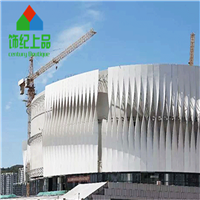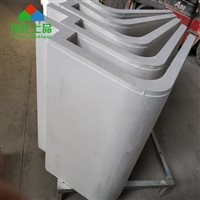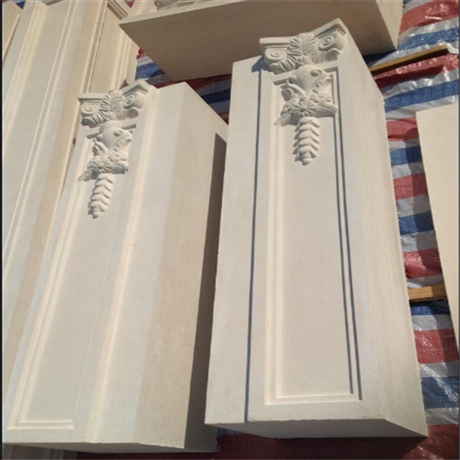

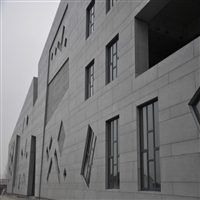


Prevention and treatment of cracks in Guangdong GRC manufacturer's decorative grade GRC lightweight partition board
Category:
building materials/Masonry materials/Concrete products
Model:
sjsp2021
Brand:
Top grade decoration
model:
sjsp2021
density:
one thousand and eight hundred
Sound absorption coefficient:
≥45Db
Usage location:
Main bricklaying
special function:
corrosion-resistant
Place of Origin:
Guangdong
Specifications:
According to the drawings, any specifications can be customized
weight:
twenty-nine
shape:
plate-like
compressive strength:
≥45Db
level:
premium
Specifications:
According to the drawings, any specifications can be customized
Is it a cross-border source of goods:
No
appearance:
Smooth and flat surface can be sprayed with any color of paint
Item Number:
sjsp2021
manufacturer:
Guangdong GRC component manufacturer decoration grade
Retail Price
300.00USD
重量
kg
- Product Description
-
model sjsp2021
density one thousand and eight hundred
Sound absorption coefficient ≥45Db
Usage location Main bricklaying
special function corrosion-resistant
Place of Origin Guangdong
Specifications According to the drawings, any specifications can be customized
weight twenty-nine
shape plate-like
compressive strength ≥45Db
level premium
Specifications According to the drawings, any specifications can be customized
Is it a cross-border source of goods No
appearance Smooth and flat surface can be sprayed with any color of paint
Item Number sjsp2021
manufacturer Guangdong GRC component manufacturer decoration grade
Description :
GRC stands for glass fiber reinforced cement, which means "using alkali resistant glass fibers as reinforcement material, low alkalinity high-strength cement mortar as bonding material, and lightweight inorganic composite materials as aggregates.
GRC has the advantages of thin components, high elasticity resistance, good impact resistance, low alkalinity, small free expansion rate, reliable crack resistance, stable quality, moisture resistance, insulation, non flammability, sound insulation, sawability, drillability, nailing, planing, chiseling, smooth wall construction, easy construction, avoiding wet operations, improving construction environment, saving land resources, light weight, reducing load in buildings (1/6-1/8 of the weight of clay bricks), reducing foundation and beam and column reinforced concrete, reducing total project cost, and expanding usable area.
Due to the installation of CRC lightweight partition panels in non load bearing areas of buildings, the required installation locations are all large span settlement deformations, and the areas with the weakest load resistance. Due to the special characteristics of assembly connection and smooth surface of lightweight partition panel tongue and groove, it is easy to cause cracks at the connection between panels and panels, as well as the connection between panels and doors and windows. Concentrated loads can cause vibration deformation of lightweight wall panels, resulting in cracks and hollowing. This poses new challenges for the assembly method of GRC strip panels, pipeline pre embedding, perforation, splitting groove, tool installation, surface plastering quality problems, and proposes some preventive measures.
Share 20 lightweight partition wall construction techniques, crack prevention and treatment plans within the circle, and exchange and learn from fellow circle members. Click on the card below for details ↓
Regarding the issue of cracks, extensive research has been conducted and the following measures are usually taken:
1. Improve the production and installation process of GRC boards to prevent cracking of board joints
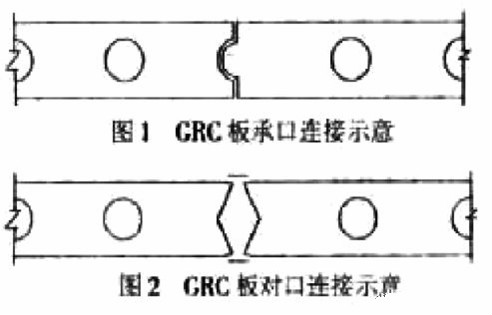
1.1 Due to the traditional board making process using socket connections (Figure 1), workers usually apply sand and mortar in the grooves before assembling and extruding the boards during installation operations. By doing so, it is difficult to ensure that the mortar at the joint is full. Instead, using a butt joint connection (Figure 2), after applying sand and mortar to both grooves, the butt joint allows the mortar to be squeezed out, ensuring the fullness of the mortar.
After 10 days of installing the partition board, check whether all gaps are well bonded and whether there are cracks. If cracks appear, the cause should be identified and repaired. All well bonded board joints and corner joints should be cleaned of floating dust, scraped with adhesive, and covered with 100mm wide fiberglass mesh cloth. For corner walls, a layer of 200mm (100mm wide on each side) fiberglass cloth should be pasted at the external corners, compacted and firmly bonded, and the surface should be smoothed with adhesive.
1.3 Fiberglass tape and fiberglass cloth: cloth weight greater than 80 g/m2; Breaking strength: 25mm × 100mm fabric strip: warp yarn greater than 300N; weft yarn greater than 150N.
2. Strengthen the maintenance of joint mortar
After the installation of GRC board, the joint mortar should be cured in a timely manner, and the curing time should not be less than 7 days.
3. All temporarily fixed wooden wedges must be removed
In the standard practice for installing temporary fixed wooden wedges between slabs, beams, and columns, wooden wedges soaked in asphalt paint may not be removed. However, during soaking, the asphalt paint that is not fully soaked or used is often unqualified, failing to meet the requirements of waterproofing and anti-corrosion. When making the ground, wooden wedges absorb water and expand. After drying and shrinking, it causes deformation and cracks in the GRC board. Therefore, wooden wedges used for temporary fixation must be completely removed after being filled with mortar or fine stone concrete and having a certain strength.
4. Reinforcement of door and window openings
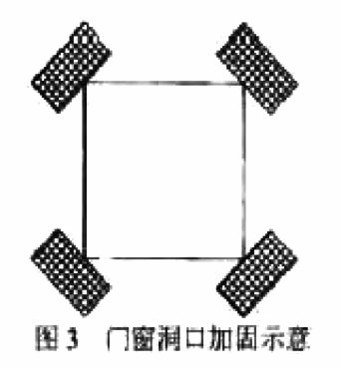
At the junction of the door panel and the wall, in addition to being fixed with U-shaped steel plates, the bottom is fixed with L-shaped angle steel clips. A 200mm × 300mm reinforcing mesh is laid along the door and window openings at a 45 ° angle to the openings (Figure 3).
5. Avoid cracks in the GRC board itself
When arranging the panels, not only should the rationality of the wall panel combination be considered to avoid less than 2/3 of the panels, but also the reserved openings for water, electricity, etc. should be marked in the panel layout diagram. Require small holes to be completed before installation to reduce vibration caused by opening holes after installation. When it cannot be completed before installation, the joint mortar strength must reach (28 days) before drilling, and a cutting machine must be used for drilling.
6. GRC board curing age
Ensure that the GRC board has an aging period of no less than 28 days and no less than 14 days. Many smaller manufacturers perform on-site measurement when receiving engineering tasks. Due to the tight schedule, the GRC board was transported to the construction site for installation before reaching the discharge time, and the curing period was seriously insufficient.
7. The joint is made of polymer mortar
Due to the shrinkage of cement, it determines the self shrinkage cracks of ordinary mortar during the solidification process. To alleviate the cracks caused by mortar shrinkage, polymer mortar should be used for joints.
8. The surface of GRC board is coated with 801 glue and fully nailed with steel wire mesh
During the production process of GRC boards, manufacturers mostly use release agents to facilitate the demolding of GRC. A layer of 801 adhesive slurry with a thickness of 2-3mm should be evenly applied on the cleaned GRC wall panel, and steel wire mesh should be fully nailed on the surface of the GRC panel. Use a nail machine to nail the board body vertically and horizontally, with a spacing of 250mm in both directions. Connect the top and sides of the strip board to the concrete column and wall, and then use L-shaped additional steel wire mesh to reinforce the connection strength.
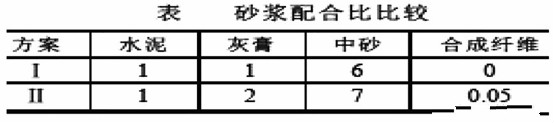
9. Improve the mortar mix ratio
Take two different mix proportion schemes, make 10m2 samples each, and observe after one month. No cracks were found in both the board and the corners of Scheme II (Table).
10. After the completion of the decorative surface layer, appropriate water spraying maintenance should be carried out
Most engineering decorative surface construction is carried out in spring and summer. High ambient temperature and strong wind can easily cause surface layer cracking or hollowing cracks due to rapid drying. Generally, water spraying and maintenance should be carried out twice a day for at least 3 days to ensure that the surface layer strength meets the design requirements. The above construction methods have been practiced in engineering projects, including the installation of GRC panels and the construction of decorative layers covering an area of over 20000 square meters. Some projects have been completed for 4 years and no cracks have been found so far.
AfterSalesService :
Key words:- Guangdong GRC manufacturer
More Products