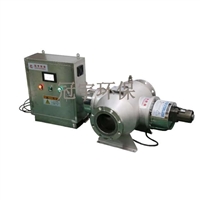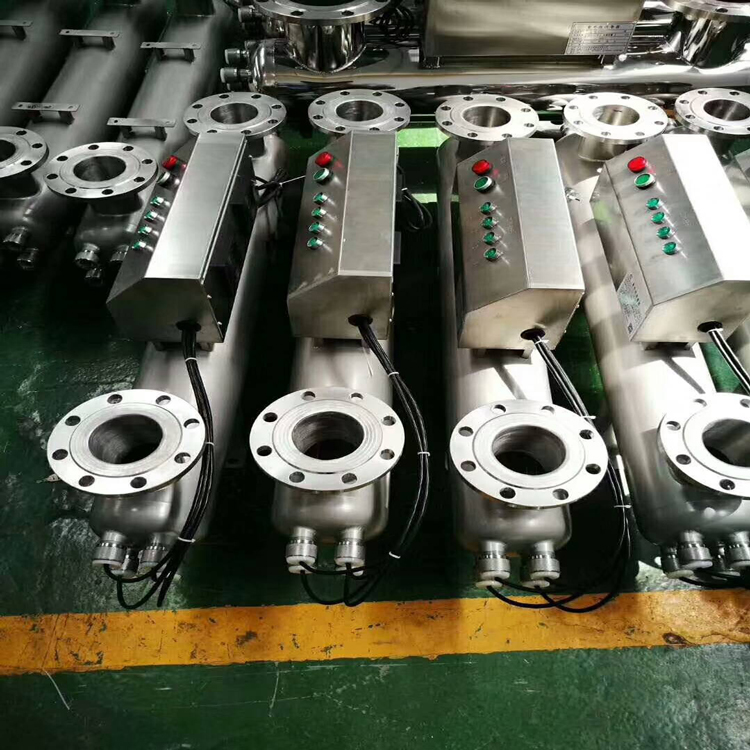


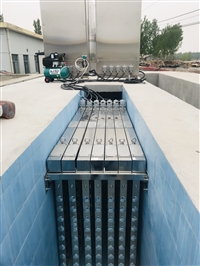
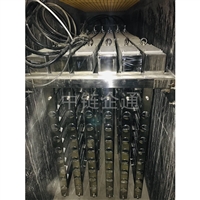

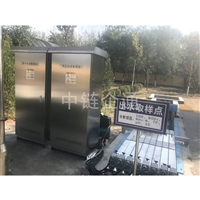
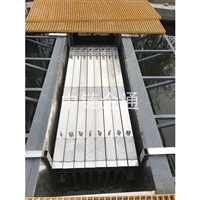
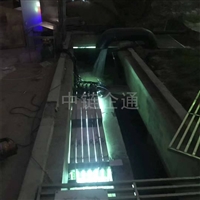
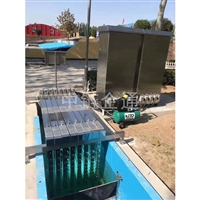
Hebei Municipal Sewage UV Disinfection Device UV Disinfection Module UV Disinfection
Category:
Environmental Protection/Raw water treatment equipment/Water sterilization and disinfection equipment
Model:
GYH-10I-8/320W
Brand:
Guanyu
Retail Price
66,668.00USD
重量
kg
- Product Description
-
Description :
The UV disinfection module of the Hebei municipal sewage UV disinfection device is a patented product of Guanyu Company, with patent number ZL201120005118.5. This product uses a UV disinfection module system arranged in an open channel to emit short wave ultraviolet radiation with a wavelength of 253.7nm to sterilize and disinfect the water passing through the open channel, thereby solving the problem of excessive bacterial indicators in the treated sewage and making the bacterial indicators of the final discharged water meet and exceed the requirements of relevant national discharge standards and water quality standards.
The UV disinfection performance characteristics of the UV disinfection module of Hebei municipal sewage UV sterilizer:
Modular design, modular structure
The UV module adopts pipes tailored for this product, and the main components are laser cut, perforated, and cut. The product has uniformity, consistency, interchangeability, aesthetics, high precision, and small errors. The main beam, cleaning system, and line protection system of the product all adopt independent modular production, formatting, and modular structure, which is easy, fast, effective, time-saving, labor-saving, and labor-saving for installation
Imported light tubes with high efficiency and long lifespan
The equipment adopts imported lightsources such as Philips and Philips ultraviolet lamps, which have mercury lamp technology, high-intensity output, minimal environmental temperature impact, high ultraviolet conversion efficiency, and a low voltage high-intensity lamp tube electro-optical conversion rate of up to 50%, saving 10% energy; Long lifespan, effective working life>12000 hours, exquisite manufacturing process, good reliability, high light maintenance rate, and continuous sterilization and disinfection effect
Professional customized ballasts with stable performance and high compatibility
The electronic ballast used in the equipment is tailor-made for this product and designed to match the UV lamp used. It has strong adaptability, good compatibility, long service life, and a power factor of less than 0.95. It has various protection functions for abnormal states such as no-load protection, overload protection, load short circuit protection, lamp leakage protection, lamp life protection, etc., and meets the requirements of CE, CQC, UL and other standards.
Imported material quartz sleeve, high purple transmittance and high sterilization rate
Quartz casing is made of pure imported raw material from the Pacific Ocean, with a UV transmittance greater than 93%; Highly compatible with UV lamps, with a single ended open quartz sleeve structure.
Water level control, economical and practical, low failure rate
Each module is equipped with a water level control system, which automatically starts/stops the ultraviolet lamp according to the level of water (the lamp works below the liquid level and stops working above the liquid level)
Cleaning system, modular design patent technology
Automatic cleaning system, patented technology. Water powered cleaning, pneumatic cleaning, mechanical and chemical cleaning are available for customers to choose from.
Combining domestic and foreign technologies for cleaning components. Structural science, beautiful appearance, standardized production of grinding tools, anti-corrosion and durable materials, and no damage to quartz sleeves. It has advantages such as consistency, uniformity, interchangeability, thorough cleaning, and long service life.
High end system configuration and complete protection measures
Customized special cables for the internal wiring system, protected by 316 (304) stainless steel pipes for external use, with a modular design combination structure that is corrosion-resistant, anti-aging, leak free, leak free, and durable.
The two ends, middle, and circuit parts of the lamp tube sleeve are equipped with multiple protective measures, seismic and anti-corrosion systems, easy installation, and no hidden dangers of water leakage and electric leakage
The equipment has a unique design of three support beams, namely upper, middle, and lower, with small errors, long service life, and safe and stable structure. Ensure that there is no deformation or distortion of the equipment during long-term operation.
We have a complete range of products and can customize and produce 120 series products according to customer needs.

Characteristics of UV disinfection module and electronic control function of Hebei municipal sewage UV disinfection device
Working voltage 380V/50Hz (three-phase five wire system), grounding resistance should be less than 4 ohms, protection level IP54
The electrical components of the control system are imported from Germany Siemens, domestically produced PLC, and touch screen (optional), with good quality, stable operation, high degree of automation, and the ability to achieve one click startup without dedicated personnel on duty.
The system can be customized according to different working conditions and customer needs, with good expansion functions such as remote dry contact control of work start/stop; There is a flexible and convenient Ethernet communication interface; Communication with RS485 (supporting Modbus protocol) allows for communication with DCS and remote terminals.
The PTFE+316 stainless steel material water level probe is corrosion-resistant.
Application Industry
This product is suitable for disinfection and treatment of industrial wastewater, domestic sewage, and municipal sewage. Applicable to sewage treatment plants, factories, hospitals, and other sewage treatment stations.
In cities, it is also known as a sewage treatment plant or sewage treatment plant. The commonly known treatment station located in the factory is actually a pre-treatment facility when the effluent is discharged into the urban drainage pipeline. A wastewater treatment plant is a complex system composed of multiple unit processes, where the cost and efficiency of each unit process are interrelated and affect each other, ultimately determining the cost and efficiency of the entire system.
In cities, it is also known as a sewage treatment plant or sewage treatment plant. The commonly known treatment station located in the factory is actually a pre-treatment facility when the effluent is discharged into the urban drainage pipeline. The general goal of wastewater treatment is to remove suspended solids and improve oxygen consumption (i.e. stabilize organic matter), sometimes accompanied by disinfection and further treatment. The treatment of industrial wastewater focuses on the removal or transformation of oils, suspended solids, heavy metals, and organic compounds that hinder the operation of urban sewage plants or have high residues, as well as the adjustment of pH value
The process of urban sewage treatment plants is determined based on the required level of treatment and economic analysis. Usually divided into three levels: ① Level 1 processing. By using the precipitation method, the removal rates of suspended solids and five-day biochemical oxygen demand can generally reach around 60% and 30%, respectively. ② Secondary processing. By using the biological treatment method of water, the removal rate of suspended solids and five-day biochemical oxygen demand can generally reach about 90%. When using the high load rate activated sludge method, the removal rate of five-day biochemical oxygen demand is about 60%. ③ Third level processing. Further remove untreated substances from the secondary treatment.

The main treatment structure of the primary sewage treatment plant is the sedimentation tank. Secondary sewage treatment plants are equipped with additional biological devices (such as aeration tanks, biofilters, biological turntables, or aerated biofilters) and post sedimentation tanks. Due to the presence and different functions of sedimentation tanks before and after, the former is often referred to as the primary sedimentation tank, while the latter is referred to as the secondary sedimentation tank. There are also auxiliary facilities and facilities for treating sludge from sedimentation tanks. Auxiliary facilities generally include grilles and sedimentation tanks (also known as impurity tanks). Remove lumps and cloth from the grille. The sand settling tank removes sediment to prevent it from accumulating in subsequent deep tanks and affecting operation. The facilities for treating sludge are generally digestion tanks and dewatering equipment (drying beds or dewatering machines). The buildings of wastewater treatment plants usually include pump rooms, laboratories, sludge dewatering rooms, repair shops, etc. Activated sludge treatment plants often have blower or air compressor rooms. In order to control operation, economic dispatch, and improve management level, sewage treatment plants have begun to adopt automation devices and electronic computer control. The ultraviolet disinfection module of Hebei municipal sewage ultraviolet disinfection equipment includes: ① remote communication, telemetry, recording, and alarm of operating parameters such as water quality, water quantity, and power supply voltage; ② Automatic control and remote control of valve opening and closing and scheduling of water pump units; ③ Third level processing. The effluent quality of secondary treatment sometimes cannot meet the discharge requirements, so further treatment (or deep treatment) is carried out. The effluent from biological treatment methods is generally rich in ammonia, nitrogen, nitrate, and phosphate, and eutrophication often occurs when discharged into stagnant water bodies such as lakes and bays. At this time, facilities for nitrogen and phosphorus removal are often added. When the effluent is discharged into water bodies with extremely high water quality requirements or irrigated grasslands, sports fields, and recreational green spaces, and the water quality needs to be comprehensively improved, double-layer filter beds are often added. Some also use biological ponds and land treatment.
The location of the wastewater treatment plant should be coordinated with the outlet of the wastewater, taking into account the need for phased construction of the entire drainage system, and complying with urban land use planning. Wastewater treatment plants, especially those with sludge treatment and dewatering equipment, have a certain impact on the environmental quality of surrounding buildings and should have appropriate isolation green belts. The advanced computing technology has made the economic analysis of drainage system planning increasingly perfect, and the selection of sewage plant sites is often solved simultaneously with the planning of the entire system

AfterSalesService :
Key words:- Hebei Municipal Wastewater UV Disinfector