

Haite Filter Plate Heat Exchanger BR0.1 Plate Heat Exchanger Mining Chemical Heat Exchanger National Customization
Category:
chemical industry/Heat transfer equipment/Plate heat exchanger
Model:
BR0.1-C
Brand:
Haide filter
model:
BR0.1-C
Installation method:
vertical
Heat transfer method:
Interwall type
Processing & Customization:
yes
temperature range:
one hundred and twenty
work pressure:
0.6/1.0/1.6
power:
0
purpose:
Hydraulic system lubrication system cooler for steel plant power plant
heat transfer area:
twelve
heat transfer coefficient:
≥350W/㎡. K
weight:
eighteen thousand seven hundred and eighty-nine
Overall dimensions:
432x690
Place of Origin:
Xinxiang, Henan
Item Number:
HT-BR0.1-C
Channel cross-sectional area:
twelve
Specifications:
120 pieces
Is it a cross-border source of goods:
No
manufacturer:
Haide filter
Retail Price
2,600.00USD
重量
kg
- Product Description
-
model BR0.1-C
Installation method vertical
Heat transfer method Interwall type
Processing & Customization yes
temperature range one hundred and twenty
work pressure 0.6/1.0/1.6
power 0
purpose Hydraulic system lubrication system cooler for steel plant power plant
heat transfer area twelve
heat transfer coefficient ≥350W/㎡. K
weight eighteen thousand seven hundred and eighty-nine
Overall dimensions 432x690
Place of Origin Xinxiang, Henan
Item Number HT-BR0.1-C
Channel cross-sectional area twelve
Specifications 120 pieces
Is it a cross-border source of goods No
manufacturer Haide filter
Description :
BR0.1 Plate Heat Exchanger Product Introduction:
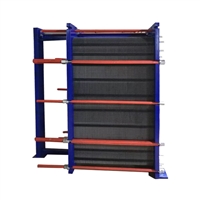
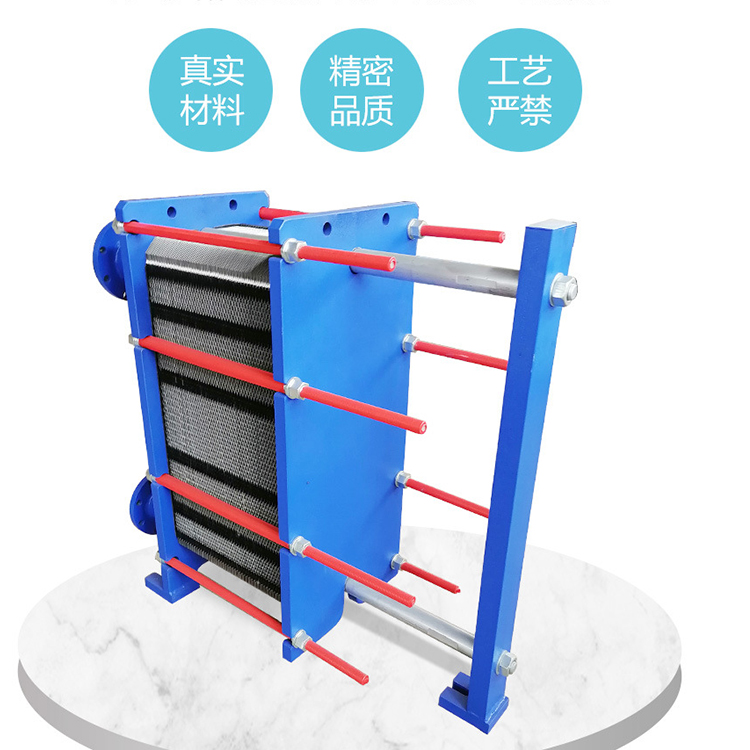
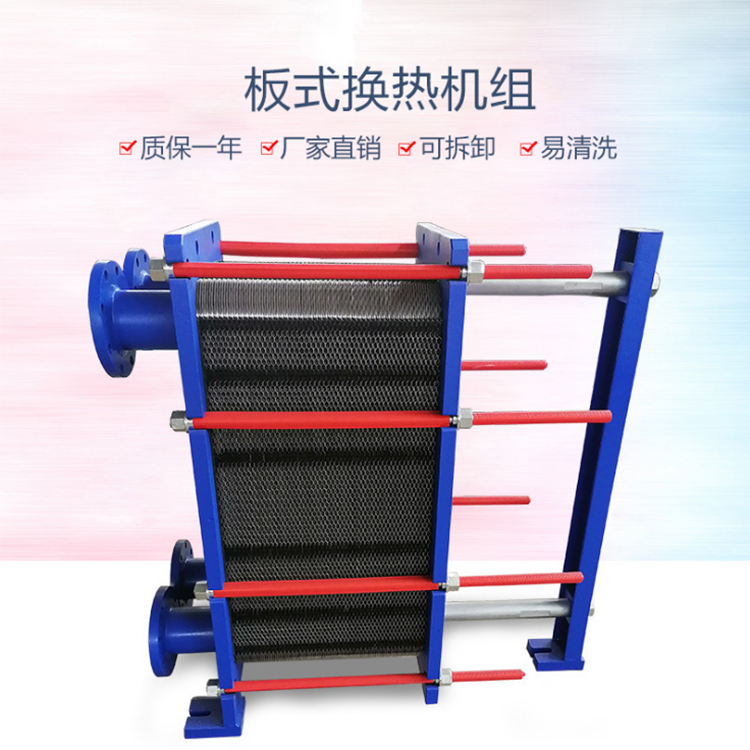
BR0.1 Plate Heat ExchangerIt is an efficient heat exchanger composed of a series of metal sheets with certain ripple shapes stacked together. Thin rectangular channels are formed between various plates for heat exchange. Plate heat exchangers are ideal equipment for heat exchange between liquid and liquid, as well as between liquid and vapor. It has the characteristics of high heat transfer efficiency, low heat loss, compact and lightweight structure, small footprint, wide application, and long service life. Under the same pressure loss, its heat transfer coefficient is 3-5 times higher than that of a tube heat exchanger, occupying one-third of the area of a tube heat exchanger, and its heat recovery rate can reach over 90%. There are two main types of plate heat exchangers: frame type (detachable) and brazed type. The plate forms mainly include herringbone corrugated plate, horizontal flat corrugated plate, and nodular plate.

Structure principle of BR0.1 plate heat exchanger:
BR0.1 Plate Heat ExchangerA detachable plate heat exchanger is composed of many stamped corrugated thin plates at certain intervals, sealed by gaskets on all sides, and overlapped and compressed by a frame and a clamping screw. The four corner holes of the plates and gaskets form the distribution and collection pipes for the fluid, while reasonably separating the hot and cold fluids, allowing them to flow in the flow channels on both sides of each plate and exchange heat through the plates. The optimization design calculation of plate heat exchanger is to reasonably determine its model, process and heat transfer area under the condition of known temperature difference ratio NTUE, so that NTUp equals NTUE.
Technical characteristics of BR0.1 plate heat exchanger:
1. Efficient and energy-saving: Its heat transfer coefficient is between 3000-4500 kcal/m2 ·° C · h, which is 3-5 times higher than the thermal efficiency of shell and tube heat exchangers.
2. Compact structure: Plate heat exchangers have tightly arranged plates, and compared with other types of heat exchangers, plate heat exchangers occupy less space and space. Plate heat exchangers with the same heat transfer area are only 1/5 of shell and tube heat exchangers.
3. Easy to clean and disassemble: Plate heat exchangers rely on clamping bolts to clamp the clamping plates, making disassembly and assembly convenient. They can be opened and cleaned at any time. At the same time, due to the smooth surface and high turbulence, they are not easy to scale.
4. Long service life: Plate heat exchangers are made of stainless steel or titanium alloy plates, which can withstand various corrosive media. The rubber pads can be replaced freely and are easy to disassemble and repair.
5. Strong adaptability: Plate heat exchanger plates are independent components that can be added or removed according to requirements in various forms; Suitable for various requirements of different processes.
6. No liquid leakage, the sealing groove of the plate heat exchanger is equipped with a drainage channel, and various media will not collude. Even if there is a leak, the media will always be discharged outward.

Application areas of BR0.1 plate heat exchanger:
Plate heat exchangers have been widely used in metallurgy, mining, petroleum, chemical, power, medicine, food, chemical fiber, papermaking, textile, shipbuilding, heating and other sectors. They can be used for heating, cooling, evaporation, condensation, sterilization and disinfection, waste heat recovery and other situations.
Solar energy utilization: Participate in the heat exchange process of heat transfer media such as ethylene glycol and antifreeze in solar collector panels to achieve the purpose of utilizing solar energy.
Chemical industry: manufacturing titanium oxide, alcohol fermentation, synthetic ammonia, resin synthesis, manufacturing rubber, cooling phosphoric acid, cooling formaldehyde water, alkali carbon industry, electrolytic alkali production.
Steel industry: cooling quenching oil, cooling electroplating fluid, cooling reducer lubricating oil, cooling rolling mill, drawing machine cooling fluid.
Metallurgical industry: heating and cooling of aluminate mother liquor, cooling of sodium aluminate, cooling of lubricating oil for aluminum refining mills.
Mechanical manufacturing industry: cooling of various quenching fluids, cooling of press machines, lubricating oil for industrial mother machines, and heating of engine oil. The food industry produces salt, dairy products, soy sauce, vinegar for sterilization and cooling, animal and vegetable oil for heating and cooling, beer and malt extract for heating and cooling in beer production, sugar production, gelatin concentration, sterilization and cooling, and produces monosodium glutamate.
Textile industry: various waste liquid heat recovery, cooling of boiling phosphating fibers, cooling of adhesive solution, cooling of acetic acid and acetic anhydride, cooling of alkaline aqueous solution, heating and cooling of adhesive fibers.
Paper industry: cooling black water, heating and cooling of bleaching salt and alkali solution, heat recovery of glass paper waste liquid, heating and cooking acid, cooling of hydrogen peroxide sodium solution, recovery of bleaching paper waste liquid, condensation of exhaust gas, preheating and concentration of pulp like waste liquid. Central heating thermal power plant waste heat area heating, heating domestic water, boiler area heating.
Oil industry: Heating and cooling synthetic detergents, heating whale oil, cooling vegetable oil, cooling hydrogen peroxide, cooling glycerol and emulsified oil.
Electric power industry: generator shaft pump cooling, transformer oil cooling.
Ship: diesel engine, central cooler, jacket water cooler, piston cooler, lubricating oil cooler, preheater, seawater desalination system (including multi-stage and single-stage). Marine aquaculture seedling cultivation: Supporting boilers to heat up the seawater for seedling cultivation has saved the use of coal, thereby improving energy conservation, environmental protection, and efficiency. Others: pharmaceuticals, petroleum, ceramics, glass, cement, geothermal utilization, etc


AfterSalesService :
Key words:- plate heat exchanger
More Products