


Smart Energy Management Platform
Category:
Electrical Engineering/CNC and instrumentation/Data collector
Model:
acrel
Brand:
Acrel
brand:
Acrel
model:
acrel
type:
system integration
Power supply method:
AD/DC220V
Control method:
discrete signal
function:
collect
Retail Price
3,000,000.00USD
重量
kg
- Product Description
-
brand Acrel
model acrel
type system integration
Power supply method AD/DC220V
Control method discrete signal
function collect
Description :
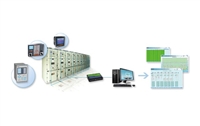
The AcrelEMS3.0 smart energy management platform provides real-time monitoring, intelligent prediction, dynamic allocation, optimization strategies, diagnostic alarms for the operation status of distributed power sources, municipal power sources, energy storage systems, charging facilities, and various AC/DC loads in enterprise microgrids. It can schedule orderly interaction between sources and loads, achieve energy panoramic analysis, meet the needs of digital energy efficiency management, intelligent safety analysis, dynamic adjustment and control, and visualized panoramic analysis in enterprise microgrids. It achieves flexible interaction and economic operation between photovoltaic storage and charging resources under different strategies, reduces energy costs for users, and improves the operational efficiency of enterprise microgrids.
Widely applicable scenarios: Suitable for various places such as industrial and commercial enterprises, schools, hospitals, highways, industrial parks, etc.
Main functions
Real time monitoring: Real time collection of data from photovoltaic, wind power generation, energy storage systems, charging piles, and traditional power supply and distribution systems, visually displaying energy production and flow, including the production and consumption processes of various energy sources.
Intelligent prediction: Combining meteorological and historical data to predict photovoltaic and wind power generation and load power, and comparing and analyzing them with actual power, optimizing scheduling through energy storage systems and load control, and reducing demand and electricity costs.
Optimization control: Based on load changes and grid scheduling, optimization control is carried out using game theory based power coordination and allocation technology to achieve interactive integration and flexible allocation of energy between distributed renewable energy generation, charging facilities, and energy storage devices, promote the consumption of new energy, compensate for load fluctuations, achieve demand management, reduce peak valley differences, smooth loads, reduce electricity costs, and improve the return on investment of new energy.
Energy consumption analysis: Collect the consumption of various energy media such as electricity, water, natural gas, and cold/heat in enterprises, compare them on a month on month basis, display energy flow, benchmark energy consumption, and convert standard coal or carbon emissions.
Orderly Charging: The system supports the connection of AC/DC charging stations and is linked and controlled according to the enterprise load and transformer capacity, as well as the transformer load rate, to guide users to charge in an orderly manner and ensure the safe operation of the enterprise microgrid.
Operation and maintenance inspection: The system supports task management, inspection/defect/alarm/repair records, and notification work order management, and tracks the trajectory of operation and maintenance personnel through Beidou positioning to achieve closed-loop management of the operation and maintenance process.
By introducing the AcrelEMS3.0 smart energy management platform, customers' energy storage, charging piles, photovoltaics, power operation and maintenance, energy consumption, prepaid, electrical safety and other systems have been successfully integrated into a large platform for centralized monitoring and unified management. This has achieved functions such as reliable power supply monitoring, billing management, energy consumption analysis management, dynamic area management, etc., improved the consumption ratio of new energy, reduced electricity costs, and helped customers achieve profits.
1. Overview of Integrated Smart Energy System
The cloud platform is a set of platforms based on the Ankeri IoT data center, which has established the uplink and downlink data standards and provides Internet users with energy IoT data services. Users only need to purchase Ankerui IoT sensors and transformers, and install them themselves. Whether it is IoT instrument direct transmission or uploading through the gateway, they can use their mobile phones to scan the code to obtain the required industry data services.
system architecture
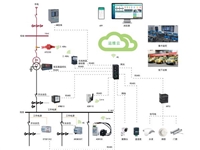
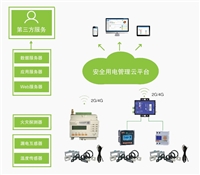
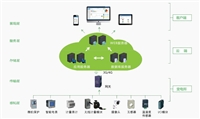
 The Acrel EIoT energy IoT cloud platform adopts a layered and distributed structure, mainly composed of three parts: the perception layer (terminal collection devices), the network layer (communication management terminals), and the platform layer (energy IoT cloud platform).
Perception layer: Various sensors connected to the network, including multifunctional meters, prepaid meters, multi loop meters, IoT meters, IoT water meters, electric vehicle charging stations, car charging stations, street light controllers, etc. Network layer: Intelligent gateway, collects data from the perception layer, performs protocol conversion and storage, and uploads the data to the energy IoT cloud platform. Platform layer: includes application servers and data servers, which can implement applications on PC or mobile devices.

Platform Architecture
 Platform Features
1. Energy supply
Power collection and reading function module

Intelligent operation and maintenance function module

2. Energy management
Safe electrical function module

Power Quality Function Module

3. Equipment management
Intelligent lighting function module

Prepaid water and electricity function module

Car/electric scooter charging operation function module

4. Energy analysis
Energy management functional module

Value added service function module
(1) Industrial configuration

(2) 3D visualization

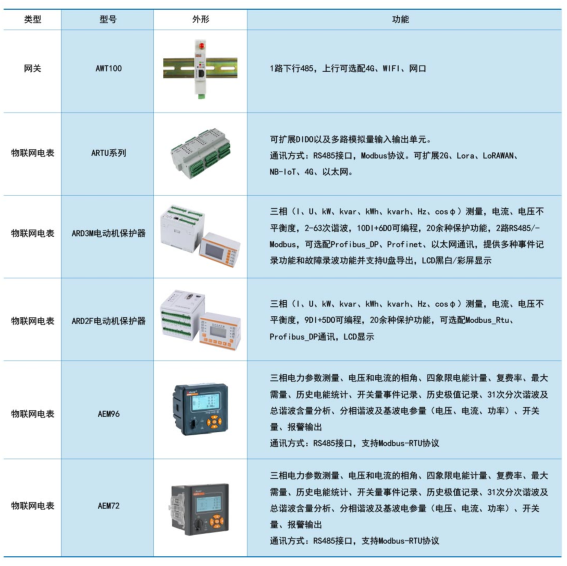
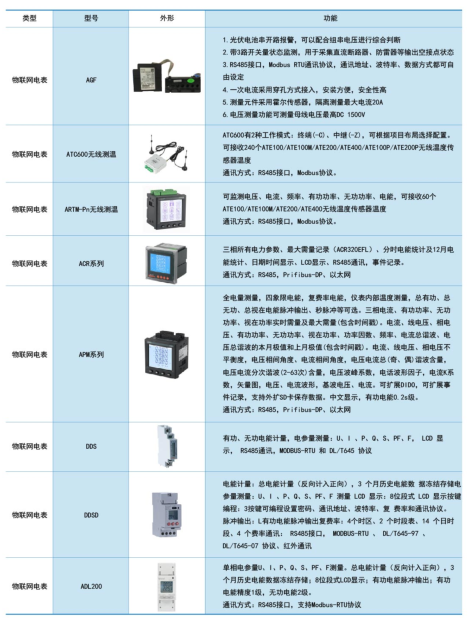
Equipment selection

Time of use electricity pricing strategy for energy storage systems
3 Grid side
Relieve power grid congestion: Install energy storage systems upstream of the transmission line. When a line blockage occurs, the energy that cannot be transmitted can be stored in energy storage devices. When the line load is less than the line capacity, the energy storage system will discharge back to the line.
Delaying the expansion and upgrading of transmission and distribution equipment: In transmission and distribution systems with loads close to equipment capacity, energy storage systems can be used to effectively improve the transmission and distribution capacity of the power grid through smaller installed capacity, thereby delaying the construction of new transmission and distribution facilities and reducing costs.
Profit model: Improve transmission and distribution efficiency, delay investment.
2.4 User side
Capacity management: Industrial users can use energy storage systems to store energy during low demand periods and discharge during peak loads, thereby reducing overall load and achieving the goal of reducing capacity electricity bills.
Capacity leasing: Energy storage power stations are leased to new energy service providers. Currently, the rental fee range for energy storage capacity in China is 300-350 yuan/kW · year. The specific pricing is negotiated between the project revenue of the energy storage power station and the new energy power station, and then both parties sign a long-term leasing agreement.
Spontaneous self use of electricity: Household and commercial users who install photovoltaics can better utilize photovoltaic electricity by configuring energy storage, improve the level of spontaneous self use, and reduce electricity costs.
Peak valley price arbitrage: In the electricity market where peak valley prices are implemented, energy storage systems are charged at low prices and discharged at high prices to achieve peak valley price arbitrage and reduce electricity costs.
Profit model: Reduce capacity electricity bills, save electricity costs, and arbitrage peak valley price differences.
AfterSalesService :
Key words:- Smart Energy Management Platform
More Products