


Virtual power plant optical storage charging energy IoT system
Category:
Electrical Engineering/CNC and instrumentation/Data collector
Model:
acrel
Brand:
Acrel
brand:
Acrel
model:
acrel
type:
system integration
Power supply method:
AD/DC220V
Control method:
discrete signal
function:
collect
Retail Price
3,000,000.00USD
重量
kg
- Product Description
-
brand Acrel
model acrel
type system integration
Power supply method AD/DC220V
Control method discrete signal
function collect
Description :
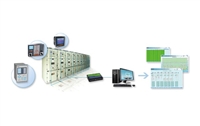
The AcrelEMS enterprise microgrid digital system integrates enterprise load side power monitoring, energy consumption statistics, power quality analysis and governance, intelligent lighting control, monitoring of major energy consuming equipment, charging pile operation management, distributed photovoltaic monitoring, energy storage management, and other functions. Users can centrally monitor, dispatch, and operate the enterprise microgrid as a whole through one platform, while meeting the requirements of reliable, safe, economical, and orderly electricity consumption for the enterprise.
Real time monitoring and control of electrical parameters, operating status, and contact temperature of distribution related equipment such as transformers, circuit breakers, DC screens, busbars, reactive power compensation cabinets, and cables involved in the distribution of 35kV to 0.4kV substations in enterprises. Monitor the power quality of the main circuits of the enterprise's microgrid and carry out treatment. Handle faults in a timely manner and issue alarm messages to improve the reliability of enterprise power supply.
The cloud platform is a set of platforms based on the Ankeri IoT data center, which has established the uplink and downlink data standards and provides Internet users with energy IoT data services. Users only need to purchase Ankerui IoT sensors and transformers, and install them themselves. Whether it is IoT instrument direct transmission or uploading through the gateway, they can use their mobile phones to scan the code to obtain the required industry data services.
system architecture
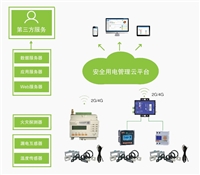
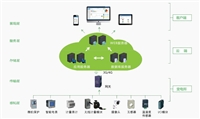
 The Acrel EIoT energy IoT cloud platform adopts a layered and distributed structure, mainly composed of three parts: the perception layer (terminal collection devices), the network layer (communication management terminals), and the platform layer (energy IoT cloud platform).
Perception layer: Various sensors connected to the network, including multifunctional meters, prepaid meters, multi loop meters, IoT meters, IoT water meters, electric vehicle charging stations, car charging stations, street light controllers, etc. Network layer: Intelligent gateway, collects data from the perception layer, performs protocol conversion and storage, and uploads the data to the energy IoT cloud platform. Platform layer: includes application servers and data servers, which can implement applications on PC or mobile devices.

Platform Architecture
 Platform Features
1. Energy supply
Power collection and reading function module

Intelligent operation and maintenance function module

2. Energy management
Safe electrical function module

Power Quality Function Module

3. Equipment management
Intelligent lighting function module

Prepaid water and electricity function module

Car/electric scooter charging operation function module

4. Energy analysis
Energy management functional module

Value added service function module
(1) Industrial configuration

(2) 3D visualization

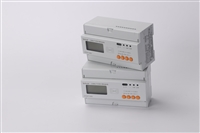
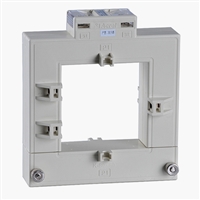
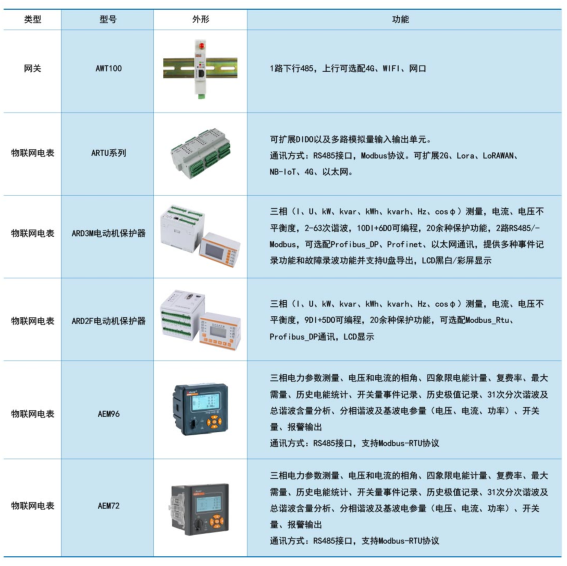
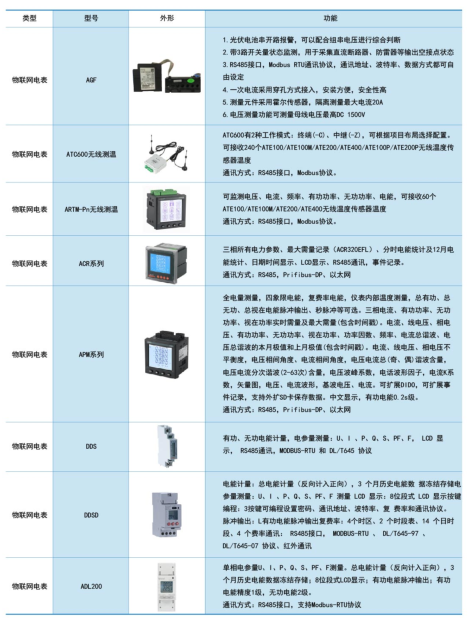
Equipment selection

Virtual power plant energy IoT system
How to establish a digital enterprise microgrid
The energy management awareness of enterprises determines the level of digitalization of their power grids. Experts predict that there will be further policies (such as demand response, energy dual control, carbon emission constraints) and price incentive mechanisms to promote the establishment of microgrid digitalization in enterprises, and to build infrastructure for the promotion and development of virtual power plants. At the same time, it will also enhance the energy management awareness of enterprises and generate value for them through digital energy management. How can companies establish microgrid digitalization that is suitable for themselves?
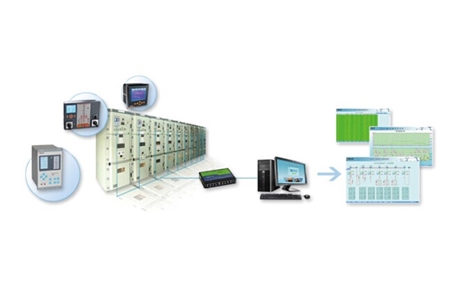
The digital system (EMS) for enterprise microgrids includes sensors, intelligent gateways, and microgrid digital software installed on-site. Sensors are used to monitor and control the load equipment and distributed generation equipment (systems) inside the enterprise. The data of field sensors are accessed to edge computing intelligent gateways. Each intelligent gateway can be regarded as a regional headquarters. After collecting the data of the received sensors for protocol conversion, it is uploaded to the EMS and forwarded to the third-party system. The gateway can perform logical calculation and execute EMS instructions according to preset thresholds or automatic learning. EMS can be seen as the command center of enterprise microgrids, generating various charts, control strategies, and analysis conclusions based on data uploaded by intelligent gateways, and responding to scheduling instructions of virtual power plants according to set permissions. This large number of EMS forms the foundation of virtual power plants
The digitization of the load side is essentially about enhancing management awareness. The digitalization of enterprise microgrids is a trend, a necessary condition for the development of virtual power plants, and a necessary means for enterprises to improve their energy management level. With the promotion of the dual carbon policy and electricity reform policy, in order to improve energy utilization efficiency and solve the problem of large peak valley differences in the power grid, more and more policy tools will inevitably be put on the table, including increasing electricity price fluctuations, widening the peak valley electricity price difference, energy consumption dual control, etc. In this situation, relying solely on manual management cannot adapt to policy and electricity price changes. Enterprises that establish and adapt to digital energy management in advance will quickly gain the advantage of electricity costs and truly enjoy the benefits of electricity reform policies.
AfterSalesService :
Key words:- Virtual power plant optical storage charging energy Internet of Things