


Ankerui Oil Fume Online Monitoring System Solution Manufacturer
Category:
Electrical Engineering/Complete electrical and electrical equipment/Other electrical and electrical equipment
Model:
AcrelCloud-3500
Brand:
Acrel
Retail Price
90,000.00USD
重量
kg
- Product Description
-
Description :
Shortcomings in the Treatment of Organic Waste Gas from Kitchen Fumes in the Catering Industry
Most restaurants do not have pre embedded smoke exhaust systems and safety passages
Some restaurants located in the old city area have relatively outdated machinery and equipment, and their overall planning and layout are not in accordance with the design scheme. There are many unscientific areas, and the unscientific and reasonable layout leads to an increase in the cost of installing oil fume purifier machinery and equipment. Moreover, the vast majority of restaurants operating in street facing rooms do not have a safe smoke exhaust system, resulting in the immediate discharge of kitchen fumes into the air, which poses a threat to environmental air quality.
Keywords: oil fume detection; practicability; wireless communication
The saying 'people are iron, rice is steel' indicates that the catering industry in our country is a field that is not easily declining. In recent years, with the trend of economic development, the restaurant sales market in China has also gained development momentum. In addition, the kitchen oil fume emissions in the catering industry have not been manipulated, and many kitchen oil fume emissions that have not been cleaned or are not up to standard are discharged into the air. The harm of this kitchen oil fume to the air quality index is increasing. As early as 2001, China implemented the "Food and Beverage Industry Oil Fume Emission Standards", which established a definition for the concentration of kitchen oil fume emissions. But until now, the vast majority of China's environmental protection bureaus have used chemical testing methods for oil fume detection, that is, sampling and extracting the vapor in the exhaust pipe on site and bringing it to the laboratory to test the concentration of kitchen oil fume. This method has high labor costs and cannot immediately grasp the kitchen fume data information of the catering industry, resulting in the inability of the environmental protection bureau to carry out real-time supervision and management methods for the catering industry.
Manufacturer of Ankerui Oil Fume Online Monitoring System Solution I. Introduction to Catering Oil Fume Monitoring Cloud Platform
1. Function
Cooking fumes are one of the main sources of volatile organic compounds (VOCs) and PM10 in the atmosphere. In recent years, with the strengthening of environmental protection governance, various levels have continuously strengthened the full coverage installation of oil fume purifiers by catering operators, but there are still some problems and loopholes in supervision.
(1) Poor proactive environmental awareness: Most small and medium-sized catering owners believe that holding certificates from the industry and commerce, food and medicine departments is enough to operate legally, ignoring environmental impact assessment approval, resulting in the installation of kitchen fume purification facilities without standardized requirements;
(2) Due to the direct impact of the power of oil fume purification facilities on the purchase and installation cost and oil fume purification effect, despite the installation of purification equipment, complaints about poor purification effect and oil fume disturbance to residents still occur from time to time;
(3) Difficulty in self-regulation of businesses: During the inspection process, although catering owners installed oil fume purification equipment, they did not consciously maintain and use it, and the effect of regular cleaning was not significant;
(4) Difficulty in supervision: There are a huge number of catering enterprises, and it is impossible to achieve full coverage through human supervision. Some monitoring projects require multiple sampling by testing companies and equipment, and require a long time for analysis. The cost and difficulty of supervision are high.
In order to make up for the loopholes in the existing catering industry's e-liquid monitoring and facilitate the supervision of regulatory authorities, the Ankerui oil fume monitoring cloud platform has emerged. The oil fume monitoring module communicates and exchanges data with the cloud platform through 2G/4G, and the system can monitor the startup and operation status of enterprise catering equipment; Implement functions such as startup rate monitoring, purification efficiency monitoring, facility shutdown alarm, pending cleaning alarm, abnormal alarm, etc; Perform statistical analysis, ranking, and other statistical functions on collected data; Compared to traditional electrostatic monitoring methods, it is safer and more effective.
2. Application location

2、 Structure of Catering Oil Fume Monitoring Cloud Platform
The platform collects data on the operating status of catering fume treatment equipment and the concentration of fume emissions, automatically alerts and warns enterprises with excessive emissions and abnormal situations. Regulatory authorities can quickly handle the situation, urge catering enterprises to rectify their equipment, and regularly clean and maintain them to achieve emission reduction, environmental protection, and non disturbance to the public.
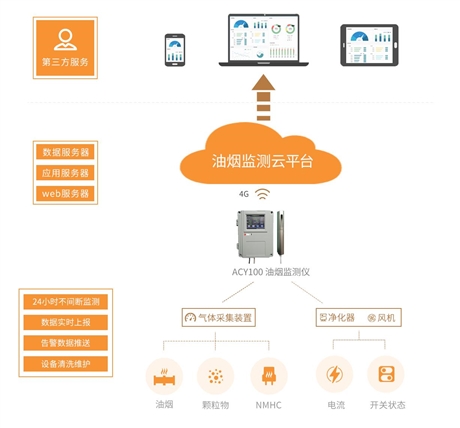
Install monitoring terminals on site to monitor the working status of the oil fume purifier in real time, including the current of equipment operation. At the same time, compare and analyze the particulate matter concentration at the exhaust outlet. Once the emissions exceed the standard, the system will issue abnormal signals.
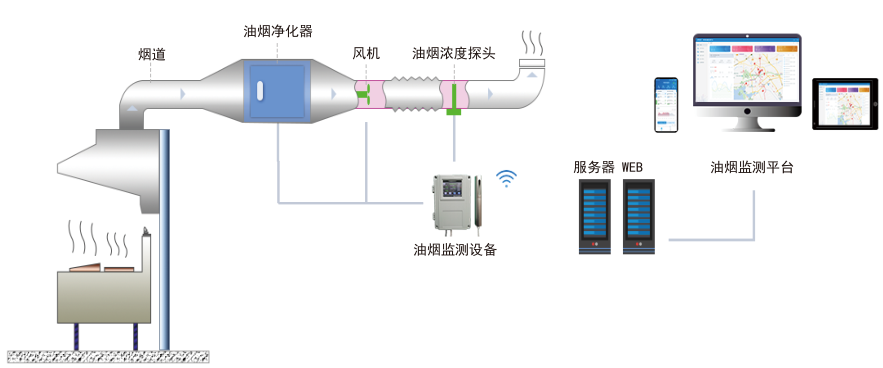
Oil fume monitoring equipment is used to monitor data such as oil fume, particulate matter, NmHc, etc
Purifier and fan work together to purify oil fumes, while monitoring the current of the purification equipment
The device uploads the collected data to a remote cloud server via 4G network

Structure diagram of oil fume monitoring cloud platform
3、 Hardware parameters of catering fume monitoring cloud platform
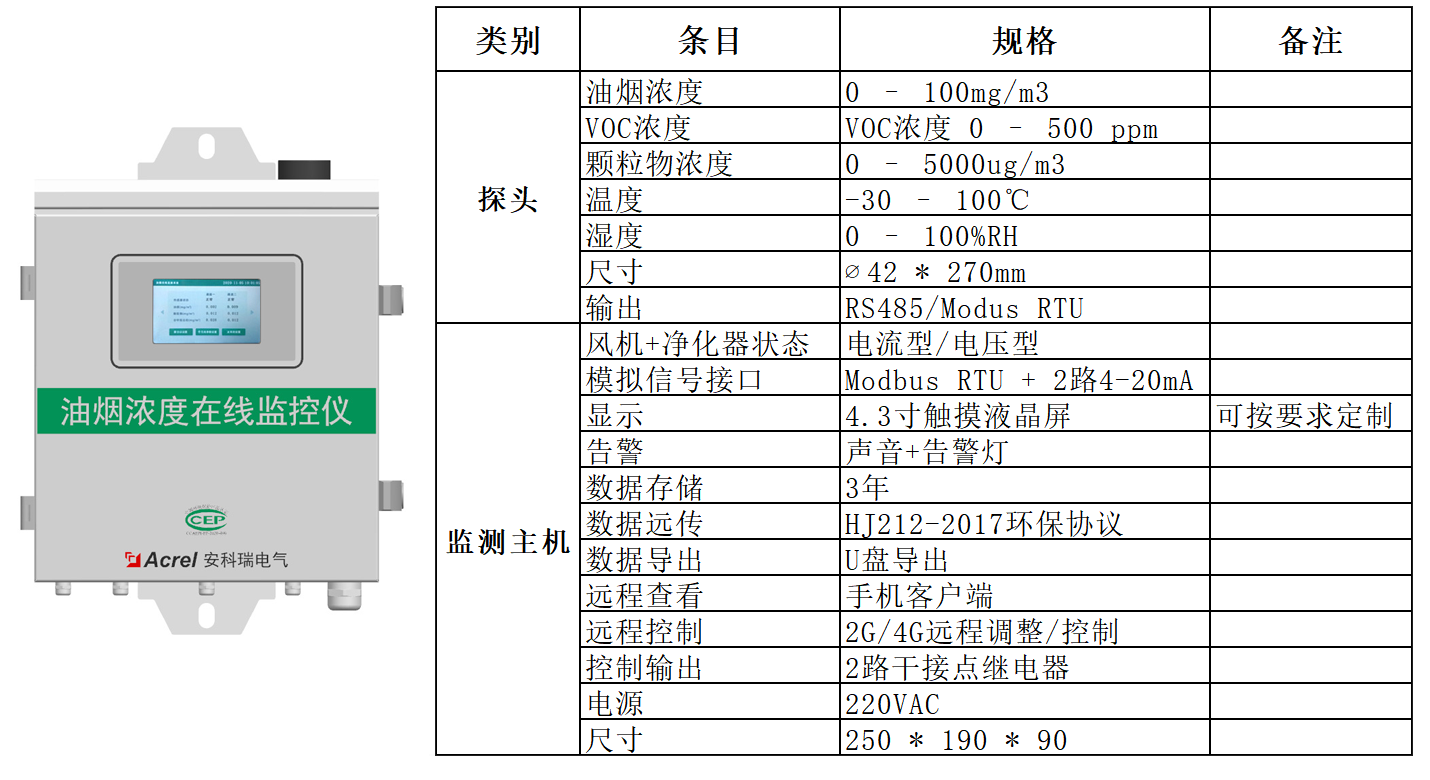
4、 Main functions of the catering fume monitoring cloud platform
online monitoring
Monitoring of oil fume emission data, including the collection and monitoring of oil fume emission concentration, particulate matter, NmHc and other numerical values; Simultaneously monitor the start stop status and operational data of the monitoring fan and purifier.
Alarm data monitoring
The system generates corresponding emission exceeding alarms based on the collected oil fume values; Analyze the operation data of the purifier and upload the corresponding alarm events such as operation, shutdown, and malfunction of the purification equipment.
data analysis
Run time analysis, offline analysis; Alarm proportion and ranking analysis; Historical data statistics, enterprise analysis reports, etc.
hidden danger management
The system analyzes the collected alarm data, generates corresponding hazard records, distributes and handles hazards, promptly handles alarms, and forms a closed loop.
Basic data maintenance
Personal information, permission maintenance, enterprise information entry, corresponding measurement point information entry, etc.
data service
Data collection, SMS reminders, data storage and parsing.
Equipment cleaning and maintenance
Develop a maintenance plan for cleaning/replacing the filter element of the oil fume monitoring equipment. After the set deadline is exceeded, the system will generate corresponding alarms to remind users to replace or clean the collection filter element.
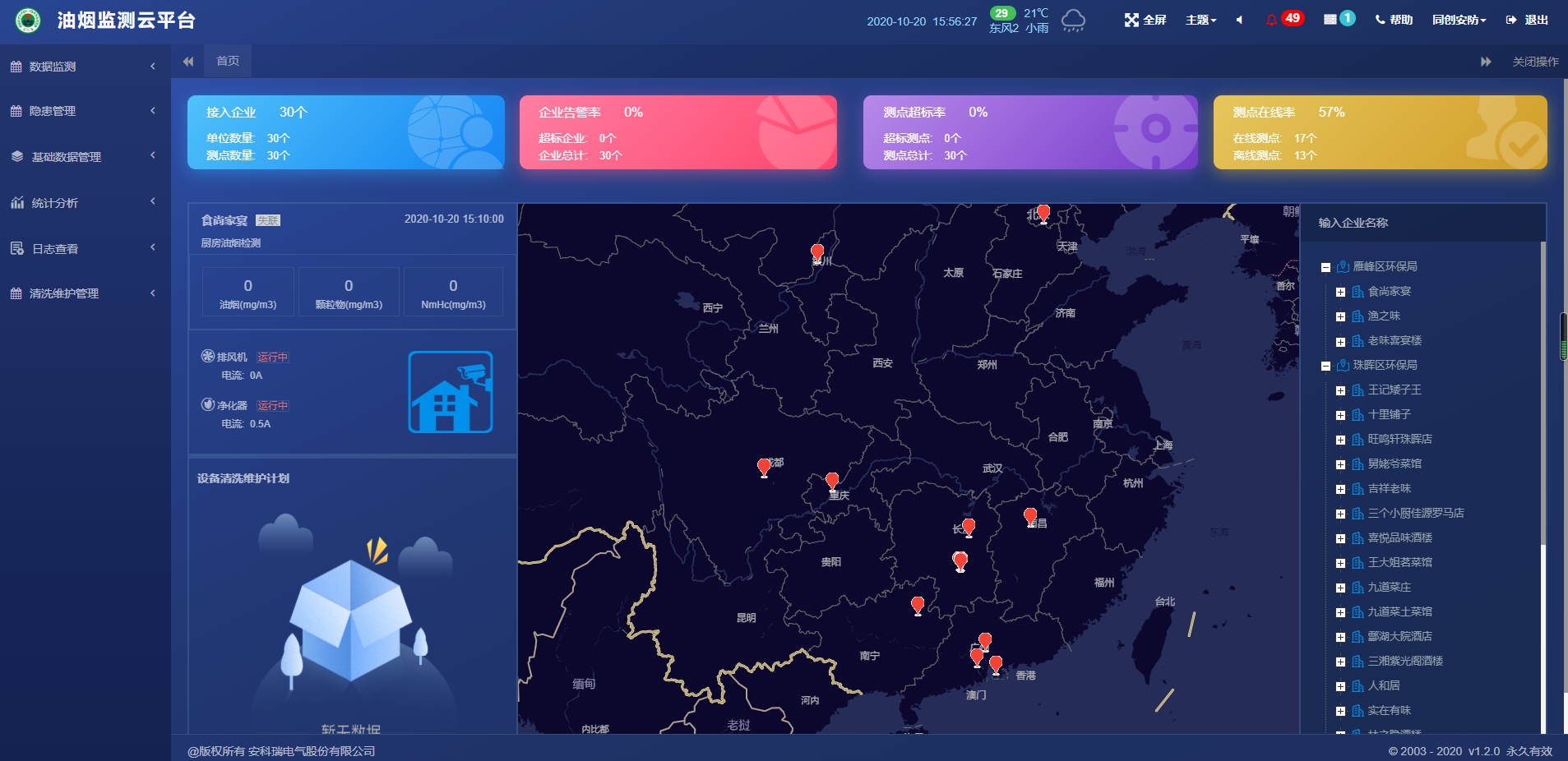
(1) Home Page
Access to enterprises;
Display the number of connected enterprises and the number of monitoring points.
AQI weather;
Real time AQI weather conditions.
Alarm rate, exceedance rate, online rate;
Display the number of alarm companies, alarm rates, including statistics on exceeding standards and online rates.
(2) Large screen display
This page displays all basic information of the cloud platform system on a large screen through a warehouse format, mainly including project overview, enterprise hazard ranking, alarm information list, monitoring points and alarm statistics, monitoring point geographic location, work order task statistics, etc.
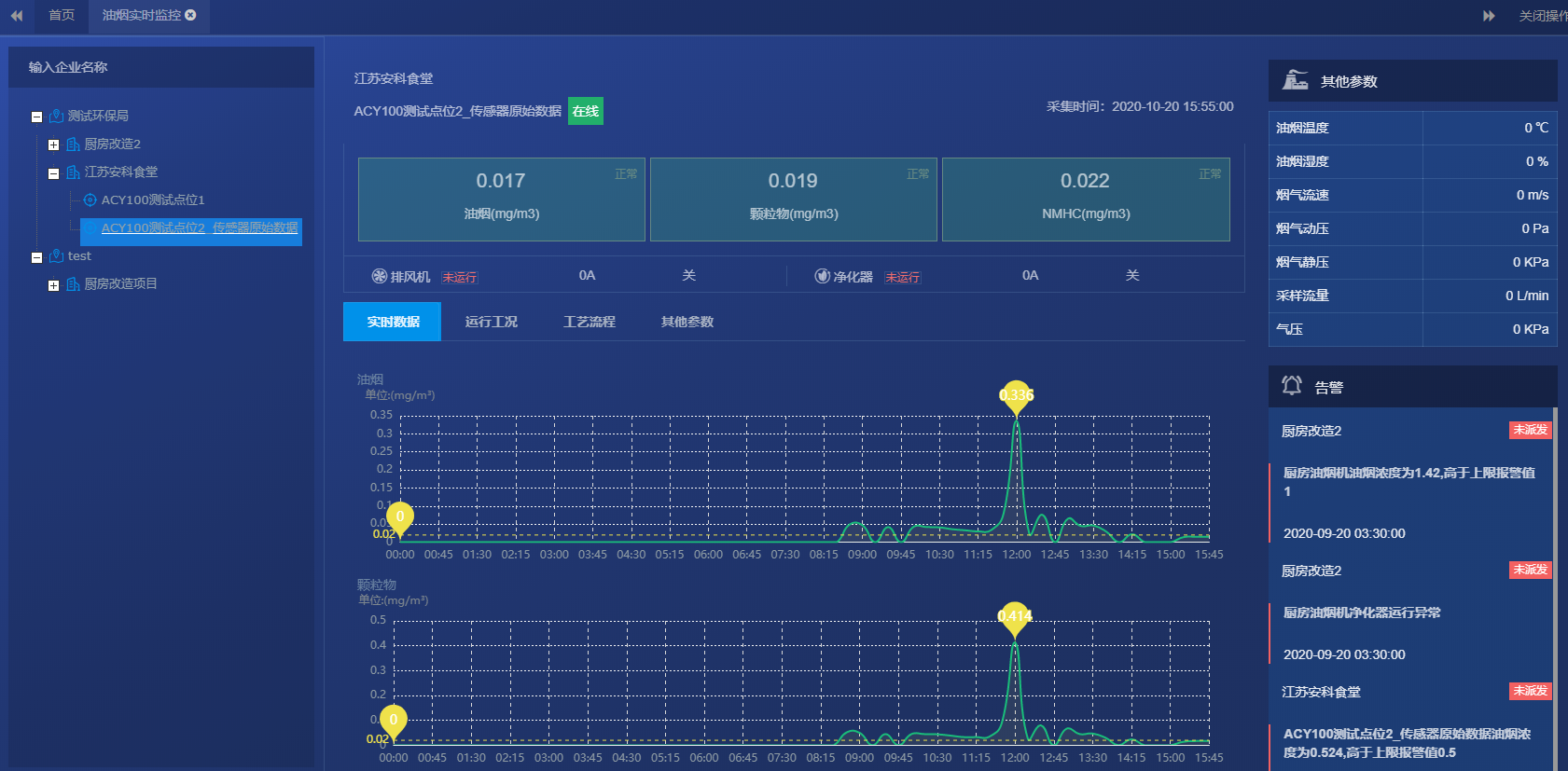
(3) Real time monitoring
The system can filter monitoring points, click on each monitoring point information, and you can see real-time data and 24-hour data change curves. And you can see the historical alarm information of the monitoring nodes.
Real time monitoring data includes information on the operating current, oil fume concentration, particulate matter concentration, and NMHC concentration of oil fume purifiers and fans.
(4) Hazard management
4.1 The backend generates corresponding alarm information during hazard inspections based on the concentration threshold and threshold time set by the measuring point, and provides bell and voice prompts on the homepage
4.2 Enterprise users confirm hidden dangers, identify the recipients of work orders, work order deadlines, and work order task descriptions
4.3 The operation and maintenance personnel confirm the content of the work order and handle the hidden dangers, fill in the details of the handling results, upload on-site pictures and other attachments, or conduct secondary distribution
4.4 Relevant enterprise users can confirm the processing progress of corresponding hazard information on the "Hazard Record" page, including whether it has been processed and distributed.


(5) Statistical analysis
5.1 Analysis of Exceeding Standards
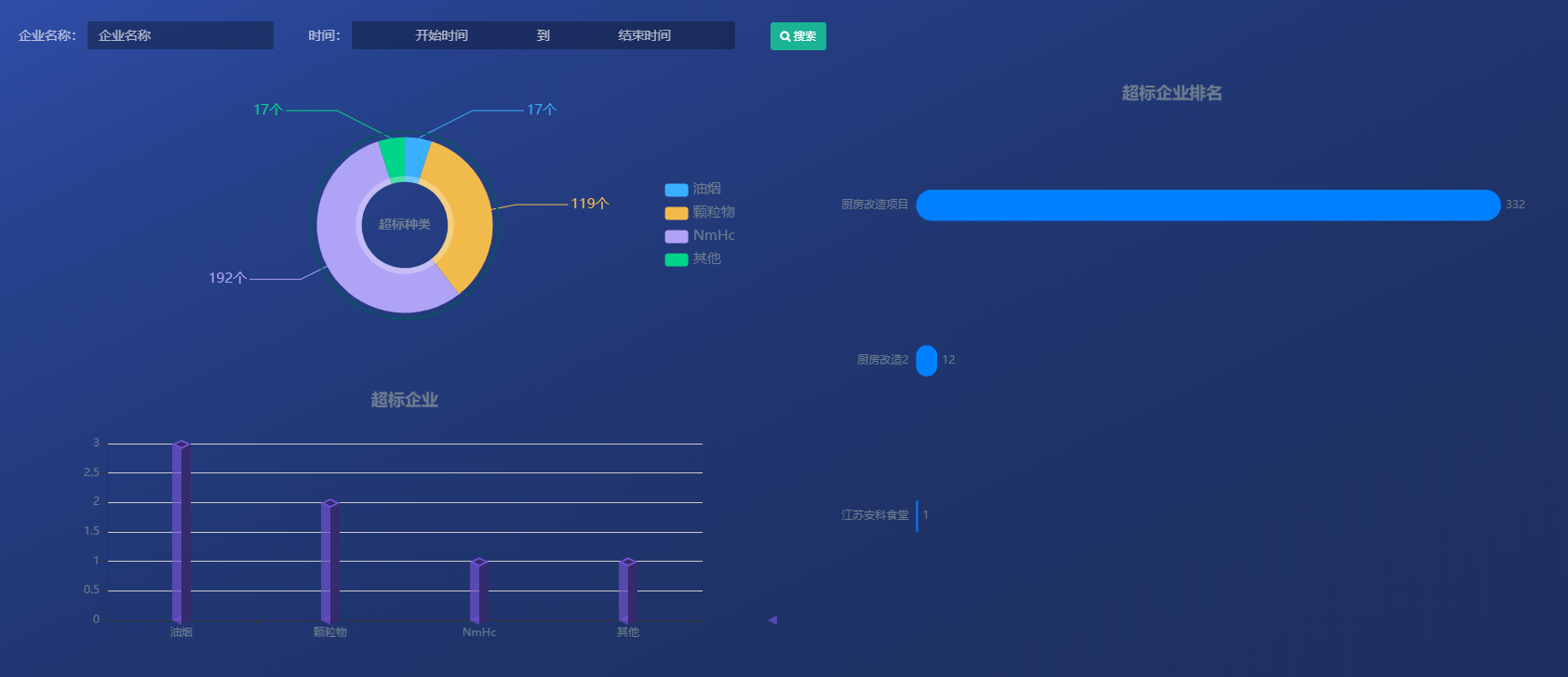
Perform correlation analysis on the collected data of oil fume, particulate matter, and NMHC, display a pie chart of the types and enterprises that exceed the standard, and rank the alarm enterprises. Based on the ranking, analyze and evaluate the data and operational status of relevant enterprises.
5.2 User Analysis Report
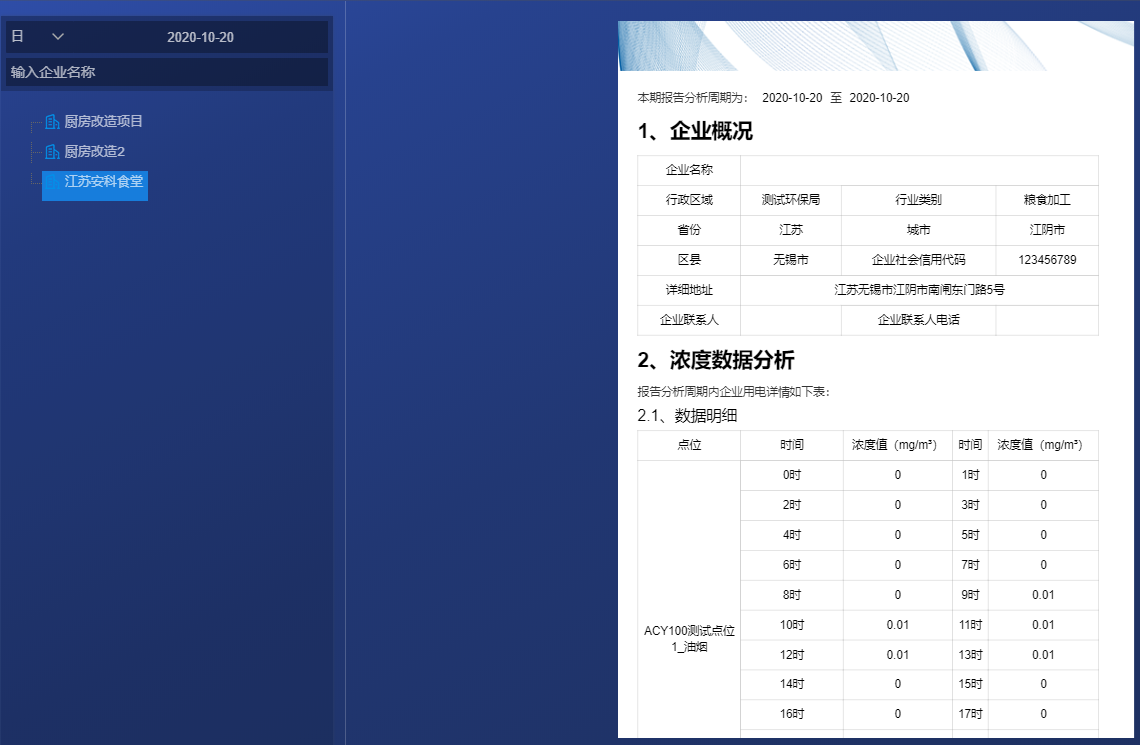
The user analysis report module summarizes the current alarms of the enterprise and supports exporting templates in Word. The specific template content can be customized according to customer needs.
5.3 Analysis of Online Duration
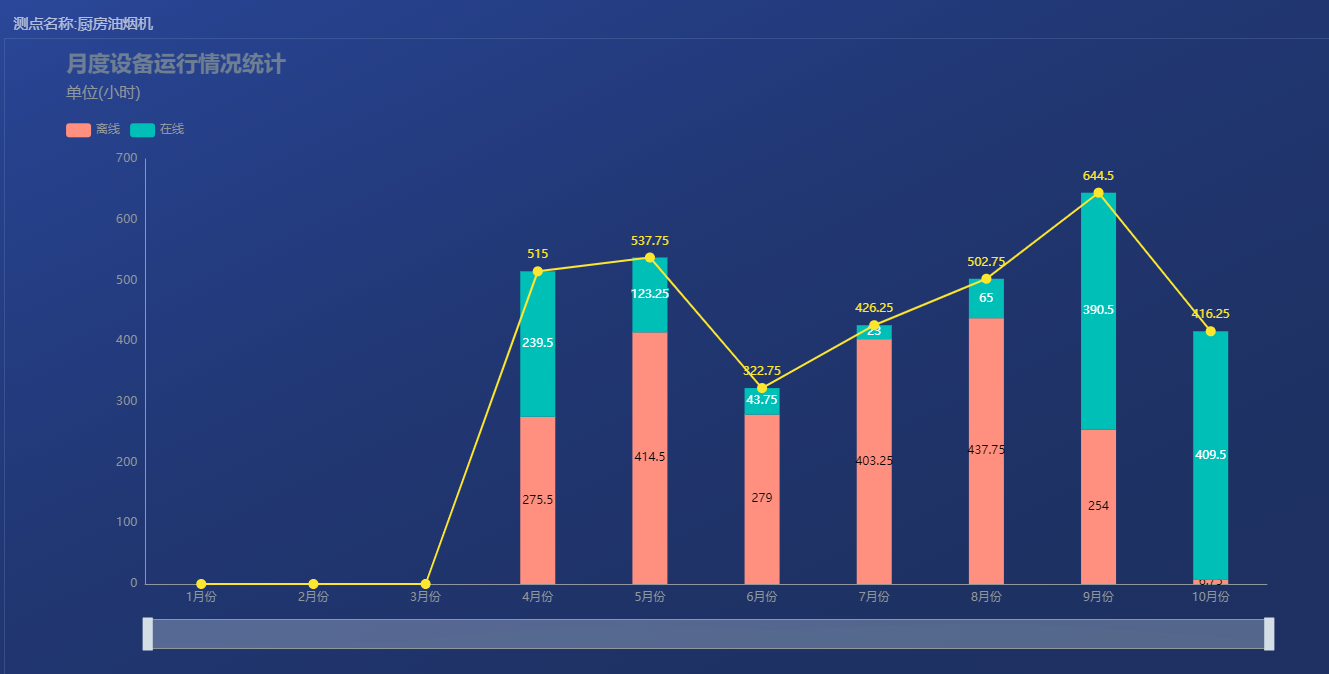
The enterprise online duration report module summarizes the current online and offline duration of monitoring instruments, as well as the online and offline time of fans and purifiers, and displays them in the form of line charts and radar charts.
(6) Equipment cleaning and maintenance
Set up a regular cleaning and replacement plan for enterprise detectors, including the installation time of maintenance monitoring points, the previous cleaning time, the next maintenance cycle, corresponding responsible persons, and other information.
5、 User experience of catering fume monitoring cloud platform
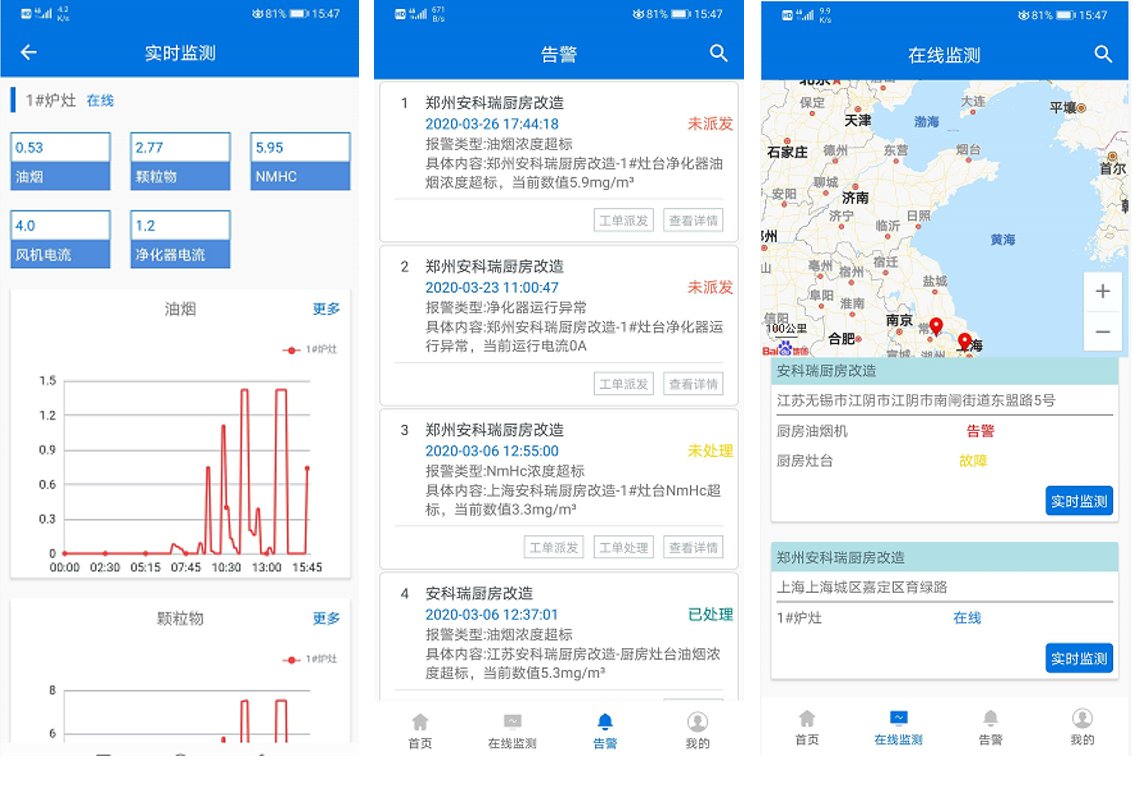
mobile app

The APP includes all the above functions, which can be downloaded by scanning the QR code above. After downloading, enter "acroly 123456" in the three columns to experience it.
WeChat Mini Program
The mini program includes some of the above functions, which can be accessed by scanning the QR code above. After downloading, enter "acroly 123456" in the three columns to experience it.

6、 Configuration of Catering Oil Fume Monitoring Cloud Platform
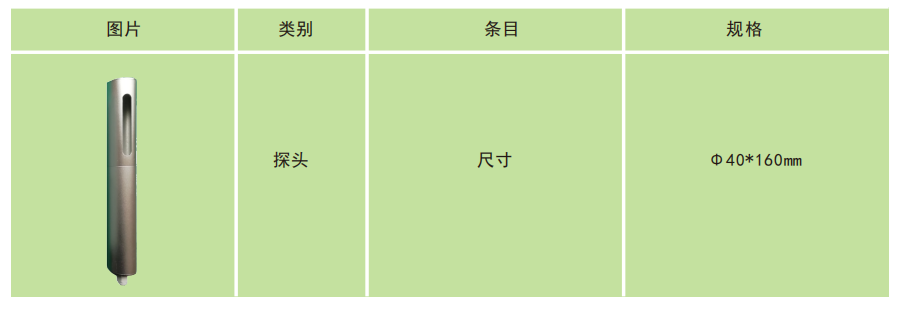
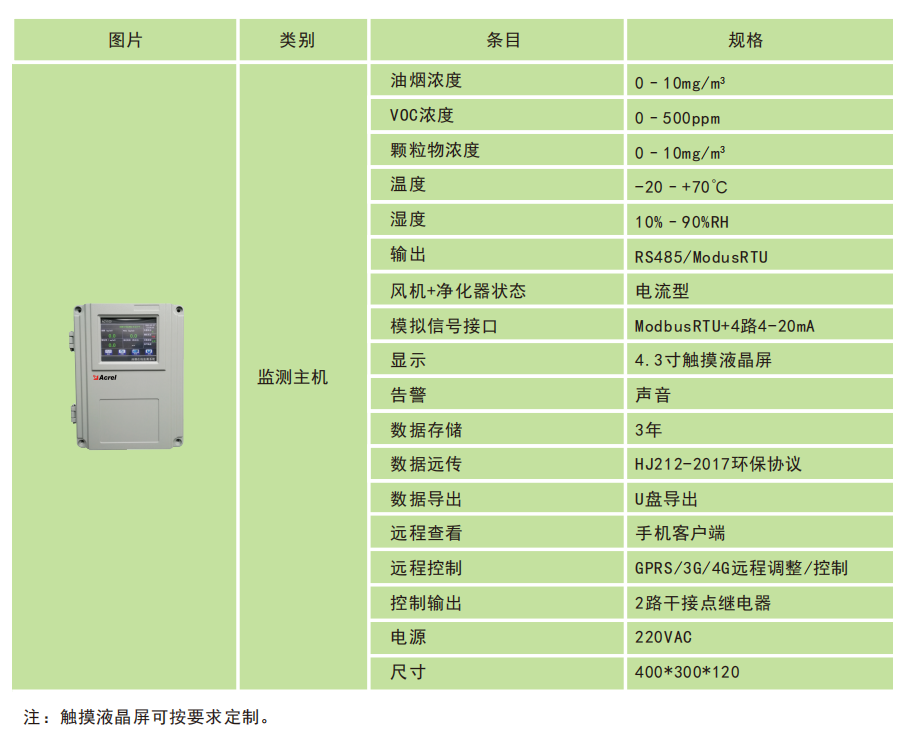
7、 Business Model of Catering Oil Fume Monitoring Cloud Platform
(1) Data hosting method
Ankrui guides users to complete the installation of oil fume monitoring equipment. Users upload data to Ankrui's oil fume monitoring operation cloud platform, entrust Ankrui to manage it, and charge storage fees according to regulations/agreements.
(2) User built platform
The platform is built in the user monitoring room (or location), and hardware customers can purchase or apply for Alibaba Cloud servers according to our recommended equipment configuration standards. Ankrui completes the platform construction and training of the operation management team for clients.
Composition of kitchen smoke exhaust
The key air pollutants in kitchen smoke exhaust include inhalable particulate matter, fine particulate matter that can settle on the ground, and volatile organic compounds (VOCs). From the perspective of shape composition, cooking kitchen fumes contain two major categories: fine particulate matter and volatile organic compounds (VOCs). Among them, fine particulate matter has a smaller particle size, generally ranging from 0.1 to 10 μ m, and can be divided into solid and liquid particles. Moreover, the viscosity of the liquid is high, making cooking kitchen fumes a mixture of gas, liquid, and solid air pollutants.
The experimental results of the research project show that cooking home style stir fry in a restaurant kitchen results in the detection of over 200 different components in kitchen fumes, including plant oils, fine particulate matter, nitrogen compounds, aldehyde macrolides, aldehydes, lipids, and some heterocyclic compounds. From the perspective of the distribution of VOCs components, the emissions of nitrogen compound air pollutants are mainly ethane and cyclohexanol, while the emissions of aldehyde macrolide air pollutants are indoor, hydrogen bromide, toluene, acetaldehyde, butyraldehyde, and pentanal.
High voltage electrostatic induction oil fume purifier machine equipment
The high-voltage electrostatic induction method is based on the basic principle of electrostatic induction accumulation. Due to the strong electrostatic field effect of the induced electrification conductor, the electric arc discharge induces electricity in the oil particles, hydrolyzes the droplets, and creates many new induced electrification oil particles. When they enter the collection area and are subjected to electric field force, they oxidize and exercise towards the sun, thereby promoting the extraction of remaining kitchen oil fume particles from the smoke and dust, making the solved kitchen oil fume vapor meet environmental standards. Waste engine oil is injected into the oil collection tank and discharged into the collection equipment through the oil discharge pipe. The advantage is high cleaning efficiency and low frictional resistance. The defect is long-term application, which is prone to settling oil stains, reducing the ability of concentration differentiation work, and endangering cleaning efficiency. It cannot be cleaned in the middle and later stages, which can easily lead to fire accidents and require timely personnel, resulting in significant wear and tear. Generally, installing a metal filter element in front of high-voltage electrostatic induction equipment can increase the load of the electrostatic field and improve the actual cleaning effect.
Composite oil fume purifier machine equipment
Composite oil fume purifier machine equipment refers to oil fume purifier machine equipment designed using two or more cleaning methods. Various technical aspects fill in the gaps between each other, greatly improving cleaning efficiency compared to previous technical aspects, and having numerous industry prospects. The sales market is relatively complete, with high-voltage electrostatic induction technology as the key, supplemented by other cleaning technologies to achieve the goal of improving various indicators of kitchen oil fume discharge. Common mechanical equipment includes suction filtration and high-pressure electrostatic induction composite oil fume filters
The front-end mechanical equipment filtration control module and the back-end development high-voltage electrostatic induction control module are used in conjunction with each other, which is a two-stage oil fume purifier method. The mechanical equipment filtration equipment can physically separate large particle welding smoke particles. Although the cleaning efficiency is not high, it is suitable as part of the preparatory treatment for initial and intermediate cleaning, thereby reducing the pressure of back-end development work. After undergoing preparatory treatment, the smaller droplets and fine particles enter the high-pressure electrostatic induction area for secondary solution, and the low concentration kitchen fumes that have been resolved are discharged through the inlet and outlet.
Ankerui Oil Fume Online Monitoring System Solution Manufacturer
AfterSalesService :
Key words:- Ankerui Oil Fume Online Monitoring System